Since we are travellers and pilgrims in the world, let us ever ponder on the end of the road, that is of our life, for the end of our roadway is our home (St Columban, 8th sermon).
It would seem that many of the 'strongest allies' of the USA 'punch above their weight', as a Danish TV station noticed. Is this because the head of government of each wears a good pair of 'Mitts'? Or is it President Obama and his scriptwriters who need such?
Meanwhile, and on a much more serious level, four years ago when Mr Obama was campaigning for the presidency of the USA, his opponent had no difficulty giving a simple, straight answer to a simple question. But Mr Obama found the same question 'above my pay grade'.
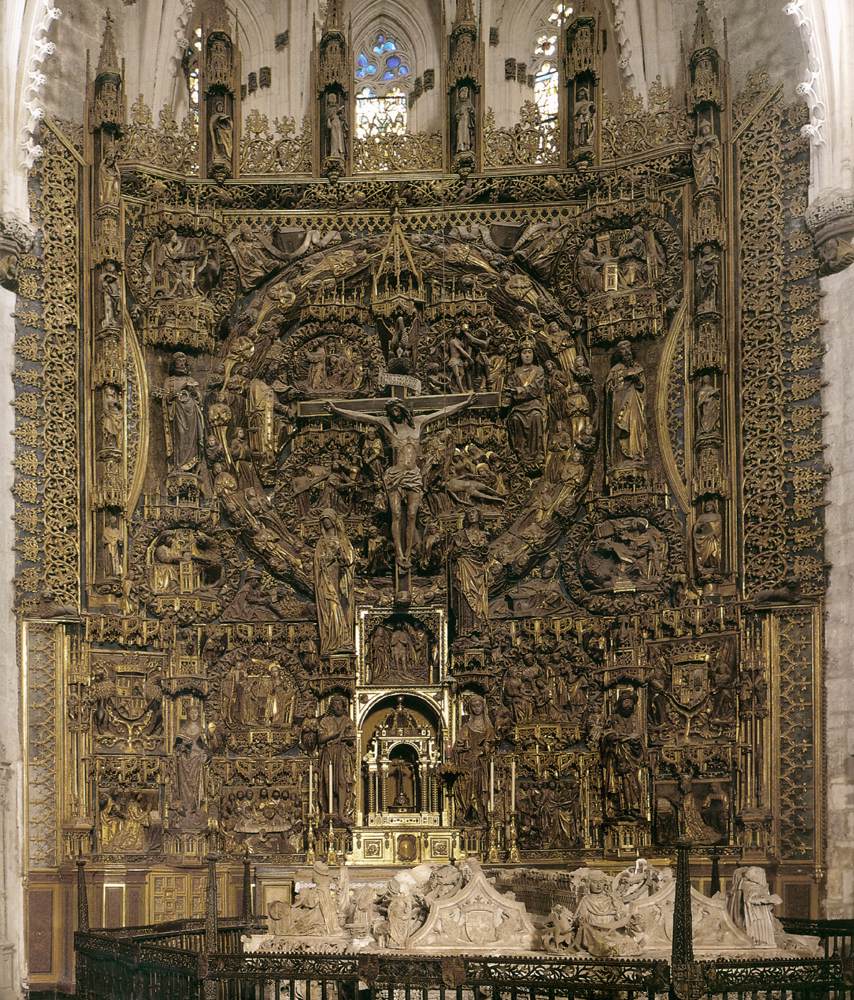
Today's Irish Independent carries a story that gives hope, Prayers answered as faithful flock to help save church. Sacred Heart Church, in the heart of the city of Limerick, closed down in 2006 when the Jesuits left. The report says that the property had been on the market for €4million but was sold very recently for €700,000 to the Institute of Christ the King Sovereign Priest. That is a bargain price, even though much money will be needed for repairs and to refurnish the church.
The priests of the Institute celebrate Mass in the Extraordinary Form, what the Irish Independent report refers to as 'the Latin Mass', a term also used, in inverted commas, on the Institute's website, though its preferred term is 'Traditional Latin Mass'. Latin is still the basic liturgical language of the Latin Rite, to which most Catholics belong. I have never celebrated Mass in the Extraordinary Form, either when it was still the only Mass we knew or in recent years. When I was ordained in December 1967 there was an 'interim Mass', the main change being that the readings were in the vernacular. However, I have on a number of occasions celebrated the 'New Mass', Novus Ordo or Mass in the Ordinary Form, in Latin.
My blogging friend Shane reported earlier in the year that the Benedictine Monastery of Our Lady of the Cenacle was moving from Tulsa, Oklahoma, to Stamullen in County Meath, north of Dublin.
There is no doubt that the Catholic Church in Ireland is going through a grave crisis. Among many other things, very few young men are accepting a call to the priesthood. Gaudium et Spes, the Pastoral Constitution on the Church in the Modern World, promulgated by Pope Paul VI on 7 December 1965 as the Second Vatican Council drew to a close, says, the Church has always had the duty of scrutinizing the signs of the times and of interpreting them in the light of the Gospel. Thus, in language intelligible to each generation, she can respond to the perennial questions which men ask about this present life and the life to come, and about the relationship of the one to the other. We must therefore recognize and understand the world in which we live, its explanations, its longings, and its often dramatic characteristics.
Are the new monastery of Our Lady of the Cenacle, with young monks from the USA living a new expression of the ancient Benedictine form of the monastic life, and the reopening of Sacred Heart Church, to be staffed by young priests from overseas, members of an institute that came into being some years after Vatican II, and helped by local people young and old, among the signs of the times we should be paying attention to?
While posting the link Misyononline link for today's Sunday Reflections on Facebook I saw there a link to a new video by Jean Vanier, founder of L'Arche and co-founder with Marie-Hélène
Mathieu of Faith and Light. He is speaking to a young fellow-Canadian, Maya Pot, a fifth-grader, about hospitality, which I had also focused on in Sunday Reflections, where a Filipino seminarian told me about the experience of hospitality that he had when he went to visit some workers from Kerala, India, living in an overcrowded labour camp in Dubai.
Marie-Hélène Mathieu
I've since discovered that Jean speaks to Maya in a number of short videos on hospitality, each directed to a different group. The one above is for parents. He speaks to teachers (below), to senior elementary students here, to junior elementary students here and to secondary students here. The videos were produced by L'Arche Canada and are meant primarily for use in schools.
Jean Vanier can speak with the great authority of personal witness on hospitality. He didn't set out to start a movement, L'Arche, that would spread to 40 countries. Father, in 1964 he, a professor of philosophy and a former officer in the Royal Canadian Navy, invited two men with intellectual disabilities to live with him in France, as the L'Arche International website describes:L’Arche International has its roots in the foundation of the first L’Arche community in 1964 in Trosly-Breuil, a village north of Paris. Following the suggestion of his mentor Father Thomas Philippe, a Dominican priest, Jean Vanier, son of a former Governor General of Canada, decided to invite Raphaël Simi and Philippe Seux to live with him in a small house which he named L’Arche, the French word for the Ark.
I have been deeply influenced by Jean Vanier since I first read about him in the early 1970s. I made two retreats under him in the Philippines, in Cebu City in 1991 and in Manila five years later. I also took part in the international Faith and Light pilgrimage to Lourdes in Holy Week 2001, travelling with pilgrims from the north of England - I was based in Britain at the time - but as chaplain to the small contingent from the Philippines.
Two things in particular have always struck me about Jean, one very apparent in these videos. That is how he speaks so naturally about Jesus as someone he really knows. The other, not noticeable in these videos but very clear in talks I have heard him giving, is that he speaks about individuals by name.
I was blessed with parents who enabled me to develop the talents God gave me, who were clear in how they taught me discipline - by example and by trust, with only the occasional scolding. I once met a girl of 15 or 16 here in the Philippines who clearly was seeking attention. This was during a retreat. When she came to see me she burst into floods of tears and said, My parents give me everything I ask for. But they never ask me how I did in school today - and they never even scold me.
I was blessed too with good teachers, some of whom were true mentors. A good mentor is a lifelong blessing. A teacher or parent who is a tormentor is a lifelong burden for some.
'The clouds parted and Your light, oh Lord, shone down upon us.'
The emblem of Faith and Light, painted in 1971 by Meb, a man with an intellectual disability.
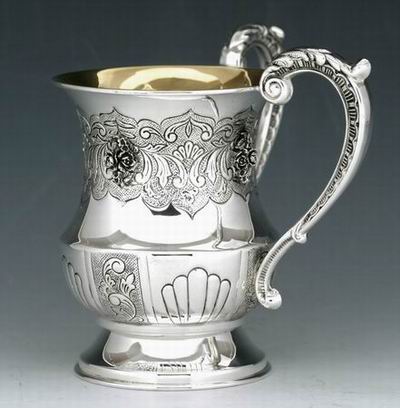
A silver cup for netilat yadayim, the Jewish ritual washing of hands
Readings(New American Bible: Philippines, USA) Readings(Jerusalem
Bible: Australia, England & Wales, India [optional], Ireland, New Zealand,
Pakistan, Scotland, South Africa) Gospel
Mark 7:1-8, 14-15, 21-23(Revised Standard Version –
Catholic Edition) Now when the Pharisees gathered together to him,
with some of the scribes, who had come from Jerusalem, they saw that some of
his disciples ate with hands defiled, that is, unwashed. (For the Pharisees,
and all the Jews, do not eat unless they wash their hands, observing the
tradition of the elders; and when they come from the market place, they do not
eat unless they purify themselves; and there are many other traditions which
they observe, the washing of cups and pots and vessels of bronze.) And the
Pharisees and the scribes asked him, "Why do your disciples not live according
to the tradition of the elders, but eat with hands defiled?"
And he said to them, "Well did Isaiah
prophesy of you hypocrites, as it is written, 'This people honors me with their lips, but their heart is far from me;
in vain do they worship me, teaching as doctrines the precepts of men.'
“You leave the commandment of God, and hold fast
the tradition of men."
And he called the people to him again, and said
to them, "Hear me, all of you, and understand: there is nothing outside a
man which by going into him can defile him; but the things which come out of a
man are what defile him.
“For from within, out of the heart of man, come evil thoughts,
fornication, theft, murder, adultery, coveting, wickedness, deceit,
licentiousness, envy, slander, pride, foolishness. All these evil things come
from within, and they defile a man."
Glory to God in the highest (New English translation)
In the Philippines the new English translation will be fully implemented on the First Sunday of Advent. In the Diocese of Bacolod, where I live, the people's parts are being gradually introduced. We started with 'And with your spirit' in August and this weekend are introducing the 'I confess' and 'Gloria'.
Glory to God in the highest,
and on earth peace to people of good will.
We praise you,
we bless you,
we adore you,
we glorify you,
we give you thanks for your great glory,
Lord God, heavenly King, O God, almighty Father.
Lord Jesus Christ, Only Begotten Son,
Lord God, Lamb of God, Son of the Father,
you take away the sins of the world,
have mercy on us;
you take away the sins of the world,
receive our prayer;
you are seated at the right hand of the Father,
have mercy on us.
For you alone are the Holy One,
you alone are the Lord,
you alone are the Most High,
Jesus Christ,
with the Holy Spirit,
in the glory of God the Father.
Amen.
The website of Corpus Christi Watershed, which produced the video above, is here.
Recently I was speaking to a Filipino seminarian who had worked in Dubai for some years. He had been quite involved in his parish at home and wanted to visit a group of Catholics from Kerala, India, who lived in a labour camp in Dubai. His friends thought he was crazy but he went anyway. He simply wanted to befriend these men whose living conditions he had heard about. What he described was what I've found subsequently in videos such as the one above, which is from an Indian TV station, except that in my imagination I had pictured World War II-type wooden huts instead of big buildings not unlike apartment blocks in large cities. The men made him most welcome. The air inside was just as the reporter in the video described. His hosts were preparing a meal outside their crowded bedroom. They didn't see much need to wash their hands or their utensils and what they were preparing was somewhat more spicy than what Filipinos normally eat. But the young Filipino enjoyed being with his fellow Catholics, whom he knew were his brothers. He could see clearly their living conditions and was able to understand some of their stories. But what struck him most of all was their hospitality. The Pharisees and scribes in today's gospel ask Jesus, Why do your disciples not live according to the tradition of the elders, but eat with hands defiled?
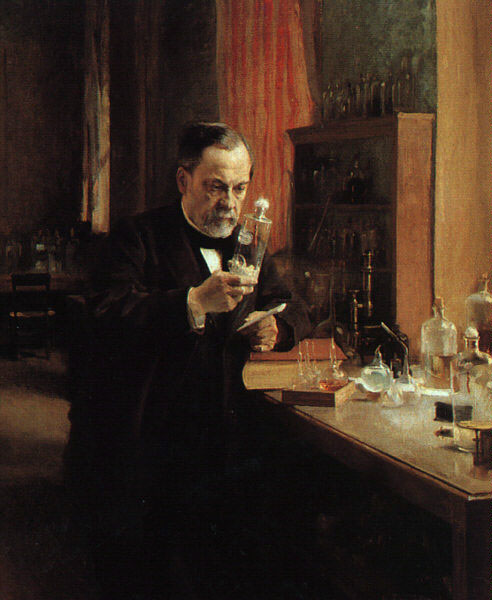
I don't think that Jesusis telling us to be careless with food, in preparing it or eating it. Scientists such as Louis Pasteur have shown us the importance of doctors washing their hands and equipment before surgery, a connection that hadn't been seen before. But what Jesus is on about, I think, is the attitude of someone who would notice that the workers from Kerala in a camp in Dubai didn't wash their hands before cooking and eating and would be critical of them - instead of asking why the washing facilities they shared with so many others were lacking. Someone who would fail to see the overcrowded living quarters and the underpaid workers, separated from their families, being exploited by their employers and by recruiting agencies in their own countries. The situation my young Filipino friend came across in Dubai can be found in many countries. The term 'OFW' is widely used here in the Philippines. It means 'Overseas Filipino Worker'. OFWs are often described by politicians as modern-day heroes. But too few politicians and others are asking why so many, probably a minority in the overall picture but yet a large number of individual real persons, are exploited by some agencies at home and by employers abroad. In reality, these are treated as anything but heroes. Nor is Jesus opposing tradition or traditions. He was a faithful Jew, as were Joseph and Mary and understood their importance. Tradition and traditions, even if we don't know their origins, are basically life-giving. The Pharisees and scribes in today's gospel - not all Pharisees and scribes were like these - have turned them into ways of sucking the lifeblood out of people. Reb Tevye in the extract from Fiddler on the Roof below says, And because of our traditions, every one of us knows who he is. The exploited workers from Kerala, carried with them the tradition of hospitality they had inherited from their ancestors and welcomed a stranger from the Philippines in Dubai. Despite their appalling conditions they knew who they were. They lacked freedom in so many ways but they had the freedom to be welcoming. Hospitality is one of the most cherished experiences in the Bible, in both the Old and New Testaments. It is cherished in every culture and it is at the heart of following Jesus, who showed hospitality to others, rich and poor, and who graciously accepted it from others, rich and poor. Indeed, he was sometimes criticised for eating with the poor, as he is in today's gospel because his companions didn't wash their hands. I don't know if the workers from Kerala whom my friend met had a chance to go to Mass - he did as he lived very near a church. But the Prayer after Communion today fits in with their meeting in Dubai. Renewed by this bread from the heavenly table, we beseech you, Lord, that, being the food of charity, it may confirm our hearts and stir us to serve you in our neighbour. Through Christ our Lord.
The second reading in the
Office of Readings for the feast of St Monica
(332-387) always brings a smile to my face and leads me to ask,
‘Was St Monica an “Irish mother”?’ St Augustine’s brother had said to their
mother when she was dying that it might be better if she died in her homeland in
north Africa, rather than in Italy. The extract from St Augustine’s Confessions
goes on: But as she heard this she looked at me and said: ‘See the way he
talks’. And then she said to us both: ‘Lay this body where it may be. Let no
care of it disturb you: this only I ask of you that you should remember me at
the altar of the Lord wherever you may be’. The latter part of
the last quotation appears on innumerable memorial cards and I don’t know of a
better request for prayers for the dead. But it’s the ‘See the way he talks’
that makes me smile. Many’s the time I heard my own mother – and other Irish
mothers – say, nearly always in a family-type context, ‘Did you ever hear such
nonsense?’ It’s the kind of thing that only people intimately related can say to
one another, conveying gentle criticism/a reprimand and affection at the same
time.
A variation of St Monica’s request is on the memorial card of
my own mother, Mary who, like the saint, died at the age of 55: ‘All I ask of
you is that you will remember me at Mass and Holy Communion’.
Remember, Monica, my mother May
Monica, my mother, rest in peace with her husband, before whom and after whom
she was given in marriage to no man. She dutifully served him, bringing forth
fruit to you with much patience, that she might also win him to you. Inspire, O
Lord my God, inspire your servants my brethren, your children my master, whom I
serve with my voice, my heart, and my writings, that as many of them as read
these words may remember at your altar your handmaid, Monica, together with
Patricius, formerly her husband, by whose flesh you brought me into this life,
how I know not. May they with a pious affection remember them who were my
parents in this transitory light, my brethren under you, our Father in our
Catholic mother, and my fellow citizens in the eternal Jerusalem, for which your
pilgrim people here below continually sigh from their setting out until their
return, so that my mother's last request of me may be more abundantly granted by
her through the prayers of many, occasioned by my confessions, rather than
through my own prayers.
I was quite astonished some years ago reading an article in a
scholarly Catholic magazine published in the USA lamenting that so many Catholic
parents weren’t choosing truly Christian names for their children anymore. One
example given was ‘Austin’. Clearly, the author was unaware that this is a
common variation of ‘Augustine’, used especially in Ireland and in Britain.
Indeed, the Augustinian Friars are often referred to in England as ‘The Austin
Friars’.
When I was in primary school one of our juvenile jokes was: ‘Who
is the patron saint of car manufacturers? St Monica, because she had a Baby
Austin’. The ‘Baby Austin’ was a small family car produced very successfully in
England between 1922 and 1939. At least we knew who St Monica and St Augustine
were. I’m not sure about young people in Ireland today.
Readings(New American Bible: Philippines, USA) Readings(Jerusalem
Bible: Australia, England & Wales, India [optional], Ireland, New Zealand,
Pakistan, Scotland, South Africa) Gospel
John 6:60-69 (Revised Standard
Version – Catholic Edition)
Many of the disciples of Jesus, when they heard it, said,
"This is a hard saying; who can listen to it?" But Jesus, knowing in
himself that his disciples murmured at it, said to them, "Do you take offense
at this? Then what if you were to see the Son of man ascending where he was
before? It is the spirit that gives life, the flesh is of no avail; the words
that I have spoken to you are spirit and life. But there are some of you that
do not believe." For Jesus knew from the first who those were that did not
believe, and who it was that would betray him. And he said, "This is why I
told you that no one can come to me unless it is granted him by the
Father." After this many of his disciples drew back and no longer went
about with him. Jesus said to the twelve, "Do you also wish to go
away?" Simon Peter answered him, "Lord, to whom shall we go? You have
the words of eternal life; and we have believed, and have come to know, that you
are the Holy One of God."
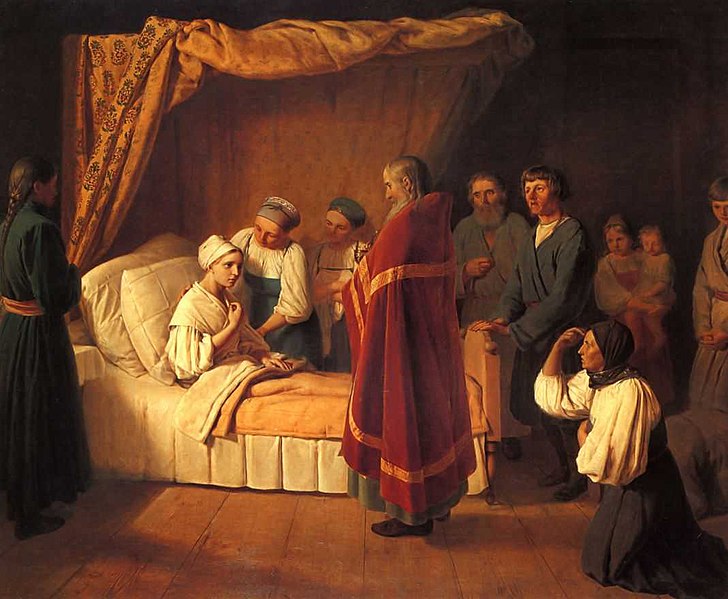
Some time before Easter 1993 when I was in the relatively remote parish of Lianga, Surigao del Sur, on the east coast of Mindanao, one of our volunteer catechists came on a Saturday afternoon to tell me that her father was asking for the Bread of Life. She told me he was fully conscious. I went immediately to the house, heard his confession, gave him the Sacrament of the Sick and Holy Communion in the presence of his family. The man himself participated fully and joyfully.
I discovered that his family was somewhat unusual. He had been widowed twice and married three times. There were children from his three marriages there, some with their children, including a babe in arms.
At the end of the celebration of the three sacraments I asked those who were closest to the sick person to lay hands on him so that we could continue with our own prayer over him. But he turned this into something far more beautiful. He took his youngest grandchild to his breast and embraced him before embracing each of his family who were present. It was an occasion where the joy was tangible.
It is not usual in the Philippines to offer the priest something to eat when he goes on a sick call. But on this occasion the family did and it was fitting.
Next morning, before Sunday Mass, the catechist came to tell me that her father had just died. along with her sadness she felt greatly consoled because her father had received the Bread of Life as his last meal before he died.
During these last five Sundays the Church has been proclaiming Chapter Six of St John's Gospel when Jesus teaches us very clearly that he is the Bread of Life. The Church has always understood that each time we celebrate the Eucharist the bread and wine, through the power of the Holy Spirit working in the priest, who is called to be an alter Christus, another Christ, become the Body and Blood of Christ. As the Catechism of the Catholic Church No 1374 teaches, In the most blessed sacrament of the Eucharist 'the body and blood, together with the soul and divinity, of our Lord Jesus Christ and, therefore, the whole Christ is truly, really, and substantially contained'.
There were many listening to Jesus who couldn't accept his teaching. This is a hard saying; who can listen to it? many asked. They walked away, probably in good faith. But when Jesus asked the twelve, Do you also wish to go away? Peter answered on behalf of the group, Lord, to whom shall we go? You have the words of eternal life; and we have believed, and have come to know, that you are the Holy One of God.
Our faith is pure gift from God, not a reward for 'being good'. It is a gift that a person may lose. It is a gift that a whole community may lose. It would seem that in the last few decades that gift has been lost by many in the Western world, places such as Ireland, Belgium, the Netherlands, Quebec, all of them sending missionaries to the ends of the earth until recently and now with their seminaries empty and their churches bereft of young people on Sundays.
Our faith, especially our faith in the Eucharist, is something we must thank God for each day. In my Reflections for the 15th Sunday I featured a video of an 87-year-old priest, Fr Ralph Beiting, preaching on a street last summer in Kentucky. I learned only last Sunday that Father Beiting died after a short illness on 9 August. On the website of the Father Beiting Appalachian Mission Center there is a recording of him saying, It’s not been an easy road. It’s been for a little hardship, headaches, anxieties and the desire to quit. But the joy has been overwhelming, to be able to say Mass every day in these hills and offer it up for the good and benefit of its people. That gives me power that I never have any other way. Father Beiting made his own the choice his bishop made for him more than 60 years ago when he assigned the young priest to an area as big as the state of Rhode Island in eastern Kentucky, an area where there was widespread poverty among both black and white people, an area where there were only a handful of Catholics, an area where there was great ignorance about Catholics. Father Beiting once told me that when he built the church in Mount Vernon, where I served during Holy Week and Easter Week in 1970, he deliberately had clear windows from the ground up so that people could see that Catholics didn't sacrifice children, that they didn't have cloven hooves. I think that those days have long gone, largely because of the daily choices Father Beiting made to be a faithful priest, working for all the people, working so that each family could put bread on the table each day, working so that the Catholics could receive the Bread of Life every Sunday, working so that others might see the truth of the Catholic faith. The first reading today is about making a choice for God. Jesus asks each of us directly to make a choice: Do you also wish to go away? My parishioner in an out of the way place in the Philippines knew the choice he should make before he died: to ask for the Bread of Life.
Communio
Qui manducat carnem meam et bibit sanguinem meum in me maneat, et eo in ego, dicit Dominus.