16 October 2014

Irish Presidential Distinguished Service Award for Columban Fr PJ McGlinchey


It has just been announced that Columban Fr PJ McGlinchey has been named as one of the recipients of a Presidential Distinguished Service Award for 2014 . He will be presented with the award by Irish President Michael D Higgins at a ceremony later this year. Fr McGlinchey's baptismal names are Patrick James but he is known to everyone as 'PJ'.

Fr McGlinchey, a native of County Donegal, Ireland, has spent his missionary life on Jeju [formerly 'Cheju'] Island about 130 kms off the southern coast of South Korea. The citation for his award reads:

Arriving in Jeju, Korea in 1954 Fr McGlinchey, a priest with the Missionary Society of St Columban, was faced with a society that was deeply traumatised and ravished by poverty. Lead by his faith and knowledge in agriculture he set about helping to pull thousands of Jeju citizens out of poverty.

His model of development and profitable farming encouraged use of underused farm land and new farming methods. St Isidore farm was founded to include pigs, sheep, cows and now a stud.


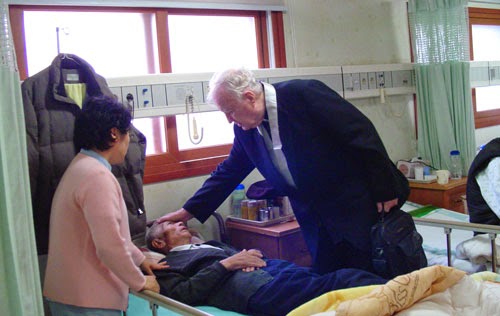
Fr McGlinchey with a sick person in Korea

A textile factory, employed up to 1,700 Jeju women in a time when jobs on the island were scarce. His forming of a credit union changed the economy of the island and helped the citizens emerge from poverty.

Fr Mc Glinchey never forgot the island people setting up Isidore Nursing home, hospice, kindergarten and a youth centre which for over 18,000 young people from all over Korea. These welfare activities, some funded completely from donations and profits from the farm, take care of Jeju's most vulnerable.

For 60 years, his extraordinary drive, dedication and vision has changed the lives of those on Jeju and Ireland is now associated with this great island. His tireless dedication gave them not just hope but a belief in what they could achieve themselves.

You can read more about the work of Fr McGlinchey here.


President Ramon Magsaysay 
(31 August 1907 - 17 March 1957) [Wikipedia]

In 1975 Fr McGlinchey was one of the Ramon Magsaysay awardees in Manila. His award was for Rural Development. The website of the Ramon Magsaysay Award Foundation has a biographical page on the priest here. The foundation was set up to honour President Ramon Magsaysay of the Philippines who died in a plane crash in the Philippines on St Patrick's Day, 17 March 1957. 

The website of the Isidore Farm founded by Fr McGlinchey is here. It is named after St Isidore the Farmer, widely venerated in the Philippines as San Isidro Labrador or simply, San Isidro.

San Isidro (c.1070 - 15 May 1130) and his wife Blessed Maria Torribia


Source of report: Website of Columbans, Ireland.

13 October 2014

Opening of the Jubilee Year to mark the 1400th anniversary of the death of Saint Columbanus.

Statue of St Columbanus in Luxeuil, France
Yesterday morning, 12 October, Cardinal Seán Brady, retired archbishop of Armagh, Ireland, was the Principal Celebrant at Mass at the Church of Santa Maria sopra Minerva, Rome, at the opening of the Jubilee Year to mark the 1400th anniversary of the death of Saint Columbanus. The Irish missionary saint, also known as 'Columban', died in Bobbio in northern Italy, on 23 November 1615. He is the patron saint of the Missionary Society of St Columban, formally established in 1918, to which I belong.
Cardinal Seán Brady [Wikipedia]
Pope Francis greeted the pilgrim group marking the centenary at the end of his address today after praying the Angelus.
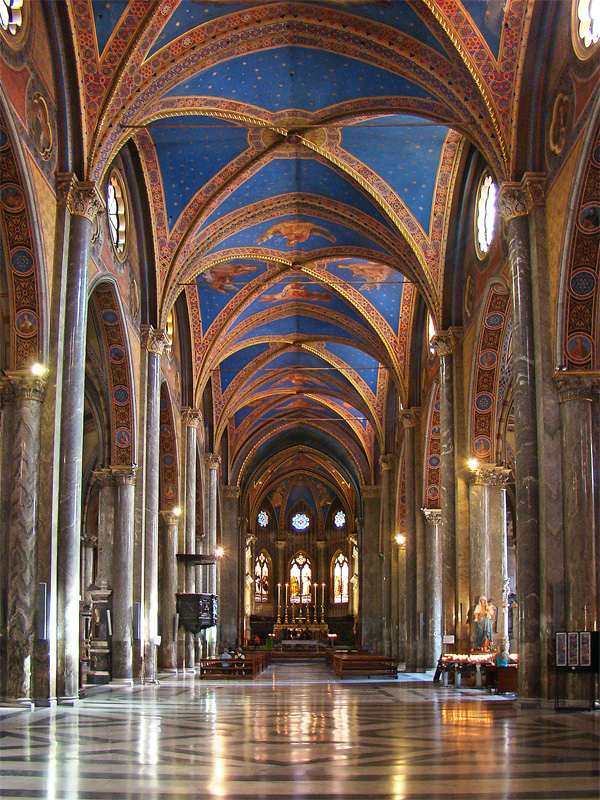
Interior of Santa Maria sopra Minerva, Rome [Wikipedia]
Here is the homily of Cardinal Brady, published in Zenit. 
I am very pleased to see you all here in Rome, in this beautiful Church of Santa Maria Sopra Minerva.  We are here to celebrate the opening of the Jubilee Year of Saint Columbanus. The Jubilee Year commemorates the 1400th anniversary of the death of that great monk and missionary, who died in Bobbio in AD615. 
The Jubilee Year was opened yesterday in the Basilica of Saint John Lateran, after the arrival and solemn reception of the relics of the saint from Bobbio, followed by a Mass, celebrated by Cardinal Vallini, Vicar General of Pope Francis for the Diocese of Rome. 
Monastery ruins at Annegray, France [Wikipedia]
In a sense, the ceremony brought closure finally to the earthly pilgrimage of Columbanus who ardently desired to reach Rome, but failed to do so since he died at Bobbio – a diocese and a city which not only preserves his mortal remains, but admirably keeps alive his memory, example and spirit to this day.
In fact, we Irish are profoundly touched by the fact that so many parishes in Italy and elsewhere, so reverently keep alive the memory of Columbanus – an outstanding monk and missionary and saint.
Basilica of San Colombano, Bobbio, Italy [Wikipedia]
I remember the first time I visited Bobbio – some 50 years ago and the warm welcome we received - simply because we were Irish.  I remember the bunch of fresh flowers placed on his tomb – clear proof that someone, with a grateful heart, after all the centuries, had remembered the poor abbot – come from a distance to announce the Good News. 
But what has Columbanus to say to us – citizens of the third millennium – after fourteen centuries?  Sure, Columbanus is far distant from us in time and space, but the relevance of his thought and spirituality is extraordinary.  This was underlined by Saint John Paul II in a message to the people of Luxeuil in 1990 to commemorate the foundation of the monastery there by Columbanus fourteen hundred years earlier when the Holy Father wrote: 
You are recalling a past that is still alive and recognising the gift, given by God, to the Church, in the person of great pioneers like Saint Columbanus.  For the Lord has marvellously combined in Saint Columbanus, love of evangelisation, devotion to monastic life and the fullness of human dignity.
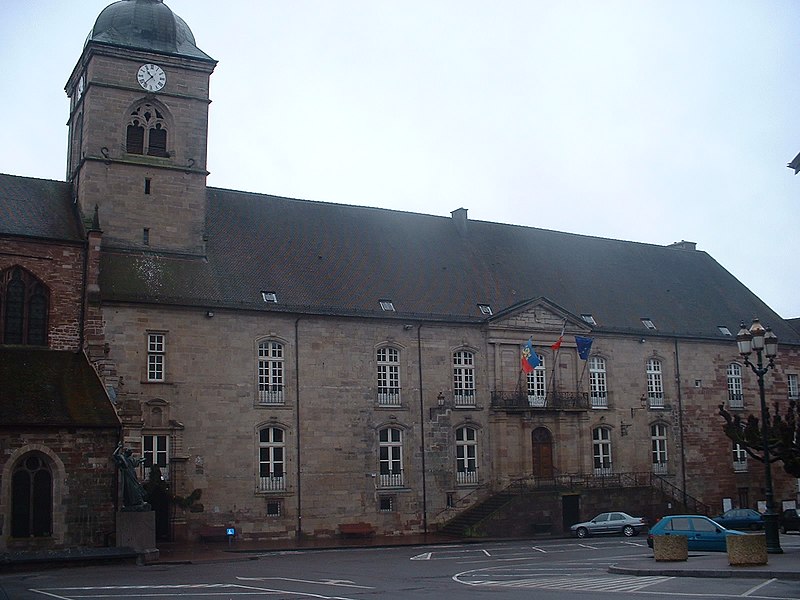
Abbatial Palace, Luxeuil, France [Wikipedia]
In this Mass of Thanksgiving, we too express our gratitude to God for the gift of the faith and for the goodness of all those who played any part in handing onto to us the Good News.
To help us to do so better, we recall the example of Columbanus.  During the long years of being a monk in the monastery of Bangor and earlier in Cleenish – it obviously became clear to him that, in every age, the Church is called to make all its members disciples and missionaries of Christ – Christ who is the way – the truth and the life.  So he sought the permission of his Abbot – the renowned Comgal - to leave the Monastery of Bangor and to set out as a pilgrim for Christ.  Abbot Comgall eventually agreed and so it was that Columbanus set out, on his missionary journey, accompanied by twelve brothers from the community.  So there began the long journey which would take them first to present-day France, then Germany, Switzerland, Austria and finally to Bobbio in Italy.  It was the summer of 592 – Columbanus would have been fifty years of age and rather old for such an adventure in conditions of those days. 
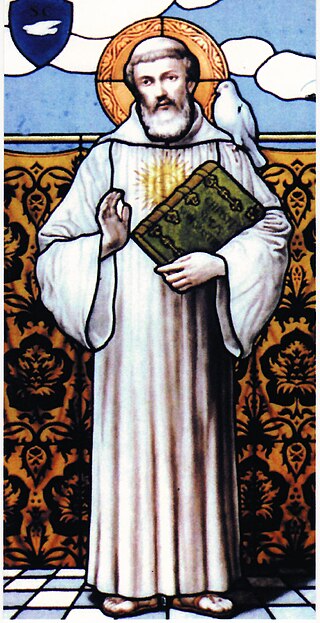
St Columbanus, stained glass window, Bobbio Abbey crypt [Wikipedia]
Over the next twenty years he founded a number of monasteries:  Annagray and Luxeuil, in France; Bregenz in Austria and Bobbio here in Italy.
Saint John Paul II often called for a new evangelisation of Europe after the decline in faith of recent decades.  Saint Columbanus could be seen as a model and a patron of this new evangelisation.  His missionary work could also be described as a second, and new, announcing of the Good News after the damage inflicted by the invasions from abroad and by the fall of the Roman Empire in the West.  Columbanus and his monks brought the light of faith to people who, themselves, in turn became evangelisers until Europe became, once more, a Christian continent. 
Everywhere he went, Columbanus remained devoted to the monastic way of life.  He founded monasteries; he wrote his own Monastic Rule.  It can be truly said that the ways opened up through Europe, and the monasteries founded by him, were often the places where, later on, the Benedictine rule would flourish.  With Saint Benedict, he helped to lay the basis for the European Monasticism of the Middle Ages.
The rule of Columbanus recommended that the monks should confess privately, and often, to one particular confessor. It was an effort to address the crisis that flowed from having only public confessions which were rarely celebrated more than once in a lifetime.  Perhaps he has something to say to all of us today on that topic.
Columbanus loved the monastic life of prayer and contemplation; the silence and the solitude; the fasts and the penance.  He would have seen them not alone as the golden way to a closer union with God but also as the indispensable pre-requisite of successful conversion and the winning of hearts and minds to the following of Christ. 
It is the same spirituality that saw Saint Thérèse become the Patroness of the Missions because of her prayers and sacrifices on behalf of the missions.  There can be no renewal of faith that is not preceded by a renewal of prayer because to evangelise is to transmit life and is the fruit of holiness.
Bregenz, Austria [Wikipedia]
In Saint Peter’s Basilica there is a mosaic dedicated to Saint Columbanus.  It bears the inscription – If you take away freedom you take away dignity.  The phrase is taken from one of the letters of Columbanus.  Indeed it is something that could have been written, not only by a seventh century missionary, but also by a citizen of today’s world, where so many people live in terrible conditions of slavery, fear and oppression.  In addition to the ancient forms of oppression such as war, poverty, loneliness, violence and exile, the modern world has new forms of slavery such as drug and alcohol addition, which are particularly destructive of human dignity.
The glory of God is the human person – fully alive.  Columbanus succeeded in uniting faith with human dignity and freedom.  These are the values on which, for centuries, the identity of Europe was founded and without which the Europe of today risks failing to have a future. May the jubilee year of Saint Columbanus, as well as his life and his writings, inspire all of us to strive for the defence of basic human rights for all.
We make our own the prayer of Saint John Paul II who, writing to the people of Luxeuil, expressed the hope that all who would commemorate the great founder of their famous abbey would be spurred to even greater fidelity to Christ and enthusiasm for His Kingdom.
My hope and prayer is: that by participating in this pilgrimage and Jubilee celebrations, and through the intercession of Saint Columbanus, we may all draw closer to Christ – the way, the truth and the life.                           
AMEN
Statue of St Columban, St Columban's, Bristol, RI, USA

10 October 2014

‘Go . . . and invite everyone you find to the wedding banquet.' Sunday Reflections, 28th Sunday in Ordinary Time Year A

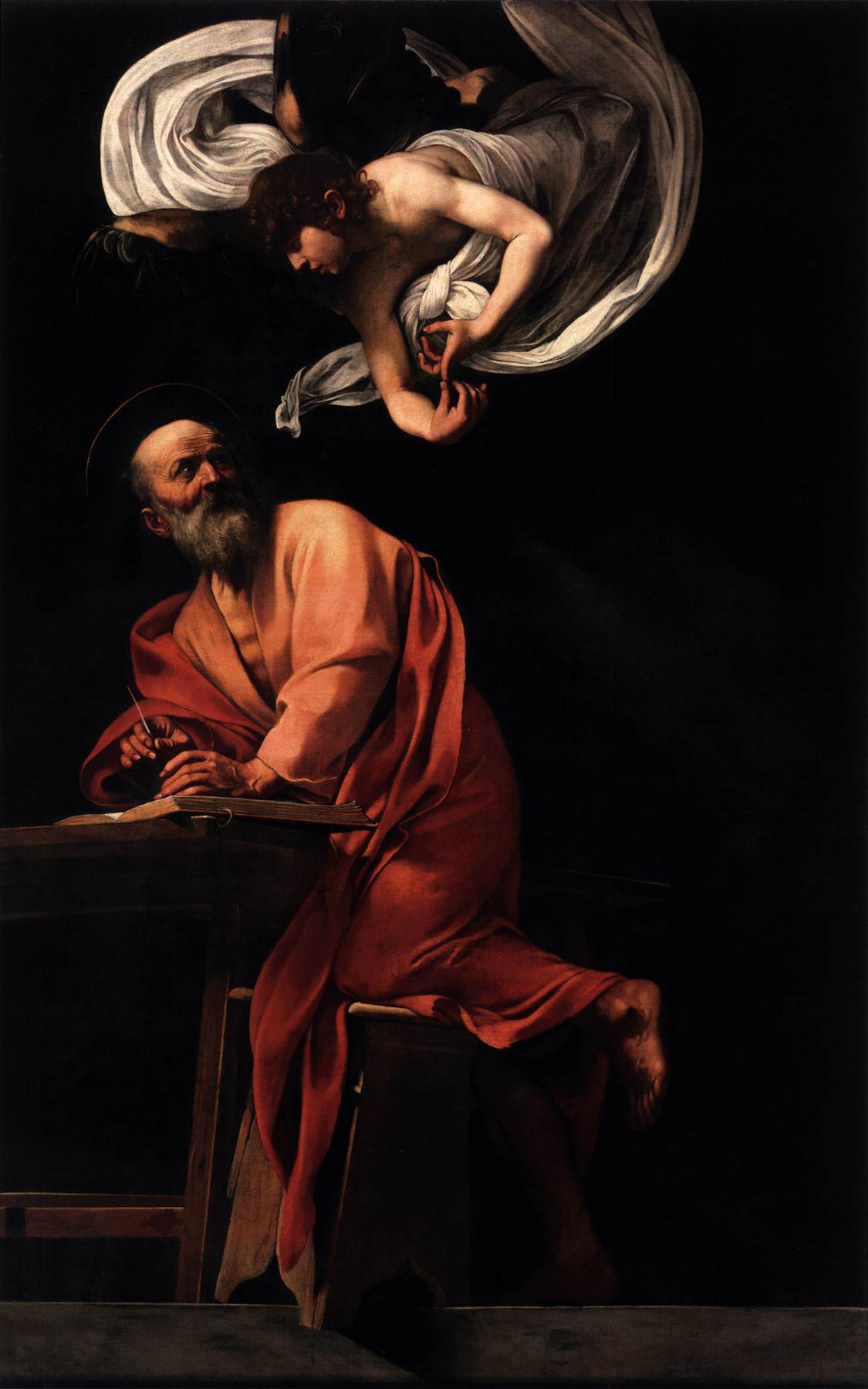
Contarelli Chapel, San Luigi dei Francesi, Rome [Web Gallery of Art]

Readings (New American Bible: Philippines, USA)

Readings (Jerusalem Bible: Australia, England & Wales, India [optional], Ireland, New Zealand, Pakistan, Scotland, South Africa)

Gospel Matthew 22:1-14 [or 22:1-10] (New Revised Standard Version, Catholic Edition: Canada) 

Jesus said to the chief priest and the elders of the people:

“The kingdom of heaven may be compared to a king who gave a wedding banquet for his son. He sent his slaves to call those who had been invited to the wedding banquet, but they would not come. Again he sent other slaves, saying, ‘Tell those who have been invited: Look, I have prepared my dinner, my oxen and my fat calves have been slaughtered, and everything is ready; come to the wedding banquet.’ But they made light of it and went away, one to his farm, another to his business, while the rest seized his slaves, mistreated them, and killed them. The king was enraged. He sent his troops, destroyed those murderers, and burned their city. Then he said to his slaves, ‘The wedding is ready, but those invited were not worthy. Go therefore into the main streets, and invite everyone you find to the wedding banquet.’ Those slaves went out into the streets and gathered all whom they found, both good and bad; so the wedding hall was filled with guests.
[“But when the king came in to see the guests, he noticed a man there who was not wearing a wedding robe, and he said to him, ‘Friend, how did you get in here without a wedding robe?’ And he was speechless. Then the king said to the attendants, ‘Bind him hand and foot, and throw him into the outer darkness, where there will be weeping and gnashing of teeth.’ For many are called, but few are chosen.”]


Antiphona ad introitum     Entrance Antiphon  Ps 129 [130]:3-4
Si iniquitates observaveris, Domine, Domine, quis sustinebit?
Quia apud te propitiatio est, Deus Israel.
De profundis clamavi ad te Domine: Domine exaudi vocem meam.
Gloria Patri, et Filio, et Spiritui Sancto; sicut erat in principio, et nunc et semper. Amen.

Si iniquitates observaveris, Domine, Domine, quis sustinebit?
Quia apud te propitiatio est, Deus Israel.

If you, O Lord, should mark iniquities, Lord, who could stand?
But with you is found forgiveness, O God of Israel.

Out of the depths I cry to you, O Lord. Lord, hear my voice!
Glory to the Father, and to the Son, and to the Holy Spirit;
as it was in the beginning, is now and will be for ever. Amen.

If you, O Lord, should mark iniquities, Lord, who could stand?
But with you is found forgiveness, O God of Israel.

[The longer form is used when Mass is celebrated in the Extraordinary Form, using the 1962 Missal.]

A swing made from tyres in East Timor [Wikipedia]
A friend of mine who has three young daughters and a fourth child on the way and who now lives in California posted on her Facebook the other day that the authorities in some school are removing the swings from its playground because they are 'dangerous' for children. I wonder if the committee in the Vatican who drew up the Lectionary we have been using since 1969 thought that some of the words of Jesus might be 'dangerous' for us since they have given us the option today of leaving out the last four verses of the Gospel [in square brackets above].
In Matthew 3:7 Jesus addresses some Pharisees and Sadducees with the words, You brood of vipers!, which he repeats in 12:34 and in 23:34 he's even more scathing: You snakes, you brood of vipers! How can you escape being sentenced to hell?
The words of Jesus aren't always 'nice'. And not all the words in the homily of Pope Francis last Sunday at the Holy Mass for the opening of the Extraordinary Synod on the Family were 'nice'. Addressing the assembled participants, mostly bishops, he said, And to satisfy this greed, evil pastors lay intolerable burdens on the shoulders of others . . . We are all sinners and can also be tempted to 'take over' the vineyard, because of that greed which is always present in us human beings. God’s dream always clashes with the hypocrisy of some of his servants. We can 'thwart' God’s dream if we fail to let ourselves be guided by the Holy Spirit. 

Still-life, Floris Claesz van Dijck, 1610
Private collection [Web Gallery of Art]
The First Reading and the Gospel speak clearly of God's desire for all of us to be with him, sharing in the abundance of his riches, symbolized in both readings by a lavish banquet.
President Ramon Magsaysay (died 1957) of the Philippines wearing a barong Tagalog [Wikipedia]

Nearly 30 years ago I officiated at a wedding in Sacred Heart Church, Cebu City. The reception was held next door at a centre attached to the church, which belongs to the Jesuits. At the reception I noticed an elderly man wearing a barong Tagalog, which is formal dress for men in the Philippines, especially at weddings. But it turned out that nobody knew him. He wasn't a guest, but had invited himself along. As there were weddings almost every day at Sacred Heart Church I figured that maybe he invited himself along whenever the reception was held at the adjacent centre.

But nobody minded. Filipinos are hospitable and nobody is ever turned away. Many of us were amused and I had noticed the man at Mass. In other words, he wasn't a freeloader but participated in the wedding ceremony, something that many invited to weddings an baptisms don't do. They just turn up for the meal.

The harsh words of Jesus, which I suspect many priests won't read at Mass, jolt us out of our complacency. The man who turned up at the banquet without bothering to dress for the occasion clearly thought that cultural norms and good manners didn't apply to him. It's not a crime to turn up at a wedding or some similar event dressed casually but to do so shows a lack of respect for the celebrants and for oneself.

However, in the parable, Jesus isn't telling us to be 'nice' and well-mannered. He's telling us forcefully that in order to share in the 'dream' that he and our heavenly Father have for us we have to do the Father's will. Pope Francis referred to this in the closing words of his homily: My Synod brothers, to do a good job of nurturing and tending the vineyard, our hearts and our minds must be kept in Jesus Christ by 'the peace of God which passes all understanding' (Phil 4:7). In this way our thoughts and plans will correspond to God’s dream: to form a holy people who are his own and produce the fruits of the kingdom of God (cf. Mt 21:43).

We have to make choices. We often choose to sin. God is merciful, bending down to welcome us back, to acknowledge our sins and to ask for and receive his forgiveness. Jesus has given the Church the wonderful Sacrament of Reconciliation/Confession/Penance, precisely so that he can meet us in our sinfulness, forgive and heal us. And the Church teaches us clearly that when we have committed a grave sin we must avail of that sacrament. By the same token, he wants us priests to be available for penitents and to go to confession  regularly ourselves.

When God gave us the gift of freedom he also placed some 'swings' in our 'playground', knowing that we would sometimes fall and 'graze our knees' or even hurt ourselves more seriously. He didn't protect us from all possible eventualities. Had he done so he would have made prisoners of us. He invites us to his heavenly banquet, paid for by the sacrifice of his Son on Calvary.

In the parable the king's servants went out into the streets and gathered all whom they found, both good and bad; so the wedding hall was filled with guests. Both good and bad had a sense of being blessed and honoured by the invitation, except for one - we don't know if he was one of the 'good' or one of the 'bad' - with an insolent sense of entitlement rather than a wondrous sense of being graced.

The Two Trinities, Murillo, 1675-82
National Gallery, London [Web Gallery of Art]

Jesus, Mary and Joseph,
in you we contemplate
the splendor of true love,
to you we turn with trust. 
Holy Family of Nazareth,
grant that our families too
may be places of communion and prayer,
authentic schools of the Gospel
and small domestic Churches.
Holy Family of Nazareth,
may families never again
experience violence, rejection and division:
may all who have been hurt or scandalized
find ready comfort and healing. 
Holy Family of Nazareth,
may the approaching Synod of Bishops
make us once more mindful
of the sacredness and inviolability of the family,
and its beauty in God's plan. 
Jesus, Mary and Joseph,
graciously hear our prayer.


08 October 2014

The Rosary with the Great Painters: the Glorious Mysteries

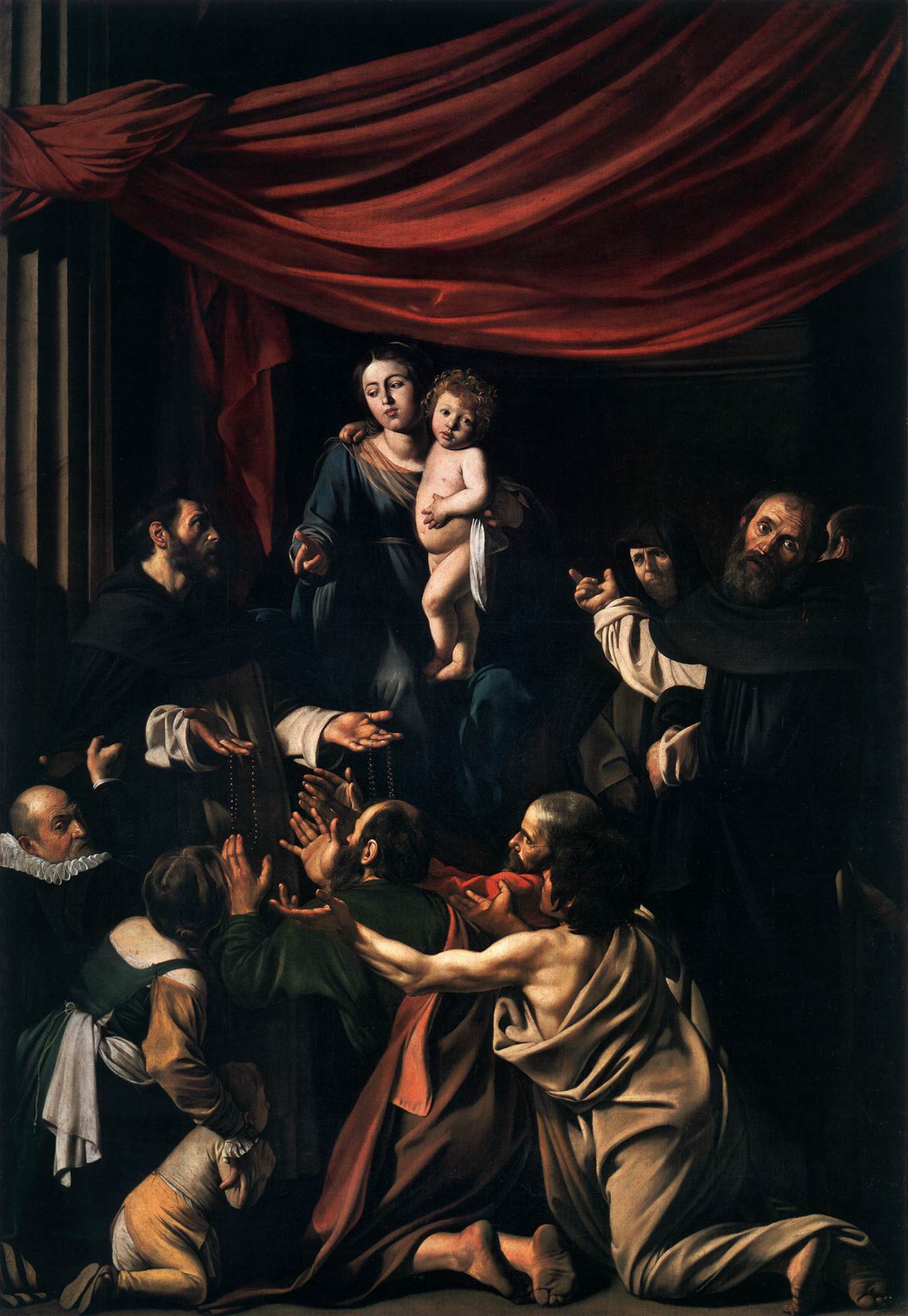
Madonna del Rosario, Caravaggio, c. 1607
Kunsthistorisches Museum, Vienna

'In this process of being conformed to Christ in the Rosary, we entrust ourselves in a special way to the maternal care of the Blessed Virgin. She who is both the Mother of Christ and a member of the Church, indeed her “pre-eminent and altogether singular member”, is at the same time the “Mother of the Church”. As such, she continually brings to birth children for the mystical Body of her Son. She does so through her intercession, imploring upon them the inexhaustible outpouring of the Spirit. Mary is the perfect icon of the motherhood of the Church.' [St John Paul II, Rosarium Virginis Mariae, No 15.]

The Rosary here is the formula prayed by members of the Legion of Mary, the way I prefer. There are various ways of beginning and ending the Rosary but the Five Mysteries are the heart of the prayer. The most common formula of the Rosary is here.

In the name of the Father, and of the Son, and of the Holy Spirit. Amen. 

Come, O Holy Spirit, fill the hearts of Your faithful, and enkindle in them the fire of Your love.

v. Send forth Your Spirit, O Lord, and they shall be created.

R. And You shall renew the face of the earth.

Let us pray.

God our Father, pour out the gifts of Your Holy Spirit on the world. You sent the Spirit on Your Church to begin the teaching of the gospel: now let the Spirit continue to work in the world through the hearts of all who believe. Through Christ our Lord. Amen.

v. You, O Lord, will open my lips.

R. And my tongue shall announce Your praise.

v. Incline unto my aid, O God.

R. O Lord, make haste to help me.

v. Glory be to the Father, and to the Son and to the Holy Spirit;

R. As it was in the beginning, is now, and ever shall be, world without end. Amen. 

The Glorious Mysteries (Sunday and Wednesday)

First Mystery
The Resurrection
The Resurrection of Christ, Rembrandt, c.1639
Alte Pinakothek, Munich

Our Father, ten Hail Marys, Glory be

Second Mystery
The Ascension
The Ascension of Christ, Rembrandt, c.1636
Alte Pinakothek, Munich

Our Father, ten Hail Marys, Glory be

Third Mystery
The Descent of the Holy Spirit
Pentecost, El Greco, 1596-1600
Museo del Prado, Madrid

Our Father, ten Hail Marys, Glory be

Fourth Mystery
The Assumption
The Assumption of the Virgin, El Greco, 1577
Art Institute, Chicago

Our Father, ten Hail Marys, Glory be

Fifth Mystery
Crowning of Our Lady as Queen of Heaven
The Coronation of the Virgin, Velásquez, 1645
Museo del Prado, Madrid


Our Father, ten Hail Marys, Glory be


Hail, Holy Queen, Mother of Mercy; hail, our life, our sweetness and our hope. To you we cry, poor banished children of Eve, to you we send up our sighs, mourning and weeping in this valley of tears. Turn then, O most gracious advocate, your eyes of mercy towards us, and after this our exile, show us the blessed fruit of your womb, Jesus. O clement, O loving, O sweet Virgin Mary.

v. Pray for us, O holy Mother of God.

R. That we may be made worthy of the promises of Christ.


Let us pray.

O God, Whose only-begotten Son, by His life, death and resurrection, has purchased for us the rewards of eternal salvation; grant, we beseech You, that meditating upon these mysteries in the most holy Rosary of the Blessed Virgin Mary, we may imitate what they contain, and obtain what they promise. Through the same Christ our Lord.

Amen. 


v. Most Sacred Heart of Jesus

R. Have mercy on us.
v. Immaculate Heart of Mary
R. Pray for us.
v. St Joseph
R. Pray for us.
v. St John the Evangelist
R. Pray for us.
v. St Louis-Marie deMontfort
R. Pray for us. 

In the name of the Father, and of the Son, and of the Holy Spirit. Amen. 


Regina Caeli

V. Regina caeli, laetare, alleluia.
R. Quia quem meruisti portare, alleluia.
V. Resurrexit, sicut dixit, alleluia.
R. Ora pro nobis Deum, alleluia.


[V. Gaude et laetare, Virgo Maria, alleluia.
R. Quia surrexit Dominus vere, alleluia.


Oremus. Deus, qui per resurrectionem Filii tui, Domini nostri Iesu Christi, mundum laetificare dignatus es: praesta, quaesumus; ut per eius Genetricem Virginem Mariam, perpetuae capiamus gaudia vitae. Per eundem Christum Dominum nostrum. Amen.]

Queen of Heaven

V. Queen of Heaven, rejoice, alleluia.
R. For He whom you did merit to bear, alleluia.
V. Has risen, as he said, alleluia.
R. Pray for us to God, alleluia.

[V. Rejoice and be glad, O Virgin Mary, alleluia.
R. For the Lord has truly risen, alleluia.

Let us pray. O God, who gave joy to the world through the resurrection of Thy Son, our Lord Jesus Christ, grant we beseech Thee, that through the intercession of the Virgin Mary, His Mother, we may obtain the joys of everlasting life. Through the same Christ our Lord. Amen.]

The first part of Regina Caeli is sung at the end of Compline (Night Prayer) during the Easter Season. The complete prayer is recited instead of the Angelus during that period.


The Lord's Prayer

Our Father, who art in heaven,
hallowed be thy name;
thy kingdom come,
thy will be done
on earth as it is in heaven.
Give us this day our daily bread,
and forgive us our trespasses,
as we forgive those who trespass against us;
and lead us not into temptation,but deliver us from evil.
Amen.

Hail Mary

Hail Mary,

Full of Grace,
The Lord is with you.
Blessed are you among women,
and blessed is the fruit
of your womb, Jesus.
Holy Mary,
Mother of God,
pray for us sinners now,
and at the hour of our death.
Amen.

Glory be to the Father

Glory be to the Father,
and to the Son,
and to the Holy Spirit:
As it was in the beginning,
is now,
and ever shall be,
world without end.
Amen.


All paintings from Web Gallery of Art