Since we are travellers and pilgrims in the world, let us ever ponder on the end of the road, that is of our life, for the end of our roadway is our home (St Columban, 8th sermon).
The following report was sent by Columban Fr Liam O'Callaghan in Pakistan.
On Sunday morning, March 15 there were two suicide attacks on two Churches in Yohannabad, Lahore – St. John’s Catholic Church and Christ Church Protestant Church, in which 15 were killed and over 70 injured. The first attack was on St John’s but it could have been much worse as the security guards stopped the attackers who detonated the bomb outside the gate. A few minutes later the second attack happened at Christ Church which is only a short distance away. People at the church claim that two of the three Government police on duty were actually at a nearby shop watching the Pakistan-Ireland World Cup cricket game and as a consequence the bomber got further into the church compound and most of the deaths and injuries were at Christ Church.
Violent protests erupted after the blasts, with a mob killing two men accused of involvement in the attacks and news reports also claimed the mob set their bodies on fire. There is deep anger in the Christian community at the Government’s failure to protect minorities, especially in the aftermath of the suicide bomb attack in All Saints Church, Peshawar on 22 September 2013 in which 83 people were killed. There were protest marches by Christians in other cities all over the country on Sunday.
Pakistani Prime Minister Nawaz Sharif and President Mamnoon Hussain have condemned the latest bombings. The Government also announced compensation for the victims – Rupees 500,000 (US$5,000) to each of the families of those who were killed and Rupees 75,000 (US$750) each for those injured,
Nabila Ghazanfar, a spokeswoman for the Punjab police, said the deaths from the attack on Sunday included 13 worshipers, two police officers deployed for security outside the churches and the two suspects beaten to death by the mob, in addition to the two bombers. Dr Muhammad Saeed, the chief doctor at Lahore General Hospital, where scores of the wounded were brought, said that many were in critical condition.
Yohannabad has the biggest concentration of Christians in Lahore with an estimated 100,000 living there. There are numerous problems facing the community – poverty, unemployment, drug use, violence - and a sense that the entire area is being neglected by the government in terms of development and infrastructure.
The militant group, Jamaat-ul-Ahrar, has claimed responsibility for the attack. Tehrik-i-Taliban (TTP), also known as the Pakistani Taliban, is an umbrella organisation of various militant groups, one of which is Jamaat-ul-Ahrar. In September 2014 Jamaat-ul-Ahrar split from the TTP amid leadership rivalries. The splinter group launched a series of devastating suicide attacks and later announced its allegiance to the Islamic State group, a move that was seen as signalling frustration over waning support from an embattled al-Qaeda and hope that Islamic State might send men or money.
However, on last Thursday, 12 March, the group's spokesman announced that it was rejoining the Pakistani Taliban.Today, Monday, is a day of mourning and all missionary schools have been closed as a mark of respect. Most of the funerals are taking place today. Please keep in your prayers all those in Pakistan who suffer at the hands of extremists as well as for peace in the country.
Readings(Jerusalem Bible: Australia, England & Wales, India [optional],
Ireland, New Zealand, Pakistan, Scotland, South Africa)
GospelJohn 3:14-21 (New Revised Standard Version, Catholic Edition, Canada)
Jesus said to Nicodemus:
“And just as Moses lifted up the serpent
in the wilderness, so must the Son of Man be lifted up,that whoever believes in him may have
eternal life.
“For God so loved the world that he gave
his only Son, so that everyone who believes in him may not perish but may have
eternal life.
“Indeed, God did not send the Son into
the world to condemn the world, but in order that the world might be saved
through him.Those who believe in him are not
condemned; but those who do not believe are condemned already, because they
have not believed in the name of the only Son of God.And this is the judgment, that the light
has come into the world, and people loved darkness rather than light because
their deeds were evil.For all who do evil hate the light and do not come to the
light, so that their deeds may not be exposed.But those who do what is true come to the light, so that it
may be clearly seen that their deeds have been done in God.”
The Pharisees generally have a bad name and the adjective
'pharisaical' is defined in Merriam-Webster as marked by
hypocritical censorious self-righteousness. Those words could certainly
describe most of the Pharisees we meet in the gospels. But they do not apply to
Nicodemus. He was patently a good man who said to Jesus when he met him at
night, Rabbi, we know that you are a teacher who has come from God;
for no one can do these signs that you do apart from the presence of God (John 3:2). He was also with Jesus at the end helping to prepare for the burial. Nicodemus, who had at first come to Jesus by night, also
came, bringing a mixture of myrrh and aloes, weighing about a hundred pounds
(John 19:39).
This good Pharisee can help us come to the light, especially when that involves walking through the darkness. Physical darkness is part of the reality that God has given us and can protect us from the cosmic powers of this present darkness (Ephesians 6:12), as it did Nicodemus when he came by night to visit Jesus.
God has given us many examples of persons willing to confront the cosmic powers of this present darkness even at the risk of their lives. One such person is Patience Mollè Lobè, a 57-year-old widow and member of the Focolare Movement. An engineer, she became a very senior official in the Department of Public Works in Cameroon. She saw at first hand the powers of darkness in the corruption she encountered there. Here she relates how attempts were made three times to kill her.
Patience Mollè Lobè is yet another example of a layperson living fully the vision of Vatican II. So many have the idea that carrying out a particular kind of liturgical service, eg, being a reader, is what being a good lay Catholic is all about. It's much more than that. It is a way of life in following Jesus, living every moment according to the Gospel, bringing the values of Jesus into every human situation. In the words of St Paul in today's Second Reading: For we are what he has made us, created in Christ Jesus for good works, which God prepared beforehand to be our way of life (Ephesians 2:10).
Here in the Philippines many of us have known persons like Patience Mollè Lobè, some of whom have died for confronting the cosmic powers of this present darkness. Their witness to Jesus and the Gospel brings us the light of hope and proves the truth of his words today, God did not send the Son into the world to condemn the world, but in order that the world might be saved through him.
Antiphona ad introitum Entrance Antiphon Cf Isaiah 66:10-11
Laetare, Jerusalem, et conventum facite, omnes qui diligitis eam;
gaudete cum laetitia, qui in tristis fuistis,
ut exsultetis, et satiemini ab uberibus consolations vestrae.
Rejoice, Jerusalem, and all who love her.
Be joyful, all who were in mourning,
exult and be satisfied at her consoling breast.
+++
On 11 March it was announced that the the poem below by Irish poet Seamus Heaney (1939 - 2013) had been chosen as Ireland's best-loved poem of the last one hundred years.
When all the others were away at Mass by Seamus Heaney In Memoriam M.K.H., 1911-1984
When all the others were away at
Mass
I was all hers as we
peeled potatoes.
They broke the silence,
let fall one by one
Like solder weeping off
the soldering iron:
Cold comforts set
between us, things to share
Gleaming in a bucket of
clean water.
And again let fall.
Little pleasant splashes
From each other’s work
would bring us to our senses.
So while the parish
priest at her bedside
Went hammer and tongs at
the prayers for the dying
Readings(Jerusalem Bible: Australia, England & Wales, India [optional],
Ireland, New Zealand, Pakistan, Scotland, South Africa)
GospelJohn 2:13-25 (New Revised Standard Version, Catholic Edition, Canada)
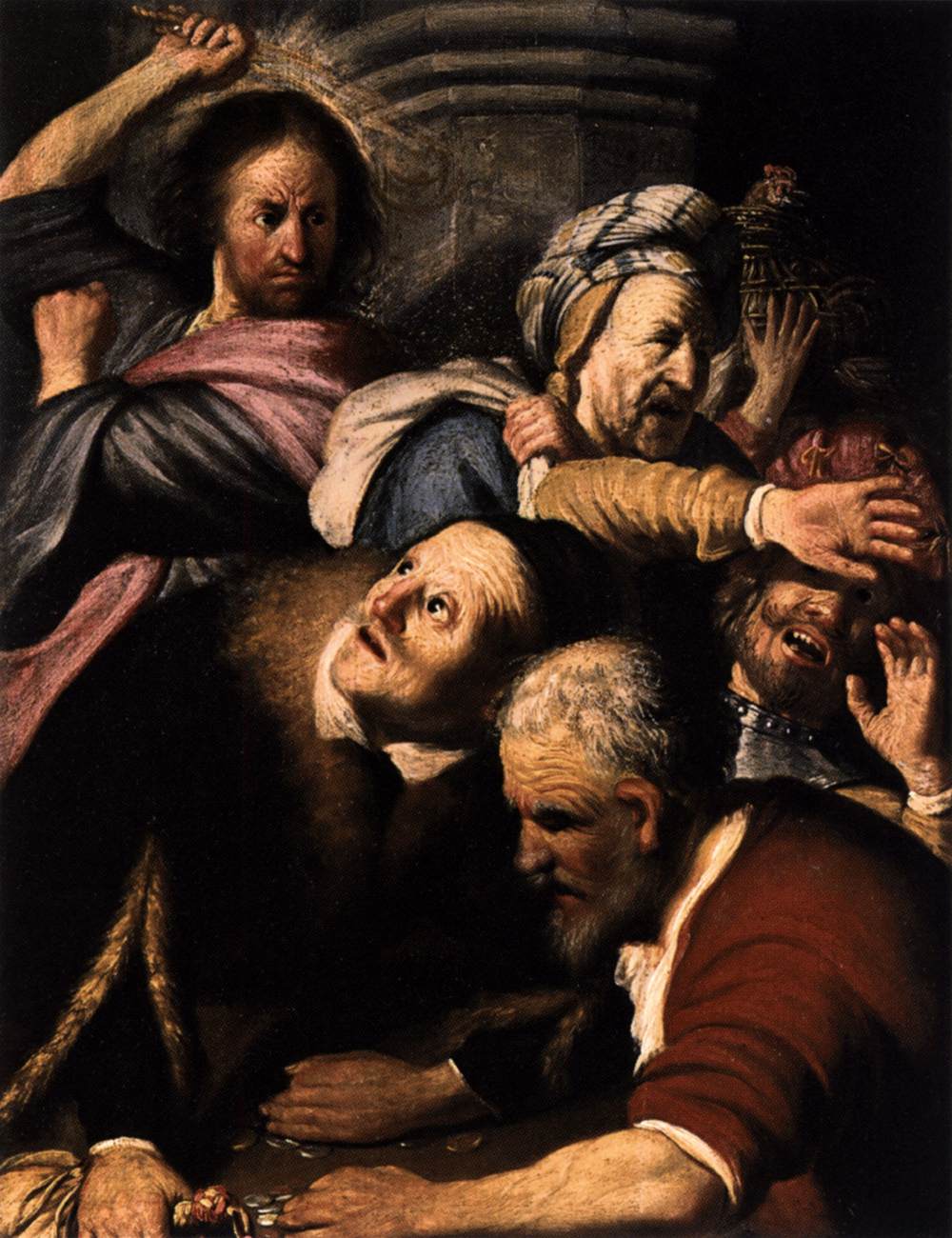
The Passover of the Jews was near, and Jesus went up to Jerusalem. In the temple he found people selling cattle, sheep, and doves, and the
money changers seated at their tables. Making a whip of cords, he drove
all of them out of the temple, both the sheep and the cattle. He also poured
out the coins of the money changers and overturned their tables. He told
those who were selling the doves, “Take these things out of here! Stop making
my Father’s house a marketplace!” His disciples remembered that it was
written, “Zeal for your house will consume me.” The Jews then said to him,
“What sign can you show us for doing this?” Jesus answered them, “Destroy
this temple, and in three days I will raise it up.” The Jews then said, “This temple has been under construction for
forty-six years, and will you raise it up in three days?” But he was
speaking of the temple of his body. After he was raised from the dead, his
disciples remembered that he had said this; and they believed the scripture and
the word that Jesus had spoken.
When he was in Jerusalem during the Passover festival, many believed in
his name because they saw the signs that he was doing. But Jesus on his
part would not entrust himself to them, because he knew all people and needed no one to testify about anyone; for he himself knew what was
in everyone.
In 1990 I went to renew my driving licence in Dublin. It took about twenty minutes, as I had to go to three or four different persons. But everything was orderly. Now you only have to go to one and the procedure, apart from filling up the form, takes less than a minute.
When I reached the last official he told me that I'd get my licence in the post (mail) in a day or two. I told him that I was leaving for Iceland the following day. (I was going on a pastoral visit to the Filipinos living there and was to drive around the whole country).
The clerk looked at me. And while he didn't swear at me, he said something to the effect, 'You stupid idiot. Why didn't you say so before?' I had no reason to do that since on previous occasions I had received my licence then and there. Now there was a new system.
On the face of it, the clerk was insulting me. But in a very 'Dublin way' he was being most helpful. He got up from his desk and came back a minute or two later with my new licence.
I had met an official with common sense, a person with a sense of public service.
Over the years here in the Philippines I have heard far too many stories of officials in situations like that who make it extremely difficult for members of the public, especially poorer ones, and who use delaying tactics unless something is passed across the counter.
In today's Gospel Jesus uses physical force to show his utter disgust at the Temple being used as a market. He knew that some of these people took advantage of those who were poor. There are such persons in every community.
Jesus was emphasising the sacredness of the Temple, the only place where Jews offered sacrifices to God.
But the First Reading links worship with daily life. It gives us the Ten Commandments, which spell out how our relationship with God and our relationship with those around us are intertwined. When the connection is not made evil follows, as the death of Floribert Bwana Chui in the video above shows.
I knew of a provincial engineer here in the Philippines who was never promoted. The reason? He used all the money allotted to build an excellent road nearly 50 years ago between two towns, by far the best in his own and in the neighbouring provinces. No 'brown envelopes'. No kickbacks. Every centavo allotted went into the road. Many Columbans knew this man and told me of his deep faith and integrity.
When we truly worship God at Mass and on other occasions in the church or other designated sacred places, we come to see that every place, every situation, is meant to be sacred also. My mother more than once in scolding me said, House devil, street angel! In effect she was calling me to integrity, the kind of integrity I saw, for example, in my father's life. St Paul, so to speak, nails the life of the follower of Jesus to the Cross in today's Second Reading: We proclaim Christ crucified. The sacrifices offered in the Temple foreshadowed the Sacrifice of Jesus in which all of us share each time we celebrate the Holy Sacrifice of the Mass. Some God calls, after strengthening their faith especially through the Eucharist and his Word, to share literally in the Sacrifice of Jesus. Floribert Bwana Chui was one of those. Pope Francis has spoken frequently about the martyrs of our time. On 6 February, the feast day of the Martyrs of Japan, he said, I think of our martyrs, the martyrs of our times, men, women, children who are being persecuted, hated, driven out of their homes, tortured, massacred. And this is not a thing of the past: this is happening right now. It would do us good to think of our martyrs. Today, we remember Paolo Miki, but that happened in 1600. Think of our present-day ones! Of 2015. We can see clearly the martyrdom of someone killed simply for being a Christian. There have been many such martyrs in recent years in the Middle East and in parts of Africa. What we don't see so clearly, perhaps, is that a person who is killed for refusing to give a bribe, for refusing to tell a lie, for refusing to cooperate in crime, for demanding and working for justice, is also a martyr. There are many such persons such as Floribert Bwana Chui. Another such is Clement Shahbaz Bhatti, the Pakistani politician assassinated on 2 March 2011 because he saw his life as a politician as his vocation in following Christ:
My name is Shahbaz Bhatti. I was born into a Catholic family. My father, a retired teacher, and my mother, a housewife, raised me according to Christian values and the teachings of the Bible, which influenced my childhood. Since I was a child, I was accustomed to going to church and finding profound inspiration in the teachings, the sacrifice, and the crucifixion of Jesus. It was his love that led me to offer my service to the Church.
The frightening conditions into which the Christians of Pakistan had fallen disturbed me. I remember one Good Friday when I was just thirteen years old: I heard a homily on the sacrifice of Jesus for our redemption and for the salvation of the world. And I thought of responding to his love by giving love to my brothers and sisters, placing myself at the service of Christians, especially of the poor, the needy, and the persecuted who live in this Islamic country.
I have been asked to put an end to my battle, but I have always refused, even at the risk of my own life. My response has always been the same. I do not want popularity, I do not want positions of power. I only want a place at the feet of Jesus. I want my life, my character, my actions to speak of me and say that I am following Jesus Christ.
Floribert Bwan Chui, whom I learned about only a few days ago, and Shahbaz Bhatti, whom I have written about many times, understood how the Temple and the 'Marketplace' - the latter in its proper 'location' - are related in terms of following Jesus. And they both embodied fully the vision of Vatican II for the lay person:
For man, created to God's image, received a mandate to subject to himself the earth and all it contains, and to govern the world with justice and holiness; a mandate to relate himself and the totality of things to Him Who was to be acknowledged as the Lord and Creator of all. Thus, by the subjection of all things to man, the name of God would be wonderful in all the earth.
This mandate concerns the whole of everyday activity as well. For while providing the substance of life for themselves and their families, men and women are performing their activities in a way which appropriately benefits society. They can justly consider that by their labor they are unfolding the Creator's work, consulting the advantages of their brother men, and are contributing by their personal industry to the realization in history of the divine plan (Gaudium et Spes, 34).
Readings(Jerusalem Bible: Australia, England & Wales, India [optional],
Ireland, New Zealand, Pakistan, Scotland, South Africa)
GospelMark 9:2-10 (New
Revised Standard Version, Catholic Edition, Canada)
Six days later, Jesus
took with him Peter and James and John, and led them up a high mountain apart,
by themselves. And he was transfigured before them,and his clothes became dazzling white, such as no oneon earth could bleach them.And there appeared to them Elijah with Moses, who were
talking with Jesus.Then Peter said to Jesus, “Rabbi, it is
good for us to be here; let us make three dwellings,one for you, one for Moses, and one for Elijah.”He did not know what to say, for they were terrified.Then a cloud overshadowed them, and from the cloud there came a voice,
“This is my Son, the Beloved;listen to him!”Suddenly when they looked around, they saw no one with them
any more, but only Jesus.
As they were coming down
the mountain, he ordered them to tell no one about what they had seen, until
after the Son of Man had risen from the dead.So they kept the matter to themselves,
questioning what this rising from the dead could mean.
Responsorial Psalm (Philippines, USA)
Bishop Edward Galvin (1882 - 1956)
After his ordination in 1909 for his native Diocese of Cork in the south of Ireland Fr Edward J. Galvin, born on 23 November, the feast of St Columban, 1882, was sent on loan by his bishop to the Diocese of Brooklyn, New York. In those days it was common for young Irish diocesan priests to be sent to English-speaking countries until there was a vacancy at home, a situation that certainly doesn't exist any more in Ireland.
God's providence led the young priest in 1912 to head for China with Canadian Fr John Mary Fraser who later founded the Scarboro Missions. Fr Galvin's decision was to lead him to co-found with Fr John Blowick what was in 1918 to become the Missionary Society of St Columban but that began in 1916 in Ireland as 'The Maynooth Mission to China'.
Fr Galvin and Fr Blowick
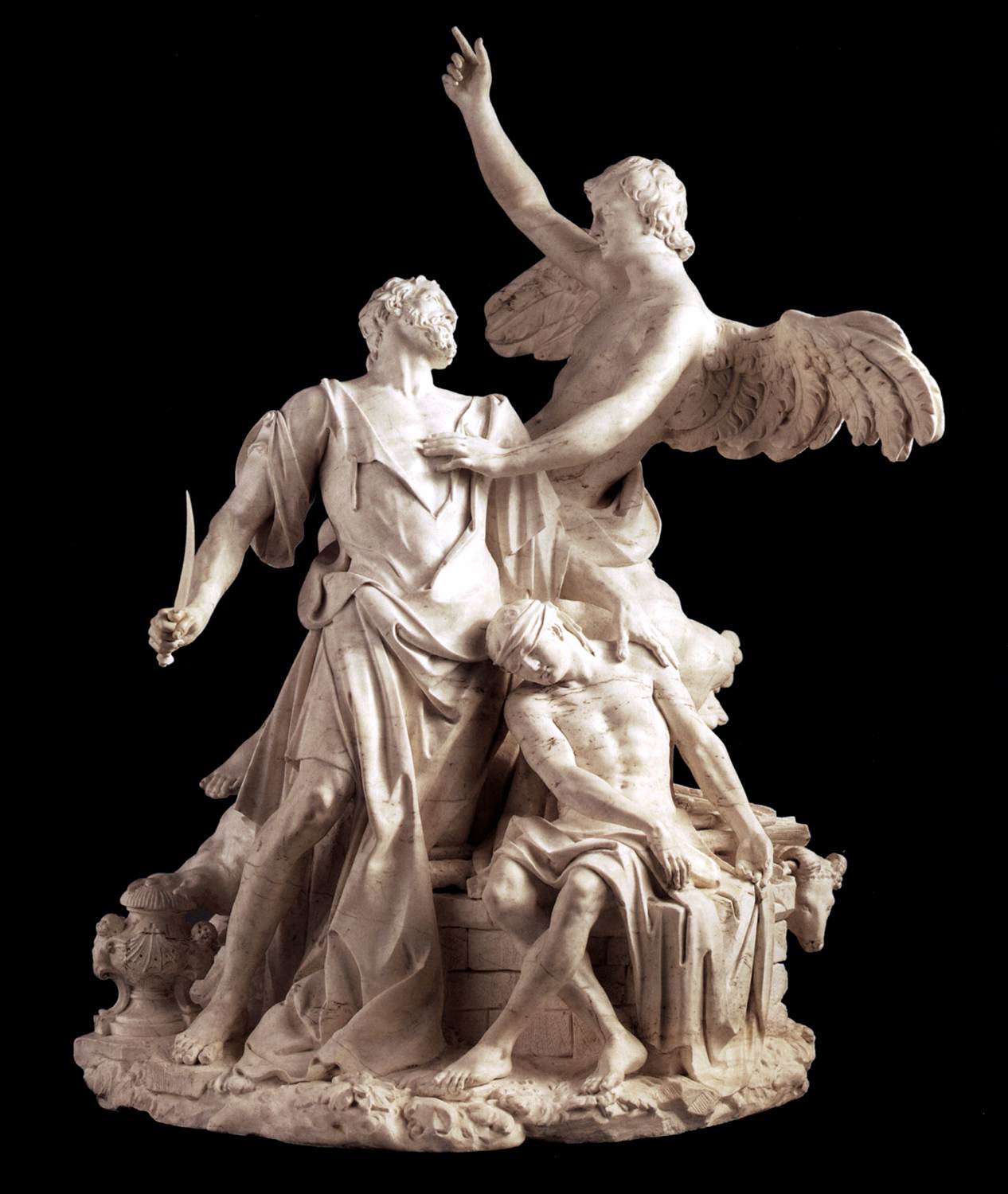
Fr Galvin's decision was for him something like that of Abraham in today's First Reading. He wrote many years later, I still remember the pain of parting on that grey, dreary morning,When the train got underway for Toronto, I crumpled up in the coach and cried as if my heart would break.
Fr Blowick said of that moment in Fr Galvin's life, He supported his head in his hands, and for two hours his mind was a blank. He had of his own election become a wanderer for Christ’s sake. For all he knew he was going to China to die.
Another of the first Columbans, Bishop Patrick Cleary who, like Bishop Galvin, served in China, wrote, It is no easy matter to part from home and friends under any circumstances: it was particularly trying in Father Galvin’s case. He was facing an unknown world; trials and hardship were before him – but these he regarded as nothing. The thought that almost unnerved him was the fact that never again, perhaps, would he see one of those faces he held so dear, never again get a glimpse of the land he loved. Was it any wonder then that as the train sped across the continent to Vancouver he flung himself into the corner of a carriage and wept like a child?
That was the reality a century ago for most missionaries.
We can only imagine the turmoil within the heart of Abraham as he walked that morning with Isaac to sacrifice him. The letter the young Fr Galvin wrote to his mother about his decision echoes the turmoil of Abraham. The greatest pain, perhaps, that Edward Galvin suffered was his awareness that his mother would suffer too. The full text of his letter is on page 3 here. Below is an edited version.
Feb 21st, 1912
My dear Mother,
I am sorry, dear Mother, to have to write this letter, but God’s will be done.
Everything is in His hands. Mother, don’t grieve, don’t cry. It is God’s will.
God has called and I had to obey.
I am not going back to Ireland. I am going as a missionary to China. May God’s
will be done. God knows my heart is broken, not for myself but for you whom I
love above all the world.
Mother, you know how this has always been on my mind. But I thought it was a
foolish thought – a boyish thought; that it would pass away as I grew older.
But it never passed, never, never, never.
Why should God ask me to do this thing that is breaking my heart to do? I don’t
know. God knows best. May His will be done. 'If any man will come after me let
him take up his cross and follow me.' Oh yes, but oh my God I never thought
that it was so hard to follow. I have tried to follow when you called. I ask
you in return to console my poor mother, to comfort her, to help her to make
the Sacrifice I am making and spare her until we meet again.’
Though he did not understand why God was asking him to sacrifice Isaac, his only son by his wife Sarah, Abraham submitted to God's will. Doing God's will was at the heart of the life of Edward Galvin, as his letter to his mother shows: God’s will be done . . . May God's will be done . . . May his will be done. When in 1927 he was ordained bishop of the prefecture that was to become the Diocese of Hanyang in 1946, though he had little or no interest in the trappings of the office of bishop, Edward Galvin was insistent that his episcopal motto was to be the words of Mary to the Angel Gabriel, Fiat Voluntas Tua, Thy Will be Done.
Bishop Edward J. Galvin in 1927
Though he had co-founded the Missionary Society of St Columban to preach the Gospel in China, Bishop Galvin said there to his fellow Columbans on one occasion when everything seemed to be going against them, We're not here to convert China but to do God's will. The Columbans in China lived through wars, terrible floods, banditry and then the Communist takeover in 1949 and all were eventually expelled, some after spending time in prison. Bishop Galvin was forced to leave in 1952. He died in Ireland on 23 February 1956. Bishop Galvin's experience of the Transfiguration of Christ wasn't quite like that of Peter, James and John on Mount Tabor. They caught a brief glance of the divinity of Jesus. That was to strengthen them in years to come. He expressed it in his letter to his mother: Mother, you know how this has always been on my mind. But I thought it was a foolish thought – a boyish thought; that it would pass away as I grew older. But it never passed, never, never, never. Jesus revealed himself quietly but persistently to Edward Galvin from his adolescent years until he was already a priest until the young Irishman could see clearly that his call was to be a missionary. Like the 'Yes' of Abraham, our father in faith, the 'Yes' of Fr Edward John Galvin was to be the channel of enormous blessings to countless people, not only in China, but in many other countries. The experience of the Transfiguration that Peter, James and John had was to lead countless persons to be followers of Jesus Christ, many of them to martyrdom. So also did the 'drip, drip, drip' persistence of God's call to Edward Galvin, a quieter 'Transfiguration', lead countless persons to be followers of Jesus, many of them to martyrdom, including some of his Columban companions. May each of us be able to say wholeheartedly to Jesus in whatever circumstances we find ourselves what Fr Galvin expressed as an aside to him in his letter to his mother: I have tried to follow when you called.
Fr Galvin's letter to his mother
Antiphona ad introitum Entrance Antiphon Cf Ps 26 [27]: 8-9 [The shorter version is used in the 'New Mass', the longer in the 'Old Mass']
Tibi dixit cor meum quaesivi vultum tuum,
Of you my heart has spoken: Seek his face.
vultum tuum, Domine, requiram.
It is your face, O Lord, that I seek,
Ne avertas faciem tuam a me.
hide not your face from me.
Dominus illuminatio mea, et salus mea: quem timebo?
The Lord is my light and my salvation: whom should I fear?
Gloria Patri, et Filio, et Spiritui Sancto.
Glory to the Father, and to the Son, and to the Holy Spirit.
Sicut erat in principio, et nunc, et semper, et in saecula saeculorum. Amen.
As it was in the beginning, is now, and will be for ever. Amen.