21 December 2015

Christmas - 'Christ's Mass'. 'And the Word became flesh and lived among us.'

Adoration of the Shepherds, Caravaggio, 1609
Museo Regionale, Messina, Italy [Web Gallery of Art]

The Solemnity of the Nativity of the Lord has four different Mass formularies, each with its own prayer and readings. Any of the four fulfills our obligation to attend Mass. These are:

Vigil Mass, celebrated 'either before or after First Vespers (Evening Prayer) of the Nativity'; that means starting between 5pm and 7pm.
Mass During the Night, known before as 'Midnight Mass'. In many parts of the world it does begin at midnight but here in the Philippines since the 1980s it begins earlier, usually at 8:30pm or 9pm.
Mass at Dawn.
Mass During the Day.

When you click on 'Readings' below from the New American Bible you will find links to the readings for each of the four Masses. The readings from the Jerusalem Bible for the four Masses are all on one page.

Readings (New American Bible: Philippines, USA)

Readings (Jerusalem Bible: Australia, England & Wales, India [optional], Ireland, New Zealand, Pakistan, Scotland, South Africa)


In the beginning was the Word, and the Word was with God, and the Word was God. He was in the beginning with God. All things came into being through him, and without him not one thing came into being. What has come into being in him was life, and the life was the light of all people. The light shines in the darkness, and the darkness did not overcome it.
There was a man sent from God, whose name was John. He came as a witness to testify to the light, so that all might believe through him. He himself was not the light, but he came to testify to the light. The true light, which enlightens everyone, was coming into the world.
He was in the world, and the world came into being through him; yet the world did not know him. He came to what was his own, and his own people did not accept him. But to all who received him, who believed in his name, he gave power to become children of God, who were born, not of blood or of the will of the flesh or of the will of man, but of God.
And the Word became flesh and lived among us, and we have seen his glory, the glory as of a father’s only son, full of grace and truth. (John testified to him and cried out, ‘This was he of whom I said, “He who comes after me ranks ahead of me because he was before me.”’) From his fullness we have all received, grace upon grace. The law indeed was given through Moses; grace and truth came through Jesus Christ. No one has ever seen God. It is God the only Son, who is close to the Father’s heart, who has made him known.

Adeste fideles læti triumphantes,
O come, all ye faithful, joyful and triumphant!
Venite, venite in Bethlehem.
O come ye, O come ye to Bethlehem.
Natum videte Regem angelorum:
Come and behold him born the King of Angels:
Venite adoremus, venite adoremus, venite adoremus Dominum.
O come, let us adore Him, O come, let us adore Him, O come let us adore Him, Christ the Lord.

What Christmas is All About

From A Charlie Brown Christmas by Charles M. Schultz

And there were in the same country shepherds abiding in the field, keeping watch over their flock by night. And, lo, the angel of the Lord came upon them, and the glory of the Lord shone round about them: and they were sore afraid. And the angel said unto them, Fear not: for, behold, I bring you good tidings of great joy, which shall be to all people. For unto you is born this day in the city of David a Saviour, which is Christ the Lord. And this shall be a sign unto you; Ye shall find the babe wrapped in swaddling clothes, lying in a manger. And suddenly there was with the angel a multitude of the heavenly host praising God, and saying, Glory to God in the highest, and on earth peace, good will toward men.(Luke 2:8-14, KJV).

Adoration of the Shepherds, Murillo, 1646-50
The Hermitage, St Petersburg [Web Gallery of Art]


Oíche Chiúin / Silent Night / Stille Nacht


Christmas Concerto, Arcangelo Corelli (1653 - 1713)
Freiburg Baroque Orchestra

Confessions in the mall in Ireland

Confessional, Basilica of Our Lady of Manaoag, Philippines [Wikipedia]

Catholic News Service has a video about twenty priests hearing confessions in a shopping mall in Ireland to mark the beginning of the Extraordinary Jubilee of Mercy, which began on 8 December.


For many years at least some shopping malls in Ireland have been seen as places for pastoral ministry, with some having pastoral centres as part of the set up. One with which I am very familiar is The Oratory, part of The Blanchardstown Centre, one of the biggest malls in Dublin. It is an initiative of the Capuchin Franciscan Friars in Ireland. Fr Dan Joe O'Mahony OFMCap is the person in charge, a man of unlimited energy, a familiar figure not only in the mall itself but in a number of the neighbouring parishes. One of his modes of transport is his bicycle. And he always wears his Capuchin habit.


Here in the Philippines, very sadly, the many shopping malls that we have now are not seen as places for pastoral ministry. But they are often seen as places for Masses of convenience for Sunday shoppers, despite the many churches in our cities and the many Sunday Masses celebrated in them. Here in the Diocese of Bacolod such Masses were stopped after our Diocesan Synod ten years ago.

The reporter in the video above doesn't seem to be aware of the fact that in Ireland for many years at least a number of malls have been serving not just the body but the soul. Apart from The Oratory in Blanchardstown another such is The St Peregrine Oratory in Rathfarnham Shopping Centre. Confessions are heard daily form 3 to 4:15 and there is a special ministry to persons and families affected by cancer. St Peregrine, a Servite Friar, was healed of a cancerous growth on his leg, is a patron saint of those with cancer.

Pope Francis goes to confession and hears confessions.

General Audience, 19 February 2014

The Sacrament of Penance and Reconciliation flows directly from the Paschal Mystery. In fact, on the evening of Easter the Lord appeared to the disciples, who were locked in the Upper Room, and after addressing them with the greeting, “Peace be with you!”, he breathed on them and said: “Receive the Holy Spirit. If you forgive the sins of any, they are forgiven” (Jn 20:21-23). This passage reveals to us the most profound dynamic contained in this Sacrament.

First, the fact that the forgiveness of our sins is not something we can give ourselves. I cannot say: I forgive my sins. Forgiveness is asked for, is asked of another, and in Confession we ask for forgiveness from Jesus. Forgiveness is not the fruit of our own efforts but rather a gift, it is a gift of the Holy Spirit who fills us with the the wellspring of mercy and of grace that flows unceasingly from the open heart of the Crucified and Risen Christ. Secondly, it reminds us that we can truly be at peace only if we allow ourselves to be reconciled, in the Lord Jesus, with the Father and with the brethren. And we have all felt this in our hearts, when we have gone to confession with a soul weighed down and with a little sadness; and when we receive Jesus’ forgiveness we feel at peace, with that peace of soul which is so beautiful, and which only Jesus can give, only Him.

16 December 2015

'The child in my womb leaped for joy.' Sunday Reflections, 4th Sunday of Advent, Year C

Book of Hours of Maréchal de Boucicaut, 1405-08 
Musée Jacquemart-André, Paris [Web Gallery of Art]


Readings (New American Bible: Philippines, USA)

Readings (Jerusalem Bible: Australia, England & Wales, India [optional], Ireland, New Zealand, Pakistan, Scotland, South Africa)


In those days Mary set out and went with haste to a Judean town in the hill country, where she entered the house of Zechariah and greeted Elizabeth. When Elizabeth heard Mary’s greeting, the child leaped in her womb. And Elizabeth was filled with the Holy Spirit and exclaimed with a loud cry, “Blessed are you among women, and blessed is the fruit of your womb. And why has this happened to me, that the mother of my Lord comes to me? For as soon as I heard the sound of your greeting, the child in my womb leaped for joy. And blessed is she who believed that there would be a fulfillment of what was spoken to her by the Lord.”


The Visitation, El Greco, 1610-13 
Dumbarton Oaks, Washington DC [Web Gallery of Art]

About eight years ago I celebrated Mass on the Feast of the Visitation in a home for girls where most come from a background of abuse. One girl of 16, whom I'll call 'Gloria', was pregnant. She was from another part of the Philippines and had been working in a restaurant and said that one of her co-workers was responsible. I wasn't quite sure to what extent the cause of the pregnancy had been consensual or whether the young man had taken advantage of the young woman. Perhaps there was an element of both.

Gloria was very angry and would not accept the baby she was carrying who was by this time around six months, as I recall. I invited her at the end of the Mass to come forward for a blessing for herself and her child. She agreed. I placed my hand gently on her stomach, as Elizabeth is about to do in the painting on parchment from the Book of Hours at the top and as both she and Mary do in the painting below, while I prayed. 

The Visitation, Rogier van der Weyden, c.1445 
Museum der Bildenden Künste, Leipzig [Web Gallery of Art]

Gloria told me afterwards that she could feel the baby moving as I blessed them both - and she had a smile on her face. She was able to go home to her own place some time later where she gave birth.

The French miniaturist of the Book of Hours of Maréchal de Boucicaut and Rogier van der Weyden both capture the sacredness of the lives of the unborn Jesus and John the Baptist. El Greco captures the swirl of a dance of life, the flowing blue robes suggesting the joy of the two pregnant mothers, Mary and Elizabeth.

Today's gospel has particular relevance in the context of ongoing public debates in a number of countries about abortion, including Ireland and the USA.

+++

One of a number of ministries to both women and men who have been directly affected by abortion is Rachel's Vineyard. I have connections with Rachel's Vineyard, Ireland, which has brought its healing retreat to such places as the Faroe Islands, South Korea and Lebanon.


Del Verbo Divino
San Juan de la Cruz

Del Verbo divino
la Virgen preñada
viene de camino:
¡ si les dais posada !


Concerning the Divine Word
St John of the Cross


With the divinest Word, the Virgin
Made pregnant, down the road
Comes walking, if you'll grant her
A room in your abode. 

Translation by Roy Campbell

Posada is a Spanish word meaning 'lodging' or 'accommodation'. In some Spanish-speaking countries, especially Mexico, Las Posadas is a nine-day preparation for Christmas.


15 December 2015

Columban Fr Eamonn F. Byrne RIP

Fr Eamonn F. Byrne
(23 July 1929 - 12 December 2015)

Fr Eamonn Byrne died in St Columban's Nursing Home, Dalgan Park, Navan, Ireland, on 12 December 2015.  Born in Crumlin, Dublin on 23 July 1929, he was educated at Rialto National School and Synge St Christian Brothers' School, Dublin, and entered the Columban seminary in Dalgan Park in 1947. He was ordained priest there on 21 December 1953.

Synge Street CBS logo [Wikipedia]

Appointed to the Philippines in 1954, he was assigned to St Isidore the Farmer Parish, Labrador, Pangasinan, for three years.

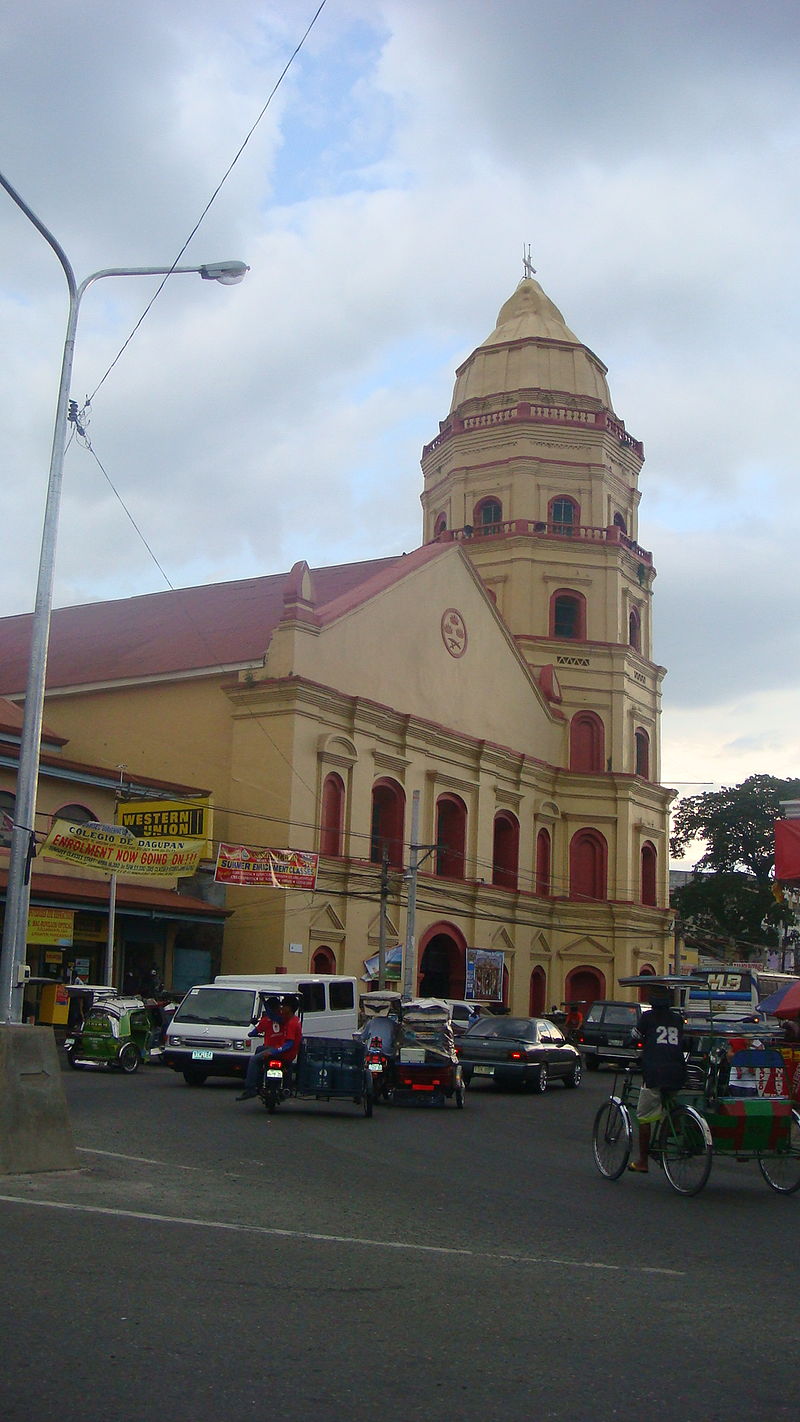
St Isidore the Farmer Church, Labrador [Wikipedia]

From 1957 to 1964 he was Chaplain at University of the East, Manila, and later at Far Eastern University, Manila. He spent periods as Director of Student Catholic Action in Manila, and many years later, in retirement, he published a history of that dynamic movement underthe title, Columbans in Student Catholic Action, Philippines 1937-2007.

Logo of Student Catholic Action Philippines [Wikipedia]

From 1974 till 1977 Fr Byrne worked to develop the Columban apostolate to the Filipino community in the USA. Then, it was back to Pangasinan, to the parishes of Lingayen, Naguelguel, Labrador and Sual until 1988 when he was assigned to the Columban Formation Program for college students in Cebu City for a brief period. Subsequently he served for six years as Director of Vocations in Luzon, and a further six years on Mission Awareness in that area. His last appointment in the Philippines was to Our Lady of Remedies Parish, Malate, Manila, where he served from 2000 to 2007, when he returned to the Retirement Home at St Columbanʼs, Navan.

Epiphany of the Lord Co-Cathedral, Lingayen [Wikipedia]

A man of great charm and good humour, he was a popular pastor and worked very well with young people. As long as his health permitted, he was an enthusiastic member of the retired Columbans in Dalgan, ever willing to lend his support and encouragement to any new initiative.

May he rest in peace.

St Columban's Cemetery, Dalgan Park

Obituary by Fr Cyril Lovett

Grafton Street, Dublin [Wikipedia]
'Grafton Street's a wonderland . . .'

Fr Patrick Raleigh, Regional Director of the Columbans in Ireland, wrote in an email: Fr Eugene Ryan, a classmate, recited the Prayers at the Cemetery. After lunch in the College there was an impromptu sing-song and very fittingly some of the songs were Dublin songs.

Very likely one of those songs was The Dublin Saunter, written by Dubliner Leo Maguire for another Dubliner, Noel Purcell, who sings it here. Noel (1900 - 1985) was an internationally-known film, TV and stage actor and, like Father Eamonn, was educated at Synge Street CBS.


St Stephen's Green, Dublin [Wikipedia]
'And a stroll in Stephen's Green'

08 December 2015

'Rejoice in the Lord always.' Sunday Reflections, 3rd Sunday of Advent, Year C

Baciccio, c.1690, Musée du Louvre, Paris [Web Gallery of Art]


Readings (New American Bible: Philippines, USA)

Readings (Jerusalem Bible: Australia, England & Wales, India [optional], Ireland, New Zealand, Pakistan, Scotland, South Africa) 


And the crowds asked John, “What then should we do?” In reply he said to them, “Whoever has two coats must share with anyone who has none; and whoever has food must do likewise.” Even tax collectors came to be baptized, and they asked him, “Teacher, what should we do?” He said to them, “Collect no more than the amount prescribed for you.” Soldiers also asked him, “And we, what should we do?” He said to them, “Do not extort money from anyone by threats or false accusation, and be satisfied with your wages.”
As the people were filled with expectation, and all were questioning in their hearts concerning John, whether he might be the Messiah,  John answered all of them by saying, “I baptize you with water; but one who is more powerful than I is coming; I am not worthy to untie the thong of his sandals. He will baptize you with the Holy Spirit and fire.  His winnowing fork is in his hand, to clear his threshing floor and to gather the wheat into his granary; but the chaff he will burn with unquenchable fire.”
So, with many other exhortations, he proclaimed the good news to the people.


Rejoice in the Lord always; and again I say, Rejoice.
Be careful for nothing; but in every thing by prayer and supplication with thanksgiving let your requests be made known unto God.
And the peace of God, which passeth all understanding, shall keep your hearts and minds through Jesus Christ our Lord (Phil 4:4, 7; Authorized [King James[ Version).

I came across the setting above by George Rathbone of the first and last verses of today's Second Reading while preparing this week's Sunday Reflections. It emphasises a basic theme of Advent: Joy. And today the Church focuses on that. We call the Third Sunday of Advent 'Gaudete Sunday' from the Latin opening word of the Entrance Antiphon, 'Gaudete in Domino semper,' 'Rejoice in the Lord always'.

The First Reading begins with the same theme: Sing aloud, O daughter of Zion; shout, O Israel! Rejoice and exult with all your heart, O daughter of Jerusalem! (Zephaniah 3:14).

'Ligaya' is the Tagalog word for 'joy' and is a common enough name for girls in the Philippines. It is the name used for the girl at the heart of the story below, though not her real name, which was a particularly beautiful one. St Joseph is one of the central figures in the gospels read at Mass as we approach Christmas and is highlighted in the gospel for Thursday, 17 December, Matthew 1:1-17, and in the gospel for Friday, 18 December, Matthew 1:16-24. It was through St Joseph, the Husband of Mary, that Jesus was born of the line of David, as God had promised. And by naming Jesus, as the angel asked him to do, St Joseph became the legal father of Jesus. 

This story is in the current issue of MISYONonline.com, the magazine of the Columbans in the Philippines of which I have been editor since October 2002 and has appeared there before. It is a story that shows the joy that only God can give, a joy that usually comes from within a very painful situation, a situation that may well be the result of a great sin.

I MET ST JOSEPH IN MANILA


By Columba Chang Eun-Yeal
 
Columba Chang, 2012

We first published this article in the November-December 2003 issue of MISYON. It is a story that can be told and re-told over and over again. The author, a Columban Lay Missionary from Korea who was assigned to the Philippines for many years, is now based in Myanmar.
There may be as many as seven million Filipino overseas workers spread all over the world. [This figure is probably higher now, 2015.] They greatly help our country’s economy by the money they send home. However sometimes we seem to take them for granted, thinking that they have an easy life abroad. Read Aling Maria’s story below and find out the dangers our OFWs (Overseas Filipino Workers) face and the abuses they experience. We thank ‘Mang Pepe’ for his help in writing this article in which we’ve changed the names.
'Mang' and 'Aling' are Tagalog honorifics for a man and woman, respectively, older than oneself. 'Tatay' is the equivalent of 'Papa' and 'Daddy'.
I met Mang Pepe and his daughter Ligaya through my work with Caritas Manila. I visit the family regularly. They live in a poor part of the city and Mang Pepe makes a living by doing odd jobs. My work takes me to families affected by HIV/AIDS. I knew Mang Pepe’s story before he shared it with the congregation at the Saturday evening Mass in Baclaran Church on 7 December 2002 at the end of a celebration organized by Caritas Manila for World AIDS Day.

Baclaran Church [Wikipedia]

A Greener Pasture

Mang Pepe and his wife Aling Maria were having difficulties putting their five children through school. This sometimes led to arguments. Eventually Aling Maria decided to work in the Middle East. She felt happy when accepted as a nursing aide with a two-year contract in the UAE. She prepared her documents. She and Pepe sold their house and lot for her fare and placement fee. She flew out on 5 February 1989, full of hope for her family’s future financial stability.
Aling Maria soon discovered that her contract as a nursing aid was terminated just a few months after she arrived, without any hope of renewal. But she didn’t want to go back to the Philippines with an empty pocket. She decided to take the ‘TNT’ route. She managed to find a series of jobs as a saleslady, cashier and office worker.

Columba Chang, left, with friend in Manila

Hope turns into a nightmare

As an illegal worker, she was often subjected to different abuses like underpayment, long hours of working without a day off and so on. But the worst thing was when one of Aling Maria’s employers took advantage of her and made her pregnant. When she came home to the Philippines in October 1993 Mang Pepe and the family were very shocked to learn that Aling Maria carried a child in her womb. She hadn’t mentioned anything about this before. However, despite this they still welcomed her and the child with joy . . . but deep in their hearts there was a shadow of sadness, fear and uncertainty.
After a few days the tabloids reported that three Filipino overseas workers had been sent home because of being infected with HIV, the virus that causes AIDS – and that one of them was Aling Maria. These stories, and the rumors they spawned, continued for a month. Some relatives, neighbors and friends rejected Aling Maria. The children of Mang Pepe and Aling Maria were torn apart. Some wanted to quit school and leave the area. The family suffered greatly because of the stigma.

Interior of Baclaran Church [Wikipedia]

Confirmed HIV

Aling Maria and Mang Pepe went to the Department of Health (DOH) for a series of blood tests. The tests confirmed what Aling Maria knew already, that she and her ‘little mercy child,’ as Mang Pepe called his wife’s daughter had HIV. The doctor gave them counseling and advice and information about HIV/AIDS.

Ligaya is born

Aling Maria decided not to stay in the hospital and continued to work as a pension plan insurance agent. In time she gave birth to a baby girl whom they named Ligaya. Gradually, however, Mang Pepe saw his dear wife turning into a picture of misery as she suffered from constant headaches and flu. Aling Maria was hoping for a miracle that would ease her agony. It was not to be. The HIV developed into full-blown AIDS. Her appetite disappeared until she couldn’t eat anymore. Mang Pepe and the children saw Aling Maria slowly dying. He prepared the family to accept her death as the will of God. She died on 15 December 1997, aged 46.
Like everyone else in Baclaran Church, I was deeply touched by Mang Pepe’s story, even though he had told it to me many times. I was touched by the great love of this simple man who accepted as his own a daughter who was the fruit of the brutal violation of his wife. Mang Pepe is ‘Tatay’ to Ligaya. Her schoolmates sometimes tease her because her features clearly show her Middle Eastern origins. But her Tatay stands by her, as do her brothers and sisters.
Francesco Mancini, Pinacoteca, Vatican City [Web Gallery of Art]

Proud to be her Tatay

Tatay Pepe is proud of Ligaya’s singing ability and smiled as she sang at the celebration in Baclaran. Ligaya is very proud of her Tatay and knows the depth of his love as a father. She has very uncertain health and is often in the hospital. The shadow of AIDS hangs over her.
St Joseph named Jesus, the Son of Mary, and thereby became his legal father. He loved Mary, his wife, and raised Jesus as his own son. Mang Pepe has gone through the agony of knowing that his wife was violated overseas, after dishonest employers had taken advantage of her in other ways. When she brought home a child who was not his, he made her his own. This latter-day St Joseph in Manila has given much joy to his daughter Ligaya as she has given much joy to him and others, like myself, who have come to know and love her.

+++
‘Ligaya’ died in the latter part of 2004. I was in Baclaran Church that day at the invitation of Columba and came to know ‘Ligaya’ as a friend. Shortly before she died I had the privilege of talking to her on Columba’s cellphone. She was a delightful child. The light of heaven upon her.

Columban Missionaries, Banmaw, Myanmar, 2011
L to R: 
Sr Ashwena Apao (Philippines), Arlenne Villahermosa (Philippines), Sr Mary Dillon (Ireland) and Columba Chang (Korea)

Antiphona ad introitum Entrance Antiphon Phil 4:4-5

Gaudéte in Dómino semper:íterum díco, gaudéte:
Rejoice in the Lord always; again I say, rejoice. 
Dóminus prope est.
The Lord is near.

Ps 84 [85]:2 Modéstia véstra nóta sit ómnibus homínibus:
Let your forbearance be known to all men. 
Nihil sollíciti sítis:
Do not be anxious over anything; 
sed in ómni oratione
but in all manner of prayer, 
petitiónes véstrae innotéscant apud Déum. 
let your requests be made known unto God.
Benedixísti, Dómine, térram túam:
Lord, you have blessed your land; 
avertísti captivitátem Jácob.
you have put an end to Jacob's captivity. 

V. Glória Patri, et Fílio, et Spirítui Sancto.
Glory to the Father, and to the Son, and to the Holy Spirit.

R. Sicut erat in princípio, et nunc, et semper, et in saecula saeculórum. Amen.
As it was in the beginning, is now, and will be for ever. Amen.

Gaudéte in Dómino semper:íterum díco, gaudéte:
Rejoice in the Lord always; again I say, rejoice. 
Dóminus prope est.
The Lord is near.

The text in bold is used in Masses in the Ordinary Form. The longer version is used in Masses in the Extraordinary Form but may be used in the Ordinary Form.