17 November 2010

A saint who lived in a pigsty


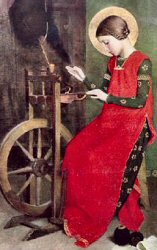
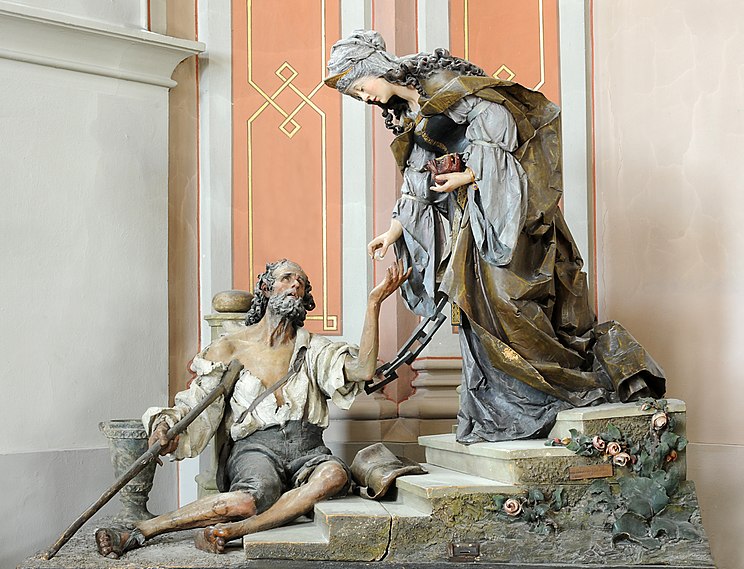
St Elizabeth of Hungary (1207-1231), the patron saint of Franciscan Tertiaries (Secular Franciscans and members of the many religious congregations of the Franciscan Third Order). She was a princess, married at 14, mother of three, widowed at 20 and forced, with her children, out of their home in winter, finding herself living in a disused pigsty shown ot her by a kind shepherd.


St Elizabeth had an extraordinary love for the sick and the poor and built a hospital in Marburg, Germany, where she daily worked. She died at the age of 24 and was canonized four years later.

This remarkable woman, along with being patron of Third Order Franciscans, is also a patron of many other groups: Bakers; beggars; brides; Catholic charities; charitable societies; charitable workers; charities; countesses; death of children; exiles; falsely accused people; hoboes; homeless people; hospitals; in-law problems; lacemakers; lace workers; nursing homes; nursing services; people in exile; people ridiculed for their piety; Sisters of Mercy; Teutonic Knights; toothache; tramps; widows.

You can read more about her here.

From a letter by Conrad of Marburg, spiritual director of Saint Elizabeth of Hungary (used in the Office of Readings for the saint):

Elizabeth was a lifelong friend of the poor and gave herself entirely to relieving the hungry. She ordered that one of her castles should be converted into a hospital in which she gathered many of the weak and feeble. She generously gave alms to all who were in need, not only in that place but in all the territories of her husband’s empire. She spent all her own revenue from her husband’s four principalities, and finally she sold her luxurious possessions and rich clothes for the sake of the poor.


Twice a day, in the morning and in the evening, Elizabeth went to visit the sick. She personally cared for those who were particularly repulsive; to some she gave goods, to others clothing; some she carried on her own shoulders, and performed many other kindly services. Her husband, of happy memory, gladly approved of these charitable works. Finally, when her husband died, she sought the highest perfection; filled with tears, she implored me to let her beg for alms from door to door.


On Good Friday of that year, when the altars had been stripped, she laid her hands on the altar in a chapel in her own town, where she had established the Franciscan Friars Minor, and before witnesses she voluntarily renounced all worldly display and everything that our Savior in the gospel advises us to abandon. Even then she saw that she could still be distracted by the cares and worldly glory which had surrounded her while her husband was alive. Against my will she followed me to Marburg. Here in the town she built a hospice where she gathered together the weak and the feeble. There she attended the most wretched and contemptible at her own table.


Apart from those active good works, I declare before God that I have seldom seen a more contemplative woman.


Before her death I heard her confession. When I asked what should be done about her goods and possessions, she replied that anything which seemed to be hers belonged to the poor. She asked me to distribute everything except one worn-out dress in which she wished to be buried. When all this had been decided, she received the body of our Lord. Afterward, until vespers, she spoke often of the holiest things she had heard in sermons. Then, she devoutly commended to God all who were sitting near her, and as if falling into a gentle sleep, she died.

15 November 2010

Letter of an Iraqi priest to his wounded country


Above is a video on the killing of two priests and 48 parishioners during Mass at Our Lady of Salvation Church, Baghdad, on 31 October. They were members of the Syrian Rite of the Catholic Church. Of the 15 Catholic dioceses in Iraq eleven belong to the Chaldean Rite, one to Latin or Roman Rite, one to the Armenian Rite and two to the Syrian Rite. The song in the video is in Arabic and, as far as I can make out, was written in honour of the people who were martyred. Freddie Hamika put the video together. I'm not sure if he wrote the song.

You can read a longer post, with some photos, at http://www.misyononline.com/, the online magazine I edit for the Columbans in the Philippines, here. It includes the letter of Fr Albert Hisham Naoum, a friend of the two priests who were murdered, Fr Wasim Sabieh and Fr Thaier Saad Abdel, along with the names of their parishioners who died.

12 November 2010

'They will hand you over . . . because of my name' 33rd Sunday of Ordinary Time Year C

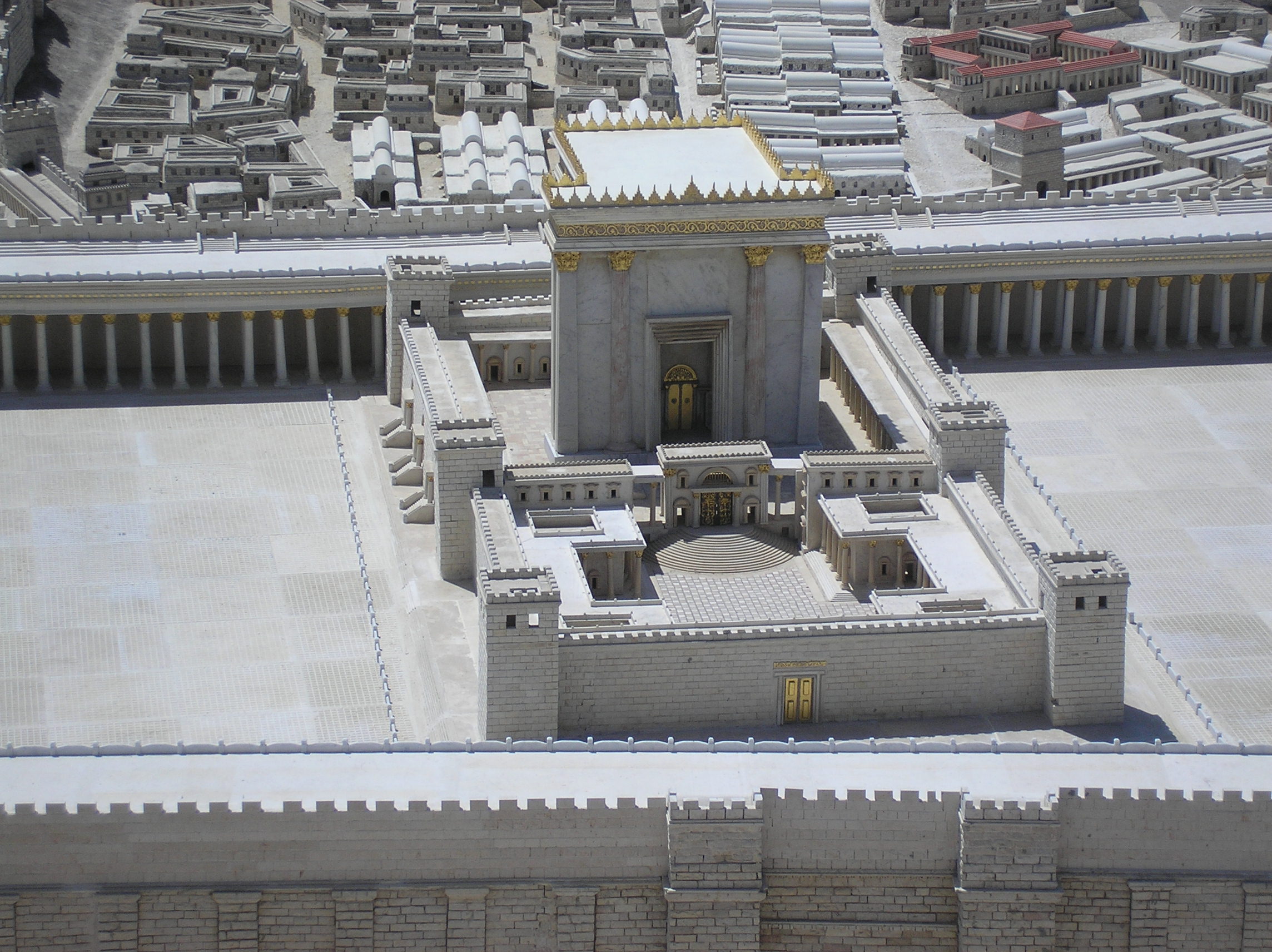
The Second Jewish Temple. Model in the Israel Museum. Picture taken by Deror Avi on 18 August 2006.

I've posted Sunday Reflections on http://www.misyononline.com/, the online magazine I edit for the Columbans in the Philippines. Here is the link.

La Sagrada Familia Basilica, Barcelona


'Can you ever gloss over the bad bits?'

RTÉ, Ireland’s national broadcasting service, carried an interview with Dana on Sunday 7 November that will be available online till 28 November. Dana, born Rosemary Brown and now Mrs Scallon, has had a most unusual career. She represented Ireland in the Eurovision Song Contest in 1970 when only 18 and won with the song All Kinds of Everything. The photo above is from around that time.


In 1991 she and her husband Damien began to work with EWTN in Birmingham, Alabama. In 1997 she ran as an independent for the ceremonial position of President of Ireland and came third. In 1999 she was elected as an independent Member of the European Parliament (MEP) for a five-year term.

Dana played a controversial role in the 2002 referendum in Ireland on the protection of life from conception. Though the Church, including the Vatican, had clearly signaled that Catholics could vote for the proposal, Dana and a small group of other pro-life people opposed it as not going far enough. Their votes helped defeat the proposed amendment to the Irish Constitution which now, in theory, allows abortion, where it didn’t before.

On the other hand, Dana met with a lot of hostility in the European Parliament because of her principled stand for the life of the unborn.

In the interview with Gay Byrne, one of Ireland’s top broadcasters, she comes across as a person of strong but quite Catholic faith, simple and open. When at the end she was asked what she would say to “God when she comes face to face with him, after a pause she said, with a smile, ‘Can you ever gloss over the bad bits?’

The interview, which runs for 26'30", is available online only until Sunday 28 November.

 
Dana singing All Kinds of Everthing in 1970.


Dana singing Totus Tuus, Totally Yours, which she and her husband wrote after the visit of Pope John Paul II to Ireland in 1979. Ironically, Dana wasn't in Ireland at the time.

08 November 2010

Pope Benedict consecrates Sagrada Familia basilica in Barcelona


THE POPE CONSECRATES THE CHURCH OF THE SAGRADA FAMILIA


VATICAN CITY, 7 NOV 2010 (VIS) - At 9 a .m. today the Pope travelled by popemobile from the archbishopric of Barcelona to the church of the Sagrada Familia, masterpiece of the Catalan architect Antoni Gaudi.


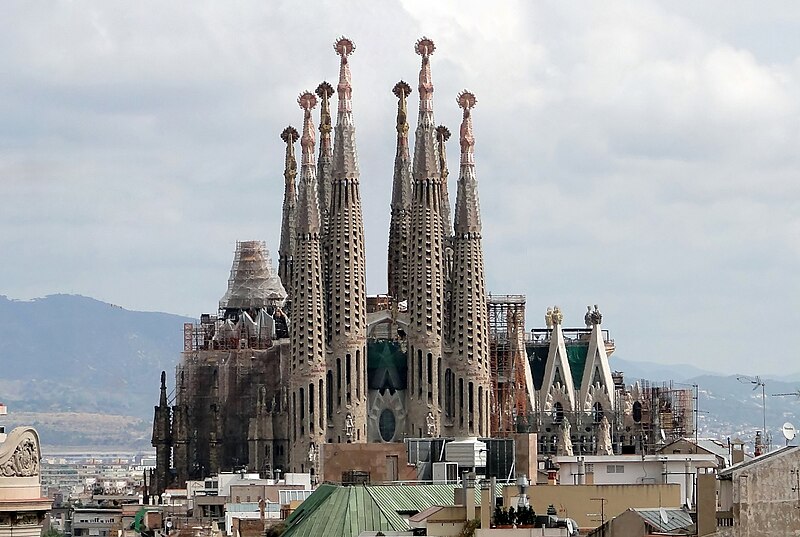
Work on the building, which began in the year 1882, continues today thanks to donations from all over the world and is scheduled to come to an end in 2026. The final project is due to comprehend eighteen spires, twelve dedicated to the Apostles, four to the Evangelists, one to Jesus - at 170 metres the highest of all - and one to the Virgin Mary.


Before Mass, the Holy Father travelled around the outside of the church where thousands of people were gathered to greet him.


Benedict XVI entered the building by a secondary entrance where he was welcomed by the president of the Sagrada Familia foundation and by Jordi Bonet, head of the building project. He then went on to meet with King Juan Carlos and Queen Sofia of Spain in the Museum Hall of the Sagrada Familia.

After his meeting with the monarchs, the Pope went to the sacristy to prepare for the celebration of Mass during which he consecrated the church and the altar of the Sagrada Familia.

Beginning his homily the Pope spoke in Catalan, greeting the King and Queen, and Cardinal Lluis Martinez Sistach, archbishop of Barcelona , and the other cardinals, bishops, priests, religious and lay people present.

Going on then to highlight how this day "marks an important step in a long history of hope, work and generosity that has gone on for more than a century", the Holy Father made special mention of the people whose efforts made it possible to build the church, especially "the man who was the soul and the artisan of this project, Antoni Gaudi, a creative architect and a practising Christian who kept the torch of his faith alight to the end of his life, a life lived in dignity and absolute austerity. This event is also in a certain sense the high point of the history of this land of Catalonia which, especially since the end of the nineteenth century, has given an abundance of saints and founders, martyrs and Christian poets. It is a history of holiness, artistic and poetic creation, born of the faith, which we gather and present to God today as an offering in this Eucharist".

Benedict XVI expressed his joy at the fact that "this shrine, since its beginnings, has had a special relationship with St. Joseph . I have been moved above all by Gaudi's confidence when, in the face of many difficulties, filled with trust in divine Providence , he would exclaim, ' St. Joseph will finish this church'. So it is significant that it is also being dedicated by a Pope whose baptismal name is Joseph".

Meeting King Juan Carlos and Queen Sophia of Spain


This work of art "stands as a visible sign of the invisible God, to whose glory these spires rise like arrows pointing towards absolute light and to the One Who is Light, Height and Beauty itself. In this place, Gaudi desired to unify that inspiration which came to him from the three books which nourished him as a man, as a believer and as an architect: the book of nature, the book of Sacred Scripture and the book of the liturgy. In this way he brought together the reality of the world and the history of salvation, as recounted in the Bible and made present in the liturgy. He made stones, trees and human life part of the church so that all creation might come together in praise of God, but at the same time he brought the sacred images outside so as to place before people the mystery of God revealed in the birth, passion, death and resurrection of Jesus Christ.

"In this way, he brilliantly helped to build our human consciousness, anchored in the world yet open to God, enlightened and sanctified by Christ. In this he accomplished one of the most important tasks of our times: overcoming the division between human consciousness and Christian consciousness, between living in this temporal world and being open to eternal life, between the beauty of things and God as beauty. Antoni Gaudi did this not with words but with stones, lines, planes, and points. Indeed, beauty is one of mankind's greatest needs; it is the root from which the branches of our peace and the fruits of our hope come forth. Beauty also reveals God because, like Him, a work of beauty is pure gratuity; it calls us to freedom and draws us away from selfishness".


The Church of herself is nothing; she is called to be the sign and instrument of Christ, in pure docility to His authority and in total service to His mandate. The one Christ is the foundation of the one Church. He is the rock on which our faith is built. Building on this faith, let us strive together to show the world the face of God Who is love and the only one who can respond to our yearning for fulfilment. This is the great task before us: to show everyone that God is a God of peace not of violence, of freedom not of coercion, of harmony not of discord.

King Juan Carlos with Pope Benedict after the Mass


"In this sense", the Pope added, "I consider that the dedication of this church of the Sagrada Familia is an event of great importance, at a time in which man claims to be able to build his life without God, as if God had nothing to say to him. In this masterpiece, Gaudi shows us that God is the true measure of man; that the secret of authentic originality consists, as he himself said, in returning to one's origin which is God. Gaudi, by opening his spirit to God, was capable of creating in this city a space of beauty, faith and hope which leads man to an encounter with Him Who is truth and beauty itself. The architect expressed his sentiments in the following words: 'A church [is] the only thing worthy of representing the soul of a people, for religion is the most elevated reality in man'".
The Holy Father recalled then how "this church began as an initiative of the Association of the Friends of St. Joseph, who wanted to dedicate it to the Holy Family of Nazareth. The home formed by Jesus, Mary and Joseph has always been regarded as a school of love, prayer and work. The promoters of this church wanted to set before the world love, work and service lived in the presence of God, as the Holy Family lived them. Life has changed greatly and with it enormous progress has been made in the technical, social and cultural spheres. We cannot simply remain content with these advances. Alongside them, there also need to be moral advances, such as in care, protection and assistance to families, inasmuch as the generous and indissoluble love of a man and a woman is the effective context and foundation of human life in its gestation, birth, growth and natural end.

"Only where love and faithfulness are present can true freedom be born and endure. For this reason the Church advocates adequate economic and social means so that women may find in the home and at work their full development, that men and women who contract marriage and form a family receive decisive support from the state, that life of children may be defended as sacred and inviolable from the moment of their conception, that the reality of birth be given due respect and receive juridical, social and legislative support. For this reason the Church resists every form of denial of human life and gives its support to everything that would promote the natural order in the sphere of the institution of the family", said the Pope.

Benedict XVI asked God "that in the land of Catalonia new witnesses of holiness may rise up and flourish, and present to the world the great service that the Church can and must offer to humanity: to be an icon of divine beauty, a burning flame of charity, a path so that the world may believe in the One Whom God has sent".

"I implore the Lord of our lives that, from this altar, which will now be anointed with holy oil and upon which the sacrifice of the love of Christ will be consumed, there may be a flood of grace and charity upon the city of Barcelona and its people, and upon the whole world. May these fruitful waters fill with faith and apostolic vitality this archdiocesan Church, its pastors and its faithful".


The Pope concluded his homily in Catalan, saying "I wish to commend to the loving protection of the Mother of God, Mary Most Holy, April Rose, Mother of Mercy, all who enter here and all who in word or deed, in silence and prayer, have made this possible this marvel of architecture. May Our Lady present to her divine Son the joys and tribulations of all who come in the future to this sacred place so that here, as the Church prays when dedicating religious buildings, the poor may find mercy, the oppressed true freedom and all men may take on the dignity of the children of God. Amen".

At the end of Mass Cardinal Sistach read out the decree by which the Pope declares the church of the Sagrada Familia to be a minor basilica.

Following the Eucharistic celebration, the Holy Father left the building by the Portico of the Nativity and appeared on the terrace overlooking the square and adjoining street where thousands of faithful had followed the Mass on giant screens.

Queen Sophia and King Juan Carlos


Before praying the Angelus , the Pope recalled how in the Brazilian city of Porto Alegre yesterday the beatification had taken place of Servant of God Maria Barbara of the Blessed Trinity, foundress of the Sisters of the Immaculate Heart of Mary. "May the deep faith and fervent charity with which she followed Christ", he said, "awaken in many the desire to devote their lives completely to the greater glory of God and the generous service of their brothers and sisters, especially the poorest and the most needy".
Referring then to the architect Antoni Gaudi, the Holy Father highlighted how, "through his work, he sought to bring the Gospel to everyone. For this reason, he conceived of the three porticos of the exterior of the church as a catechesis on the life of Jesus Christ, as a great Rosary, which is the prayer of ordinary people, a prayer in which are contemplated the joyful, sorrowful and glorious mysteries of our Lord. In collaboration with the parish priest Gil Pares, he also designed and financed from his own savings the creation of a school for the children of the workers and of the poorest families of the neighbourhood, which was at that time a outlying suburb of Barcelona . He brought concrete reality to the conviction, saying: 'The poor must always find a welcome in the Church, which is an expression of Christian charity'".


The Pope then travelled to the archbishopric of Barcelona , where he had lunch.


PV-SPAIN/ VIS 20101107 (1870)

Report: Vatican Information Service. Photos: La Vanguardia
03 November 2010

58 killed in Catholic church in Iraq last Sunday

An al-Qaeda-linked group has claimed responsibility for an attack on Our Lady of Salvation Syrian Catholic Church in Baghdad that ended in the deaths of 58 people. Reuters reported the death toll a day after attackers stormed the Our Lady of Salvation church in the Karrada neighborhood. You can read a full report by Deacon Keith Fournier on Catholic Online.

Our Lady of Salvation Church before the attack

Among the dead were three priests. Father Wasim Sabieh and Father Thaier Saad Abdal were killed during the attack. The third priest, Father Qatin, was wounded and died later in hospital. Aid to the Church in need also has a report with a video, The Situation of Christians in Iraq. H/T to Fr Tim Finigan for the link.


The video doesn't come up on Internet Explorer in my computer but does on Mozilla. If you can't get it on my post try this link.
Pope calls on world community to help end savage violence in Iraq


By Carol Glatz

Catholic News Service

Coffins of some of the Catholic victims


VATICAN CITY (CNS) -- A deadly militant siege of the Syrian Catholic cathedral in Baghdad was a "savage" act of "absurd violence," Pope Benedict XVI said.

The pope urged international and national authorities and all people of good will to work together to end the "heinous episodes of violence that continue to ravage the people of the Middle East." The attack occurred Oct. 31 as about 100 people gathered for Sunday Mass.

"I pray for the victims of this absurd violence, which is even more savage because it struck defenseless people, gathered in God's house, which is a house of love and reconciliation," Pope Benedict said after praying the Angelus with pilgrims in St. Peter's Square Nov. 1, the feast of All Saints.

The following day, he sent a telegram to Baghdad as Catholics held funerals for two priests and several others among the 58 people killed in the violence.

"Deeply saddened by the violent deaths of so many faithful and of Fathers Tha'ir Saad and Boutros Wasim, I want to participate spiritually in the funeral while I pray that these brothers and sisters would be welcomed into the mercy of Christ in the Father's house," the pope said.

"For years, this beloved country has suffered unspeakable pain, and even the Christians have become the objects of savage attacks which, with total disrespect for life, the inviolable gift of God, try to undermine trust and civil coexistence," he said.

"I renew my appeal that the sacrifice of these brothers and sisters of ours may be seeds of peace and of true rebirth and so that all those who have at heart reconciliation and a coexistence marked by fraternity and solidarity would find reasons and strength to work for good," the pope said.

'An age that is twisted out of its true pattern'

There is a striking translation of Philippians 2:15, from the first reading in today's Mass, in the Knox version: You live in an age that is twisted out of its true pattern, and among such people you shine out, beacons to the world, upholding the message of life. The RSV reads: . . . children of God without blemish in the midst of a crooked and perverse generation, among whom you shine as lights in the world . . .

Today I came across a video produced by the Dominican Friars in the Philippines, Lumen Ecclesiae, which shows St Dominic as a 'Light of the Church' in an age that, in its own way, was 'twisted out of its true pattern'.

When I was a kid my late father used to take me sometimes to High Mass in St Saviour's, Dominick St, the Dominican church in the heart of Dublin. I remember very clearly the first stirrings of interest in the priesthood because of the white habit of the friars, even though subsequently I never felt any call to be a Dominican. The Irish Dominican Vocations blog shows that God is still using that same habit to draw young men to the priesthood and to the Dominicans.