Since we are travellers and pilgrims in the world, let us ever ponder on the end of the road, that is of our life, for the end of our roadway is our home (St Columban, 8th sermon).
I will set shepherds over them who will care for them, and they shall fear no more, nor be dismayed, neither shall any be missing, declares the Lord (Jeremiah 23:4; First Reading).
Readings(Jerusalem Bible: Australia,
England & Wales, Ireland, New Zealand, Pakistan, Scotland)
GospelMark 6:30-34(English Standard Version, Anglicised: India)
The
apostles returned to Jesus and told him all that they had done and taught.And he said to
them, “Come away by yourselves to a desolate place
and rest a while.” For many were coming and going,
and they had no leisure even to eat.And they
went away in the boat to a desolate place by themselves.Now many saw them going and recognized them, and they ran there
on foot from all the towns and got there ahead of them.When he went ashore he saw a great crowd, and he had
compassion on them, because they were like sheep without a shepherd. And he
began to teach them many things.
In 2018 I attended a meeting of a
Catholic movement I have been involved in for many years in a country in
western mainland Europe. The local bishop came to visit us and spoke at one of
our sessions. His talk utterly disgusted me. He was boasting about the fact
that the diocese employed people in pastoral work and administration who were
living in situations that were objectively gravely sinful: adulterous
relationships, same-sex relationships - I don't mean normal and healthy
friendships - and so on. He spoke of how 'welcoming' the diocese was to
everyone. To me he showed no concern whatever of someone who wanted the people
God had called him to serve to know Jesus Christ and to follow him according to
the Gospel, to take up their cross and to be with him for ever in heaven.
There was no mention of the true
welcome that the Church of Jesus Christ gives to sinners, especially through
the sacrament of confession, no mention of the first words of Jesus in St Mark's Gospel, the first gospel to be written, The time is fulfilled, and the kingdom of God is
at hand;repent and believe in the gospel (Mark 1:15).
I have friends who lived in that same
diocese with whom I stayed for a couple of days before the meeting. They told
me that they were planning to emigrate to North America because of their
concern that they were not getting any spiritual nourishment from the Church
and were not getting the teaching of the Church in their local parish. They
were particularly anxious that their teenage daughter get the Catholic formation
at home, in school and in the parish that she ought to have. The family have
since left that country.
Our meeting took place in the white building in the centre. This is part of the complex that includes the Cathedral Basilica of the Assumption and St Adalbert. Across the River Danube is Slovakia.
Later in the year our movement met in
Esztergom, Hungary, where we had a talk from Bishop László Bíró of
the Military Ordinariate of Hungary. He was not in great health but spoke the
gospel of Jesus Christ as given to the Church so clearly and so hopefully that
it lifted my heart. He grew up in a country that had been ruled by the
Communist party for decades after World War II and where the Church experienced
persecution. The way our movement was initially introduced secretly to Hungary during
Communist times was truly inspirational and an expression of Christian courage,
hope and faith. It flourishes there now.
I cannot but see Bishop Bíró in the context of part of today's First Reading from the Prophet Jeremiah: I will set shepherds over them who will care for them, and they shall fear no more, nor be dismayed, neither shall any be missing, declares the Lord [Jeremiah 23:4].
These words, and the harsh words of Jeremiah at the beginning of the First Reading, challenge every one of us who has the responsibility of forming others in the Christian faith and in informing others about Jesus Christ, bishops, priests, catechists, teachers and parents in particular
Last week I quoted the words of Frank Duff, founder of the Legion of Mary, in 1948: an inert laity is only two generations removed from non-practice. Non-practice is only two generations away from non-belief. That is what has happened in the first country above. And in so many parts of the Western world it is not only an inert laity. The Lord speaks scathingly to religious leaders through Jeremiah in the First Reading: You have scattered my flock and have driven them away, and you have not attended to them [Jeremiah 23:2].
About two years ago I saw last Sunday's gospel, when Jesus called the twelve and began to send them out two by two, and this Sunday's gospel, when the apostles returned to Jesus and told him all that they had done and taught, being fulfilled in my presence. It was at a conference organised by the Legion of Mary at the Legion's headquarters in Dublin. There were maybe 30 or 40 Legionaries present and at one stage they were sent out two by two to a nearby plaza to approach people there and tell them about Jesus Christ and Mary. This is a work that the Legion has been doing for years in many parts of the world. After 45 minutes or an hour the Legionaries came back to report all that they had done and taught.
They had met some who had lapsed from the Church or from the Christian faith altogether and others who had no connection with the faith. But most were happy to be approached and to accept a Miraculous Medal. The Legionaries were gently reminding all those they met that God loved them and that God had sent his Son Jesus Christ, God and Man, into the world through Mary. They were also taking seriously the mission Jesus Christ gave to the whole Church: Go into all the world and proclaim the gospel to the whole creation (Mark 16:15).
This is what the first part of the Prologue to the Catechism of the Catholic Church says: All Christ's faithful are called to hand it on from generation to
generation, by professing the faith, by living it in fraternal sharing, and by
celebrating it in liturgy and prayer. The last line of today's Responsorial Psalm (Ps 22 [23]) below sums up our hope in this: In the Lord's own house shall I dwell for ever and ever.
Those Legionaries were living out that and were focusing on the reality that the purpose of our life is to know, love and serve God here on earth and to be with him for ever in heaven. They were sharing in what Jesus does in today's gospel: When he went ashore he saw a great crowd, and he had compassion on them, because they were like sheep without a shepherd. And he began to teach them many things.
El Señor es mi Pastor
The Lord is my Shepherd (Psalm 22 [23])
This Spanish version of The Lord is my Shepherd was produced by Kerigma de Amor in Iquitos, Peru. The Greek word Kerygma, as it is spelled in English, means 'The proclamation of the Gospel'.
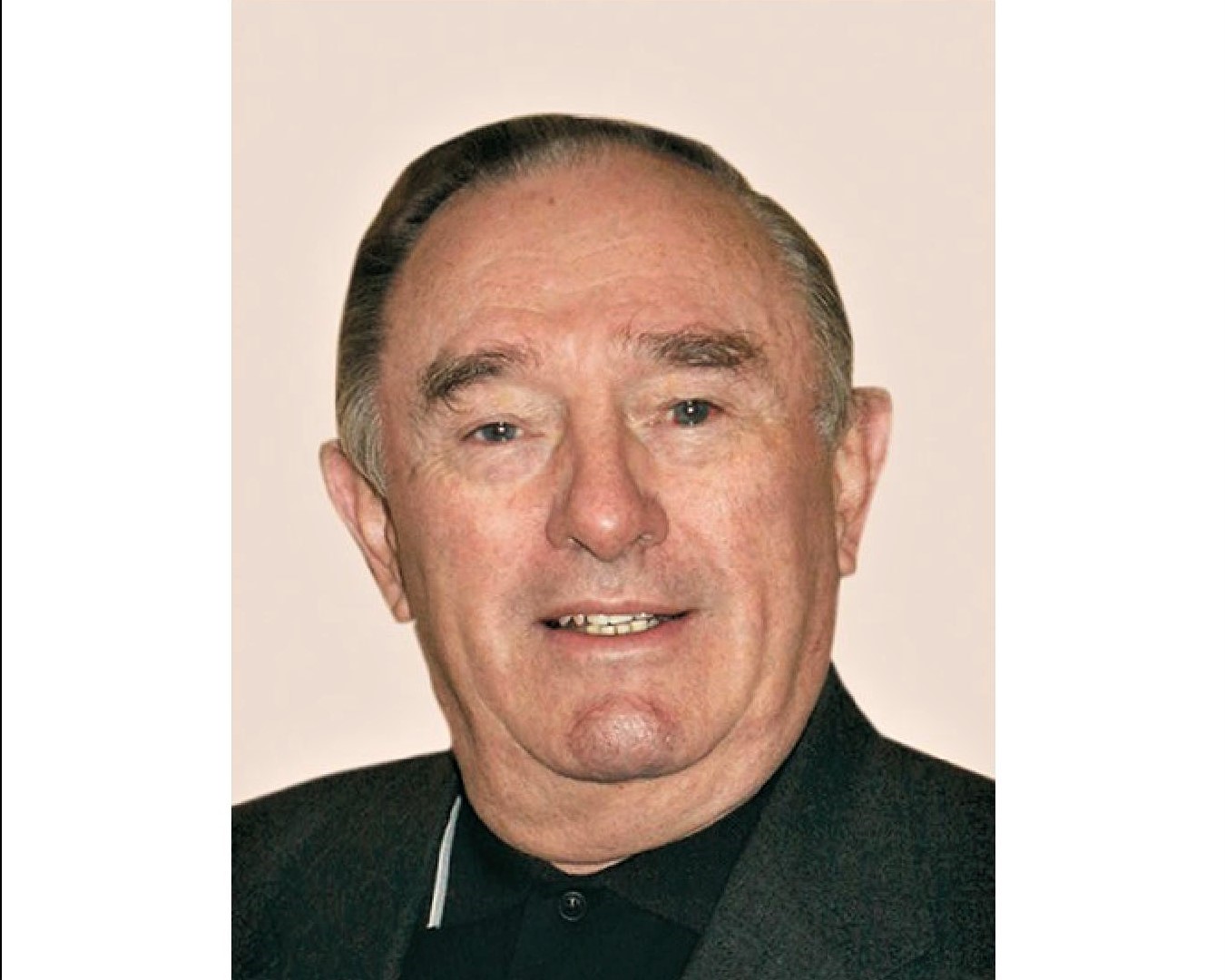
Fr Peter J. Cronin
(28 February 1930 - 10 July 2021)
Please pray for the repose of the soul of Columban Fr Peter Cronin who died peacefully on 10 July. He was ordained in 1954 and went to Korea in 1955 where he spent eight years. For the rest of his life he worked in the USA where he was Regional Director froom 1983 to 1987.
You will find a brief obituary of Father Peter here.
Solas na bhFlaitheas ar a anam uasal - The Light of Heaven on his noble soul.
Extraordinary Form of the Mass
Traditional Latin Mass (TLM)
Eighth Sunday after Pentecost
The Complete Mass in Latin and English is here. (Adjust the date at the top of that page to 7-18-2021 if necessary).
Authentic beauty, however, unlocks the yearning of the human heart, the profound desire to know, to love, to go towards the Other, to reach for the Beyond.
GospelMark 6:7-13(English Standard Version, Anglicised)
Jesus
called the twelve and began to send them out two by two, and gave them
authority over the unclean spirits.He charged them to take nothing for their journey except a
staff—no bread, no bag, no money in their beltsbut
to wear sandals and not put on two tunics.And he said to them, “Whenever you enter a
house, stay there until you depart from there.And if any place will not receive you and
they will not listen to you, when you leave, shake off the dust that is on
your feet as a testimony against them.”So they went out
and proclaimed that people should repent.And they cast out many demons
and anointed with oil many who were sick and healed them.
Today's gospel reminds me of experiences as a
seminarian while on Peregrinatio pro Christo with the Legion of Mary, in St
Anne's Parish, Edge Hill, Liverpool, in 1963, in St Fergus' Parish, Paisley,
Scotland in 1965 and in Holy Family Parish, Pewsey, Wiltshire, England, in
1966. Peregrinatio pro Christo, or PPC, is a programme of the
Legion of Mary that began in 1958. Legionaries give up a week or two of
their summer vacation to do full-time Legion work in another country. The name
comes from the motto that inspired St Columban and many Irish missionary
monks, Peregrinari pro Christo, 'to be a pilgrim for Christ'. Saint
Pope John XXIII quoted this in a letter to the Irish Hierarchy in 1961 on the occasion
of the Patrician Year, commemorating 1,500 years of the Catholic faith in
Ireland. In the same letter he specifically referred to the involvement in this
spirit of the Society of St Columban in Latin America. (Thanks to Shane
for the link).
Many of us in the seminary, including some of the
priests, used to go for a week or two during our summer break. Like the
apostles, we depended on the hospitality of parishioners for board and lodging.
In my three experiences I was in parishes and the main work was going from
house-to-house in pairs, rather like what the Apostles were sent by Jesus to do
in today's gospel. Legionaries never work alone. Occasionally people would
close their door once we announced who we were but very few were impolite. Some
would give us a warm welcome.
I remember
one family we visited in Liverpool. They were lapsed Catholics and the parish
records showed they were rather hostile to the Church. However, when the man
who opened the door heard our Irish accents he called his wife and began to tell us about their pleasant experiences on visits to Ireland. I suggested that the friendliness and warmth of the Irish people was an expression of their Catholic faith. We had a very friendly conversation with the couple and when we were leaving they seemed to have let go of their hostility to the Church.
As a young priest studying in the USA I had
similar experiences in Lancaster, Kentucky, during the summers of 1969 and
1970. The parish priest, Fr Ralph Beiting, had college - and some high schoool - students from
other parts of the USA work on various projects in his parish that covered
nearly four counties and that had very few Catholics. There was still a lingering
prejudice against Catholics.
One of the projects was to visit each home, in
pairs, just as the Legion does, and introduce ourselves as being from the
Catholic Church, and telling the people about our programmes. Again, the
response was generally positive. In some rural homes we'd meet older people
sitting on their rocking chairs on the veranda. They'd invite us to sit down and
relax and would sometimes share a bit about their Bible-based faith. As we'd
leave we'd hear the friendly farewell so common in the area, 'Y'all come back!'
Some of the programmes we invited children to were
summer Bible schools and five-day vacations for poor children in a summer camp,
boys one week and girls another week. Black and white children would be
together at a time when this was rare in that part of the USA.
Only God knows what can result
from going from house to house as a way of carrying the mission that Jesus gave
to the Twelve and that he gives to us. He doesn't guarantee 'success' but
simply sends us out in trust.
One of Father Beiting's summer
apostolates for many years was street-preaching, very often with seminarians.
On one occasion years ago he was driven out of one town at gunpoint but
returned the next day, not to preach but simply to show himself. Amaziah said to
Amos, “O seer, go, flee away to the land of Judah, and eat bread there . . . and the Lord said to me, ‘Go, prophesy to my people
Israel.’” (First Reading).
Fr Beiting was eventually
not only accepted but welcomed. He, a Catholic priest, was continuing an old
tradition in the area, that of the travelling preacher. He was one of the very
few left. Fr Beiting, born on 1 January 1924, was ordained in 1949 and up to
his late 80s he was still going strong. In the video above he is preaching during the summer
of 2011. He died the following summer on 9 August 2012. What a wonderful
example he was as a disciple of Jesus and as a Catholic priest!
My experience with Fr Beiting was
similar in many ways to that with the Legion of Mary. The Handbook of
the Legion, written by the Servant of God Frank Duff, who founded the Legion in 1921, states: The object
of the Legion of Mary is the glory of God through the holiness of its members
developed by prayer and active co-operation, under ecclesiastical guidance, in
Mary's and the Church's work of crushing the head of the serpent and advancing
the reign of Christ.
The urgency of such work is highlighted in a letter Frank Duff wrote to my late Columban confrere Fr Aedan McGrath in 1948 where he stated that where the laity did not fulfil its role, the Church would fail. He insisted that 'an inert laity is only two generations removed from non-practice. Non-practice is only two generations away from non-belief'. (Frank Duff, A Life Story by Finola Kennedy, p.8).
That is what has happened in the Western world, including Ireland, in the last 73 years. More than ever each of us needs to joyfully proclaim Christ is there with me . . . Christ has promised me . . . I'll give you myself as the 87-year-old Fr Beiting, with many serious illnesses, was doing in the video above.
The words of the Gospel Acclamation, based on John 6:63, 68, put everything in focus: Your words are spirit, Lord, and they are life; you have the message of eternal life.
Authentic beauty, however, unlocks the yearning of the human heart, the profound desire to know, to love, to go towards the Other, to reach for the Beyond.
Gospel Mark 6:1-6(English Standard Version, Anglicised)
Jesus
went away from there and came to his hometown, and his disciples followed
him.And on the Sabbath he began to teach in
the synagogue, and many who heard him were astonished, saying, “Where did
this man get these things? What is the wisdom given to him? How are such mighty
works done by his hands?Is not this the carpenter, the son of Mary
and brother of James and Joses and Judas and Simon? And are not his
sisters here with us?” And they took offense at him.And Jesus said to them, “A prophet is not without honor, except in his hometown and among his
relatives and in his own household.”And he could do no mighty work there, except
that he laid his hands on a few sick people and healed them.And he marveled because of their
unbelief.
Both the New
American Bible and the Jerusalem Bible lectionaries read, He was amazed
at their lack of faith. Jesus was among his own people, in the town where
his brothers and sisters, ie, his cousins, lived. Perhaps his amazement was a
form of frustration. Missionaries are men and women who are often 'amazed' at
what seems to be their lack of 'success' in changing the situation, whether it
is leading people to faith in Jesus Christ or working among baptised people for
the justice that the Gospel demands but evidently isn't there.
Yet
Jesus laid his hands on a few sick people and healed them. In other
words, he found some who responded in faith.
One Columban
priest who found faith in Keiko, a very sick 14-year-old girl in Japan, was Fr
James Norris, a New Zealander who died on 6 October 2007. Japan is still a
country where fewer than one in two hundred are Catholics. He wrote about his
experience in Far East, the magazine of the Columbans in
Ireland and Britain, in 1973. Father Jim's article made a profound impact on me
and is a story that moves me each time I think
about it. Maybe the few who believed and were healed consoled Jesus in his
humanity. Maybe he felt something of what Father Norris describes in the
closing paragraph of his article.
The story of Keiko and her parents shows us that our Catholic Christian faith
is a gift from God, a gift for which we should thank him every day. It is a story that highlights what the mission of the Church is, ie the mission of each baptised person: to prepare the way for others to know Jesus Christ.
And Keiko in a very real sense was and continues to be a prophet, though not at first recognised as such by those around her. Her radiant smile in the photo above, taken nearly 50 years ago, still touches my heart because it reveals God's love for her and for each of us.
There is a high school in our parish for nearly
2,000 girls conducted by the Sisters of the Infant of Jesus. Very few of these
girls are baptized Christians. As a means of contact, I teach English to the
junior high school pupils three times a week. My classes are very informal and
I am afraid the young ladies don’t take me very seriously, possibly because I
give them no homework or exams. My specialty is supposed to be pronunciation
and intonation.
One day, early in November 1971, I received a
summons from one of my little pupils, Keiko Uemura, aged 14. She was very sick
in the hospital and wished to be baptized. I hadn’t noticed her absence at
school. The nuns were full of apologies for not letting me know, but they
hadn’t thought her illness was serious; moreover, she had never shown any real
interest in religion but on the contrary, during religious classes seemed to
take a delight in trying to tie the Sister up in knots with embarrassing
questions.
When I visited her she seemed in good spirits.
After ascertaining that she really did believe and had sufficient knowledge to
realize what she was doing, I baptized her. A few days later I returned to the
hospital with several books that explained the faith simply and would help her
to pray. She began to prepare for her first Holy Communion. I discovered that
despite her seemingly frivolous behavior during religion classes, she had
retained quite a lot and what was more, in her present crisis could believe,
simply and totally, with no reservations.
In December she was moved to the University
hospital, the largest in town and the best equipped. Keiko herself was not
aware of it, but she was suffering from a rare type of bone cancer that
sometimes afflicted children. The doctor gave her three months to live. Her
parents were wonderful. One of them was always near her, day and night. In her
case this devoted warm parental love was an actual grace that served to open
out and expand her soul to receive the grace of God’s love. As Keiko responded
to God’s love, the change in her thinking and outlook, her values, could not
fail to impress her parents who in turn were drawn along by the girl towards
God.
About Christmas time she made her first Holy
Communion. She was radiantly happy that day, as is evident from the photo.
Present for the occasion were her parents and some of the Sisters from the
school. I made a tape recording for future use. Each week I took her Holy
Communion. Her mother prepared the altar and with Keiko read the book on
doctrine explaining the faith.
Home for the
New Year
The girl was permitted to return home for three
days over the New Year. As a result of an operation she had recovered so well
that she could walk about slowly with the aid of crutches. She believed she was
on the way to complete recovery; she was full of roseate plans for her future,
a trip to Lourdes followed by a life of service as a nurse to crippled
children. Her father hoped against hope for a miracle, but on the quiet he
assured me that it was only a question of time.
Spiritual
progress
During the next three months she made tremendous
spiritual progress. Her mother told me that she herself was sometimes concerned
by the flood of visitors, who often outstayed their welcome, even when Keiko
was in pain. But the girl never showed it; she always put on a cheerful front
and showed her gratitude to all-comers. Later when her mother grumbled about
the inconsiderateness of some people, the girl stopped her with: ‘Mother, it may
be alright for you to complain because you are not a Christian, but I am one
now and must love everybody. Besides, the visitors come because they are
interested in me and I am grateful for this.’ Apart from the occasional sigh or
moan that escaped her lips, she never complained of the pain.
As the long winter faded, the cherry blossom trees
along the Shirakawa River responded to the warm April sun and flooded the banks
with a soft pink mist. I could see the blossoms from the window of her room,
but the girl was too young to appreciate the pathos of their beauty – those
petals whose destiny was to diffuse their delicate beauty for a brief span,
only to be caught by the slightest breeze and flutter to the earth from which
they sprang. Keiko never saw her own life and destiny in those blossoms.
About the middle of April she began to weaken.
Within a week, she had lost consciousness and was given oxygen. She died
peacefully on 27 April. The church was filled at her funeral. Her classmates
were heartbroken and inconsolable, far more emotionally upset than her family.
Indeed, I was surprised at how calmly her parents bore their great loss. I
discovered it was because they had received the grace of the faith through the
girl’s influence, even before they had begun any formal instructions. They were
convinced that she still lived on in God and that they would meet her again.
Whole family
converted
A week after the funeral her parents and her
brother began their study of the doctrine. They were model catechumens. Every
night before the family altar, united to Keiko in spirit, they said the rosary
and read a chapter from the Scriptures. I baptized them on 6 November, the
anniversary of Keiko’s baptism. There were tears of joy in their eyes that day
as they realized they were united to their daughter by grace within the bosom
of God the Father.
One of Keiko’s closest friends who was shattered
by her death but very impressed by the spiritual change in the girl before her
death, has resolved to follow in her footsteps and pursue the ideal of service
Keiko set for herself had she lived. She is now under instructions and intends to become a nurse.
Fr James Norris after officiating at the joint wedding ceremony of three brothers in Japan.
Testimony of
her faith
There was nothing sensational about this girl’s
short life. She did nothing that would merit notice in the mass media; her life
created no more of a stir in society than a petal falling to the ground. But I
am convinced her story is real news and a genuine success story. In these days
of superficial sensationalism, even we Christians tend to forget that the real
battles of life are won or lost within the depths of the heart where a man
meets his God and says yes or no.
Moreover, in
a country like Japan, a missioner seldom sees the grace of God’s action working
so powerfully and swiftly in a soul. Such tangible evidence of God’s presence
is almost a physical sign of His love which bolsters one’s hope no end,
enabling the missioner to keep going. This slip of a girl was a candle in the
darkness, a spring flower in the desert.
Authentic beauty, however, unlocks the yearning of the human heart, the profound desire to know, to love, to go towards the Other, to reach for the Beyond.
 Prophet Jeremiah and Christ

 Esztergom,
Hungary
 Cathedral
Basilica of Esztergom