20 April 2011

Sharing a birthday with a saint and a sinner

Servant of God Fr Emil Joseph Kapaun, 20 April 1916 (Holy Thursday) - 23 May 1951 in Korea.

When I was in secondary school I considered for a while joining the Irish Air Corps. When I discovered that to be a pilot you had to be pretty good at physics and mathematics I dropped that idea but still had thoughts of becoming an army officer. Along with this was a growing conviction that God was calling me to be a missionary priest. I held both priests and soldiers in great esteem.

We have a very good public library service in Dublin and when I was about 16 I came across a biography of a Catholic priest who died in the Korean War as a chaplain in the American Army, Fr Emil J. Kapaun ['CAPEun']. Here was somebody who, to a heroic degree, embodied all my ideals. I was thrilled when I discovered that we shared the same birthday. I've just discovered now that, like myself, he was also a 'Holy Week baby'. I was born on Tuesday of Holy Week the last time Easter fell on its latest possible date, 25 April, 1943. (St Francis Xavier was also born on Tuesday of Holy Week (7 April 1506).

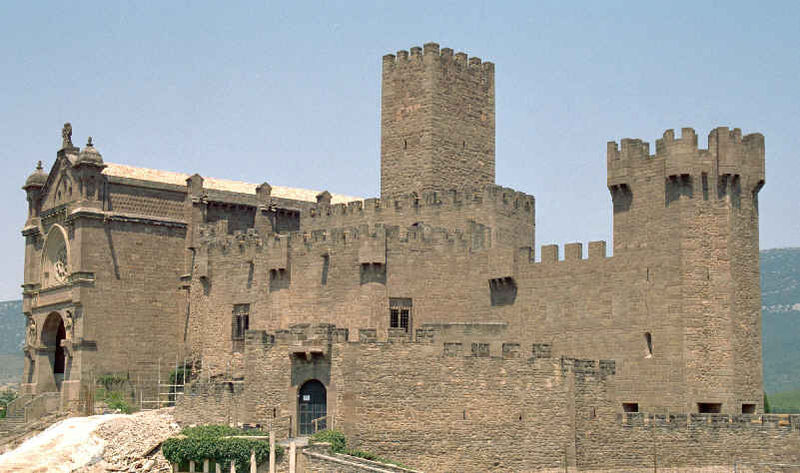
Castillo Javier, Navarra, Spain, where St Francis Xavier was born

A brief biography of Father Kapaun  on the website devoted to his beatification and canonization reads:

Father Kapaun, was born in Pilsen, Kansas in the Diocese of Wichita, Kansas on Holy Thursday, April 20, 1916. He was ordained as a Priest for the Diocese on June 9, 1940 and entered the U.S. Army Chaplain Corps in 1944.


Separated from the service in 1946, he re-entered the Army in 1948 and was sent to Japan the following year.

In July of 1950 Father Kapaun was ordered to Korea. On November 2 of that same year he was taken as a prisoner of war. In the seven months in prison, Father Kapaun spent himself in heroic service to his fellow prisoners without regard for race, color or creed.

To this there is testimony of men of all faiths. Ignoring his own ill health, he nursed the sick and wounded until a blood clot in his leg prevented his daily rounds. Moved to a so-called hospital, but denied medical assistance, his death soon followed on May 23, 1951.

The Diocese of Wichita and the Vatican have begun the formal process that could lead to Father Kapaun's canonization. In 1993, it was announced that Fr. Kapaun would receive the title of "Servant of God". 

Father Kapaun celebrating Mass during the Korean War


The same website also has this prayer:
 
Prayer for Intercession


Father Emil Kapaun gave
glory to God by following
his call to the priesthood and
thus serving the people of Kansas
and those in the military.

Father Kapaun, I ask your
intercession not only for these needs
which I mention now. . .but that I
too may follow your example of
service to God and my neighbor.

For the gifts of courage in battle
and perseverance of faith,
we give you thanks O Lord.

Recite one Our Father, one Hail Mary,
and one Glory Be.

Below is a video of that prayer being led in a church by a priest who received his First Holy Communion from Father Kapaun. At the end is the voice of Father Kapaun giving a blessing:


Here is the trailer of a film about Father Kapaun.


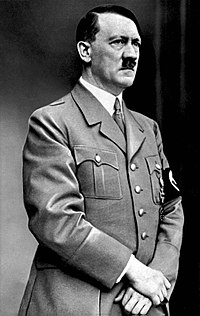
Discovering during my adolescent years such a genuinely saintly hero who shared my birthday somehow cancelled out that fact that I also shared it with one whose contribution to the world wasn't quite as positive:


19 April 2011

Columban Fr Anthony Kelly RIP

Fr Anthony (Tony) W. Kelly (1935 - 2011)

Please pray for the repose of the soul of Fr Tony Kelly who died on 12 April. I didn't know him too well as he was already in the Philippines when I entered the seminary in 1961. We worked in different parts of the Philippines and would usually meet only at occasional meetings. The words used in the obituary below sent by Fr Cyril Lovett, editor of Far East, the Columban magazine in Ireland, 'a kind and genial companion', are exactly the words I used myself the other day in an email to another Columban. This is captured, I think, in the photo above. I'm told too that he spoke the two main languages in the area where he worked, Pangasinense and Ilokano, fluently.

For us Irish, county allegiances - there are 32 counties, ironically, created by the English - are very important, especially with regard to our two main national sports, Gaelic Football and Hurling. I didn't know until now that Father Tony had been born in County Kerry, a Gaelic Football stronghold. But he grew up in County Tipperary, a Hurling stronghold, and I'm told that he was a very good hurler in his day. Tipperary is the place to which it's a long way in the famous English music-hall song from the Great War.

The restored Holy Cross Abbey, Holycross, Co Tipperary, where Father Tony spent some of his earlier years.

Fr Tony Kelly was born in Ballyduff, Tralee, Co Kerry, Ireland on 11 April 1935. He was educated at Holycross Primary School, Thurles Primary School, and Christian Brothers' School, Thurles, Co Tipperary.

He came to St Columban's College, Dalgan Park, in 1953 and was ordained priest on 21 December 1959.

Appointed to the Philippines in 1960, after language studies he was sent to work in the Archdiocese of Lingayen-Dagupan, in northern Luzon. He spent the next forty years working in various parishes of that archdiocese and later in the newly-created Diocese of Alaminos.

He returned to Dalgan in 2002 and, in his typical quiet, unobtrusive fashion, provided many small but essential services for his fellow-Columbans in the Retirement Home.

Though a very private person, FatherTony was a kind and genial companion, easy to live and work with. He was a man of deep integrity and honesty. He was selfless in all that he did, and served the people of Pangasinan with total dedication. His whole life revolved around visting the people in their homes and barrios.

Father Tony was very interested in sport and loved to talk about Tipperary hurling. He was a keen and shrewd bridge player, and was always very willing to share his bridge skills with others. A man of deep prayer and an exemplary missionary, he will be sadly missed by his family, and his many friends in the Philippines and in Dalgan.

Father Tony celebrated his Golden Jubilee in 2009. He had not been feeling well in recent months, and, once diagnosed with cancer, his illness progressed rapidly. He accepted the diagnosis with the same quiet, calm
determination that had characterised his life and ministry. He died in St Vincent’s Hospital, Dublin, on 12 April 2011.

May he rest in peace.

'Get Clean' - a one-minute video on Confession


I found the video Get Clean on the blog of Fr Ray Blake of the Diocese of Arundel and Brighton, England. He comments, 'I like this video. It understands Confession isn't about counselling, the wisdom of the priest, just about the sacramental meeting with God himself.'

The video shows a young woman accepting responsibility for her own sins and asking God's forgiveness in the sacrament of confession.

In many places confessin has fallen into disuse but where priests make themselves available, people go to confession. Three Columban priests in Cagayan de Oro, northern Mindanao, Fr Frank Chapman from Australia, Fr Jim Moynihan from New Zealand and Fr John Meaney from Ireland, spent hours each day in their latter years, in the confessional in St Augustine's Cathedral. People of all ages came even from distant places because they had heard about it.

When Fr Moynihan, a man without guile who had served in the Royal New Zealand Air Force during the War, died in 1992 someone went to file a telegram of sympathy to send to the Columbans. (In those days telegrams were still a vital form of communication here). The clerk, a long-haired young man, asked 'Is that the priest who was always hearing confessions at the Cathedral?' When told it was, as soon as he had completed the transaction he left the office and sped on his motorcycle to pay his respects.

Fr Chapman was 90 when he died in 2004. He was the last of the pre-World War II Columbans in the Phiippines, one of the pioneers in Mindanao in 1938 and superior of the new mission in Negros in 1950, was in the confession almost daily until a month before his death.

Fr John Meaney spent 58 years in the Philippines and when he died in 2006 at the age of 86 he was the oldest Columban in the country. He was a man with a feeling, Christly heart but, as I know from experience, could also be challenging in the confessional.

The three are buried together in Cagayan de Oro.


Another Columban from New Zealand, Fr Francis Vernon Douglas (in photo) is probably a martyr to the seal of the confessional. He died, probably on 27 July 1943, after having been scourged by Japanese soldiers when they tied him to a pillar in a church that he was visiting. After a few days of this they took him away. It is believed that he had been called to hear confessions in the hills. Father Franks' body was never found.

May all of us use this beautiful sacrament to receive God's unconditional forgivess, won for us on Calvary.


14 April 2011

'Hosanna to the Son of David'. Sunday Reflections, Palm Sunday Year A

Jesus entering Jerusalem on Palm Sunday. Fresco in the Parish Church of Zirl, Austria

Gospel for Procession of Palms Mt 21:1-11

When Jesus and the disciples drew near Jerusalem and came to Bethphage on the Mount of Olives,
Jesus sent two disciples, saying to them, “Go into the village opposite you, and immediately you will find an ass tethered, and a colt with her. Untie them and bring them here to me. And if anyone should say anything to you, reply, ‘The master has need of them.’ Then he will send them at once.” This happened so that what had been spoken through the prophet  might be fulfilled: Say to daughter Zion, “Behold, your king comes to you, meek and riding on an ass, and on a colt, the foal of a beast of burden.”

The disciples went and did as Jesus had ordered them. They brought the ass and the colt and laid their cloaks over them, and he sat upon them. The very large crowd spread their cloaks on the road,  while others cut branches from the trees and strewed them on the road. The crowds preceding him and those following kept crying out and saying: “Hosanna to the Son of David; blessed is the he who comes in the name of the Lord; hosanna in the highest.”

And when he entered Jerusalem the whole city was shaken and asked, “Who is this?” And the crowds replied, “This is Jesus the prophet, from Nazareth in Galilee.”

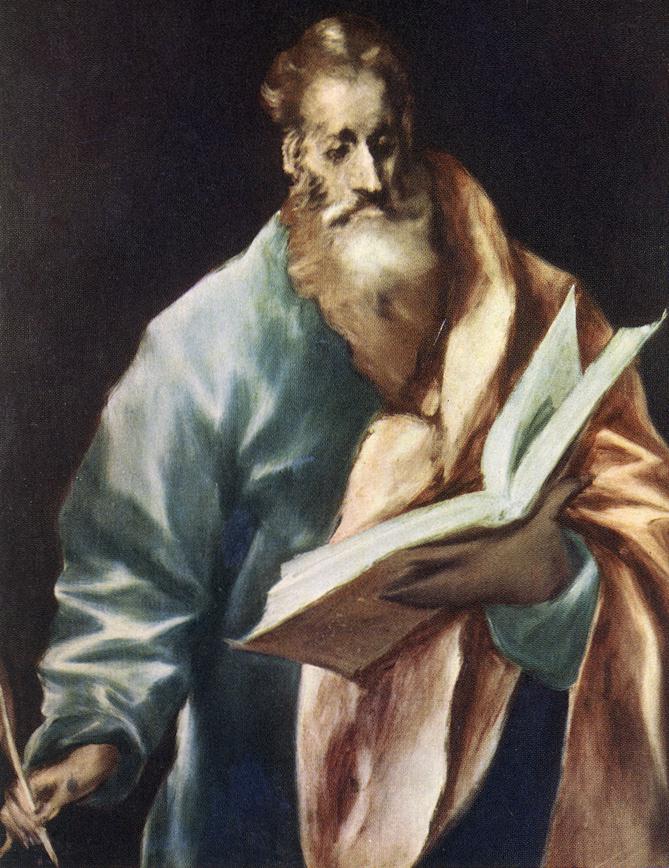
St Matthew, El Greco, 1610-14

This year has seen the overthrow of two north African leaders who had been president/dictator of their respective countries for decades. Other long-term leaders may find the same thing happening to them. The other day the previous president of the Ivory Coast, who refused to accept the election results some months ago in which he lost, was arrested this week hiding in a bunker, similar to the arrest of the lat Saddam Hussain. In February we in the Philippines marked the 25th anniversary of the overthrow of Ferdinand Marcos who made himself dictator when he couldn’t accept that his legal term as president was coming to an end.


We have many examples in history of powerful figures coming to a sorry end, people who tried to cling on to power or to glory.

From 1409 until 1963, before the coronation of a pope, while he was being carried from the sacristy of St Peters’ the Master of Ceremonies would stop the procession three times, kneel before the pope while holding burning flax and say in a loud voice, ‘Sancte Pater, sic transit gloria mundi!’ ‘Holy Father, thus passes the glory of the world!’

Jesus didn’t need anyone to hold up burning flax and remind him of what future popes were to be reminded of. As the people held up their palms and laid their cloaks on the ground for him he knew what was going to happen within a week.

I’ve often wondered if the people who welcomed Jesus into Jerusalem on Palm Sunday were the same people who shouted ‘Crucify him!’ five days later on Good Friday. I’m sure that some who welcomed him turned against him.

One of the most distressing things that can happen to a person is to be falsely accused. It is even more distressing if a person is executed for something he hasn’t done, something which happens far too often. It ‘s too late for the individual if he is declared innocent after having been put to death, though such a declaration can give some comfort to his family and defenders. (As far as I know, Jesus has never been officially declared innocent by any civil authority.)

Unlike the many dictators who have been overthrown and have died in ignominy, Jesus never sought power of any kind. He rejected any attempts of people to make him king. As he listened to the ‘Hosannas’ on Palm Sunday he was acutely aware of what was about to happen and had tried to warn his disciples in advance. But they couldn’t comprehend any such end, or that many of them would come to a similar end.

It goes against our grain as we try to come to terms that God who became Man was born in a stable and died a terrible death on a cross, after unimaginable torture and insults. This is the depth of God’s love for us.

Holy Week focuses on our Lord Jesus Christ, on his sufferings and, at the Easter Vigil, on his Resurrection and the hope of our own resurrection at the end of time. It helps us to see that in his sufferings , which he embraced wholeheartedly in obedience to the will of his Father and out of his love for us, Jesus is with us in ours. We cannot celebrate Easter Sunday if we do not share Good Friday with Jesus. And we won’t be able to participate in Good Friday unless we see through the emptiness of so much adulation as Jesus did on Palm Sunday.

+++
Readings for Mass 
Isaiah 50:4-7
Phil 2:6-11
Mt 26-14 – 27:66 or 27:11-54

Christ Carrying the Cross (detail), El Greco 1580s

Holy Week by Fr Thomas Rosica CSB

13 April 2011

Religious Professions in Belgium and the Philippines yesterday

Sr Marie Elizabeth of the Divine Mercy OCD (standing)

Yesterday Sr Marie Elizabeth of the Divine Mercy, from the Philippines, pronounced her first vows in the Carmel of Our Lady of Consolation, Vilvoorde, Belgium, the oldest existing community of Discalced Carmelite nuns in the world, founded in 1469 by Blessed John Soreth. Her companion in the photo, Sr Marie Paul Therese, also from the Philippines will make her profession, God willing, within this year. The officiaiting priest was Fr Paul De Bois OCD, a former provincial of the Discalced Carmelites in Belgium.

I visited the Carmel in Vilvoorde in 2005.

A group of Capuchin Tertiary Sisters of the Holy Family in the Philippines

Meanwhile, another Discalced Carmelite, Fr Alan Rieger OCD, an American, was the celebrant at a Mass in the Diocese of Bacolod, where I live, when seven young women made their first profession as Capuchin Tertiary Sisters of the Holy Family. I was unable to be there as I am directing some retreatants at the Carmelite Retreat House, Ozamiz City, across the road from the Carmelite Monastery. The retreat house is right on the sea-shore. Father Alan is no stranger here as he has come a number of times on official visitation.

At our Mass yesterday morning we prayed for the new Sisters in Vilvoorde and here in the Philippines.

Sr Juliet Mantos TC, after her final profession in July 2009 in Cagayan de Oro Cathedral, with Sr Maria Elena S. Echavarren TC, Superior of the Vice-Province.

The Capuchin Tertiary Sisters of the Holy Family came to the Philippines in 1982 and are now part of the Vice-Province of St Clare, with its headquarters in Cebu City. The Vice-Province includes missions in South Korea and in India. There are plans to establish a community in Sri Lanka. There are now Filipino Sisters working in Korea, India and Tanzania. The Vice-Province has Sisters from China who have had their formation here, made their professions here and are working here. Their are also eight young women from Vietnam in the Philippines who are preparing to enter the aspirancy shortly. Sr Juliet Mantos, above, is the Directress of Aspirants in Bacolod City.

The newly-professed are Sisters Ronalyn C. Moreno, Megan M. Nudalo, Soseth P. Soliva, Maricel L. Fuerzas, Markris B. Bios, Myra F. Grijaldo and Maris Stella D. Magno.

The Sisters in the group photo above are wearing the normal 'working' habit. Sisters Juliet and Elena are wearing the darker habit, worn on special occasions.

You can read about Holy Family Home, Makati City, here and about Holy Family Home, Bacolod City, where I'm unofficial chaplain and where the joy of the Sisters and of the girls they take care of gives me a real taste of the joy of the Lord, here. 'The Lord takes delight in his people' (Ps 149:4).

Every month, usually on the night of the first Saturday, the Capuchin Tertiary Sisters in Bacolod hold a two-hour vigil in the presence of the Blessed Sacrament exposed, a vigil to which the girls in Holy Family Home are invited, for vocations. As far as I know, the Sisters hold a similar vigil in their other houses.


08 April 2011

‘I have come to believe that you are the Christ, the Son of God.’ Sunday Reflections, 5th Sunday of Lent Year A

The Raising of Lazarus, Rembrandt, c1630

Readings (New American Bible, Philippines, USA)

Gospel (John 11:1-45 or 11:3-7, 17, 20-27, 33b-45)

Now a man was ill, Lazarus from Bethany, the village of Mary and her sister Martha. Mary was the one who had anointed the Lord with perfumed oil and dried his feet with her hair; it was her brother Lazarus who was ill. So the sisters sent word to him saying, “Master, the one you love is ill.” When Jesus heard this he said, “This illness is not to end in death, but is for the glory of God, that the Son of God may be glorified through it.” Now Jesus loved Martha and her sister and Lazarus. So when he heard that he was ill, he remained for two days in the place where he was. Then after this he said to his disciples, “Let us go back to Judea.” The disciples said to him, “Rabbi, the Jews were just trying to stone you, and you want to go back there?” Jesus answered,

“Are there not twelve hours in a day? If one walks during the day, he does not stumble, because he sees the light of this world. But if one walks at night, he stumbles, because the light is not in him.” He said this, and then told them, “Our friend Lazarus is asleep, but I am going to awaken him.” So the disciples said to him, “Master, if he is asleep, he will be saved.” But Jesus was talking about his death, while they thought that he meant ordinary sleep. So then Jesus said to them clearly, “Lazarus has died. And I am glad for you that I was not there, that you may believe. Let us go to him.” So Thomas, called Didymus, said to his fellow disciples, “Let us also go to die with him.”

When Jesus arrived, he found that Lazarus had already been in the tomb for four days. Now Bethany was near Jerusalem, only about two miles away. And many of the Jews had come to Martha and Mary to comfort them about their brother. When Martha heard that Jesus was coming, she went to meet him; but Mary sat at home. Martha said to Jesus, “Lord, if you had been here, my brother would not have died. But even now I know that whatever you ask of God,

God will give you.” Jesus said to her, “Your brother will rise.” Martha said to him, “I know he will rise, in the resurrection on the last day.” Jesus told her, “I am the resurrection and the life; whoever believes in me, even if he dies, will live, and everyone who lives and believes in me will never die. Do you believe this?” She said to him, “Yes, Lord. I have come to believe that you are the Christ, the Son of God, the one who is coming into the world.”

When she had said this, she went and called her sister Mary secretly, saying, “The teacher is here and is asking for you.” As soon as she heard this, she rose quickly and went to him. For Jesus had not yet come into the village, but was still where Martha had met him. So when the Jews who were with her in the house comforting her saw Mary get up quickly and go out, they followed her, presuming that she was going to the tomb to weep there. When Mary came to where Jesus was and saw him, she fell at his feet and said to him, “Lord, if you had been here, my brother would not have died.”

When Jesus saw her weeping and the Jews who had come with her weeping, he became perturbed and deeply troubled, and said, “Where have you laid him?” They said to him, “Sir, come and see.” And Jesus wept. So the Jews said, “See how he loved him.” But some of them said, “Could not the one who opened the eyes of the blind man have done something so that this man would not have died?”

So Jesus, perturbed again, came to the tomb. It was a cave, and a stone lay across it. Jesus said, “Take away the stone.” Martha, the dead man’s sister, said to him, “Lord, by now there will be a stench; he has been dead for four days.” Jesus said to her, “Did I not tell you that if you believe you will see the glory of God?” So they took away the stone. And Jesus raised his eyes and said,

“Father, I thank you for hearing me. I know that you always hear me; but because of the crowd here I have said this, that they may believe that you sent me.” And when he had said this, He cried out in a loud voice, “Lazarus, come out!” The dead man came out, tied hand and foot with burial bands, and his face was wrapped in a cloth. So Jesus said to them, “Untie him and let him go.”

Now many of the Jews who had come to Mary and seen what he had done began to believe in him.

+++

I had always believed in the Resurrection and as a young priest preached with conviction about it. However, after the sudden death of my mother in 1970 at the age of 55 I discovered that my faith in the Resurrection, while real, had been mainly in my mind. But I very quickly discovered something far more wonderful: because of my mother’s death my faith in the Resurrection had become a conviction rooted in my heart.

I can trace this almost to the exact minute. My mother died in her sleep in Ireland and when I got the news by phone in New York, where I was studying, I was having my breakfast. I was utterly shocked but after telling another Columban priest who was studying with me I felt very strongly that my mother had fulfilled her mission on earth and that we would be reunited one day.

After the funeral Mass, which I celebrated and where, for the first time, I preached with utter conviction from my heart on the reality of the Resurrection, my father, who was to die suddenly himself 17 years later, told me how utterly desolate he had felt before the Mass but how comforted and strengthened he felt after it.

In 2007 I met Father Joe Broderick, a Columban based in Japan whom I hadn’t met for 37 years, who reminded me that he was at my mother’s funeral and was still using in his funeral homilies what I had said on that occasion. I’ve no idea what I said but I know that it is the Resurrection of Jesus, which we are preparing to celebrate in the great feast of Easter in two weeks, is the central fact of our lives.I know too that people are open to the Gospel particularly at funerals.

Martha, in today’s gospel, also felt utterly desolate and maybe felt disappointment with Jesus that he hadn’t saved her brother Lazarus. Mary too used the very same words her sister had used: ‘Lord, if you had been here, my brother would not have died’.

John writes the feelings of Jesus in a way that we find elsewhere only in St Mark’s gospel. I remember being deeply struck in 1963 by a photo of Paul-Émile Cardinal Léger, then Archbishop of Montréal, weeping after a Mass in his cathedral for the soul of Pope John XXIII who had just died. Pope John was 81 when he died and his death wasn’t a tragedy, though the whole world had come to love him, especially during the last few months of his life as he struggled with cancer. But I had never seen a bishop – or any priest – weep before. Yet we find John’s stark statement in the gospel today: ‘And Jesus wept’. Here we see God who became Man expressing a grief that can only come from a loving heart, a grief that he shares with everyone suffering from the loss of a loved one.

Last Sunday I celebrated the funeral Mass of a young man of 18, the only child of a single mother, who had been fatally stabbed by another 18-year-old. Surely when Jesus wept he was weeping not only for Lazarus and his sisters, but for that young man and his mother.

It is clear in the gospel that Jesus wanted to strengthen the faith of Martha and Mary, of the apostles, and of the people so that they would believe that the Father had sent him. John tells us in the last line of today’s gospel, ‘Now many of the Jews who had come to Mary and seen what he had done began to believe in him’.

May our faith in the Resurrection grow stronger and, as we continue our Lenten penance, may our hope in our own resurrection also grow stronger. Wecan and should prepare for Easter and for our own death and resurrection by going to confession during the next two weeks.

Lord, if only you had been here
A reflection on today's gospel by Fr Thomas Rosica CSB


07 April 2011

Filipino bishop for diocese in Papua New Guinea

Bishop-elect Rolando Santos CM

VATICAN CITY, 6 APR 2011 ( VIS ) - The Holy Father:

Appointed Fr. Rolando Santos, C.M. provincial superior of the Lazarist Fathers, Philippines , as Bishop of Alotau-Sideia (area 20,000 [square kilometres], population 245,000, Catholics 41,137, priests 23, religious 43), Papua New Guinea . The bishop-elect was born in Rizal, Philippines, in 1949 and ordained a priest in 1974.

The priests and brothers of the Congregation of the Mission, to which Bishop-elect Santos belongs, are known in the English-speaking world as the Vincentians, after their founder, St Vincent de Paul. They are widely known elsewhere as the Lazarists, from the priory of St Lazarus in Paris, which they were given shortly after their foundation.

Before he was appointed Provincial in the Philippines Bishop-elect Santos had been working in Papua New Guinea.

As far as I know, Bishop-elect Santos will be the second Filipino bishop to be ordinary, ie, the person in charge, usually a bishop, of a jurisdiction in the church. The other is Bishop Wenceslao S. Padilla CICM of the Prefecture Apostolic of Ulaanbaatar, which covers the vast country of Mongolia (1,566,500 square kilometres, compared to the 300,000 of the Philippines) with a Catholic population in 2004 of 168 out of 2,400,000 people. Bishop Padilla is the first bishop ever in Mongolia and the first Filipino to be appointed bishop of a jurisdiction outside of the Philippines.

Fr Ronald Magbanua CICM, ordained in his native Silay City, Negros Occidental, with some of his CICM confreres from the Philippines and the Democratic Republic of the Congo in Mongolia.

Father Raymundo Sabio MSC, who grew up in Negros Occidental, has been the ordinary of the Prefecture Apostolic of the Marshall Islands since December 2007. He had been in Korea for many years. The prefecture, in contrast to that of Ulaanbaatar, has a land area of only 161 square kilometres, made up of small islands spread over a wide area of the Pacific. Catholics number around 4,600 out of a population of about 51,000.

Fr Raymundo Sabio MSC (center) at his installation as Prefect Apostolic of the Marshall Islands.