02 January 2012

The resilience of the faith of Filipinos


We are still in the Christmas Season until the Feast of the Baptism of the Lord, observed on Sunday in countries that celebrate the Epiphany as a holyday of obligation on 6 January. In countries that celebrate the Epiphany on Sunday the Feast of the Baptism of the Lord will be observed on Monday 9 January.

Katolikongpinoy posted the old English song, The Coventry Carol, as a tribute to those who died in Tropical Storm Sendong/Washi a week before Christmas, especially in Iligan City and in Cagayan de Oro City, both in northern Mindanao, .

Last night I received a text from a friend whom I first met in the 1970s when he was a houseboy in a Columban parish, Eddie, now a teacher. He was born on the feast of St Edward the Confessor, 13 October, and was given the English king's name at baptism. The feast is not observed in the Philippines but his parents got the name from the Almanake, an annual booklet listing all the saints for each day. Eddie's father was murdered when Eddie was a child, leaving his mother Marilyn with four young children.

I officiated at the wedding of Eddie and Anita. I remember one unpleasant detail: it was the only time in 40 years in the Philippines that I had  the highly contagious 'sore eyes', known as 'piskat' in the Cebuano language. I had to borrow dark glasses and managed not to share this 'gift' with anyone else!

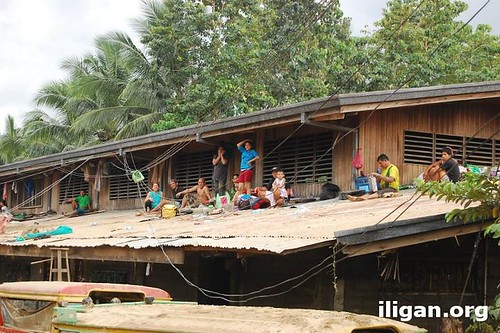
Last night I received a text message in Cebuano from Eddie about his daughter Ea, who is married and lives in Iligan City. It read: Ea and the children are now in our house because they were caught in the floods. By the mercy of God, they were all saved because they were able to climb onto the roof of their house. We are taking care of them, especially the children so that they will forget the trauma.

I texted back to Eddie in Cebuano: The mercy of God they were saved.

Eddie replied in English exactly as posted here: yes . . . GOD IS GOOD ALL THE TIME . . . ALL THE TIME GOD IS GOOD.

Pope Benedict's General Prayer Intention for January is: Victims of Natural Disasters. That the victims of natural disasters may receive the spiritual and material comfort they need to rebuild their lives.

Countless Filipinos have respond in the way the Holy Father wishes, taking care of the immediate material needs of the victims of the storm. That included prisoners in one jail who do a lot of carpentry work offering to build coffins to be sent to the stricken cities, a very urgent need.

The father in the video is mourning his dead child. Eddie thanks God that his daughter and grandchildren were saved. We cannot understand such things. But Eddie lost his father to a violent and unjust death and knows how precious life is and that it is a gift from God.

One of the greatest gifts God has given the people of the Philippines is a resilient faith, a faith that has a strong sense of gratitude. May it always be so.

29 December 2011

'God takes delight in his people.' Sunday Reflections for the Solemnity of Mary, Mother of God

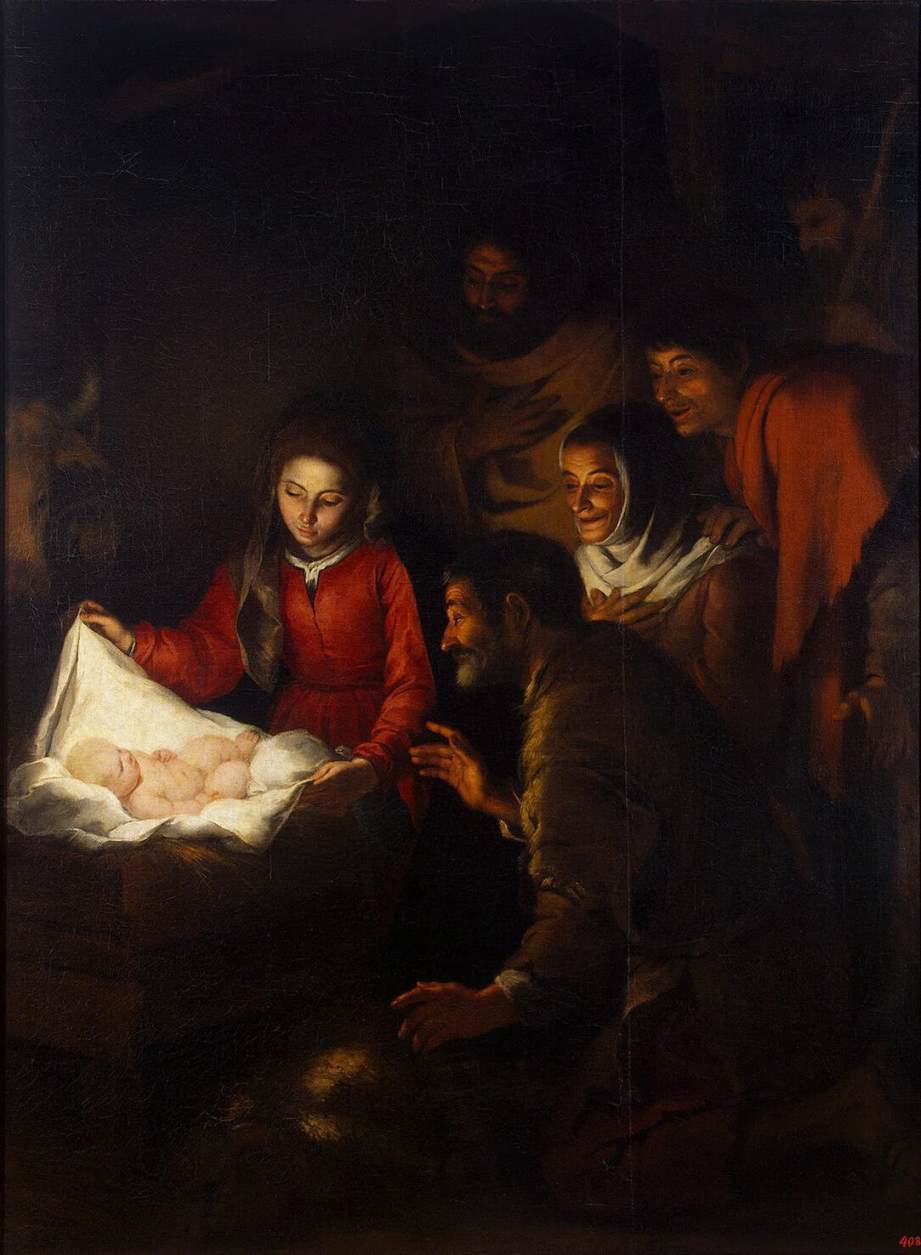
Adoration of the Shepherds Murillo, painted 1646-50

Readings (New American Bible: Philippines, USA)

Gospel Luke 2:16-21 (Jerusalem Bible: Australia, England & Wales, India [optional], Ireland, New Zealand, Pakistan, Scotland, South Africa)

The shepherds hurried away and found Mary and Joseph, and the baby lying in the manger. When they saw the child they repeated what they had been told about him, and everyone who heard it was astonished at what the shepherds had to say. As for Mary, she treasured all these things and pondered them in her heart. And the shepherds went back glorifying and praising God for all they had heard and seen; it was exactly as they had been told.

When the eighth day came and the child was to be circumcised, they gave him the name Jesus, the name the angel had given him before his conception.

+++

An Soiscéal Lúcás 13:33-37 (Gaeilge, Irish)

San am sin d’imigh na haoirí anonn go Beithil go deifreach, agus fuair siad Muire agus Iósaef, agus an naíonán ina luí sa mhainséar. Agus ar a fheiceáil dóibh, d’inis siad an ní a dúradh leo mar gheall ar an leanbh seo. Agus cách a chuala, b’ionadh leo na nithe a dúirt na haoirí leo. Agus thaiscigh Muire ina cuimhne na nithe seo uile, ag machnamh orthu ina croí. Agus chuaigh na haoirí ar ais ag glóiriú agus ag moladh Dé faoinar chuala siad agus a bhfaca siad, de réir mar a bhí ráite leo.

Nuair a bhí ocht lá caite agus é le timpeallghearradh, tugadh Íosa mar ainm air, mar a thug an t-aingeal air sular gabhadh sa bhroinn é.

+++

My mother once told me a story about her mother-in-law, my grandmother Jane Coyle, that made me smile. I was Jane’s first grandchild and my father John was her only child. When my mother would take me over to my grandparents’ house, as she often did, the neighbours would drop by to admire the infant, as people do. Some would say I looked like my father while others would say I was more like my mother. 

My mother discovered that after we had gone, especially if some had remarked that I looked like her, my grandmother Jane would go to the next-door neighbour and ask, ‘Doesn’t my grandson look like my son?’ (Jane Coyle died when I was three and was buried the day my brother was baptised).

One of my favourite lines in the Bible – I quoted it in Sunday Reflections for Christmas Day – is ‘God takes delight in his people’ (Psalm 149). This is from the Grail translation of the psalms, the version used in the English-language editions of the Breviary, the Prayer of the Church.  Psalm 149 appears in Morning Prayer of the Church on the first Sunday of the four-week cycle and on all solemnities and feasts. I had been praying this psalm regularly for many years before the line jumped out at me some time in the early 1990s. I can’t remember how or why.  

 I have some idea of the delight that God takes in us and in me from the kind of delight that I and most people I know take in a newborn child, even one whose circumstances of birth aren’t ideal. Murillo captures the delight of the shepherds, the light reflected from the infant Jesus showing it in their faces. We see St Joseph in the background. The light of Jesus is reflected most strongly in the face of Mary, who looks so young and almost vulnerable, a quieter delight on her face, taking in the wonder of what has happened. But Mary kept all these things, pondering them in her heart (Luke 2: 19). She is wearing red, the colour associated with the Holy Spirit, rather than the conventional blue. And Mary said to the angel, "How shall this be, since I have no husband?" And the angel said to her, "The Holy Spirit will come upon you, and the power of the Most High will overshadow you; therefore the child to be born will be called holy, the Son of God (Luke 1:34-35). 

The eyes of all in Murillo’s painting, and our eyes, are drawn to the Baby Jesus, the painter capturing the truth of St John’s words: In him was life, and the life was the light of men. The light shines in the darkness, and the darkness has not overcome it (John 1:4-5). 

Murillo’s painting is similar in ways to Gerrit van Honthorst’s Adoration of the Child that I used on Christmas Day and that you can see below. I do not know if Murillo was familiar with the earlier painting in which Mary is also wearing red and holding the cloth in almost the same way. Again, all eyes are on The light that shines in the darkness, and the darkness has not overcome it. 

Both paintings capture the beautiful blessing that God asked Moses to give to his people and that we listen to in the First Reading today: The LORD bless you and keep you:  The LORD make his face to shine upon you, and be gracious to you: The LORD lift up his countenance upon you, and give you peace. "So shall they put my name upon the people of Israel, and I will bless them" Numbers 6:24-27). God truly takes delight in us, his sons and daughters. The birth of Jesus invites us to take delight in God who became Man.  

 [Scripture quotations from Revised Standard Version, Catholic Edition].

 Adoration of the Child Gerrit van Honthorst, painted c.1620


  Look toward the Lord and be radiant; let your faces not be ashamed (Cf Ps34[33]). Communion Antiphon, Third Sunday in Ordinary Time.

+++
Today is the eighth day of the Octave of Christmas. I came across this video on a couple of blogs today. The normally fearful Linus is not afraid to explain the meaning of Christmas by quoting the words of St Luke directly on the stage. At the words of the angel, 'fear not' he drops his security blanket, rather like the Apostles after Pentecost.

. 


Happy New Year!
Manigong Bagong Taon!
¡Feliz Año Nuevo!
Athbhliain Faoi Mhaise Daoibh!

27 December 2011

'Some Children See Him'


I found this beautiful song, which I don't remember hearing before, on the website of the Columbans in Ireland. It was written by Alfred Burt. The male singer is Tennessee Ernie Ford (1919-1991). I'm not sure who the female singer is nor do I know who put the video together. The recording goes back to the 1950s.

26 December 2011

' . . . on the feast of Stephen': a tale of two men named Wenceslas (Václav)


Good King Wenceslas is one of the most popular Christmas carols in Britain and Ireland but not known at all in the Philippines. It is sung here by The Irish Rovers, a Canadian group consisting of immigrants from Ireland, mostly Northern Ireland. You can detect the accent of their place of origin in their singing. The words are by John Mason Neale, whose translation of Veni, Veni Emmanuel is the best known English version of O come, O come Emmanuel. The tune of Good King Wenceslas goes back to the 13th century.

The opening line of this carol is 'Good King Wenceslas looked out on the feast of Stephen'. Today, 26 December, is the feast of St Stephen, the first Christian martyr. 'Good King Wenceslas' is also venerated by the Church as a martyr, his feast falling on 28 September. However, though he is on the universal calendar of the Church he's not venerated at all in the Philippines since 28 September is also the feast day of the first Filipino saint, San Lorenzo Ruiz, like St Stephen and St Wenceslas, a martyr.

Cardinal Miloslav Vlk, then Archbishop of Prague, with skull of Saint Wenceslas during a procession on 28 September 2006

The King Wenceslas referred to is St Wenceslas, Duke of Bohemia, assassinated on 28 September 935. He was declared king after his death. He is the patron saint of the Czech Republic and the main square in Prague is named after him.

The Czech version of the saint's name is 'Václav', the Christian name of the recently deceased former president, Václav Havel, and also of the current president, Václav Klaus.

Václav Havel, 5 October 1936 - 18 December 2011.
First President of the Czech Republic, 2 February 1993 - 2 February 2003

Pope Benedict: Václav Havel a visionary leader

Pope Benedict's telegram to President Václav Klaus of the Czech Republic:

His Excellency Václav Klaus President of the Czech Republic. Having learned with sadness of the death of Former President Václav Havel, I send heartfelt condolences at this time of national mourning. I join all those who have gathered in Saint Vitus' Cathedral for the solemn funeral rite in commending the soul of the deceased to the infinite mercy of our heavenly Father. Remembering how courageously Mr Havel defended human rights at a time when these were systematically denied to the people of your country, and paying tribute to his visionary leadership in forging a new democratic polity after the fall of the previous regime, I give thanks to God for the freedom that the people of the Czech Republic now enjoy. As a pledge of spiritual strength and comfort, I cordially impart my Apostolic Blessing to all who mourn in the hope of resurrection to new life.


BENEDICTUS PP. XVI
 

24 December 2011

'In Times Like These', a song dedicated to the victims of Typhoon Sendong/Washi


Glenn, a young man who is studying law at Xavier University in Cagayan de Oro, the southern Philippines city hardest hit by Typhoon Sendong/Washi a week ago, wrote and recorded this song. His sister Maria Fe produced the video. Their parents, Joe and Annie, are teachers who grew up in Columban parishes in Mindanao.

Please continue to pray for the souls of those who have died, for those who are trying to pick up the pieces and for the many people who are working together for a better future for all.

23 December 2011

Typhoon Sendong/Washi: Pastoral Letter of Archbishop of Cagayan de Oro, Philippines

Photos from Iligan.org

 
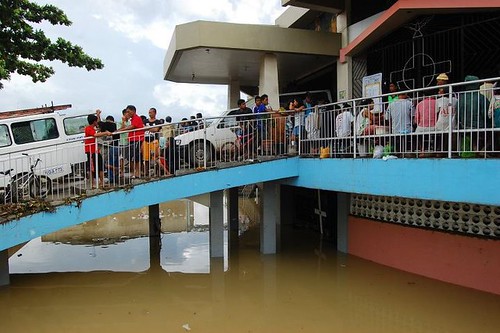
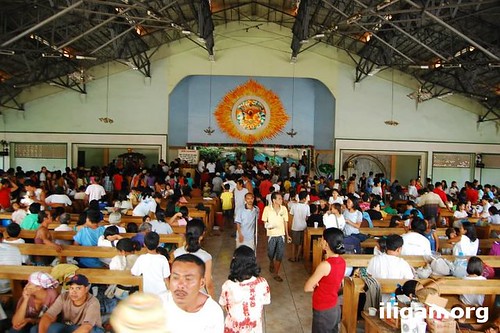
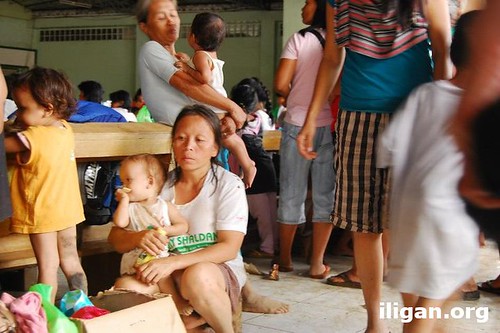
San Lorenzo Ruiz Church, Iligan City, a temporary evacuation center.

The Columbans are very familiar with both Iligan City and Cagayan de Oro City, the two places most badly hit by Typhoon Sendong/Washi last weekend. 'Washi' was the international code-name for the storm, 'Sendong' the Philippine name. Columban Fr Rolly Aniscal lost a cousin and her two children in Cagayan de Oro. The children's bodies haven't been recovered yet.

I'm posting photos taken in Iligan City, which is about 90kms from Cagayan de Oro City.

New Zealander Fr Paul Finlayson and his team in the Columban-run Holy Rosary Parish, Agusan, Cagayan de Oro, are taking care of 25 families whose homes were destroyed or badly damaged. Venus Guibone, who worked in Ireland as a Columban lay missionary whose house was very badly damaged is among those being accommodated at St John Vianney Theological Seminary.

San Lorenzo Ruiz Church

Pastoral Letter - A Time to Grieve, A Time to Build

A Pastoral Letter written by Archbishop Antonio J. Ledesma, S.J., Archbishop of Cagayan de Oro, addressed to the faithful people of the Archdiocese of Cagayan in this moment of pain and sorrow as the city was devastated by the typhoon Sendong.

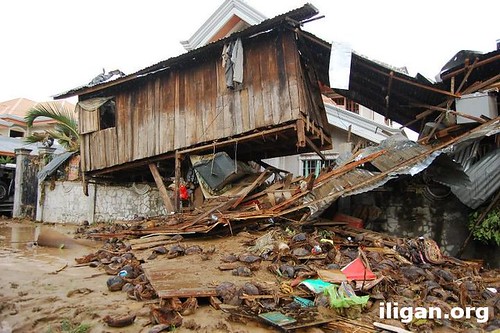
Christmas is a time of rejoicing. But this year in Cagayan de Oro we mourn and express our condolence for all those who have perished in the wake of Typhoon Sendong on Dec. 16-17. In some places entire families have been washed away by the rampaging waters of Cagayan de Oro River. Others died in their sleep trapped inside their homes by the sudden rise of flood waters that reached unprecedented levels past midnight.

There are accounts of how a mother clutching the hands of two children was able to escape from the floods, only to lose another child whose pleas for help could be heard receding in the darkness of the night. Another family was able to hold on to an uprooted balete tree that floated out into Macajalar Bay and reached the shores of Camiguin Island. Floating bodies have been retrieved from the waters of nearby towns. The low-lying communities of Cala-Cala and Isla de Oro have been leveled by a tsunami-like river surge.


Practically everyone in the city has lost some relatives or personal friends in this calamity. Schools have lost some students and staff; officemates have not reported because of the condition of their homes; and a number of unidentified bodies still await a dignified burial in a common resting place.

In some of our churches, the Misa de Gallo could not be celebrated because the church became a refuge for families seeking higher ground. In one chapel, even pigs and other animals were brought in and tied at the foot of the altar. Lay ministers were scandalized until the parish priest reminded them that this must have been the same situation in the stable of that first Christmas night. We have also started to celebrate the Misa de Gallo in the evacuation centers. [Note: the Misa de Gallo is the novena of nine pre-dawn Masses in thanksgiving for the gift of our faith celebrated throughout the Philippines from 16 to 14 December. A resilient faith is one of the most remarkable gifts God has given the people of the Philippines.]

Even as we grieve with those directly affected by this tragedy, the challenge for us now is to help re-build the lives and broken homes of the survivors. The evacuation centers are slowly being organized in the distribution of relief goods – in particular, water, food, medicine, mats, blankets, etc.

We are heartened to see many volunteers and organizations coming forward to share their time, energy and resources. Our affected parishes and social action workers have collaborated with government agencies in running these centers in the City Central School, West City Central School, Macasandig, Bulua, Kauswagan, Iponan, etc. The 14 centers have been providing shelter and basic needs to more than 7,000 families and 43,000 individuals. Meanwhile, the listed number of dead and missing has reached nearly 700 persons.


The longer-term challenge is to help these families re-build their present homes or re-locate to safer grounds. We are heartened by the visit of President Aquino and other public officials. His declaration of a state of national calamity and observation that families should not be allowed to return to extremely dangerous areas are welcome statements. Last January 2009, the city had already experienced severe flooding. Some old-time residents recalled that this phenomenom happens every forty years. But barely three years after that, Typhoon Sendong came with greater vengeance.

We have to cast a broader look at the entire river basin area of Cagayan de Oro River. This extends to the northwestern part of Bukidnon and surrounding areas. Illegal logging and irresponsible mining activities have contributed to the degradation of the environment and the siltation of the river bed. The erection of man-made structures may have also impeded the natural flow of the waters. (The continued hydraulic flush mining along Iponan River has likewise caused widespread flooding of the Canitoan-Iponan areas of the city.) It is for these reasons that we have to strengthen the Cagayan de Oro River Basin Management Council, a multi-sectoral effort to protect and conserve our most precious natural resource after our human resources – the river system.

As we approach Christmas week and the coming of the new year, may I propose a Family-Adopt-a-Family program. Families unaffected by the flood can invite to their homes an evacuee family, especially those that have lost their homes or loved ones, for a few days or for a Christmas meal to share the spirit of the season. May the new-born child in the manger fill us with the spirit of solidarity in moments of adversity and hope in the sharing of love and life with one another. “Make us know the shortness of our life that we may gain wisdom of heart” (Ps. 90).

These people had been on the roof for two days.

22 December 2011

'There is nothing further for him to say.' Sunday Reflections for Christmas Day

Adoration of the Child, Gerrit van Honthorst, painted c.1620

'God takes delight in his people'. [Psalm 149, Grail translation, used in the Breviary.]

Readings (New American Bible, used in the Philippines, USA):


Each Mass has its own specific prayers and readings. By attending any of them we fulfill our obligation on this great holy day.

The beginning of the Holy Gospel according to John (John 1:1-18). This gospel is read at the Mass During the Day. The translation is that of the Revised Standard Version - Catholic Edition).

In the beginning was the Word, and the Word was with God, and the Word was God. He was in the beginning with God; all things were made through him, and without him was not anything made that was made. In him was life, and the life was the light of men. The light shines in the darkness, and the darkness has not overcome it.

There was a man sent from God, whose name was John. He came for testimony, to bear witness to the light, that all might believe through him. He was not the light, but came to bear witness to the light. The true light that enlightens every man was coming into the world. He was in the world, and the world was made through him, yet the world knew him not.

He came to his own home, and his own people received him not. But to all who received him, who believed in his name, he gave power to become children of God; who were born, not of blood nor of the will of the flesh nor of the will of man, but of God. And the Word became flesh and dwelt among us, full of grace and truth; we have beheld his glory, glory as of the only Son from the Father. (John bore witness to him, and cried, "This was he of whom I said, 'He who comes after me ranks before me, for he was before me.'")

And from his fulness have we all received, grace upon grace. For the law was given through Moses; grace and truth came through Jesus Christ. No one has ever seen God; the only Son, who is in the bosom of the Father, he has made him known.


+++
 
An Soiscéal, Eoin 1:1-18 (Gaeilge, Irish)
 
Bhí an Briathar ann i dtús báire
agus bhí an Briathar in éineacht le Dia,
agus ba Dhia an Briathar.
Bhí sé ann i dtús baire in éineacht le Dia.
Rinneadh an uile ní tríd
agus gan é ní dhearnadh aon ní dá ndearnadh.
Is ann a bhí an bheatha
agus ba é solas na ndaoine an bheatha.
Agus tá an solas ag taitneamh sa dorchadas,
ach níor ghabh an dorchadas é.

Bhí fear a tháinig ina theachtaire ó Dhia,
agus Eoin a ba ainm dó.
Tháinig sé ag déanamh fianaise
chun fianaise a thabhairt i dtaobh an tsolais
chun go gcreidfeadh cách tríd.
Níorbh é féin an solas
ach tháinig ag tabhairt fianaise i dtaobh an tsolais.
An solas fírinneach
a shoilsíonn gach aon duine,
bhí sé ag teacht ar an saol.
Bhí sé ar an saol
agus is tríd a rinneadh an saol,
agus níor aithin an saol é.

Chun a chuid féin a tháinig
agus níor ghlac a mhuintir é.
Ach an uile dhuine a ghlac é,
thug sé de cheart dóibh
go ndéanfaí clann Dé díobh,
dóibh seo a chreideann ina ainm,
an mhuintir nach as folanna a rugadh iad
ná as toil feola,
ná as toil fir ach ó Dhia.

Agus rinneadh feoil den Bhriathar
agus chónaigh sé inár measc,
agus chonacamar-na a ghlóir,
a ghlóir mar Aonghin ón Athair,
lán de ghrásta agus d’fhírinne.Tagann Eoin ag tabhairt fianaise ina thaobh
agus glaonn in ard a ghutha:
“É seo an té a ndúirt mé faoi:
‘An té atá ag teacht í mo dhiaidh,
tá an tosach aige orm mar bhí sé ann romham.’”

Óir ghlacamar uile as a lánmhaireacht,
sea, grásta ar ghrásta.
Tugadh an dlí go deimhin trí Mhaois,
ach tháinig an grásta agus an fhírinne trí Íosa Críost.
Ní fhaca aon duine riamh Dia.
An tAonghin atá i gcochall chroí Dé,
eisean a d’aithris.

+++

'There is nothing further for him to say'

On the Monday of the Second Week in Advent, the Second Reading in the Office of Readings is from The Ascent of Mount Carmel by St John of the Cross. Here is a brief extract from that reading that for me says everything:

When God gave us, as he did, his Son, who is his one Word, he spoke everything to us, once and for all in that one Word. There is nothing further for him to say.

+++

'Mary kept all these things, pondering them in her heart' [Luke 2:19, Gospel of Mass During the Day].

+++


Christmas in Our Hearts is one of the most popular Christmas songs in the Philippines and first appeared in 1990. The words were written by Rina Cañiza and Jose Mari Chan and the music by the latter. Here he sings it with his daughter Liza.
 
Malipayon nga Pascua!
 
Nollaig shona daoibh!
 
Happy Christmas!

¡Feliz Navidad!