09 August 2012

Pope Benedict's Prayer Intentions for August 2012


General Intention
Prisoners. That prisoners may be treated with justice and respect for their human dignity.
Missionary Intention
Youth Witness to Christ. That young people, called to follow Christ, may be willing to proclaim and bear witness to the Gospel to the ends of the earth.


08 August 2012

The Dominican habit and my vocation


Today is the feast of St Dominic. When I was a child my father, John, whose 25th death anniversary is 11 August, used to take me to High Mass on days such as Easter Monday and Whit Monday. Sometimes it would be to St Mary of the Angels Capuchin Church in Church Street, Dublin, sometimes to St Saviour's Dominican Church in Dominick Street, not too far away from the Capuchins. He loved High Mass. As a child I didn't!

He probably brought me to St Saviour's on other occasions too because I distinctly remember, when I was six or seven, being attracted by the habit of the Dominican friars I saw there. I guess that that was God stirring within me a sense that he was calling me to be a priest. When I began to think seriously about the priesthood at the age of 13 I never considered the Dominicans as I wanted to be a missionary priest - and a secular one, not a religious. But the Irish Dominicans have worked in Trinidad for many years, something I don't think I was aware of at the time.

St Dominic, El Greco (painted 1586-90)

Some years ago the Irish Dominican friars decided to go back to wearing their habit in their priories. All their vocation literature shows them wearing it. They have been doing very well for vocations in recent years and their blog, Irish Dominican Vocations, is well worth checking out. Read There are No Vocations! on 30 July.

The vocation director, Fr Gerard Dunne OP, told me a revealing story when I met him in 2010. One of the friars was to celebrate Mass in a nearby convent of religious sisters. As it was within walking distance he decided to wear his habit. On the way he met a not young religious sister from another convent who upbraided him for doing so. Habits were 'old hat'. Further on a young man stopped him and said, 'You're a priest, right? Well I'm getting married tomorrow and I'd like to go to confession'.

Speaking of confession, I met a friend today home from Belgium where she lives with her Belgian husband and their three children. She told me that her parish priest refuses to hear their confessions. 'Confession belongs to the past', he says. She doesn't know what to do. 'We have to come to the Philippines to go to confession'.

It's noteworthy too that as the Catholic Church dropped so many symbols, Friday abstinence, Lent - what we have now is 'Lent Lite' - and other things, we have become more aware of the Ramadan fast of Muslims and respect it, and sport has replaced Mass as 'liturgy'. In the past we in the West wore our 'Sunday best' going to church. Now the vast majority don't bother going to church but dress up to support their team in sporting events. In fact it has become a rip-off where teams change their gear, of which they have two or three different sets of colours, every year so that the companies they're associated with will sell more unneeded clothing, sometimes made by underpaid workers. and they know that children will put pressure on their parents to buy the new, unnecessary gear.


Ordinations of Fr Denis Murphy OP and Fr Maurice Colgan OP, St Saviour's Church, Dublin, 18 September 2011

I'm well aware that a habit or a clerical suit doesn't make a person a saint. Before Christmas 1981 when travelling on a train from London to Glasgow, wearing a red sweater and jeans, a woman asked me if I was a priest. Around the same time - I was home for Christmas from studies in Toronto - I went to visit the parents of a young Irishman I had come to know in a prayer group there. His mother opened the door. She had never met me before and didn't know I was coming but greeted me with a big smile and said 'You're very welcome, Father!'

But symbols are important. On recent visits home to Ireland I have made a point of wearing clerical dress most of the time. I have been approached by people young and old precisely because of this, once in the airport in Abu Dhabi by a newly graduated student from a Dublin university. He old me he was one of very few of his contemporaries who practised the faith and he appreciated the affirmation he got. On another occasion, flying from Abu Dhabi to Dublin I got into a genuine dialogue of faith with a Muslim man who not only had the Quran saved in his mobile phone but parts of the Bible also.

So on the feast of St Dominic I thank God for my Dad who dragged me unwillingly to St Saviour's all those years ago and for the friars I saw there whose white habits, without my being aware of it at the time, carried a quiet, personal message from God.

Take a look too at Irish Rosary Priest, the blog of 91-year-old Fr Gabriel Harty OP who is spending August working at Knock Shrine.

06 August 2012

A death in the Great War 95 years ago today

Transfiguration of Christ, Paolo Veronese, painted 1555-56

Today is the 34th anniversary of the death of Pope Paul VI. It is also the 95th death anniversary of Corporal Lawrence Dowd, an older half-brother of my maternal grandmother Annie Dowd Collins. He died in battle near Ieper (Ypres). I was the first relative to locate his grave, in September 2001. Other relatives whom I didn't know personally, independently of me, found it a few years later, learned that I had been there first and contacted me, leading to new friendships and learning more about my Uncle Larry. 

Potijze Chateau Grounds Cemetery where Larry Dowd is buried

I had always thought that Larry was the eldest of the second family of my great-grandfather Michael Dowd. His first wife died. At the age of 35 he married Mary Geraghty who, as my late mother used to put it, 'came in over five children at the age of 19'. But I learned from my newly-discovered cousins that Larry was the youngest of the first family. They have some of his letters, written to his eldest brother, and official documents from the British War Office. I smiled when I learned that he had been demoted from sergeant to corporal over something that had happened on a boat from England to Belgium.

Larry had enlisted in the Royal Dublin Fusiliers but had been transferred  a number of times, as happened to so many. His birth place is given as Dunleek, Lanarkshire, Scotland. However, that can't be right as we had no connections whatever with Scotland. In his last letter he wrote that he had applied to be moved back to his 'beloved Dubs'. When I was growing up we Dubliners were known as 'jackeens'. But when the Dublin Gaelic football team was so successful in the 1980s the term 'Dubs' more or less replaced it. However, the nickname seems to go back to the Dublin Fusiliers.

At Uncle Larry's grave, September 2001


Ten days after Larry's death the saintly Fr Willie Doyle SJ died in the same battle.

A friend of mine in Dublin says The light of heaven on him whenever he refers to someone who has died. When Peter, James and John went up Mount Tabor with Jesus they caught, ever so briefly, a glimpse of the light of heaven. May it shine on my Uncle Larry and on all who died in that awful war. One of the hopeful things I experienced very strongly when I visited Ieper is that the memory of all the dead who died in the Great War in that area, no matter what side they were on, is held in reverence by the people there. Perhaps in the hell that men created there some saw - and still see - the presence of the Transfigured Christ.

May that be so for all of us.

03 August 2012

'Believe in him whom he has sent'. Sunday Reflections, 18th Sunday in Ordinary Time Year B


From The Gospel of John (2003)  Directed by Philip Saville. Jesus played by Henry Ian Cusick; narrator, Christopher Plummer.
[John 6:24-35 is found between 2:36 and 4:24 in the video.]

Readings (New American Bible: Philippines, USA) 

Readings (Jerusalem Bible: Australia, England & Wales, India [optional], Ireland, New Zealand, Pakistan, Scotland, South Africa)

Gospel John 6: 24-35 (Revised Standard Version – Catholic Edition)

So when the people saw that Jesus was not there, nor his disciples, they themselves got into the boats and went to Caperna-um, seeking Jesus. When they found him on the other side of the sea, they said to him, "Rabbi, when did you come here?" Jesus answered them, "Truly, truly, I say to you, you seek me, not because you saw signs, but because you ate your fill of the loaves. Do not labor for the food which perishes, but for the food which endures to eternal life, which the Son of man will give to you; for on him has God the Father set his seal." Then they said to him, "What must we do, to be doing the works of God?" Jesus answered them, "This is the work of God, that you believe in him whom he has sent." So they said to him, "Then what sign do you do, that we may see, and believe you? What work do you perform? Our fathers ate the manna in the wilderness; as it is written, 'He gave them bread from heaven to eat.'" Jesus then said to them, "Truly, truly, I say to you, it was not Moses who gave you the bread from heaven; my Father gives you the true bread from heaven. For the bread of God is that which comes down from heaven, and gives life to the world." They said to him, "Lord, give us this bread always." Jesus said to them, "I am the bread of life; he who comes to me shall not hunger, and he who believes in me shall never thirst. 


Fr Ragheed Ganni (20 January 1972 - 3 June 2007)

‘He was a raconteur par excellence and a font of knowledge - we discussed everything and anything from the metaphysical to the trivial. A young and gauche student at the time, I learnt about Iraq and about theology; about the workings of the college in the summer and the best places to eat pizza. I was amazed at his command of English and Italian and his perennial good spirits and big smile - he was and will always be an inspiration’.

That is how an Irish student at the Pontifical Irish College in Rome described Fr Ragheed Ganni, a Chaldean Catholic priest murdered along with three subdeacons, Basman Yousef Daud, Wahid Hanna Isho, and Gassan Isam Bidawed, on 3 June 2007 just after the young priest had celebrated Mass in Holy Spirit parish, Mosul, Iraq. Fr Ganni, an engineer, studied theology in Rome, and stayed at the Irish College, where he was known as 'Paddy the Iraqi', 'Paddy' being a generic term for Irishmen, derived from the name of Ireland's - and Nigeria's - patron, St Patrick.

Dear young people, do not be satisfied with anything less than Truth and Love, do not be content with anything less than Christ. Pope Benedict spoke these words at the prayer vigil on 20 August last year during the Madrid World Youth Day. He also said, we need to speak with courage and humility of the universal significance of Christ as the Saviour of humanity and the source of hope for our lives.

In these words he is echoing the answer of Jesus to the question put to him in today's gospel, What must we do, to be doing the works of God? His reply: This is the work of God, that you believe in him whom he has sent.

In Verbum Domini the Pope wrote, We cannot keep to ourselves the words of eternal life given to us in our encounter with Jesus Christ: they are meant for everyone, for every man and woman. ... It is our responsibility to pass on what, by God's grace, we ourselves have received. In his Angelus talk on 29 October 2006 Benedict said, The rediscovery of the value of one's own Baptism is at the root of every Christian's missionary commitment, because as we see in the Gospel, those who allow themselves to be fascinated by Christ cannot fail to witness to the joy of following in his footsteps. 

In that same talk, in which he commented on the gospel of that Sunday, Mark 10:46-52, Pope Benedict said, The decisive moment was the direct, personal encounter between the Lord and that suffering man. They found each other face to face:  God with his desire to heal and the man with his desire to be healed; two freedoms, two converging desires. He was speaking of the meeting between the blind Bartimaeus and Jesus.

One theme that comes through repeatedly in the teaching of Pope Benedict is that our faith is in a person, Jesus, God who became man. Jesus tells us clearly that it is his Father's will that we believe in him.

Another theme of Benedict is the joy that Jesus promised those who follow him. This was the theme of the Pope's message for this year's World Youth Day held on Palm Sunday in Rome.


Pope Benedict uses a very striking term,those who allow themselves to be fascinated by Christ. I don't think I've heard it put that way before by anyone. Benedict insists so often that our faith is faith in the person of Jesus, not in a set of doctrines, though they come to us from Jesus through his Church.


Just over a year before his death Father Ragheed spoke at the Eucharistic Conference in Bari, Italy. He said, Mosul Christians are not theologians; some are even illiterate. And yet inside of us for many generations one truth has become embedded: without the Sunday Eucharist we cannot live.


In the context of the war in Iraq he spoke eloquently about the Sunday Eucharist: It is among such difficulties that we understand the real value of Sunday, the day when we meet the Risen Christ, the day of our unity and love, of our (mutual) support and help. There are days when I feel frail and full of fear. But when, holding the Eucharist, I say 'Behold the Lamb of God, who takes away the sin of the world', I feel His strength in me. When I hold the Host in my hands, it is really He who is holding me and all of us, challenging the terrorists and keeping us united in His boundless love.


In normal times, everything is taken for granted and we forget the greatest gift that is made to us. Ironically, it is thanks to terrorist violence that we have truly learnt that it is the Eucharist, the Christ who died and risen, that gives us life. And this allows us to resist and hope. 

This martyr of our times was clearly fascinated by Christ and understood that it is the Risen Lord himself whom we meet when we come together for Sunday Mass.

Jesus chides the people and questions their real reason for coming after him: Truly, truly, I say to you, you seek me, not because you saw signs, but because you ate your fill of the loaves. Yet he doesn't regret having fed them and he sees that for at least some of them their reason is somewhat deeper. He gives a straight answer to their question about the work of God: This is the work of God, that you believe in him whom he has sent. It is not being 'good', it is not being 'nice'. It is in accepting him for who he is, God who became man, who lived among us, died for us on the Cross, rose from the dead on Easter Sunday and is with us in an intimate and challenging way when we celebrate Mass, especially on Sunday.

All who met Father Ragheed described him as a joyful person. There is something very joyful, in the sense that Jesus meant, in a person who can not only tell you where the best pizza in Rome is, who is not content with anything less than Christ and who is prepared to go back to a very dangerous situation in order to be able to celebrate Mass with his people and to stay with them in the midst of war.

Read more about Fr Ragheed Ganni here and here.

31 July 2012

Olympic Gold medallist: 'I had to say "thank you" to God for the gift I was given'.

Ronnie Delany of Ireland winning the 1500 metres in the Melbourne Olympics 1956

My mother wasn't particularly into sports but I remember her running up the stairs early on Saturday 1 December 1956 to wake up my brother and me with the great news that Ronnie Delany had won the 1500 metres in the Melbourne Olympics. I was 13 then, eight years younger than the Gold medallist. He has been a hero of mine ever since and last November I met him for the first time at the annual dinner of the past pupils' union of O'Connell Christian Brothers' School in Dublin where Ronnie had done the first three years of his secondary education.

When I told him that he had been a hero to me down through the years he expressed a simple delight that for me is the mark of true humility.

Stamp issued in Ireland on the 50th anniversary of Delany's win

In one interview he said, Religion played an integral part in my life and still does, I did resort to prayer for comfort, to create confidence and assurance and I always prayed intensely before my races that I would receive the ability to perform to my level of capability. [Emphasis added]. In another interview in 1997 he said that before the Melbourne final, I resigned myself quietly to the will of God and prayed not so much for victory but the grace to run up to my capabilities.

One of the images that was captured in photos and in video is of Delany kneeling down after his victory and quietly praying, ending with the Sign of the Cross. Last Sunday I heard him on RTÉ Radio 1 on Bowman Sunday, a programme in which John Bowman features items from the archives. In one interview, done recently I think, Ronnie Delany said, I had to say 'thank you' to God for the gift I was given'. He spoke of praying to favourite saints before a race, especially to Mary. When he came home from Melbourne some individual or some group presented Ronnie with a specially commissioned piece of Waterford Crystal which showed him kneeling in prayer after the race.


In the video above Irish broadcaster Jimmy Magee presents four Irish Olympic medallists. The first 2:29 minutes is devoted to Ronnie Delany and shows him praying after winning.

On a popular Sunday radio programme broadcast the day after Delany's victory a ballad written for the occasion had the refrain, Good lad, Ronnie, we're proud you won. You proved you were best in the long run.

While he doesn't run quite as fast at 77 as he did when 21 he's still very much on the go as he carries the Olympic Flame in Dublin in one of very few fine days this summer.


Six years ago Ronnie said, I’m very lucky. I’ve had a fulfilled life. My life is my family but I have somehow always managed to maintain the myth of the Olympic champion. May God grant him many more years to inspire not only his grandchildren but all Irish people to have a faith will lead them in whatever endeavour to resign themselves quietly to the will of God and pray not so much for victory but the grace to run up to their capabilities.

26 July 2012

'He himself knew what he would do.' Sunday Reflections, 17th Sunday in Ordinary Time Year B


From The Gospel of John (2003) Directed by Philip Saville. Jesus played by Henry Ian Cusick; narrator, Christopher Plummer.

Readings (New American Bible: Philippines, USA) 


Readings (Jerusalem Bible: Australia, England & Wales, India [optional], Ireland, New Zealand, Pakistan, Scotland, South Africa)

Gospel John 6:1-15 (Revised Standard Version – Catholic Edition)

After this Jesus went to the other side of the Sea of Galilee, which is the Sea of Tiberi-as. And a multitude followed him, because they saw the signs which he did on those who were diseased. Jesus went up on the mountain, and there sat down with his disciples. Now the Passover, the feast of the Jews, was at hand. Lifting up his eyes, then, and seeing that a multitude was coming to him, Jesus said to Philip, "How are we to buy bread, so that these people may eat?" This he said to test him, for he himself knew what he would do. Philip answered him, "Two hundred denarii would not buy enough bread for each of them to get a little." One of his disciples, Andrew, Simon Peter's brother, said to him, "There is a lad here who has five barley loaves and two fish; but what are they among so many?" Jesus said, "Make the people sit down." Now there was much grass in the place; so the men sat down, in number about five thousand. Jesus then took the loaves, and when he had given thanks, he distributed them to those who were seated; so also the fish, as much as they wanted. And when they had eaten their fill, he told his disciples, "Gather up the fragments left over, that nothing may be lost." So they gathered them up and filled twelve baskets with fragments from the five barley loaves, left by those who had eaten. When the people saw the sign which he had done, they said, "This is indeed the prophet who is to come into the world!" Perceiving then that they were about to come and take him by force to make him king, Jesus withdrew again to the mountain by himself.  


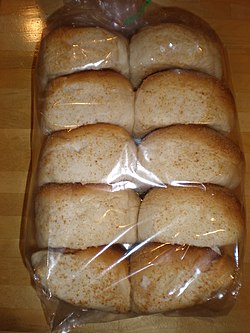
Pandesal, from the Spanish pan de sal, 'salt bread', is a very common part of breakfast in the Philippines. For some, it may be the only food available at that time. One night nearly 40 years ago in Ozamiz City, Mindanao, I was upstairs in the convento (presbytery/rectory) of the Cathedral parish before going to my own place in another building on the church plaza. I was looking out the window and saw only two people, a man and a woman. The man was a beggar whom I didn't know and the woman was Guria - from her baptismal name, Gregoria. She was a simpleminded, gentle creature, maybe in her 40s, who might wander in and out of a classroom of Immaculate Conception College, now La Salle University, also located in the cathedral plaza, and start doodling on the board. I was chaplain in the college department of ICC at the time.

I could see that Guria had two pieces of pandesal in her hand. She went over to the beggar, who hadn't approached her, and gave him one of the pieces. The only witnesses to this were God and myself - and, I presume, the heavenly host.

Guria herself would occasionally ask for something but I had learned that she was from nearby Tangub City, about 18 kms away, and came from a family that wasn't poor.

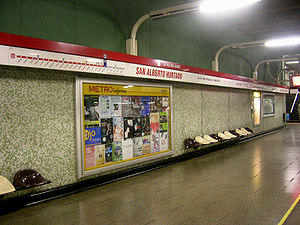
Stamp for canonisation of San Alberto Hurtado, 2005


St Alberto Hurtado Cruchaga SJ (22 January 1901 - 18 August 1952) was the second Chilean to be canonised, by Pope Benedict XVI on 23 October 2005. Columban Fr John Griffin, a New Zealander who spent many years in Zambales, Philippines, before going to Chile, wrote of San Alberto, Providence was always on his side. At a meeting one night his board of directors was unwilling, for lack of funds, to approve a new project. In the midst of discussions there was an unexpected call for Fr Hurtado to attend to someone at his front door. He had a brief conversation with the caller who said she wanted to leave a gift to help the great work he was doing.

He gratefully put her envelope in his pocket, wished her a good evening and returned to his meeting. He looked at the contents of the envelope as he sat down. Then he tossed a check onto the table saying, ‘There you are, ye of little faith!’ It was for one million pesos – worth about US$30,000 at that time. 

Father John tells us about the young Alberto, The saint’s father was murdered by rustlers when Alberto was only four. This forced his mother to sell the farm, settle all debts and move with her two small sons to Santiago. There they depended on the charity of her brother and other relatives who took turns in sheltering them and giving them a home.
At eight years of age Alberto gained a scholarship to San Ignacio College, administered by the Jesuits, and he was there for the next nine years. He and his classmates deeply admired one of their teachers, Fr Fernando Vives.

He was a man who took seriously the social implications of the Gospel teachings and of the Encyclical Letter of Pope Leo XIII, ‘Rerum Novarum’ and he instilled a lasting social conscience in most of his students.

He further tells us, Overall, Fr Hurtado is best known and remembered throughout Chile for his ‘Hogar de Cristo’ (Christ’s Home) Foundation. The seed for this was sown late one night when he was on his way home to San Ignacio. He met a man who was in poor health, had eaten nothing all day and had nowhere to go.

St John tells us in today's gospel, Lifting up his eyes, then, and seeing that a multitude was coming to him, Jesus said to Philip, "How are we to buy bread, so that these people may eat?" This he said to test him, for he himself knew what he would do. 


Father Alberto, after his encounter with the homeless, hungry man, for whom he did what he could, spent the rest of his life serving those with nothing, especially through the Hogar de Cristo Foundation which he began on 19 October 1944. 'The Church's best-kept secret is its social teaching' has become a cliché that isn't quite true. But there are some who don't want to hear it.

Today's gospel is proclaimed within the Holy Sacrifice of the Mass. St John uses the feeding of the thousands to develop his teaching on the Eucharist. A parish priest from Ireland told me recently that he sees the faith for many in Ireland as having become a private matter, with no connection to life. Jesus is showing us today that the Eucharist and daily life are very much connected. The people had followed Jesus because they wanted to hear what he had to say and maybe some had hopes of being healed of their illnesses. Receiving the Bread of Life in Holy Communion is a public commitment that we are willing to share the love of Jesus with those who don't know him and with those who do know him but may lack the basic necessities.

San Alberto was a gifted man, one who could inspire and organise others and who continues to do so 60 years after his death. Guria would not be seen by most as 'gifted'. But she had the gift of a loving faith, even if she wasn't aware of it. Just like St Martin of Tours, while still a soldier, giving half his cloak to a poor man, she gave half of what she had to another poor man. She was giving breakfast food late at night. 

The Visayan word - the Visayan languages are spoken in the central Philippines and in most of Mindanao - for breakfast is pamahaw, from the root word bahaw, leftovers. Jesus tells the apostles to gather up the leftovers - and they filled twelve baskets in doing so. This shows the utter generosity of God and calls us to reverence the food he gives us, our daily bread and the Eucharistic Bread of Life.

Guria in giving half of her food to the beggar in the cathedral plaza, San Alberto Hurtado tending to the homeless man he met and seeing the multitude in need like him, were both doing what Jesus did when he fed the five thousand. Guria, St Martin of Tours and Father Alberto in sharing what they had with an individual poor person were sharing what they had received from God with God himself, the Word who became Flesh, Jesus the Lord who has identified himself with such persons.


You can find a couple of short videos of San Alberto here. What struck me in watching them was his joyfulness, even his childlike delight in being caught by a movie camera. These are on the website of Hogar de Cristo: Padre Alberto Hurtado. It's in Spanish but is easy to explore.

25 July 2012

World Youth Day 2013: promo trailer


The next World Youth Day will take place in Rio de Janeiro, Brazil, this week next year. The trailer above has just been released. It was produced by the French WYD National Team.

The English-language website for WYDRio2013 is here. The Facebook account is here.