Showing posts with label prayer. Show all posts

18 March 2015

Week of Prayer for persons with dementia, 12 - 19 March 2015


St Joseph with the Flowering Rod, Jusepe de Ribera, early 1630s [Wikipedia]

This is an edited version of a post published on 13 March 2013. May I ask anyone who reads this to check out the website of Pastoral Care Project. This wonderful ecumenical ministry, initiated by Mrs Frances Molloy in the Archdiocese of Birmingham, England, focuses on the spiritual needs of persons with dementia.

Though this post is somewhat late, as the week of prayer is almost over, it is never too late to care for persons with dementia, often family members or individuals we have known in their prime. God calls some to this form of loving service every day.


Long ago I used to be a young man
and dear Margaret remembers that for me.

The Dutchman is a song written by Michael Peter Smith in 1968. It's about an elderly couple living in Amsterdam, Margaret and the title character. The unnamed Dutchman has dementia and Margaret cares for him with a sadness over what has happened to him over the years. It's a story of unconditional love.

 Rijksmuseum Van Gogh, Amsterdam [Web Gallery of Art)]


I became involved with The Pastoral Care Project in the Archdiocese of Birmingham, England, while based in the Columban house in Solihull from September 2000 to April 2002 when I moved to Glasgow, Scotland, though I stayed there for only a few months before returning to the Philippines. The mission statement of the Project is above. I first got involved when the founder of the Project, Mrs Frances Molloy, invited me to celebrate Mass in a home for old people.

The mission statement of the Project is above. The focus is on the spiritual needs of those who are frail, especially mentally. The Project also works with carers, not all of whom would understand the spiritual needs of those they are looking after. And the carers themselves need some care too as their work can be very demanding.

Michael Peter Smith's song, sung with such feeling by the late Liam Clancy and Tommy Makem, captures something of what is asked of those taking care of a person with dementia, who is very often a spouse or a parent, in the lines, Long ago I used to be a young man / and dear Margaret remembers that for me.

The Project's Dementia Prayer Week has been running since 12 March and ends on the 
Feast of St Joseph, 19 March. .

I studied Shakespeare's As You Like It in school. (Stratford-on-Avon is in the Archdiocese of Birmingham and not far from the office of The Pastoral Care Project.) I always liked the famous speech of Jacques, The Seven Ages of Man or All the world's a stage. But a 15-year-old cannot understand the closing lines in the way Richard Pasco does here:
Last scene of all, 
That ends this strange eventful history,  
Is second childishness and mere oblivion,  
Sans teeth, sans eyes, sans taste, sans everything.


All the world's a stage,
And all the men and women merely players;
They have their exits and their entrances,
And one man in his time plays many parts,
His acts being seven ages. At first, the infant,
Mewling and puking in the nurse's arms.
Then the whining schoolboy, with his satchel
And shining morning face, creeping like snail
Unwillingly to school. And then the lover,
Sighing like furnace, with a woeful ballad
Made to his mistress' eyebrow. Then a soldier,
Full of strange oaths and bearded like the pard,
Jealous in honor, sudden and quick in quarrel,
Seeking the bubble reputation
Even in the cannon's mouth. And then the justice,
In fair round belly with good capon lined,
With eyes severe and beard of formal cut,
Full of wise saws and modern instances;
And so he plays his part. The sixth age shifts
Into the lean and slippered pantaloon,
With spectacles on nose and pouch on side;
His youthful hose, well saved, a world too wide
For his shrunk shank, and his big manly voice,
Turning again toward childish treble, pipes
And whistles in his sound. Last scene of all,
That ends this strange eventful history,
Is second childishness and mere oblivion,
Sans teeth, sans eyes, sans taste, sans everything.

Portrait of an Old Woman, Peter Bruegel the Elder, c.1564 
Alte Pinakothek, Munich [Web Gallery of Art]

Prayer for Healthcare Professionals © 

O Lord we pray for all those whose work is dedicated 
to the assessment and care of those who experience 
confusion and profound memory loss. 
For all who work as Healthcare Professionals in 
everyday care and research into the causes of 
Dementia of many kinds. 
May they be strengthened in their work of service 
with individuals, families and friends. 
Through Jesus Christ our Lord. 
Amen. 

Written in 2009 for the Pastoral Care Project by Rev’d Canon Edward Pogmore, 
Chaplain Co-ordinator, The George Eliot Hospital NHS Trust and North Warwickshire Primary Care Trust.


At the Pastoral Care Project we are often asked how parishes can respond to  dementia.  One  example where a parish visiting team offers lunch after the regular first Friday Mass. This helps overcome isolation and also provides opportunities for parishioners to contribute; through baking, or serving.

For those whose interest is music and leading services there are also online resources. Music touches people at a very deep level and so sensitivity to the choice of music or hymns is important because of the memories evoked.

Hymns which they would have sung at Mass are helpful; times when they felt God was very close, confirmed by one carer so wisely said “People with dementia have an awareness of God – God is also aware of them.” 

Carers too need support. When a former elderly carer whose wife with dementia was hospitalised he would visit and help feed her and give her drinks and ensure she was well cared for, even though he was frail himself. He would sing songs, hymns and pray with her. After her death he found comfort  through praying and writing poetry; by donating the poems to the Pastoral Care Project he felt solidarity with people with dementia and those in similar caring situations.


The following poem was composed by him as he reflected on the painting of the Washing of the Feet by Sieger Koder during one of the Pastoral Care Projects’ Quiet Day for Carers.

The Water of your Blessing©

Do not kneel, My Lord.
It is for me to kneel
At your feet.
With your loving hands you
Touch my feet…
Loving, gentle hands
Which made those who ail and hurt
Whole and well.
You washed your feet with
Water cool and soothing…
The water of your
Blessings.
You dried my feet with
Linen pure; and gentleness.
But infinitely you washed
My heart…
A heart ‘oft grieved and saddened.
You drew me close and called me Son,
And filled me with your grace,
Your great Amen

The Week of Prayer and Awareness of Dementia 12-19th March involves us all – for everyone knows someone who is affected by dementia. Think about dementia?  You can’t help but get involved in some small way to make a difference to someone? Baking a few scones, sharing with a neighbour or sell to friends and raise a few desperately needed pounds for the Pastoral Care Project . You will be helping others through us to create opportunities to make the lives of people with dementia more fulfilling

Please contact Frances Molloy, Project Manager at the Pastoral Care Project, St George's House, Gerards Way, Coleshill, B46 3FG, England. telephone 01675 434035,www.pastoralcareproject.org.uk email info@pastoralcareproject.org.uk

06 February 2015

Jesus 'got up and went out to a deserted place, and there he prayed.' Sunday Reflections, 5th Sunday in Ordinary Time, Year B

Apostle St Peter, El Greco, 1610-14
Museo de El Greco, Toledo, Spain [Web Gallery of Art]


Readings (New American Bible: Philippines, USA)

Readings (Jerusalem Bible: Australia, England & Wales, India [optional], Ireland, New Zealand, Pakistan, Scotland, South Africa) 


As soon as they left the synagogue, they entered the house of Simon and Andrew, with James and John. Now Simon’s mother-in-law was in bed with a fever, and they told Jesus about her at once. He came and took her by the hand and lifted her up. Then the fever left her, and she began to serve them.
That evening, at sunset, they brought to him all who were sick or possessed with demons. And the whole city was gathered around the door.  And he cured many who were sick with various diseases, and cast out many demons; and he would not permit the demons to speak, because they knew him.

In the morning, while it was still very dark, he got up and went out to a deserted place, and there he prayed. And Simon and his companions hunted for him.  When they found him, they said to him, “Everyone is searching for you.” He answered, “Let us go on to the neighboring towns, so that I may proclaim the message there also; for that is what I came out to do.” And he went throughout Galilee, proclaiming the message in their synagogues and casting out demons.


In the morning, while it was still very dark, he got up and went out to a deserted place, and there he prayed. I have always been drawn by this text and similar ones elsewhere in the Gospels. People often ask me how to pray. Last Tuesday Pope Francis spoke about prayer at Mass in Santa Marta. Here is how Vatican Radio's website reports on what he said. I have highlighted parts of the report and added some [comments].

(Vatican Radio) Daily contemplation of the Gospel helps us to have true hope, said Pope Francis Tuesday morning during Mass celebrated in the Casa Santa Marta chapel. In his homily, the Pope again urged people to take 10 minutes out of their day to pick up the Gospel and talk to the Lord, rather than waste it on TV soap operas or listening to other peoples’ gossip.

Focusing on the passage from the Letter to the Hebrews on hope, Pope Francis said that “keeping our gaze fixed on Jesus” is the core of hope.  He stressed that if we do not listen to the Lord, we may be “optimistic or positive” people but without the hope that we learn “from contemplating Christ”.  [Optimism and Christian hope are not the same thing. Some are optimistic by nature, some not. Either may have Christian hope or not. His faith and hope in God, not his sunny and optimistic nature, enabled my close friend and Columban confrere, Fr Rufus Halley, shot dead in Mindanao on 28 August 2001, to live for twenty years in a situation that was always tense and often dangerous. His close friend Gaudencio Cardinal Rosales, Archbishop Emeritus of Manila, wrote of him: I knew of the intensity with which Father Rufus lived his own Christian faith, how he began each day with an hour of adoration before the Blessed Sacrament, the centrality of the Mass in his life.]


Fr Rufus Halley (1944 - 2001)

This led the Holy Father to speak of "contemplative prayer”.  The Pope said that "it is good to pray the Rosary every day", to talk "with the Lord, when we have a problem, or the Virgin Mary or the Saints ..". But, "contemplative prayer" is important and this can only be done "with the Gospel in hand".

He said: "'How do I contemplate with today’s Gospel? I see that Jesus was in the middle of the people, he was surrounded by a large crowd. Five times this passage uses the word 'crowd'. Did Jesus ever rest? This would lead me to think: 'Always with the crowd ...'. Most of Jesus’ life was on the streets, with the crowd. Did he ever rest? Yes, once, says the Gospel, he was sleeping on the boat but the storm came and the disciples woke him. Jesus was constantly in the midst of the people. And this is how we look at Jesus, contemplate Jesus, imagine Jesus. And so I tell Jesus what comes to my mind to tell him".

Continuing his reflection on today's Gospel, Pope Francis spoke of how Jesus realizes that a sick woman in the crowd touched him. Jesus, the Pope said, "not only understands the crowd, he feels the crowd", "he feels the heartbeat of each of us, everyone. He cares for each and every one of us, always!". [Most of the healing stories in the Gospel are about individuals Jesus met on the way, not persons who had an appointment with him. He saw the individual in the crowd.]

Christ Raises the Daughter of Jairus, Friedrich Overbeck, 1815
Staatliche Museen, Berlin [Web Gallery of Art]

The case of the chief of the synagogue who goes "to speak to him of his daughter who was seriously ill” is similar: [Jesus] leaves everything to takes care of the matter. The Pope went on to depict the scene: Jesus arrives in the home, the women are crying because the little girl is dead, but the Lord tells them to be calm and they scorn him. Here, the Pope said, we see "the patience of Jesus."

And then after the resurrection of the child, instead of saying "Praise be God!", Jesus  tells them: "Please give her something to eat". Pope Francis noted "Jesus always thinks of the little things." [For years 'Please give her something to eat' has been one of my favourite lines in the Gospels since it shows so clearly the thoughtfulness and humanity of Jesus, God and Man. I see him with a smile on his face, with a twinkle in his eye as he looks at the girl, maybe even winking at her.]

The Pope then pointed out "What I have just done with this Gospel is a prayer of contemplation: take up the Gospel, read and imagine the scene, imagine what happens and talk to Jesus, from the heart".

"And with this we allow hope to grow, because we have our gaze fixed, we keep our eyes fixed on Jesus. We should all carry out this contemplative prayer. 'But I have so much to do!' At home, 15 minutes, pick up the Gospel, a small passage, imagine what happened and talk with Jesus about it. [God invited Father Rufus to spend an hour in adoration each morning. He doesn't invite most Christians to do that. But is there anyone really so busy that they cannot create a 15-minute space with the Lord each day? We can do this even on the bus, on the jeepney, on the commuter-train, on the plane.] So your gaze will be fixed on Jesus and not so much on a TV soap opera, for example. Your ears will be focused on the words of Jesus and not so much on your neighborhood gossip ... ".

"This is how contemplative prayer helps us in hope. Living the substance of the Gospel. Always pray”.

Pope Francis invited people to "pray your prayers, pray the rosary, talk with the Lord, but also carry out this contemplative prayer keeping your gaze fixed on Jesus". Hope comes from this prayer, he said, adding "our Christian life unfolds in that context, between memory and hope":

"Memory of our past journey, memory of so many graces received from the Lord. And hope, looking at the Lord, who is the only one who can give me hope. And in order to gaze at the Lord, to know the Lord, we pick up the Gospel and carry out this contemplative prayer. Today, for example, try for 10 minutes - 15, no more – to read the Gospel, picture it and say something to Jesus. And nothing more. And so your knowledge of Jesus will be bigger and your hope will grow. Do not forget, keeping our eyes fixed on Jesus. And in order to do this contemplative prayer".


26 July 2013

'Lord, teach us to pray'. Sunday Reflections, 17th Sunday in Ordinary Time Year C


The Lord's Prayer, James Tissot

Readings (New American Bible: Philippines, USA)                                  

Readings(Jerusalem Bible: Australia, England & Wales, India [optional], Ireland, New Zealand, Pakistan, Scotland, South Africa)

Gospel Luke 11:1-13 (Revised Standard Version – Catholic Edition)

Jesus was praying in a certain place, and when he ceased, one of his disciples said to him, "Lord, teach us to pray, as John taught his disciples." And he said to them, "When you pray, say: "Father, hallowed be thy name. Thy kingdom come. Give us each day our daily bread; and forgive us our sins, for we ourselves forgive every one who is indebted to us; and lead us not into temptation." And he said to them, "Which of you who has a friend will go to him at midnight and say to him, 'Friend, lend me three loaves; for a friend of mine has arrived on a journey, and I have nothing to set before him'; and he will answer from within, 'Do not bother me; the door is now shut, and my children are with me in bed; I cannot get up and give you anything?' I tell you, though he will not get up and give him anything because he is his friend, yet because of his importunity he will rise and give him whatever he needs.  And I tell you, Ask, and it will be given you; seek, and you will find; knock, and it will be opened to you. For every one who asks receives, and he who seeks finds, and to him who knocks it will be opened. What father among you, if his son asks for * a fish, will instead of a fish give him a serpent; or if he asks for an egg, will give him a scorpion? If you then, who are evil, know how to give good gifts to your children, how much more will the heavenly Father give the Holy Spirit to those who ask him!"


Blessed John Paul II singing the Pater Noster (Our Father) in Latin

Fr Patrick Ronan, from County Kilkenny in Ireland, was one of four Columbans jailed in China in 1952 by the Communist authorities for 'subversive activities'. Another Columban, Fr Aedan McGrath, spent nearly three years in solitary confinement in China between 1950 and 1953 because of his involvement in the Legion of Mary. All five were expelled in 1953.

Fr Ronan, known to his fellow Columbans as 'Pops', and his three companions, Frs Owen O'Kane, John Casey and Patrick Reilly, were called The Four Felons in a book published in 1958 that told their story. They were in the same prison but in separate cells and were often interrogated in the middle of the night, never knowing when they might be called out.

Unlike his three companions, Father 'Pops' always managed to sleep soundly, no matter how often he was awakened for an interrogation. When the four were eventually released and told to leave the People's Republic he learned why when they arrived in Hong Kong. The woman who had been principal when he was in kindergarten had been praying every day of his captivity for one specific intention: that he would sleep soundly.

Like the wonderful bargaining prayer of Abraham on behalf of his people in the First Reading today that woman's prayer was very down to earth and, like Abraham, she saw God as being down to earth too.

The Four Felons have all gone to their reward now. I was blessed to know two of them in the Philippines, Fr Ronan and Fr Reilly. I happened to be in Ireland when Fr 'Pops' died there in 1991 and his great friend and fellow 'felon' Fr Patrick Reilly told us a story at the funeral Mass that reminded us of the power of the very specific prayer of Fr Ronan's former teacher, though from a somewhat humorous angle. The four travelled home by boat from Hong Kong. The other three often had difficulty trying to waken Fr Ronan in the morning and suggested that he contact his friend in Ireland and ask her to stop praying for him!

I am often deeply touched by friends in the Philippines who ask me to pray for some particular intention, very often for a family member who is sick. When that person gets better they make a point of thanking me for my prayers. There's an reminder in this that, like Abraham, I'm called to pray for the people I serve.

And Pope Francis on the evening he first spoke to use as Pope reminded us of the importance of our prayers for him.

I truly believe that it is impossible for God to refuse to listen to prayer that is in harmony with his will. So many of us older people these days have family members and friends who seem to have fallen away from the Church and, in many instances, from the faith itself. There are two things we can do: live as followers of Jesus as intensely as possible and pray that their faith will be renewed.


The Scallop Shell, traditional symbol of El Camino de Santiago, The Way of St James, the pilgrimage to Santiage de Compostela.

Let us remember in our prayers this weekend the victims of the train crash in Santiago de Compostela last Wednesday, the eve of the great feast of St James in that city named after him. Many on the train must have been pilgrims to the shrine of the Apostle.


Let us pray too for Pope Francis, for the people of Brazil and for all the pilgrims to World Youth Day Rio2013 as it ends this Sunday. The English version of the anthem for this year's WYD is sung by Ooberfuse, the British band whose lead singer Cherrie Anderson is Filipino-British, her mother being from the Philippines. This group has been doing for some years through the medium of contemporary music what the Gospel demands, as the song reminds us: 

Christ invites us:
'Come to me, be my friends'.
Christ, He sends us: 
'Go! Be missionaries'.


10 March 2013

'Long ago I used to be a young man and dear Margaret remembers that for me.' National Week of Prayer and Awareness of Dementia, 12-19 March


Long ago I used to be a young man
and dear Margaret remembers that for me.

The Dutchman is a song written by Michael Peter Smith in 1968. It's about an elderly couple living in Amsterdam, Margaret and the title character. The unnamed Dutchman has dementia and Margaret cares for him with a sadness over what has happened to him over the years. It's a story of unconditional love.


I became involved with The Pastoral Care Project in the Archdiocese of Birmingham, England, while based in the Columban house in Solihull from September 2000 to April 2002 when I moved to Glasgow, Scotland, though I stayed there for only a few months before returning to the Philippines. The mission statement of the Project is above. I first got involved when the founder of the Project, Mrs Frances Molloy, invited me to celebrate Mass in a home for old people.

The mission statement of the Project is above. The focus is on the spiritual needs of those who are frail, especially mentally. The Project also works with carers, not all of whom would understand the spiritual needs of those they are looking after. And the carers themselves need some care too as their work can be very demanding.

Michael Peter Smith's song, sung with such feeling by the late Liam Clancy and Tommy Makem, captures something of what is asked of those taking care of a person with dementia, who is very often a spouse or a parent, in the lines, Long ago I used to be a young man / and dear Margaret remembers that for me.

The Project is holding a National Week of Prayer and Awareness of Dementia. One of the activities suggested is Bake 'n' Share. Those taking part are asked to Create something whereby your visit with an elderly person focuses on their interests. The visit can become a hub of activity generating memories of the moment and a feeling of fulfilment.

It doesn't have to be baking but something the older person can be involved in and that will give a sense of purpose to that person, a sense of continuity with the past. The visitor remembers that for me.

I studied Shakespeare's As You Like It in school. (Stratford-on-Avon is in the Archdiocese of Birmingham and not far from the office of The Pastoral Care Project.) I always liked the famous speech of Jacques, The Seven Ages of Man or All the world's a stage. But a 15-year-old cannot understand the closing lines in the way Richard Pasco does here: 

Last scene of all, 
That ends this strange eventful history,  
Is second childishness and mere oblivion,  
Sans teeth, sans eyes, sans taste, sans everything.


All the world's a stage,
And all the men and women merely players;
They have their exits and their entrances,
And one man in his time plays many parts,
His acts being seven ages. At first, the infant,
Mewling and puking in the nurse's arms.
Then the whining schoolboy, with his satchel
And shining morning face, creeping like snail
Unwillingly to school. And then the lover,
Sighing like furnace, with a woeful ballad
Made to his mistress' eyebrow. Then a soldier,
Full of strange oaths and bearded like the pard,
Jealous in honor, sudden and quick in quarrel,
Seeking the bubble reputation
Even in the cannon's mouth. And then the justice,
In fair round belly with good capon lined,
With eyes severe and beard of formal cut,
Full of wise saws and modern instances;
And so he plays his part. The sixth age shifts
Into the lean and slippered pantaloon,
With spectacles on nose and pouch on side;
His youthful hose, well saved, a world too wide
For his shrunk shank, and his big manly voice,
Turning again toward childish treble, pipes
And whistles in his sound. Last scene of all,
That ends this strange eventful history,
Is second childishness and mere oblivion,
Sans teeth, sans eyes, sans taste, sans everything.

Portrait of an Old Woman, Peter Bruegel the Elder, c.1564 (Web Gallery of Art)

Prayer for Healthcare Professionals © 

O Lord we pray for all those whose work is dedicated 
to the assessment and care of those who experience 
confusion and profound memory loss. 
For all who work as Healthcare Professionals in 
everyday care and research into the causes of 
Dementia of many kinds. 
May they be strengthened in their work of service 
with individuals, families and friends. 
Through Jesus Christ our Lord. 
Amen. 

Written in 2009 for the Pastoral Care Project by Rev’d Canon Edward Pogmore, 
Chaplain Co-ordinator, The George Eliot Hospital NHS Trust and North Warwickshire Primary Care Trust.

The following is a press release by the Pastoral Care Project. Bishop David Christopher McGough is an auxiliary bishop of the Archdiocese of Birmingham.

National Week of Prayer and Awareness of Dementia takes place 12th – 19th March 2013 and it is the initiative of the Pastoral Care Project.

Introducing the forthcoming Week, Bishop McGough, lead Bishop for the Pastoral Care Project said, "I am pleased to commend the national week of prayer and awareness of dementia. Few of us can imagine the isolation, and consequent anxiety, that this affliction brings both to those who suffer and their families. Through prayer let us ground ourselves in our communion with the Lord, making ourselves one with the many who suffer and those who care for them."

Everyone can participate in this week by visiting  www. pastoralcareproject.org.uk using the resources to organise an event or to join in existing event locally.    

Frances Molloy, Project Manager would like to thank everyone who gave their support last year and is hopeful that this years’ event will be supported more widely.  “It is an important week for people with dementia and for our charity, so, whether you purchase Prayer Cards or  host an event you will be helping to raise awareness and you will be supporting the ongoing work of the Pastoral Care Project.  These are difficult times which have also impacted on the people with dementia and their carers; so making use of these resources may bring about new initiatives in parishes and help to reduce the isolation.  

Reducing isolation is ongoing and to get started we are launching Bake and Share. “wonderful scones mummy used to make”  Face book message.

When you think of home made scones, what memories arise? Bake and Share is a simple way to foster parish friendships and  visit the sick and housebound. What about their carers, and their needs?  Visiting with freshly baked scones; shared over a pot of tea is an enriching experience.

This new initiative has been adopted by  Communitas - an inter-faith project. Their Coffee Morning on 14th at English Martyrs’, Birmingham will combine Prayer, baking and selling scones to raise funds for the Pastoral Care Project.

Another  known event; Camplehaye Care Home in Devon will be having an ecumenical service on Friday 15th for the residents, relatives and staff to pray and share friendship followed by Devonshire Cream Tea.

Schools – a few to date in the UK holding special assemblies. Our Lady of the Angel’s Infant School and St Joseph’s Junior School will be contributing to the liturgy and music for the Mass celebrated by Bishop David McGough Our Lady of the Angels, Nuneaton for the deanery on Wednesday 13th March at 11.00am. Prayer intentions for the and the week  should be sent to the Pastoral Care Project.

At the Pastoral Care Project we are often asked how parishes can respond to  dementia.  One  example where a parish visiting team offers lunch after the regular first Friday Mass. This helps overcome isolation and also provides opportunities for parishioners to contribute; through baking, or serving.

For those whose interest is music and leading services there are also online resources. Music touches people at a very deep level and so sensitivity to the choice of music or hymns is important because of the memories evoked.

Hymns which they would have sung at Mass are helpful; times when they felt God was very close, confirmed by one carer so wisely said “People with dementia have an awareness of God – God is also aware of them.” 

Carers too need support. When a former elderly carer whose wife with dementia was hospitalised he would visit and help feed her and give her drinks and ensure she was well cared for, even though he was frail himself. He would sing songs, hymns and pray with her. After her death he found comfort  through praying and writing poetry; by donating the poems to the Pastoral Care Project he felt solidarity with people with dementia and those in similar caring situations.


The following poem was composed by him as he reflected on the painting of the Washing of the Feet by Sieger Koder during one of the Pastoral Care Projects’ Quiet Day for Carers.

The Water of your Blessing©

Do not kneel, My Lord.
It is for me to kneel
At your feet.
With your loving hands you
Touch my feet…
Loving, gentle hands
Which made those who ail and hurt
Whole and well.
You washed your feet with
Water cool and soothing…
The water of your
Blessings.
You dried my feet with
Linen pure; and gentleness.
But infinitely you washed
My heart…
A heart ‘oft grieved and saddened.
You drew me close and called me Son,
And filled me with your grace,
Your great Amen

The Week of Prayer and Awareness of Dementia 12-19th March involves us all – for everyone knows someone who is affected by dementia. Think about dementia?  You can’t help but get involved in some small way to make a difference to someone? Baking a few scones, sharing with a neighbour or sell to friends and raise a few desperately needed pounds for the Pastoral Care Project . You will be helping others through us to create opportunities to make the lives of people with dementia more fulfilling

Parishes are contacting regularly to update the events calendar, for example, All Hallows in Miskin, Cardiff diocese are having a mass on 19th March the feast of St Joseph a lovely closing to the week of prayer. 
 
We will help where we can, or let us know what your parish or school might be organising? For further information or donations please contact Frances Molloy, Project Manager at the Pastoral Care Project, St Gerard’s, Coventry Road, Coleshill, B46 3ED, telephone 01675 434035, www.pastoralcareproject.org.uk email info@pastoralcareproject.org.uk


30 January 2013

'A quirky kind of prayer' from the late Fr Tom Cahill SVD

Fr Tom Cahill SVD (1946 - 2013)

This morning at breakfast I was reading the February 2013 issue of Intercom, the monthly 'Pastoral and Liturgical Resource' of the Irish Catholic Bishops' Conference. It had an article, Year of Faith, Year of Thanks, by Fr Tom Cahill SVD, whom I've known since our schooldays and with whom I kept in touch over the years, from his time in Flores, Indonesia, to his many years back in Ireland. Father Tom died on 15 January, a few days after getting a massive stroke. The photo above was taken in 2011 at a gathering in St Patrick's, Maynooth, of the ordination class of 1971.

In his article, Father Tom emphasized the importance of thanking God each day. He wrote, Someone wryly remarked that the most difficult arithmetic to learn is the one that teaches us how to count our blessings. We can't be joyful without being thankful. He goes on to say, We didn't ask to be born yet don't regret that we were. Thanking God daily for this most precious gift helps us start each day with joy in our heart and not gripe in our belly. Happily acknowledging that our intelligence and abilities are gifts freely given, ensures that they are spurs to service and not prods to pride.

Further on Father Tom says, There are still more: gifts of faith in God and hope in his promises. Not only is our present life a gift but also our future eternal life is an even greater one. What would life be like without anything to hope for after death?

He came across what he describes as 'a quirky kind of prayer' and followed the advice of the late Irish comedian Hal Roach who, when he got a gale of laughter from his audience would say, Write it down; it's a good one!  This is what Father Tom wrote down:

Dear God, we rejoice and give thanks for earthworms, bees, ladybirds and broody hens; for humans tending their gardens, talking to animals, cleaning their homes and singing to themselves; for the rising of the sap, the fragrance of growth, the invention of the wheelbarrow and the existence of the teapot, we give thanks. We celebrate and give thanks. Amen.


The other day I came across an article in the December 2012 issue of Catholic Mountain Star, the newspaper of the Diocese of Nelson, British Columbia, Canada, by Fr Harry Clarke, an Irish friend of mine who is a parish priest there. He was sharing Impressions of the Eucharistic Congress, held in Dublin last June. Father Harry wrote:

The Abbot of Glenstal, drew our attention to an insight of Dublin writer, James Joyce. Joyce observed that the Church must deal with Irish people as they really are and know what they are like - an ordinary man, on an ordinary day, with ordinary thoughts and temptations, surrounded by ordinary people. 

It seems to me that he is right in this. Ireland was invaded by “devotional religion” from Europe after 1860. From then on preaching was so often not connecting with the ordinary person’s daily life. As the story goes one farmer, after Sunday Mass, put it like this: “a more ignorant priest would have suited us better”. The 10,000 or so who attended each day, mostly salt of the earth Irish, were not honored or valued in this way by the homilies I heard at daily Mass.

As I wasn't present at the Congress I can't say whether or not I agree with Father Harry's final sentence in the quotation. But I fully agree with the importance of the Irish people as they really are and know what they are like - an ordinary man, on an ordinary day, with ordinary thoughts and temptations, surrounded by ordinary people.

I remember Fr Ronan McGrath in my first year in the seminary, back in 1961-62, drawing to our attention that when we went home at the end of the year we would find the same people doing the same things, the milkman, the bread man and others doing their daily rounds, part of the fabric of life. He spoke about St Joseph in his carpenter's shop, probably getting complaints from some customers.

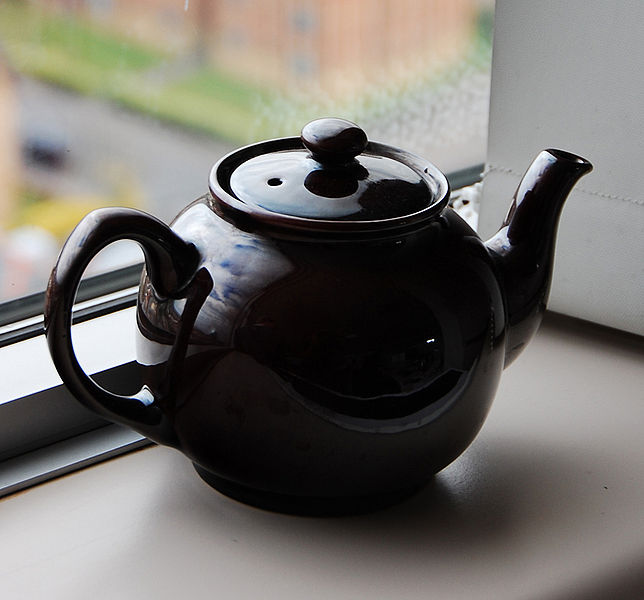
A basic black teapot (essential to every Irish home!)

And when we did go home, we found what Fr McGrath said to be true. And we found ourselves invited to the inevitable 'cuppa' whenever we visited relatives and friends and the teapot came out.

My friend Fr Tom Cahill wrote for many Catholic publications and often did the 'God spot' on radio on RTÉ, Ireland's national broadcasting service. He had the gift of seeing God's presence in incidents that to most would seem insignificant. I don't know if he was familiar with what our fellow Dubliner James Joyce wrote, as mentioned by the Abbot of Glenstal. But he certainly followed his advice.

And Father Tom would have been familiar with this delightful song by American folk musician and singer-songwriter Bill Staines, sung here by Irish singers Liam Clancy and Tommy Makem, both of whom died in recent years.


Even the sparrow finds a home, and the swallow a nest for herself, where she may lay her young, at thy altars, O LORD of hosts, my King and my God (Psalm 84:3, RSV Catholic Edition).

May Father Tom find his 'Place in the Choir' and experience in the fulness of gratitude and joy the truth of his own words, Not only is our present life a gift but also our future eternal life is an even greater one.