09 August 2024

He was making a joyful farewell to his family, full of hope . . . Sunday Reflections, 19th Sunday in Ordinary Time, Year B


Santo Niño Church, Lianga, Surigao del Sur, Philippines
Photo by Benjie Otagan

Readings (Jerusalem Bible: Australia, England & Wales, Ireland, New Zealand, Pakistan, Scotland)

Readings (New American Bible: Philippines, USA)

Gospel  John 6:41-51 (English Standard Version, Anglicised)  

So the Jews grumbled about him, because he said, “I am the bread that came down from heaven.” They said, “Is not this Jesus, the son of Joseph, whose father and mother we know? How does he now say, ‘I have come down from heaven’?” Jesus answered them, “Do not grumble among yourselves. No one can come to me unless the Father who sent me draws him. And I will raise him up on the last day. It is written in the Prophets, ‘And they will all be taught by God.’ Everyone who has heard and learned from the Father comes to me— not that anyone has seen the Father except he who is from God; he has seen the Father. Truly, truly, I say to you, whoever believes has eternal life. I am the bread of life. Your fathers ate the manna in the wilderness, and they died. This is the bread that comes down from heaven, so that one may eat of it and not die. I am the living bread that came down from heaven. If anyone eats of this bread, he will live for ever. And the bread that I will give for the life of the world is my flesh.”

Léachtaí i nGaeilge


The Prophet Elijah in the Desert
Dieric Bouts the Elder [Web Gallery of Art]

And the angel of the Lord came again a second time and touched him and said, “Arise and eat, for the journey is too great for you.” And he arose and ate and drank, and went in the strength of that food forty days and forty nights to Horeb, the mount of God. (1 Kings 19:7-8; First Reading).

Early in 1994, when I was parish priest in Lianga in the Diocese of Tandag, which covers the province of Surigao del Sur on the east coast of Mindanao, one of our volunteer catechists came to me on a Saturday afternoon and told me that her father, who was gravely ill, had asked to receive 'the Bread of Life'. I discovered that Mario, as I'll call him, had been married three times, having been widowed twice. 

When I arrived at the house there were children from his three marriages there, many of them with their own children. There was a palpable sense of joy in the home and Mario was fully alert. After hearing his confession I invited his family to join us as we celebrated the Sacrament of the Sick before giving him Holy Communion. 

After a period of silence and the closing prayers of the rite I asked those closest to their father/grandfather to place their hands on him. My idea was that we would have some spontaneous prayer. However, Mario changed this into something far more beautiful. He took his youngest grandchild, only a few months old, into his arms, embraced and kissed the child. Then he embraced and kissed each of his children and grandchildren. Almost everyone, particularly Mario himself, was aware that he had not long to live. He was making a joyful farewell to his family, full of hope because he had received God's forgiveness in the Sacrament of Reconciliation followed by the nourishment of God himself in the Bread of Life.

In the First Reading an angel wakes up the weary prophet Elijah twice with the command Arise and eat. On this occasion Mario's family in effect said the same to me, even though I wasn't weary like Elijah, as they had prepared a snack for me, which is not usual when the priest makes a sick call. However, on this occasion I thought it truly right and just as the joy of the Lord was clearly evident in Mario and his family. He knew that the journey would not be too great for him.

Mario died peacefully that night.

The bread that I will give, says the Lord, is my flesh for the life of the world (Cf John 6:51, Communion Antiphon).

Céad Míle Fáilte Romhat, a Íosa 

This is a traditional hymn in the Irish language, often sung during Communion at Mass and also at Christmas.

A Hundred Thousand Welcomes, Jesus

A hundred  thousand welcomes, Jesus, Jesus; / a hundred thousand welcomes, Jesus. / A hundred thousand welcomes, [our] Saviour; / a hundred thousand thousand welcomes, Jesus, Jesus.

Glory and praise to you, Jesus, Jesus; / glory and praise to you, Jesus. / Glory and praise to you [our[ Saviour; / glory, praise and thanks to you, Jesus, Jesus.


Traditional Latin Mass 

Twelfth Sunday after Pentecost 

The Complete Mass in Latin and English is here. (Adjust the date at the top of that page to 08-11-2022 if necessary).

Epistle: 2 Corinthian2 3:4-9.  Gospel: Luke 10:23-37.

The Good Samaritan (after Delacroix)
Vincent van Gogh [Web Gallery of Art]

But a Samaritan, as he journeyed, came to where he was; and when he saw him, he had compassion (Luke 10:33; Gospel).


02 August 2024

'We cannot keep to ourselves the words of eternal life given to us in our encounter with Jesus Christ.' Sunday Reflections, 18th Sunday in Ordinary Time, Year B


Man with Two Loaves of Bread
Jean-François Raffaëlli  [Web Gallery of Art]

Readings (Jerusalem Bible: Australia, England & Wales, Ireland, New Zealand, Pakistan, Scotland)

Readings (New American Bible: Philippines, USA)

Gospel John 6:24-35 (English Standard Version, Anglicised: India)

When the crowd saw that Jesus was not there, nor his disciples, they themselves got into the boats and went to Capernaum, seeking Jesus.

When they found him on the other side of the sea, they said to him, “Rabbi, when did you come here?” Jesus answered them, “Truly, truly, I say to you, you are seeking me, not because you saw signs, but because you ate your fill of the loaves. Do not labour for the food that perishes, but for the food that endures to eternal life, which the Son of Man will give to you. For on him God the Father has set his seal.” Then they said to him, “What must we do, to be doing the works of God?” Jesus answered them, “This is the work of God, that you believe in him whom he has sent.” So they said to him, “Then what sign do you do, that we may see and believe you? What work do you perform? Our fathers ate the manna in the wilderness; as it is written, ‘He gave them bread from heaven to eat.’” Jesus then said to them, “Truly, truly, I say to you, it was not Moses who gave you the bread from heaven, but my Father gives you the true bread from heaven. For the bread of God is he who comes down from heaven and gives life to the world.” They said to him, “Sir, give us this bread always.”

Jesus said to them, “I am the bread of life; whoever comes to me shall not hunger, and whoever believes in me shall never thirst.


Léachtaí i nGaeilge


Servant of God Fr Ragheed Aziz Ganni
(20 January 1972 - 3 June 2007)

I have featured Fr Ragheed Ganni a number of times on Sunday Reflections. As a priest and as a Catholic Christian I am truly inspired by this man who was less than half the age I am now when he was assassinated.

He was a raconteur par excellence and a font of knowledge - we discussed everything and anything from the metaphysical to the trivial. A young and gauche student at the time, I learnt about Iraq and about theology; about the workings of the college in the summer and the best places to eat pizza. I was amazed at his command of English and Italian and his perennial good spirits and big smile - he was and will always be an inspiration.

That is how an Irish student at the Pontifical Irish College in Rome described Fr Ragheed Ganni, a Chaldean Catholic priest murdered along with three married subdeacons, Basman Yousef Daud,Wahid Hanna Isho, and Gassan Isam Bidawed, on 3 June 2007 just after the young priest had celebrated Mass in Holy Spirit parish, Mosul, Iraq. (The cause for the canonisation of these four men officially opened in 2018.) Fr Ganni, an engineer, studied theology in Rome before and after ordination, and stayed at the Irish College, where he was known as 'Paddy the Iraqi', 'Paddy' being a generic term for Irishmen, derived from the name of Ireland's - and Nigeria's - patron saint, St Patrick.


Pope Benedict XVI, 20 January 2006
[Wikipedia; photo by Sergey Khozhukhov]

Dear young people, do not be satisfied with anything less than Truth and Love, do not be content with anything less than Christ. Pope Benedict spoke these words at the prayer vigil on 20 August 2011 during the Madrid World Youth Day. He also said, we need to speak with courage and humility of the universal significance of Christ as the Saviour of humanity and the source of hope for our lives.

In these words he is echoing the answer of Jesus to the question put to him in today's gospel, What must we do, to be doing the works of God? His reply: This is the work of God, that you believe in him whom he has sent.

In Verbum Domini (2010) the Pope wrote, We cannot keep to ourselves the words of eternal life given to us in our encounter with Jesus Christ: they are meant for everyone, for every man and woman . . . It is our responsibility to pass on what, by God's grace, we ourselves have received. 

In his Angelus talk on 29 October 2006 Benedict said, The rediscovery of the value of one's own Baptism is at the root of every Christian's missionary commitment, because as we see in the Gospel, those who allow themselves to be fascinated by Christ cannot fail to witness to the joy of following in his footsteps. [Emphasis added].

In that same talk, in which he commented on the gospel of that Sunday which tells the story of the meeting between the blind Bartimaeus and Jesus, Mark 10:46-52, Pope Benedict said, The decisive moment was the direct, personal encounter between the Lord and that suffering man. They found each other face to face:  God with his desire to heal and the man with his desire to be healed; two freedoms, two converging desires. 

One theme that comes through repeatedly in the teaching of Pope Benedict is that our faith is in a person, Jesus, God who became man. Jesus tells us clearly that it is his Father's will that we believe in him.

Another theme of Benedict is the joy that Jesus promised those who follow him. This was the theme of the Pope's message for World Youth Day 2012 held on Palm Sunday in Rome. Benedict insists so often that our faith is faith in the person of Jesus, not in a set of doctrines, though they come to us from Jesus through his Church and are central to the deposit of faith.

Just over a year before his death Father Ragheed spoke at the Eucharistic Congress in Bari, Italy. He said, Mosul Christians are not theologians; some are even illiterate. And yet inside of us for many generations one truth has become embedded: without the Sunday Eucharist we cannot live.

In the context of the war in Iraq he spoke eloquently about the Sunday Eucharist: It is among such difficulties that we understand the real value of Sunday, the day when we meet the Risen Christ, the day of our unity and love, of our (mutual) support and help. There are days when I feel frail and full of fear. But when, holding the Eucharist, I say 'Behold the Lamb of God, who takes away the sin of the world', I feel His strength in me. When I hold the Host in my hands, it is really He who is holding me and all of us, challenging the terrorists and keeping us united in His boundless love.

In normal times, everything is taken for granted and we forget the greatest gift that is made to us. Ironically, it is thanks to terrorist violence that we have truly learnt that it is the Eucharist, the Christ who died and risen, that gives us life. And this allows us to resist and hope. 

This martyr of our times was clearly fascinated by Christ and understood that it is the Risen Lord himself whom we meet when we come together for Sunday Mass.

Jesus chides the people and questions their real reason for coming after him: Truly, truly, I say to you, you are seeking me, not because you saw signs, but because you ate your fill of the loaves. Yet he doesn't regret having fed them and he sees that for at least some of them their reason is somewhat deeper. He gives a straight answer to their question about the work of God: This is the work of God, that you believe in him whom he has sent. It is not being 'good', it is not being 'nice'. It is in accepting him for who he is, God who became man, who lived among us, died for us on the Cross, rose from the dead on Easter Sunday and is with us in an intimate and challenging way when we celebrate Mass, especially on Sunday.

All who met Father Ragheed described him as a joyful person. There is something very joyful, in the sense that Jesus meant, in a person who can not only tell you where the best pizza in Rome is, who is not content with anything less than Christ and who is prepared to go back to a very dangerous situation in order to be able to celebrate Mass with his people and to stay with them in the midst of war.

Read more about Fr Ragheed Ganni here and here.


Traditional Latin Mass 

Eleventh Sunday after Pentecost 

The Complete Mass in Latin and English is here. (Adjust the date at the top of that page to 08-04-2022 if necessary).

Epistle: 1 Corinthians 15:1-10.  Gospel: Mark 7:31-37.

Crucified Christ
Blessed Fra Angelico [Web Gallery of Art]

For I delivered to you as of first importance what I also received, that Christ died for our sins in accordance with the scriptures (1 Corinthians 1:3; Epistle).


26 July 2024

'In the hands of Christ my action may have a divine scope.' Sunday Reflections, 17th Sunday in Ordinary Time, Year B


The Miracle of the Loaves and Fishes
Lambert Lombard [Web Gallery of Art]

Readings (Jerusalem Bible: Australia, England & Wales, Ireland, New Zealand, Pakistan, Scotland)

Readings (New American Bible: Philippines, USA)

Gospel  John 6:1-15 (English Standard Version, Anglicised)  

After this Jesus went away to the other side of the Sea of Galilee, which is the Sea of Tiberias. And a large crowd was following him, because they saw the signs that he was doing on the sick. Jesus went up on the mountain, and there he sat down with his disciples. Now the Passover, the feast of the Jews, was at hand. Lifting up his eyes, then, and seeing that a large crowd was coming towards him, Jesus said to Philip, “Where are we to buy bread, so that these people may eat?” He said this to test him, for he himself knew what he would do. Philip answered him, “Two hundred denarii would not buy enough bread for each of them to get a little.” One of his disciples, Andrew, Simon Peter's brother, said to him, “There is a boy here who has five barley loaves and two fish, but what are they for so many?” Jesus said, “Make the people sit down.” Now there was much grass in the place. So the men sat down, about five thousand in number.  Jesus then took the loaves, and when he had given thanks, he distributed them to those who were seated. So also the fish, as much as they wanted. And when they had eaten their fill, he told his disciples, “Gather up the leftover fragments, that nothing may be lost.” So they gathered them up and filled twelve baskets with fragments from the five barley loaves left by those who had eaten. When the people saw the sign that he had done, they said, “This is indeed the Prophet who is to come into the world!”

Perceiving then that they were about to come and take him by force to make him king, Jesus withdrew again to the mountain by himself.


Léachtaí i nGaeilge


(1901 - 1951)

St Alberto Hurtado SJ is a man who took today's gospel very seriously, He established the first Hogar de Cristo, Home of Christ, in Chile in 1944 to care for the many in Santiago who were homeless or had little to eat. There are now many such homes, not only in Chile and in other countries in South America but in the USA. Canonised in 2005 by Pope Benedict, he is still venerated in Chile as he was loved in his lifetime by the simple title of 'Padre Hurtado'.

He can speak to us with authority, as he does in this meditation he gave many years ago. His reference to the Venerable Matt Talbot comes from the time he spent in Dublin learning English.

The Multiplication of the Loaves  

Meditation during a retreat on the gift of self and cooperation.

Indecision, faintheartedness is the great obstacle in the plan of cooperation. We think: 'I’m not worth all that much', and from this comes discouragement: 'It makes no difference whether I act or fail to act. Our powers of action are so limited. Is my unpretentious work worthwhile? Does my abstaining from this have any meaning? If I fail to sacrifice myself nothing changes. No one needs me . . . A mediocre vocation?' How many vocations are lost. It is the advice of the devil that is partly true. The difficulty must be faced.

The solution

Five thousand men along with women and children have been hungry for three days . . . Food? They would need at least 200 denarii to feed them and this is the approximate yearly salary of a labourer.

In the desert! 'Tell them to go!' But Andrew, more observant says: 'There are five loaves and two fish, but what are these among so many?' Here we have our same problem: the disproportion.

And the loaves. Made of barley, hard as rocks (the Jews used wheat). And the fish. They were from the lake, small, rather mushy in texture, carried by a young boy in a sack that had lain on the ground for three days in the heat . . . not much of a solution. 

Did the Lord despise this offering? No, and with his blessing he fed all the hungry and had leftovers. Neither did he despise the leftovers: twelve baskets of the surplus were gathered, fish heads and bones, but even this he valued. 

The young boy consented to give Christ his poor offering, not realizing that he would feed the multitude. He believed that he had lost his small possession but he found instead that there was even a surplus and that he had cooperated for the good of the others. 

And me . . . like those fish (less than those loaves) bruised and perhaps decomposing but in the hands of Christ my action may have a divine scope, a divine reach. 

Remember Ignatius, Augustine, Camillus de Lellis, and Matt Talbot, base sinners whose lives were converted into spiritual nourishment for millions who will continue to feed on their witness. 

My actions and my desires can have a divine scope and can change the face of the earth. I will not know it, the fish did not know it either. I can do a great deal if I remain in Christ; I can accomplish much if I cooperate with Christ . . 


Fr Patrick Egan, a Columban who spent most of his life as a priest in Chile died unexpectedly on 17 July at the age of 88. At his funeral Mass Fr Alo Connaughton, who had also worked in Chile, told a story in his homily that illustrated how Father Pat lived the Gospel, a story that San Alberto Hurtado would appreciate. Father Pat was a man who, if he saw a need, would respond to it, as Jesus did to the hungry crowd in this Sunday's Gospel. In one parish where he served he found a man who was not only homeless but nameless as well. And the man didn't know where he was from. Father Pat, who was one of 14 children who grew up on a small farm in County Mayo in the west of Ireland, made a room for the man in the parish house.

Then with the help of a couple of women in the parish he went about getting the man an official and legal identity. Inspired by the story of Zechariah naming his son John, they chose Juan as his name and took 24 June, the feast of the Birth of John the Baptist, as his date of birth, going back 40 years, the age they reckoned he was.

They then had to find a family name for him. The man often walked around carrying rags, though kind people gave him clothes, and one of the women suggested jokingly that they choose the name 'Falabella'. This is the name of an up-market department store, comparable to Arnotts in Dublin, Harrods in London, Saks Fifth Avenue in New York City and Rustans in Manila. Father Pat then went with the man now named Juan Falabella to a government office to register him. The person dealing with them was very kind and understanding and Juan now was entitled to various government benefits.

Father Pat grew up about 15 kms from where the poet Antoine Ó Raifteirí was born in 1779. The poet, like Father Pat, understood this Sunday's Gospel. And Father Pat understood and lived the words of San Alberto Hurtado, in the hands of Christ my action may have a divine scope, a divine reach. 

Ó Aithrí an Reachtaraigh / from Raftery’s Repentance

Le / by Antoine Raiftearaí


A Rí na Glóire atá lán de ghrása, / is tú a rinne beoir is fíon den uisce; / le beagán aráin do riar Tú and sló; / Och! Freastail fóir agus slánaigh mise.

O King of Glory full of grace, / You made beer and wine from water; / With a little bread you provided for the multitude; / Oh! Attend to, help and save me.

Raiftearaí (1779 – 1835) was one of the last of the wandering Irish bards. He was the youngest of nine children. Some time between 1785 and 1788 all except Antoine died at the same time from smallpox and he became blind. His poetry was in Irish, though not written down when composed. The poem from which the stanza above is taken shows a knowledge of Scripture, including a familiarity with today's Gospel, along with a deep faith in God's mercy and that of our Blessed Mother and an awareness that his life was drawing to a close. He died on Christmas Day 1835. His surname, which has a number of variations in Irish, is usually Anglicised as 'Raftery'.

Antoine Raiftearaí
Craughwell, County Galway, Ireland [Wikipedia]

Traditional Latin Mass 

Tenth Sunday after Pentecost 

The Complete Mass in Latin and English is here. (Adjust the date at the top of that page to 07-28-2022 if necessary).

Epistle: 1 Corinthians 12:2-11.  Gospel: Luke 18:9-14.

Church Interior with the Parable of the Pharisee and the Publican
Dirck van Delen [Web Gallery of Art]

But the tax collector, standing far off, would not even lift up his eyes to heaven, but beat his breast, saying, ‘God, be merciful to me a sinner!’ (Luke 18:13)


19 July 2024

'Christ is our peace.' Sunday Reflections, 16th Sunday in Ordinary Time, Year B


Sheep and Lamb
Jacopo Bassano [Web Gallery of Art]

He had compassion on them, because they were like sheep without a shepherd (Mark 6:34; Gospel).

Readings(Jerusalem Bible: Australia, England & Wales, Ireland, New Zealand, Pakistan, Scotland)

Readings (New American Bible: Philippines, USA)

Gospel  Mark 6:30-34 (English Standard Version, Anglicised)  

The apostles returned to Jesus and told him all that they had done and taught. And he said to them, “Come away by yourselves to a desolate place and rest a while.” For many were coming and going, and they had no leisure even to eat. And they went away in the boat to a desolate place by themselves. Now many saw them going and recognized them, and they ran there on foot from all the towns and got there ahead of them. When he went ashore he saw a great crowd, and he had compassion on them, because they were like sheep without a shepherd. And he began to teach them many things.

Léachtaí i nGaeilge


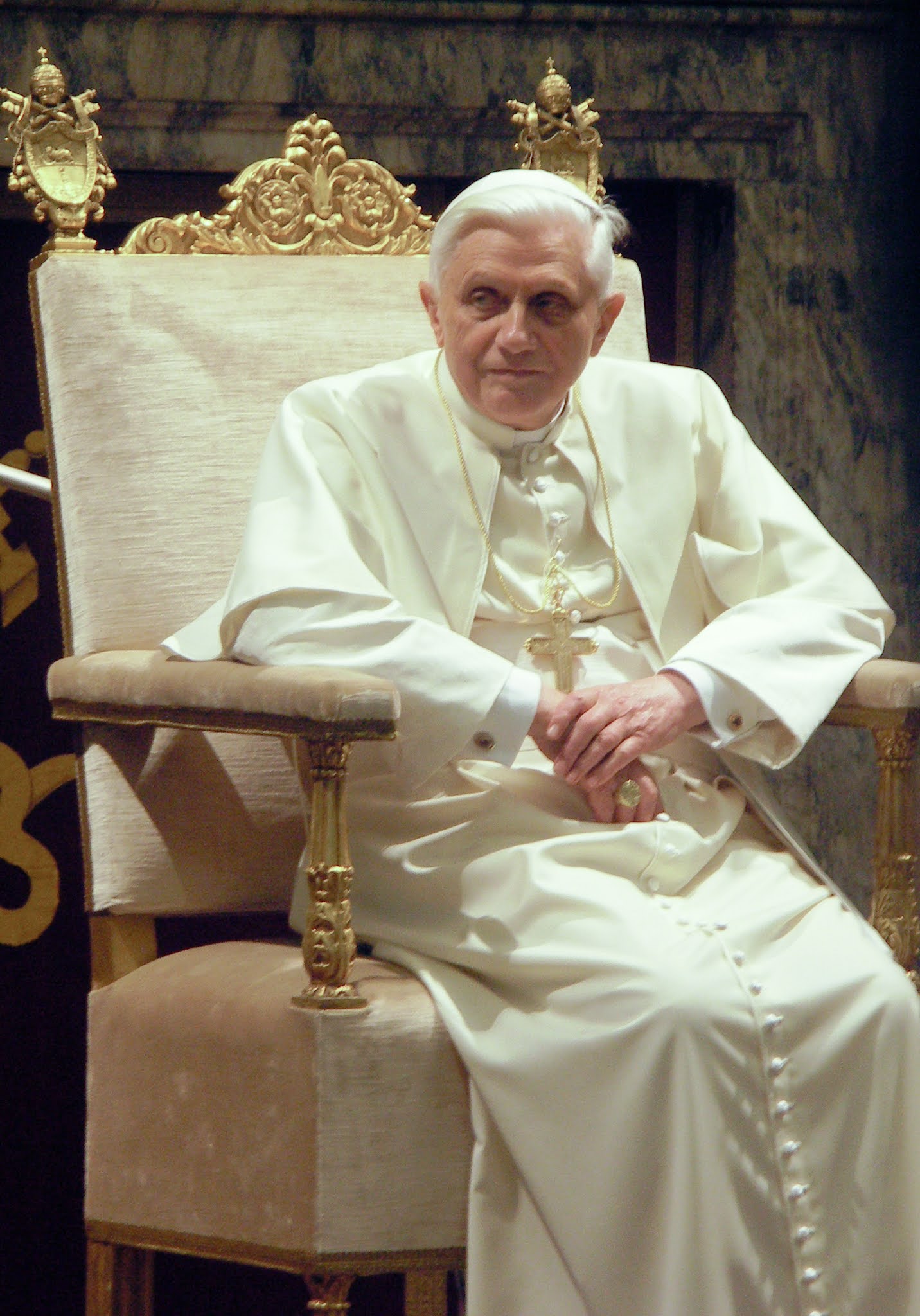
Pope Benedict XVI
Zagreb, Croatia, 2011 [Wikipedia; photo]

This is Pope Benedict's Angelus talk on Sunday 22 July 2012. He refers to St Mary Magdalene, whose feast is celebrated on 22 July, though not observed liturgically that year because it fell on Sunday. I have highlighted parts of the Pope's talk.

Dear Brothers and Sisters,

The Word of God this Sunday presents us once again with a fundamental, ever fascinating theme of the Bible; it reminds us that God is the Shepherd of humanity. This means that God wants life for us, he wants to guide us to good pastures where we can be nourished and rest. He does not want us to be lost and to perish, but to reach the destination of our journey which is the fullness of life itself. This is what every father and mother desires for their children: their good, their happiness and their fulfilment.

In today’s Gospel Jesus presents himself as the Shepherd of the lost sheep of the House of Israel. He beholds the people, so to speak, with a 'pastoral' gaze. For example, this Sunday’s Gospel says: As he disembarked, 'he saw a great throng, and he had compassion on them, because they were like sheep without a shepherd; and he began to teach them many things' (Mk 6:34). Jesus embodies God the Shepherd with his manner of preaching and his works, caring for the sick and sinners, for those who are 'lost' (cf. Lk 19:10), in order to bring them back to safety through the Father’s mercy.

Among the 'lost sheep' that Jesus rescued there was also a woman called Mary, a native of the village of Magdala on the Sea of Galilee, who for this reason was known as 'Magdalene'. It is her liturgical Memorial in the Church Calendar of today. [Pope Francis has raised it to the rank of Feast.] Luke the Evangelist says that Jesus cast out seven demons from her (cf. Lk 8:2), that is, he saved her from total enslavement to the Evil One. In what does this profound healing which God works through Jesus consist? It consists in true, complete peace, brought about by the inner reconciliation of the person, as well as in every other relationship: with God, with other people and with the world. Indeed, the Evil One always seeks to spoil God’s work, sowing division in the human heart, between body and soul, between the individual and God, in interpersonal, social and international relations, as well as between human beings and creation. The Evil One sows discord; God creates peace. Indeed, as St Paul says, Christ is our peace, he who made us both one and broke down the dividing wall of enmity, through his flesh (cf. Eph 2:14).

In order to carry out this work of radical reconciliation Jesus the Good Shepherd had to become a Lamb, 'the Lamb of God, who takes away the sin of the world' (Jn 1:29). Only in this way could he keep the marvellous promise of the Psalm: 'Surely goodness and mercy shall follow me / all the days of my life; / and I shall dwell in the house of the Lord / for ever' (Ps 23[22]:6).

Dear friends, these words make our heart beat fast for they express our deepest desire, they say what we are made for: life, eternal life! These are the words of those who, like Mary Magdalene, have experienced God in their life and know his peace. They are words truer than ever on the lips of the Virgin Mary, who already lives for eternity in the pastures of Heaven where the Shepherd-Lamb led her. Mary, Mother of Christ our peace, pray for us!

Responsorial Psalm

‘Sé an Tiarna m’Aoire (The Lord is My Shepherd)
Music by Fintan Carroll
Sung by the University of Notre Dame Choir

Responsorial Psalm        Ps 22[23].
Response                      The Lord is my shepherd; there is nothing I shall want.

1. The Lord is my shepherd; there is nothing I shall want.
Fresh and green are the pastures where he gives me repose.
Near restful waters he leads me, to revive my drooping spirit.                                  Response

2. He guides me along the right path; he is true to his name.
If I should walk in the valley of darkness no evil would I fear.
You are there with your crook and your staff; with these you give me comfort.     Response

3. You have prepared a banquet for me in the sight of my foes.
My head you have anointed with oil; my cup is overflowing.                                     Response

4. Surely goodness and kindness shall follow me all the days of my life.
In the Lord’s own house shall I dwell for ever and ever.                                              Response


Traditional Latin Mass 

Ninth Sunday after Pentecost 

The Complete Mass in Latin and English is here. (Adjust the date at the top of that page to 07-21-2022 if necessary).

Epistle: 1 Corinthians 10:6-13.  Gospel: Luke 19:41-47.

Christ Cleansing the Temple
Luca Giordano [Web Gallery of Art]

And he entered the temple and began to drive out those who sold, saying to them, “It is written, ‘My house shall be a house of prayer’; but you have made it a den of robbers (Luke 19:45-46; Gospel).