Showing posts with label Blessed John Henry Newman. Show all posts

05 February 2014

'You are the salt of the earth . . . the light of the world.' Sunday Reflections, 5th Sunday in Ordinary Time

Károly Ferenczy, 1896 [Web Gallery of Art]

Readings (New American Bible: Philippines, USA)                                  

Readings (Jerusalem Bible: Australia, England & Wales, India [optional], Ireland, New Zealand, Pakistan, Scotland, South Africa)

Gospel: Matthew 5:13-16 (New RevisedStandard Version, Catholic Edition, Canada) 

Jesus said to his disciples: “You are the salt of the earth; but if salt has lost its taste, how can its saltiness be restored? It is no longer good for anything, but is thrown out and trampled under foot.

“You are the light of the world. A city built on a hill cannot be hid. No one after lighting a lamp puts it under the bushel basket, but on the lampstand, and it gives light to all in the house. In the same way, let your light shine before others, so that they may see your good works and give glory to your Father in heaven.


One of the darkest periods in the history of the world was 1939 to 1945 when much of the world was at war. At the heart of the darkness was Nazi Germany, where freedom had been almost entirely suppressed. But not quite. Between June 1942 and February 1943 a small group of students at the University of Munich with their philosophy professor Kurt Huber formed The White Rose, a non-violent resistance group working against Hitler and the Nazi regime. 


(9 May 1921 - 22 February 1943)


Among the leaders were Sophie Scholl and her older brother Hans. They were executed together. Both were devout Lutherans. It is said that she was influenced by the writings of Blessed John Henry Cardinal Newman. Others in the group, such as Willi Graf, were devout Catholics. Not all were Christians but they shared a commitment to speaking the truth, even if it cost them their young lives. Most were in their early 20s.


One German Catholic who had a great impact on the group was Blessed Clemens August Graf von Galen, Bishop of Münster, Germany, who died just after being made a cardinal in 1946, a giant of a man physically, morally and spiritually. In a series of sermons in 1941 he denounced some of the policies of Hitler, including that of euthanasia. Hans and Sophie Scholl used one of these in a leaflet The White Rose printed and distributed secretly.


Memorial to The White Rose at the University of Munich


It was while distributing leaflets - the movement produced a total of six, their only means of communication - at the University of Munich, that Hans and Sophie were caught and then executed.

The members of The White Rose are remembered and honoured today and a number of films have been made about them. The video above contains footage from one of those.

You can see Franz Josef Müller, a member of The White Rose who survived, speak about the movement here. [The video can't be embedded.]

I remember the late Fr Vincent San Juan SJ, a Filipino who spent most of his life as a priest in the family life apostolate, telling me that during the days of Martial Law here in the Philippines when the government was conducting a vigorous campaign of promoting contraception - doctors in government hospitals often ligated women shortly after they had given birth, with no regard for their husbands or for their feelings - he sometimes gave seminars to government workers. They had little real freedom. But they were happy and encouraged to hear what they recognised as the truth from Father San Juan. To the participants in these seminars who were bombarded daily with government propaganda the Jesuit priest speaking the truth of the Gospel in a quiet and encouraging way was the salt of the earth . . . the light of the world.

Hans and Sophie Scholl and their companions knew that their lives were in danger. But their Christian faith led them to be the salt of the earth . . . the light of the world. Through them at least some experienced the truth of the words of Isaiah 9:2 quoted in Matthew 4:16, the people who sat in darkness have seen a great light, and for those who sat in the region and shadow of death light has dawned.

Salt is of use only when it is mixed with other things. The light of the sun doesn't exist for itself, for us to look at it. If we did we would be blinded. It is meant to light up everything around us, as we are meant by being salt and light to bring others to taste and see the joy of knowing Jesus the Risen Lord.

Not many are called, as some of the members of The White Rose were, to be the salt of the earth . . . the light of the world by laying down their lives. But those in The White Rose got their Christian faith, their moral values from others who for them were the salt of the earth . . . the light of the world. Some of them had belonged to various Nazi movements for young people but saw through the false values being promoted and left. In other words, they had been formed in solid values by others, older persons such as parents, some teachers perhaps. others trying to live honest and upright lives as followers of Jesus, 'missionary disciples', as Pope Francis calls us to be in Evangelii Gaudium No 120, without even being aware that they were such.
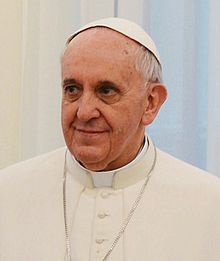


Last October in his homily in St Peter's Square on World Family Day Pope Francis explicitly called families to be the salt of the earth . . . the light of the world. And, characteristically, he called them to be such in a spirit of joy. He ended his homily with these words:

Dear families, you know very well that the true joy which we experience in the family is not superficial; it does not come from material objects, from the fact that everything seems to be going well . . . True joy comes from a profound harmony between persons, something which we all feel in our hearts and which makes us experience the beauty of togetherness, of mutual support along life’s journey. But the basis of this feeling of deep joy is the presence of God in the family and his love, which is welcoming, merciful, and respectful towards all. God alone knows how to create harmony from differences. But if God’s love is lacking, the family loses its harmony, self-centredness prevails and joy fades. But the family which experiences the joy of faith communicates it naturally. That family is the salt of the earth and the light of the world, it is the leaven of society.

Dear families, always live in faith and simplicity, like the Holy Family of Nazareth! The joy and peace of the Lord be always with you!

Photos from Wikipedia.

23 May 2013

'When the Spirit of truth comes, he will guide you into all the truth.' Sunday Reflections, Trinity Sunday


Readings (New American Bible: Philippines, USA)

Readings (Jerusalem Bible: Australia, England & Wales, India [optional], Ireland, New Zealand, Pakistan, Scotland, South Africa)

Gospel John 16:12-15 (Revised Standard Version – Catholic Edition)

Jesus said to his disciples: "I have yet many things to say to you, but you cannot bear them now. When the Spirit of truth comes, he will guide you into all the truth; for he will not speak on his own authority, but whatever he hears he will speak, and he will declare to you the things that are to come. He will glorify me, for he will take what is mine and declare it to you. All that the Father has is mine; therefore I said that he will take what is mine and declare it to you.


Albrecht Dürer, 1511 [Web Gallery of Art]

The two paintings above, like many others, depict the Holy Trinity with the crucified, dead Christ. The Catechism of the Catholic Church quotes St Caesarius of ArlesThe faith of all Christians rests on the Trinity.

Though it is a mystery that we can never fully understand, the Trinity shows God's total involvement in our lives. Without the Creator we wouldn't be. Without God becoming Man in the Jesus Christ, the Second Person of the Trinity, we would not have the possibility of eternal life. Without the coming of the Holy Spirit at Pentecost we would never understand who we are, the beloved sons and daughters of God the Father, the beloved brothers and sisters of Jesus and therefore of one another.

And none of this would be possible if Jesus had not lived among us and died for us. The paintings show us the price that God was willing to pay that we would know him and return his love.

Blessed John Henry Cardinal Newman expresses the central mysteries of our faith in Firmly I believe and truly, taken from his extended poem The Dream of Gerontius. Sir Edward Elgar later set this to music, though the setting below is by Ralph Vaughan Williams.

We Christians begin almost every prayer, liturgical or otherwise, with the words In the name of the Father and of the Son and of the Holy Spirit or with Glory to the Father . . . The Catechism tells us: Christians are baptized in the name of the Father and of the Son and of the Holy Spirit: not in their names, for there is only one God, the almighty Father, his only Son and the Holy Spirit: the Most Holy Trinity.

Like the painters Carracci and Dürer, Newman draws us to the Incarnation, the reality of God becoming Man, and the Paschal Mystery, the death and resurrection of Jesus:


And I next acknowledge duly
Manhood taken by the Son.

And I trust and hope most fully
In that Manhood crucified
.


The Second Person of the Trinity becoming one of us, living among us, dying for us in a most humiliating way, and being raised from the dead is the source of our hope. It is by following Jesus wholeheartedly that we too are bearers of this hope to others. As Pope Francis said in his homily last WednesdayJesus was 'promoted' to the Cross. He was 'promoted' to humiliation. That is true promotion, that which makes us seem more like Jesus.


In the fourth stanza, not sung here, Newman brings us to the central fact that the Holy Spirit, who will guide you into all the truth, does so above all through the Church:


And I hold in veneration,
For the love of Him alone,
Holy Church as His creation,
And her teachings are His own.


Last Sunday, Pentecost, Pope Francis in ending his homily referred to 'the harmony of the Church'. As Christians we cannot go it alone. God, the Holy Trinity, is a Community, the Perfect Community, Three Persons but One God. We are made in God's image, which means we are made to be part of a community. Here are the closing words of the Pope's homily:


Today’s liturgy is a great prayer which the Church, in union with Jesus, raises up to the Father, asking him to renew the outpouring of the Holy Spirit. May each of us, and every group and movement, in the harmony of the Church, cry out to the Father and implore this gift. Today too, as at her origins, the Church, in union with Mary, cries out: 'Veni, Sancte Spiritus! Come Holy Spirit, fill the hearts of your faithful, and kindle in them the fire of your love!' Amen.


Words: Blessed John Henry Newman, from  The Dream of Gerontius
Music: Shipston, traditional English melody arranged by Ralph Vaughan Williams

Firmly I believe and truly
God is Three, and God is One;
And I next acknowledge duly
Manhood taken by the Son.

And I trust and hope most fully
In that Manhood crucified;
And each thought and deed unruly
Do to death, as He has died.

Simply to His grace and wholly
Light and life and strength belong,
And I love supremely, solely,
Him the holy, Him the strong.

[And I hold in veneration,
For the love of Him alone,
Holy Church as His creation,
And her teachings are His own.

And I take with joy whatever
Now besets me, pain or fear,
And with a strong will I sever
All the ties which bind me here.]

Adoration aye be given,
With and through the angelic host,
To the God of earth and Heaven,
Father, Son and Holy Ghost.


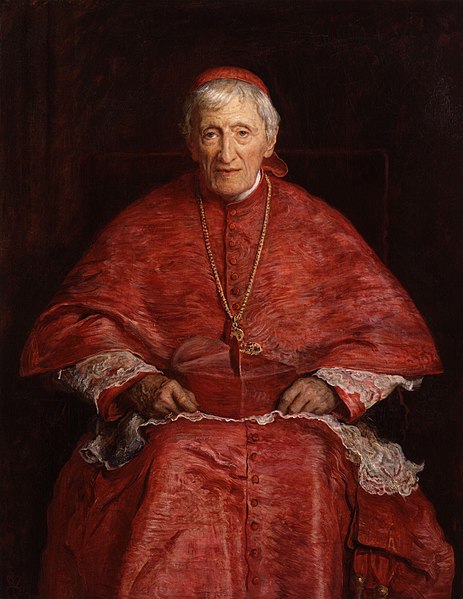
Blessed John Henry Cardinal Newman, John Everett Millais, 1891


20 September 2010

'Heart to Heart": a reflection on Blessed John Henry Newman


Yesterday, Sunday 19 September, in Birmingham, England, (Photo above) Pope Benedict beatified Cardinal John Henry Newman. Here is a reflection that Columban Sister Redempta Twomey wrote for Far East, the magazine of the Columbans in Britain and Ireland.

Blessed John Henry Newman

At the funeral, in 1890, of Cardinal John Henry Newman who is to be declared 'Blessed' on September 19th by Pope Benedict XV1, a wreath of flowers was sent by a woman with a card that read: 'A tribute of respect to a great Englishman, whose beauty of life shed its light and purity on his own century, but belongs to all ages.' Her insightful and prophetic words resonated down the years as Newman's spiritual influence continued to spread, even to our own time. His beatification confirms what many have felt – here is a genuinely holy man.

Something of that holiness seems to emanate from the portraits – the lean ascetic face, the quiet dignity, that quality of otherworldliness that so impressed his contemporaries. As one who heard him preach said, "No one has ever made us feel as he has done the detachment of the pilgrim from all earth's closest ties." Not that he was indifferent to the affairs of the world; on the contrary he kept abreast of what was going on and, in many ways was far ahead of his time. His search for truth cost him dearly, cost him friends and companions and a loved way of life. But with that honesty and humility so characteristic of him, he steadfastly walked the narrow road. "God," he wrote, "has created me to do Him some definite service, He has committed some work to me which He has not committed to another. I have my mission: I may never know it in this life, but I shall be told it in the next."

The crest containing Cardinal Newman's motto 'Cor ad cor loquitor', 'Heart speaks to heart'.


A great thinker, a writer and a man of prayer, Newman had the gift of being able to engage with his academic colleagues, 'nor lose the common touch.' Apologia Pro Vita Sua, one of the most profound biographies ever written, has both awed and guided the hearts of many. His sermons, his reflections on Scripture, his prayers still have power to move us today. And who has not been stirred by his poetry, not least the haunting verses of "Lead, kindly Light". Catholics and non-Catholics feel spiritually indebted to Newman; he attracts people of many faiths and cultures. For his motto, when, late in his life he was made a Cardinal, Newman chose the words: 'Cor ad cor loquitor', 'Heart speaks to heart.' At the end of his life this was what mattered, not his genius, not the brilliance of his work, not his great preaching or his marvellous writings, but that his heart would be in the right place. He knew, as St John of the Cross so pithily said, "In the evening of your life, you will be examined on love." As we rejoice in the beatification of this great Englishman, let us pray that our hearts too will be true and loving as we walk in the 'kindly Light' that guides us every day of our lives.