03 August 2011

Preaching Hope from Prison: François-Xavier Cardinal Nguyên Van Thuán


Tomorrow is the feast of St John Mary Vianney, patron of priests. More than ever today we need holy priests. We priests need your prayers. One of the great priests of our time was François-Xavier Cardinal Nguyên Van Thuán (1928-2002).

Fr Thadeus Nguyen Van Ly

I am conscious of the Church in Vietnam in a personal way because I am giving a weekly class to the eleven aspirants of the Capuchin Tertiary Sisters of the Holy Family here in Bacolod City. The group includes six young women from Vietnam, the first to enter the congregation. The Church in Vietnam has suffered greatly in modern times and harrassment is not yet absent, as the story of Fr Thadeus Nguyen Van Ly, 64, shows.

The Martyrs of Vietnam, celebrated by the Church on 24 November.

In the May-June 2006 issue of Misyon, which I edit on behalf of the Columbans in the Philippines, I published an article by the Cardinal. Misyon was then a printed magazine. We are gradually putting all issues from the first in 1988 online but this particular article isn't yet there. Below is the text, with an introduction.

PREACHING HOPE FROM PRISON

By François-Xavier Cardinal Nguyên Van Thuán

The extraordinary story, in his own words, of Vietnamese Cardinal Nguyên Van Thuan, Coadjutor Archbishop of Thành-Phô Hô Chí Minh (formerly Saigon) from 1975 till 1994. Just three months after his appointment he was imprisoned by the communist government. He spent thirteen years in jail, nine of them in solitary confinement. In 1998 he was appointed President of the Pontifical Council for Justice and Peace in the Vatican. He gave the Lenten retreat to Pope John Paul and his staff in 1999 and died in Rome on 16 September 2002. Here are some edited extracts from the cardinal’s story.
 
Saved by prayer

In my initial period in prison I spent many months in an extremely narrow space without windows, half suffocated by the heat and humidity. Often I had great difficulty in breathing. They tortured me by leaving me under lights day and night for ten days and then depriving me of all light for long periods. One day in the darkness I noticed a tiny hole through which the light shone. From then on I used to put my nostrils there to breathe more easily.

Whenever there were floods snakes used to invade my cell and sometimes climbed my legs to avoid the water. They used to stay with me until the floods passed. I had no toilet but since I received hardly any food I had little need of one. My daily rations consisted of some rice and vegetables cooked with salt. From five in the morning until 11:30 at night there was a constant din of voices over loudspeakers. To distract myself I did exercises, jumped, danced, sang and prayed. Prayer saved my life. In moments of great suffering, sometimes when I wanted to pray I couldn’t. I was desperately tired, sick and hungry . . . often I was tempted to despair and rebellion. But the Lord always helped me.


Learning again how to pray

In my later years in prison five policemen guarded me. Some even studied Latin to censor any documents or telegrams sent to the bishops from Rome. One day a policeman asked me: ‘Can you teach me some song in Latin?’ I replied, ‘I’ll sing some and you can choose.’ He chose the Veni Creator (Come Holy Spirit) and asked me to write out the words. I did so not really expecting that he would learn them. But in a few days he had learned them really well and sang them every morning while he was on guard. I thought to myself: ‘When an archbishop cannot pray, the Lord sends him a policeman to sing the Veni Creator and help him to pray!’

On another occasion a farmer came to the prison and asked permission to visit me. The police permitted it and he spent a few minutes with me. When he was leaving he asked: ‘Please, pray for me,’ and he added: ‘Father, one prayer from you in prison is worth a hundred offered in freedom.’ That day the Holy Spirit sent a farmer to teach me the value of prayer in prison.


Writing about hope

While in prison I wrote several books. All our religious literature had been burned and permission to publish new ones refused. I wondered how, as a pastor, I could encourage the faithful. At that time I was in a closely guarded cell but children were allowed to visit me. One day I said to one of them: ‘Ask your mother to buy me a calendar-block.’ When I received it I wrote my thoughts on the back of a sheet each night and in this way I produced my first book, Pilgrims on the Road of Hope. I wrote the second, The Way of Hope in the Light of the Word of God in the Council in my years in exile, 1,700 kilometers from my diocese. At another time when I was feeling very low and had no desire to write I received a request from the Holy Father asking me to write some spiritual exercises. These later became the work Witnesses to Hope.

I have personally experienced the sorrow of a pastor forbidden to care for his people and forced to abandon his diocese. It caused me great torment to be in prison while the people were abandoned. But I discovered that it had all been God’s work. One night I sensed a voice in my heart saying: ‘François, God holds you in his hands. Always seek his will. God knows what he is doing. He will seek other collaborators who work better than you. Be at peace.’ That night I experienced a deep peace in my heart and I decided to seek God’s will every minute of my life.

Under house arrest,

Befriended by jailers

At one stage while in prison five young jailers, university students, guarded me. One reason that I survived was because of their friendship.

Those in charge had forbidden them to speak to me. Initially my guards were changed every fifteen days. Prison authorities believed the guards risked being contaminated if left with me for any length of time. Eventually they stopped changing them because apparently they were afraid I would contaminate the whole force. And so the young students became my friends. The love of Christ has great power to change people.

I would chat with them through the door about my life, the various countries I had visited, my family, my childhood and so on. I taught them English, French, and even a little Russian. One day I asked one of them to bring something to trim a piece of wood. He did and I was able to make a cross. Even though all religious symbols were prohibited, I now had a cross in my quarters. I hid it in a bar of soap. Another time I asked for a piece of wire and a pair of pliers. My friendly policeman said, ‘I will bring them but you have to finish in four hours’ – the length of his particular shift. In four hours I had fashioned a chain for my cross. The cross was later enclosed in silver and it is the cross and chain I still wear.


Saying Mass in prison

The day I was arrested I had to leave everything behind me. The following day I was allowed to write and ask my friends to bring my clothes, toothpaste and other personal needs. I also asked them to include some wine ‘as medicine.’ My friends understood. They sent me a little bottle of Mass-wine labeled ‘Medicine for Stomach Aches’ and also some hosts hidden in a little burner used to keep the humidity at bay.

Every night I kept a tiny piece of bread for the following day’s Eucharist. And so every day for many years I had the joy of celebrating Mass with three drops of wine and one of water in my palm. This was my altar, my cathedral. For me it was the true medicine of body and soul something to stave off death in order to live for ever in Christ.

Photos in body of article from the Facebook account in honour of the Cardinal.

Prayer for the Beatification of Cardinal Francis Xavier Nguyen Van Thuan

O mighty and eternal God,
Father, Son and Holy Spirit
I offer thanks for giving to the Church
the heroic testimony of Cardinal Francis Xavier Nguyên Van Thuân.

The suffering he experienced in prison,
which he united with the crucified Christ
and commended to the maternal protection of Mary,
is for the Church and the world a shining witness of unity and forgiveness,
and of justice and peace.

His loving person and his Episcopal ministry radiate the light of faith,
the enthusiasm of hope and the warmth of love.

Now, my Lord, through his intercession and according to your will,
grant me the grace I am imploring in the hope that
he will soon be elevated to the honour of sainthood.

Imprimatur
Roma 16.9.2007
+ Giampaolo Crepaldi
Secretary
Pontifical Council for Justice and Peace

28 July 2011

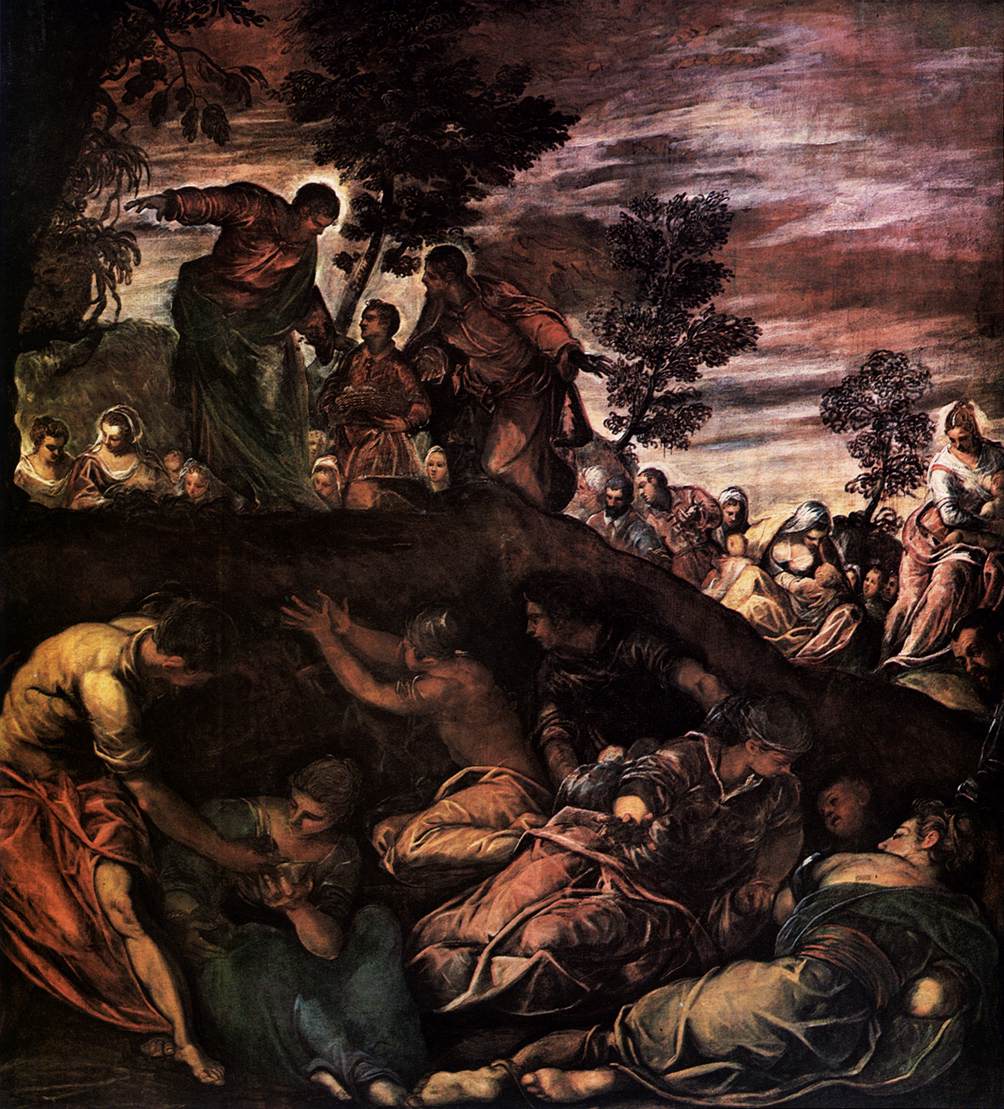
'They all ate as much as they wanted.' Sunday Reflections, 18th Sunday in Ordinary Time Year A, 31 July 2011


Readings (NAB: Philippines, USA) 

Gospel, Matthew14:13-21 (Jerusalem Bible: Australia, England and Wales, Ireland, Scotland)

When Jesus received this news he withdrew by boat to a lonely place where they could be by themselves. But the people heard of this and, leaving the towns, went after him on foot. So as he stepped ashore he saw a large crowd; and he took pity on them and healed their sick.

When evening came, the disciples went to him and said, 'This is a lonely place, and the time has slipped by; so send the people away, and they can go to the villages to buy themselves some food'. Jesus replied, 'There is no need for them to go: give them something to eat yourselves'. But they answered 'All we have with us is five loaves and two fish'. 'Bring them here to me' he said. He gave orders that the people were to sit down on the grass; then he took the five loaves and the two fish, raised his eyes to heaven and said the blessing. And breaking the loaves handed them to his disciples who gave them to the crowds. They all ate as much as they wanted, and they collected the scraps remaining; twelve baskets full. Those who ate numbered about five thousand men, to say nothing of women and children.

Soiscéal, Matha 14:13-21 (Gaeilge, Irish)

San am sin nuair a chuala Íosa faoi bhás Eoin, , chuaigh sé i leataobh as sin i mbád go dtí áit uaigneach ar leithligh. Ach fuair na sluaite scéala air, agus tháinig siad amach as na cathracha á leanúint dá gcois. Ar theacht i dtír dó, chonaic sé slua mór agus ghlac sé trua dóibh agus leigheas na hothair a bhí leo.

Nuair a bhí an tráthnóna ann, áfach, tháinig na deisceabail chuige agus dúirt siad: “Áit uaigneach é seo agus tá sé deireanach feasta. Mar sin, scaoil uait na sluaite go dtéidís isteach sna bailte agus bia a cheannach dóibh féin.” Ach dúirt Íosa leo: “Ní gá dóibh imeacht; tugaigí sibhse rud le hithe dóibh.” “Ach,” ar siadsan leis, “níl anseo againne ach cúig builíní agus dhá iasc.” “Tugaigí chugam anseo iad,” ar seisean. D’ordaigh sé do na sluaite luí fúthu ar an bhféar; thóg sé na cúig builíní agus an dá iasc, agus, ar dhearcadh suas chun na bhflaitheas dó, bheannaigh, bhris, agus thug na builíní do na deisceabail, agus thug na deisceabail do na sluaite iad. D’ith siad uile agus bhí siad sách, agus thóg siad suas an bruscar fuílligh, lán dhá chiseán déag. Timpeall cúig mhíle fear a fuair an béile, gan mná ná páistí a áireamh.


During my seminary years in the 1960s I sometimes came across this statement - though never from any of my teachers: 'You can't preach the Gospel to an empty stomach'. Today's gospel tells us clearly that Jesus took pity on those who had followed him that day, even though he needed time to be alone to come to terms with the news he had just received of the murder of his cousin John the Baptist. He then fed five thousand men, 'to say nothing of women and children' with the help of the apostles. In the very act of feeding all these people and healing the sick among them Jesus was bringing the Good News to them.

The Gospel isn't something separated from our lives. It is God's love experienced and shared. In my most recent post, 'Feed my sheep' fine - but 'feed my cat'?, I shared the charming story of Bishop-elect Thomas Dowd of Montreal who was once asked as a matter of urgency by a patient in the hospital where he was working to feed his cat. Father Dowd doesn't tell us anything about the man's faith but he saw the priest as a person who would do this act of kindness for him. That was his pressing need at that moment.

The pressing need of the vast throng that had followed him was for something to eat. There is a lovely detail in St Mark's version of the raising of the daughter of Jairus. While everyone is rejoicing at her having come to life Jesus, surely with a smile on his face, is aware of the pressing need of the 12-year-old who had just come through a deadly illness. He says, 'Give her something to eat' Mk 5:43).

St John, in his version of this event, one of very few to appear in the four gospels, has Jesus speaking about the Eucharist. As this gospel is read to us in this in the liturgy of the Word we are drawn to to thank God for the gift of himself that he offers us in every celebration of the Holy Sacrifice of the Mass. do we really believe that it is Jesus the Risen Lord whom we receive in Holy Communion? Do we really believe that we are receving the Body and Blood, Soul and Divinity of our Lord Jesus Christ, as so many of us learned in the catechism when we were children? Do we really believe that the same Jesus who fed the thousands, with only five loaves and two fish, and the help of the apostles, is now giving himself to us as the Bread of Life?

In 1993 when I was parish priest in the relatively remote province of Surigao del Sur on the east coast of Mindanao a six-year-old boy was brought to the local government hospital on the verge of death from starvation. He was being taken care of by his 11-year-old sister, not by an adult. I discovered that their mother was dead and the siblings had been divided up among relatives. Fortunately, the boy slowly recovered and I was able to get the children into an SOS Children's Village where they grew up and were well taken care of. But I'll never forget one day when the boy's sister, who had missed some years in school, came to visit me and, pointing at Somalia on a world map on the wall said, 'There are many children like my brother there'. Very few in the parish even knew where Somalia was but this girl from an utterly deprived background made the connection between here brother and children suffering from the famine in that country at that time.

Sadly, famine once again has hit that troubled land. The gospel today and our receiving the Bread of Life in Holy Communion calls us to make a similar connection between Jesus the Bread of Life whom we receive, Jesus who fed the thousands, and the needs of those who are hungry anywhere, whether it is for food so that can they simply live or for some other expression of God's love for them.


May I ask you to continue to pray for all the members of the Church in Ireland, which is going through a grave crisis. The next International Eucharistic Congress is scheduled to be held in Dublin next year. Irish missionaries have brought the faith to every continent, have brought the Bread of Life, Who prepares us for the Eternal Banquet to which He invites each one. The people of Ireland now need the prayers of those who have received the gift of the Faith and the gift of the Bread of Life through Irish missionaries. May the Eucharistic Congress be a true moment of grace for the Irish Church.

27 July 2011

'Feed my sheep' fine - but 'feed my cat'?

Tigresa and Whitey, two of my three cats

As a priest who loves cats I couldn't resist this story from the blog of Bishop-elect Thomas Dowd, soon to be auxiliary bishop of Montreal. I'm simply and shamelessly copying and pasting from his blog, Waiting in Joyful Hope. I don't know if he's distantly related to me. My maternal grandmother was Annie Dowd from County Meath, the 'Royal County'.

Post for July 25, 2011

Christopher Curtis, in his recent article on me in the Montreal Gazette, includes this quote: “The job can be a lot of things. When I worked for a hospital, I was on call and you would get everything from a multiple victim car accident to a guy who is sick and needs you to feed his cat.”

In case you were wondering about the reference to a cat, it is from an incident that took place on March 7, 2006. My older posts are still in archives for the moment, but I thought I’d fish this one out and repost it (with just a bit of editing to help it make sense). Enjoy!

I was sick, and you visited me fed my cat

Today I got a call on my pager, 15 minutes before I was going to leave the hospital to teach downtown. Calling the ward desk, I was told that a patient wanted to see me. Could it wait till tomorrow, I inquired? No, it was urgent, was the response. OK, then, I headed downstairs right away.

The nurse let me to the patient’s room. He was quite upset to be stuck in the hospital. I asked him what he wanted to talk about, and it turned out he didn’t want to talk about anything. He wanted me to feed his cat.

Excuse me?

It turns out that this unfortunate gentleman really has nobody here in the city to help him, and by now his cat was 4 or 5 days without food. He did not remember the number of the superintendent of his building, either, so he had nobody to call. Could I head over to his apartment and explain things to the super, and maybe be let in to feed that cat?

Well, this sure wasn’t part of the job description. Running through my head were the words of advice I had received time and time again: “Don’t try and rescue everybody out there! You have to distinguish between what is essential, and what is merely important! There is only one Saviour, and you are not him!”

But on the other hand, this situation involved a starving cat. And I’m a cat person, so I felt for the poor thing. So I said ok, with a rolling of my eyes towards the Lord, who by now (I am sure) was having another one of his divine belly laughs.

Things, it turned out, were not as simple as all that. The super is new there, just recently moved to Canada from Romania, and he could not find the proper key. So it was back to the hospital to get the key (and permission to use it, witnessed by a staff member), until I finally managed to get in the door and feed the poor cat. Boy, was he happy to see me!

It turns out that there is actually a deeper lesson in all of this. At one point, as I was heading back to the hospital, I asked the Lord what the point of all this was. And the Lord answered, in one of those moments of clarity that you just know is a divine response. “Tom,” He said, “if I had asked you to do something extravagently important for this man, something heroic, you would have done it without question. Yet now, when I ask you to merely show him a very simple kindness, you are full of doubts and questions and annoyance. Does that make sense?”

“He who is faithful in small things shows himself worthy to be trusted with greater things. It’s not the big things that count, but the little things, done with great love.”

So I fed his pet, and even pet it for awhile. I also took care of a couple of other things for the man (returned some rented DVDs, etc.) Tomorrow I will see him again, and I’ll talk with the doctor/social worker/whoever about the need to help him put some structure in his life. I know I can’t take all this on as some sort of long-term responsibility — but in the meantime, I can at least feed the cat.

Bishop-elect Thomas Dowd of Montreal, soon to be the youngest bishop in Canada and the second youngest in the world. The article in the Montreal Gazette referred to above, Montreal Blogfather Thomas Dowd ready to be bishop, shows clearly how a bishop or priest can use the internet in the service of the Gospel. It seems that Father Dowd was the first Canadian priest to blog.

Lifesite news sees hope in three recent episcopal appointments in Quebec.

Please pray for Bishop-elect Dowd and for a renewal of the faith in Quebec.

24 July 2011

Lament for the young Norwegians slain on Friday

Altar of Oslo Domkirke (Oslo Lutheran Cathedral)

Above is the altar of Oslo Domkirke where a special service was held this morning for all who were killed last Friday in Norway. The vast majority of the more than 90 slain were young people.

Here is a video of Grex Vocalis, a Norwegian choir under the direction of Carl Høgset, singing When David Heard that Absalom was Slain, music by Thomas Weelkes (1573-1623).


When David heard that Absalom was slain he went up into his chamber over the gate and wept, and thus he said; My son, my son, O Absalom my son, would God I had died for thee!

Based on 2 Samuel 18:33, Authorized Version (King James Bible): And the king was much moved, and went up to the chamber over the gate, and wept: and as he went, thus he said, O my son Absalom, my son, my son Absalom! would God I had died for thee, O Absalom, my son, my son!

Jesus himself would be reported by many today to the police

Christ Blessing the Children, Nicolaes Maes, 1652-53

'It is hard going out on the altar these days after Cloyne and Enda Kenny clearly has read the national mood re Vatican etc . . .' In an email from a friend who is a parish priest in Dublin and is much younger than I am.

Three bishops have come out in support of Taoiseach (Prime Minister) Enda Kenny's speech in the Dáil (Irish parliament) last Wednesday. Patsy McGarry quotes the bishops in an article in yesterday's Irish Times, Kenny reflected anger, says bishop. Bishop Noel Treanor of Down and Connor, which includes Belfast and is the second largest diocese in Ireland in terms of general and Catholic population, though Catholics are in a minority, said the Taoiseach had 'accurately reflected the dismay and anger felt by many, many Catholics in Ireland'. He was further quoted as saying he was 'shocked and devastated by the content of the Cloyne report and by the failure to implement the basic national guidelines imposed by the church within that diocese. Let me state once again that the protection of and care for our children is our absolute priority. The events described in the Cloyne report simply should not have happened'.

Mr McGarry's article quotes Bishop John McAreavy of Dromore who said that the Taoiseach's address  'accurately reflects the deep anger of the people of Ireland at the contents of the Cloyne report and underlines the huge challenges ahead for the Catholic Church as a whole'.

Auxiliary Bishop Gerard Clifford of Armagh is quoted as saying  that while he was 'taken aback at the force and wide sweeping nature of the Taoiseach’s address in the Dáil' he acknowledged 'the reason for the intensity of feeling expressed given the awful findings of the report'.

Whether it has any significance or not I don't know but the Diocese of Down and Connor and the Diocese of Dromore are the only two of Ireland's 26 that are totally within Northern Ireland, over which Mr Kenny's government has no jurisdiction, while Armagh is one of a number that is partly in Northern Ireland and partly in the Irish Republic.

Kathy Sheridan wrote in yesterday's Irish Times about how the Cloyne Report has affected priests in Ireland, The fearful Fathers. The article begins, Angry, isolated, paranoid and ageing, many of Ireland’s ‘ordinary’ Catholic priests feel failed and abandoned by the church hierarchy. But where were the ‘good priests’ when they were needed? Ms Sheridan quotes Fr Brendan Hoban of Ballina, one of the leaders of the Association of Catholic Priests, which has about 500 members, about ten percent of the country's priests, presenting a pastoral dilemma: 'A woman comes to the door who may have psychiatric problems . . . What do I do? Take a chance by letting her into my front room? There is no doubt that priests have withdrawn, that they’ve become ultracareful and ultrasensitive on how they might be compromised'. Irish parishes, unlike those in the USA and the Philippines, for example, don't usually have an office. Priests meet people in their presbytery.

I'm not sure how fair Kathy Sheridan's question is: But where were the ‘good priests’ when they were needed? I was ordained in December 1967. I know that we must have touched on the question of the abuse of children in moral theology classes in the seminary but it was never part of my experience or awareness until the 1980s when reports about abuse by priests began to emerge from North America. I had never heard a whisper of it growing up in Ireland. I remember reading Irish author Walter Macken's novel published in 1962, The Silent People, set in the time of the Great Famine in Ireland of the 1840s, where a pre-adolescent girl is abused by a neighbour and the horror when this was discovered. As a child I remember clearly the canonisation of St Maria Goretti in 1950. I'm not sure to what extent I really understood what she went through.

One of the great joys in my life is my involvement with a home for girls here in Bacolod City, Philippines, where most of the girls have experienced abuse, mainly from family members or close relatives. This morning I celebrated Mass there followed by a simple celebratory lunch in gratitude to God for a group who recently passed the Social Work Licensure Examination. One was Sr Jenemer Torio TC, Director of Holy Family Home. Three others were young women who have been in the home for some years. One of them, Richelle Verdeprado, came second in the Philippines. Her background is simply one of poverty and she is now employed by an NGO in Manila that is fighting the trafficking of women.  I am conscious that the sense of joy I find there would not be possible in the Ireland of today or in North America or in other English-speaking countries.

The appalling reality is that Jesus himself would be reported by many today to the police: 'Truly, I say to you, whoever does not receive the kingdom of God like a child shall not enter it.' And he took them in his arms and blessed them, laying his hands upon them (Mark 10:15-16).

22 July 2011

'The kingdom of heaven is like a merchant looking for fine pearls.' Sunday Reflections, 17th Sunday in Ordinary Time Year A, 24 July 2011

Girl with a Pearl Earring, Johannes Vermeer, c.1665

Readings (New American Bible: Philippines, USA)

Gospel Matthew 13:44-52 (Jerusalem Bible: Australia, England and Wales, Ireland, Scotland)

'The kingdom of heaven is like treasure hidden in a field which someone has found; he hides it again, goes off happy, sells everything he owns and buys the field.

'Again, the kingdom of heaven is like a merchant looking for fine pearls; when he finds one of great value he goes and sells everything he owns and buys it.

'Again, the kingdom of heaven is like a dragnet cast into the sea that brings in a haul of all kinds. When it is full, the fishermen haul it ashore; then, sitting down, they collect the good ones in a basket and throw away those that are no use. This is how it will be at the end of time: the angels will appear and separate the wicked from the just to throw them into the blazing furnace where there will be weeping and grinding of teeth.

'Have you understood all this?' They said, 'Yes'. And he said to them, 'Well then, every scribe who becomes a disciple of the kingdom of heaven is like a householder who brings out from his storeroom things both new and old'.

Soiscéal, Matha 13:44-52 (Gaeilge, Irish)
San am sin dúirt Íosa lena dheisceabail: “Is cosúil ríocht na bhflaitheas le stór a bhí i bhfolach i ngort, agus an fear a d’aimsigh é d’fholaigh, gur imigh le barr áthais ag díol a raibh aige gur cheannaigh an gort sin.

“Nó fós, is cosúil ríocht na bhflaitheas le ceannaí a bhí ag lorg péarlaí breátha. Tharla aon phéarla amháin leis a bhí róluachmhar, agus d’imigh agus dhíol a raibh aige gur cheannaigh sé é.

“Nó fós, is cosúil ríocht na bhflaitheas le heangach a cuireadh san fharraige agus a ghabh gach uile shórt. Ar bheith lán di, tharraing siad aníos ar an gcladach í, shuigh siad síos ansin ag cnuasach gach tairbhe i soithí agus ag caitheamh na dramhaíola uathu. Sin mar a bheidh i ndeireadh an tsaoil: rachaidh na haingil amach agus scarfaidh siad na drochdhaoine ó na fíréin agus teilgfidh siad san fhoirnéis tine iad. Is ann a bheidh gol agus díoscán fiacla.

“Ar thuig sibh na nithe sin uile?” “Thuigeamar,” ar siad leis. Dúirt sé leo: “Sin an fáth, gach scríobhaí a bhíonn ina dheisceabal de ríocht na bhflaitheas, gur cosúil é le fear tí a thógann amach as a stór nithe nua agus sean.”


Ag Críost an síol

Ag Críost an síol, ag Críost an fómhar;
in iothlainn Dé go dtugtar sinn.

Ag Críost an mhuir, ag Críost an t-iasc;
i líonta Dé go gcastar sinn.

Ó fhás go haois, ó aois go bás,
do dhá láimh, a Chríost, anall tharainn.

Ó bhás go críoch nach críoch ach athfhás,
i bParthas na ngrás go rabhaimid.

(Translation by Thomas Kinsella)

To Christ the seed, to Christ the crop,
in barn of Christ may we be brought.

To Christ the sea, to Christ the fish,
in nets of Christ may we be caught.

From growth to age, from age to death,
Thy two arms here, O Christ, about us.

From death to end — not end but growth,
in blessed Paradise may we be.

Fifty years ago the Church in Ireland observed a Patrician Year, to observe the 1,500th anniversary of the death of St Patrick in 461. He first came to Ireland as a kidnapped 16-year-old and managed to escape after six years. He came back years later as a missionary bishop, in answer to a clear call from God.
 
In the summer of 1961 the Archdiocese of Dublin held a special congress. In the foreword to a booklet, St Patrick's Achievement, Archbishop John Charles McQuaid wrote, The Dublin Congress of the Patrician Year has one purpose: to express to God our gratitude for the gift of the Faith . . . It is by a singular grace of God that we have been enabled to retain the Faith throughout the centuries.

When I entered the Columban seminary in Ireland that year there were more than 190 studying there for the missionary priesthood. Many other seminaries in Ireland had similar numbers.Today the Columban seminary and all but one of the others are closed. The Church is reviled by some and seen as irrelevant by many others, especially young people. There are many reasons for this. One is the failure of Church authorities to the abuse of children and adolescents by a small number of priests. I would say that the vast majority of people, including priests, were unaware of anything of this kind until it began to come to light in North America in the 1980s and in more recent years in Ireland. But there is a perception that even now some Church leaders are not prepared to take the necessary steps to punish those involved and to make sure it never happens again.

The first two parables tell us what someone is ready to pay when he discovers a treasure. Vermeer's painting shows us why a person would want to own a precious pearl, not to hide it away but to use it to enhance the beauty of a human being made in God's image.

But sometimes we can sell the field with the treasure or the pearls for a pittance, with utter disregard for the value of what we are throwing away. There is much historical evidence of whole communities losing the gift of the Faith, for whatever reason. The whole of Saharan Africa is one example. Modern Europe is another. Quebec in Canada and Ireland are two very recent examples of places where the faith has to a large extent ceased to be a factor or a formative influence in the lives of people.

As a missionary in the Philippines I have a fear that what has happened in my own country since I came here 40 years ago may happen here too. When I left Ireland bishops were still very powerful figures of whom politicians were afraid. We boasted of our 'Spiritual Empire'. There was some truth in that and there was a sense of gratitude to God too. There was enormous growth in the missionary dimension of the Church in Ireland in the first two/thirds of the last century.Churches were packed every Sunday and, at least in Dublin where I grew up, on weekdays during Lent.

Perhaps the boasting about our 'Spiritual Empire' led to hubris and a lack of gratitude for the precious pearl of the Faith that St Patrick had, through God's grace, brought to us.

In recent weeks the bishops and the State in the Philippines have been at odds over vehicles given to seven dioceses by the Philippines Charity Sweepstakes Office, a government agency. While the bishops concerned have all returned the vehicles and were treated with deference when they appeared before a Senate committee you have to ask if they have lost much of their moral authority. The Philippine bishops are at odds with the government over proposed Reproductive Health legislation, aspects of which are contrary to the Church's teaching. Will people listen to them if they perceive that some of them have been too cozy with politicians?

Like last week, there is a sting in the tail of one of the short parables. The net catches some fish that are of no use. These will be thrown out. Jesus is reminding us that it is possible for us to reject him.

The Irish hymn above prays, 'i líonta Dé go gcastar sinn - in nets of Christ may we be caught'. Will I be among the fish put in a basket or will I be thrown back into the sea as useless? Will my community be among the fish put in a basket or will we be thrown back into the sea as useless?

If we constantly express to God our gratitude for the gift of the Faith  and remember that It is by a singular grace of God that we have been enabled to retain the Faith throughout the centuries I don't think we have need to fear.

21 July 2011

'Today, that Church needs to be a penitent Church'


In the Dáil (Irish parliament) yesterday Taoiseach (Prime Minister) Enda Kenny made a blistering attack on the Vatican during a debate on the recently issued Cloyne Report that criticised former Bishop John Magee and his Vicar General Monsignor Denis O'Callaghan for the way they handled allegations about the abuse of children by priests of the diocese.

In his speech the Taoiseach spoke of some of the effects of clericalism: Clericalism has rendered some of Ireland’s brightest, most privileged and powerful men, either unwilling or unable to address the horrors cited in the Ryan and Murphy Reports. This Roman Clericalism must be devastating for good priests.... some of them old... others struggling to keep their humanity....even their sanity........as they work so hard.....to be the keepers of the Church’s light and goodness within their parishes...... communities... the human heart.

Mr Kenny identified himself as a practising Catholic - and he grew up in County Mayo in the west of Ireland, a place where the Catholic faith was particularly strong and that produced such figures as Fr John Blowick, co-founder of the Columbans: As a practising Catholic, I don’t say any of this easily. Growing up, many of us in here learned we were part of a pilgrim Church. Today, that Church needs to be a penitent Church. A church, truly and deeply penitent for the horrors it perpetrated, hid and denied. In the name of God. But for the good of the institution.

The Prime Minister spoke of the supremacy of the law of the State: Where the law - their law - as citizens of this country, will always supercede canon laws that have neither legitimacy nor place in the affairs of this country.

Both the Cloyne Report and the Dublin Report criticise bishops for not having implemented canon law. If they had held canonical trials for priests accused of abusing minors quite probably much subsequent suffering would have been averted. And there is no intrinsic conflict between the law of the state and canon law. The state can put a priest in prison but cannot laicise him. The Church can do the latter, as it has done in many instances.

Mr Kenny acknowledged what the Church has been doing: I must note the Commission is very positive about the work of the National Board for Safeguarding Children, established by the Church to oversee the operation by Dioceses and religious orders. The Commission notes that all Church authorities were required to sign a contract with the National Board agreeing to implement the relevant standards and that those refusing to sign would be named in the Board’s Annual Report. Progress has been in no small measure to the commitment of Ian Elliott and others. [Note: Ian Elliott, appointed by the Irish bishops, is a Presbyterian.]

He also acknowledged the failure of the State in some instances: Just last week we saw a case of the torture of children, within the family, come before the courts. Just two days ago, we were repulsed by the case of a Donegal registered sex offender…and school caretaker

Full text of speech. A video of the Taoiseach's speech, with the text, is available here. [I'm not sure how long RTÉ will leave the link there.]

Archbishop Diarmuid Martin of Dublin, interviewed on RTÉ's Six One News on TV after Mr Kenny's speech asked What sort of a cabal is in there and still refusing to recognise the norms of the church? He was referring to officials in Ireland and in the Vatican. A video of the interview by Bryan Dobson is here. [I don't know how long it will be available.]

Both Mr Kenny and Archbishop Martin are saying things that need to be said. What has been happening in the Church in Ireland has done enormous damage not only to victims of priests but to the faith and trust of good people.

[For non-Irish readers of this blog: the 'Six One News' is so called because it starts at 6:01pm, after the Angelus bell is played. Some want that to go.]