14 August 2012

Media man, missionary, Franciscan, priest, martyr: St Maximilian Kolbe


Had he been living today there is no doubt that St Maximilian Kolbe would have been using the internet to share the gospel with 'this digital continent', the expression Pope Benedict used in his message for the 43rd World Communications Day in 2009. He directly challenged young people:

It falls, in particular, to young people, who have an almost spontaneous affinity for the new means of communication, to take on the responsibility for the evangelization of this 'digital continent'. Be sure to announce the Gospel to your contemporaries with enthusiasm. You know their fears and their hopes, their aspirations and their disappointments: the greatest gift you can give to them is to share with them the 'Good News' of a God who became man, who suffered, died and rose again to save all people. Human hearts are yearning for a world where love endures, where gifts are shared, where unity is built, where freedom finds meaning in truth, and where identity is found in respectful communion. Our faith can respond to these expectations: may you become its heralds! The Pope accompanies you with his prayers and his blessing.

In his message for the following year Pope Benedict directly challenged priests:

Priests are thus challenged to proclaim the Gospel by employing the latest generation of audiovisual resources (images, videos, animated features, blogs, websites) which, alongside traditional means, can open up broad new vistas for dialogue, evangelization and catechesis.

St Maximilian Kolbe OFMConv (8 January 1894 - 14 August 1941)

Fr Maximilian Kolbe OFMConv would have entirely approved, since newspapers, magazines and the radio were central to his apostolate in pre-War Poland. He also used the media when he spent some years in Japan.

He would have approved even more these words of Pope Benedict in the same message:

Yet priests present in the world of digital communications should be less notable for their media savvy than for their priestly heart, their closeness to Christ. This will not only enliven their pastoral outreach, but also will give a 'soul' to the fabric of communications that makes up the 'Web'.

St Maximilian's pioneering use of the mass media is largely overlooked because of his extraordinary martyrdom in Auschwitz when he offered to die in place of a married Polish soldier whom he didn't even know, one of ten chosen to be executed by starvation in retaliation for the escape of three prisoners. His offer was accepted. It is known that he led the others in prayer, constantly giving them hope, and that after two weeks (different sources give different lengths of time) he was the only one still alive. At that stage he was executed by lethal injection, on the eve of the Assumption. It was fitting that he die on that day as he had an extraordinary devotion to our Blessed Mother under the title 'Mary Immaculate'.

Stained glass, Conventual Franciscan Church, Szombathely, Hungary

Collect

O God, who filled the Priest and Martyr Saint Maximilian Kolbe
with a burning love for the Immaculate Virgin Mary
and with zeal for souls and love of neighbour,
graciously grant, through his intercession,
that, striving for your glory by eagerly serving others,
we may be conformed, even until death, to your Son.
Who lives and reigns with you in the unity of the Holy spirit,
one God, for ever and ever.

11 August 2012

My Dad's 25th Death Anniversary


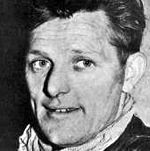
The photo above of my Dad, John Coyle, was taken just a few days before he 'upped and died' while watching on television the last day of the five-day cricket test match between England and Pakistan at The Oval, London. The Columban Superior General at the time was an Australian, Fr Bernard Cleary, and he was amused when I told him this. An illustrious Dubliner, George Bernard Shaw, once said, The English are not very spiritual people, so they invented cricket to give them some idea of eternity. The gave that Dad was watching when he had his heart attack seems to bear this out as it ended in a draw. 

My Dad was a pure 'Dub', born in Dublin city of parents from Rush, County Dublin, a fishing village north of the city, Nicholas and Jane. I didn't realise how much of a 'Dub' he was until I came home for the first time from the seminary where we 'Dubs' were a small - but significant! - minority and heard him speak. I had become accustomed to the great variety of accents from all over Ireland, some of which I couldn't understand at first. The same George Bernard Shaw also said that England and America are two countries divided by a common language. He was referring to words having different meanings and to each country using different words to describe the same reality. But we were all using the same words to mean the same thing but with utterly different pronunciations.

But it was a bit of a shock to realise that Dad had such a strong Dublin accent, one that even Dubliners themselves sometimes laugh at. Yet when he came on a visit to the Philippines for six weeks in 1981 he was able to communicate remarkably well with people who didn't have a word of English or who couldn't understand the way he spoke it. This was because what you saw was what you got. He was the same with everyone, from an archbishop to a young child.


When I was growing up I never heard the term 'bonding' being used in the context of parents relating to their children. When I became familiar with the concept I knew exactly what it meant because from my earliest days Dad and I were bonding. When my brother Paddy was still a baby Dad would take me to Sunday Mass in Holy Family Church, Aughrim Street (post-Vatican II interior in photo above), while my mother stayed at home and then went to a later Mass. For years on Sunday mornings after Mass Dad, my brother and I would meet our paternal grandfather at the local Catholic Young Men's Society, many of whose members were far from young. We would then go for a walk in the nearby Phoenix Park.

Phoenix Park in the summer

Dad also brought me to many soccer games in Dalymount Park, at the time the major football stadium in the Republic of Ireland. But my earliest memory of being with him at a game goes back to when I was maybe only four or five. He took me to Shelbourne Park to see his favourite team, Shelbourne play. They wore, and still wear, red and I remember vividly the red shirts of Shelbourne and the blue shirts of the other team, probably Limerick FC. 'Shels', as they're known, left Shelbourne Park at the end of the 1948-49 season. 


But I went to Shelbourne Park many a Sunday afternoon with Dad around 1950 to 1952 or so to watch speedway racing. The sport never really caught on in Ireland and the riders in those days weren't as colourful as those in the photo above. But names like Ronnie Moore, born in Australia but who grew up in New Zealand, Jack Young (photo below) another Australian, and Ernie Roccio, a handsome and very popular Italian-American who died in a race in England during that period, bring back many memories.Indeed I used to collect cards with photos of riders.


I remember a Friday evening in 1950, after Dad had bought a 'banger', (a pre-war Morris 8 like the one above except that ours was black and had the number ZC 595), he told me that he had a special surprise for me. After tea, our evening meal, the two of us went off in the car and arrived at the National Stadium on the South Circular Road (photo below, though it was somewhat different in 1950). It was the first of many occasions when we went there to see amateur boxing. He would have been delighted at Ireland's haul in the current Olympic Games, one gold so far (Katie Taylor), with at least a silver and the prospect of another gold tonight (John Joe Nevin), and two bronze medals (Paddy Barnes and Michael Conlan). One thing I learned from those events was a sense of sportsmanship. While the crowd would like the Irish boxers to win if there was an international contest, they always wanted the better boxer to win no matter where he was from and would make their feelings known if they thought a decision was a bad one. 


One of my heroes was Fergus Kilmartin a welterweight boxer whose parents owned a fruit and vegetable shop in Stoneybatter, in our area. Fergus worked there and I used to be in awe of him. He went off to Idaho some years later and just now I've discovered that he died there in 1994 at the age of 65. May he rest in peace.

At important games in Dalymount Park the St James's Brass and Reed Band would play. My Dad's greatest sporting memory was attending the FA Cup Final in Wembley Stadium, London, in 1948 when Manchester United defeated Blackpool 4-2 in what was considered to be perhaps the greatest final until then. In footballing terms it was for Dad as if he'd gone to heaven. It is a tradition for the spectators to sing the hymn Abide With Me before the FA Final, as it is before the Rugby League Final in England each year. Because of the memories this event had for Dad we sang it at the end of his funeral Mass in St Brigid's Church, Blanchardstown, a country village when I was a child but now a hugely built-up area.

Abide With Me is also a great favourite with brass bands and here it is played by the St James' Brass and Reed Band in Sacred Heart Church, Arbour Hill, a military chapel within Holy Family Parish where both Dad and I grew up.


Thanks for everything, Dad. May you and Mam rest in peace along with your parents and all of your own generation, especially my Auntie Jenny (Collins) Levey, the eldest of ten in my mother's family who was born 100 years ago today.


10 August 2012

'I am the bread of life.' Sunday Reflections, 19th Sunday in Ordinary Time Year B

,
The Charity of St Lawrence, Bernardo Strozzi, painted 1639-40

Readings (New American Bible: Philippines, USA)

Readings(Jerusalem Bible: Australia, England & Wales, India [optional], Ireland, New Zealand, Pakistan, Scotland, South Africa) 

Gospel John 6:41-51 (Revised Standard Version – Catholic Edition)

The Jews then murmured at Jesus, because he said, "I am the bread which came down from heaven." They said, "Is not this Jesus, the son of Joseph, whose father and mother we know? How does he now say, 'I have come down from heaven'?" Jesus answered them, "Do not murmur among yourselves. No one can come to me unless the Father who sent me draws him; and I will raise him up at the last day. It is written in the prophets, 'And they shall all be taught by God.' Every one who has heard and learned from the Father comes to me. Not that any one has seen the Father except him who is from God; he has seen the Father. Truly, truly, I say to you, he who believes has eternal life. I am the bread of life. Your fathers ate the manna in the wilderness, and they died. This is the bread which comes down from heaven, that a man may eat of it and not die. I am the living bread which came down from heaven; if any one eats of this bread, he will live for ever; and the bread which I shall give for the life of the world is my flesh."


St Lawrence of Rome was martyred on the orders of the Emperor Valerian on 10 August 258, four days after St Sixtus II, Pope, and four deacons. According to tradition Lawrence, who was from Spain and was a deacon, was roasted on a gridiron. Some scholars say that he was probably beheaded, not roasted. But there's no doubt about his martyrdom and the great impression he made on the people of Rome, especially on the poor. When he was asked to bring the Church's treasures he said he would have them in a matter of days. he distributed the Church's goods to the poor, as in Strozzi's painting above, and then brought the people before the authorities saying, 'These are the Church's treasures'.


While being roasted he told his executioners, according to the story that has come down, that they could now turn him over as he was done on one side. Whether this actually happened or not, the story shows us that the people of Rome remembered Lawrence as a man full of loving joy, as the video above shows. I'm almost certain that I've read or heard somewhere, though I can't find anything online to back this up, that those present at the saint's martyrdom smelled the aroma of bread baking as he was being grilled. For those of us who eat bread there is hardly a more pleasant sensation.

I'm writing this on the feast of St Lawrence - technically it's a memorial in the Church's liturgical calendar but has some of the trappings of a feast - and I see this saint as an embodiment of what Jesus is teaching us in the gospel for this Sunday. St Lawrence believed absolutely in the promise of eternal life given by Jesus. His faith was nourished by the Bread of Life that he received when taking part in the Holy Sacrifice of the Mass. This gave him the strength to give himself as 'bread of life' to the poor of Rome, in his great love for the poor and in his willingness to lay down his life.

Pope Benedict XV, Giacomo della Chiesa (1854-1922)

St Lawrence's life was one that integrated the Mass with service to the people, especially the poor. A few years ago I was accosted after Mass outside a cathedral in England where I was doing a mission appeal on behalf of the Columbans by a young man who kept insisting that the Church sell all its buildings and so on in order to help the poor. I'm afraid that after about ten minutes of this my patience gave way somewhat. But St Lawrence did precisely that, though the Church was still a persecuted one and , at the time as far as I know, didn't have too much in the way of buildings. And in more modern times Pope Benedict XV (1914-1922) did exactly the same with money at his disposal, both his own and that beloning to the Church in Rome. When he died there was only US$19,000 left in the Vatican treasury.


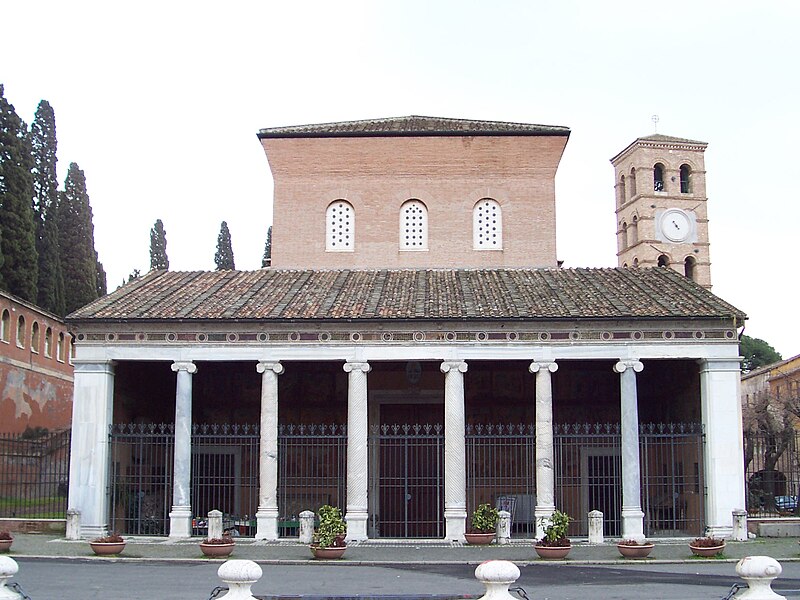
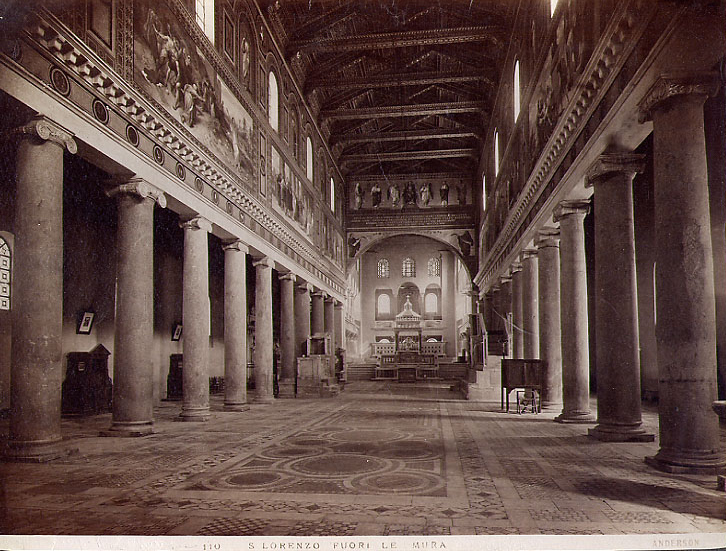
When the Holy Sacrifice of the Mass if offered in the basilica of St Lawrence, as in every other church, the bread and wine brought to the altar at the offertory become the Body and Blood of Christ. They're not 'symbols' of this. They are the Body and Blood of the Risen Lord Jesus. As the Catechism of the Catholic Church, No 33, puts it, At the heart of the Eucharistic celebration are the bread and wine that, by the words of Christ and the invocation of the Holy Spirit, become Christ's Body and Blood. 

Many walked away from Jesus because they couldn't accept his words, I am the living bread which came down from heaven; if any one eats of this bread, he will live for ever; and the bread which I shall give for the life of the world is my flesh.
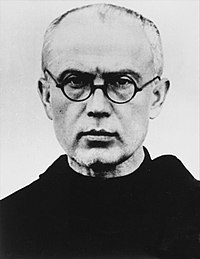
Fr William Morton, a Columban priest who grew up in a strongly Catholic family in Philadelphia, tells how he lost the faith and re-discovered it while discovering his call to the priesthood. I've highlighted some parts. [By this time he had become part of a 'Born Again' group, which brought him back to Jesus Christ].

Q. What then brought you back to the Catholic Church?

A. Though I agreed with and experienced personally this relationship with Jesus, certain behaviours like smoking, drinking and swearing were stressed as litmus tests of Christian life. There was a lot of quoting of Scripture and arguments about who was saved and who was not. I began to think of the Catholics I knew who didn't quote much Scripture, who smoked or drank, but who were also generous, compassionate and non-judgmental people.

I asked myself: ‘If Jesus came back whose butt would he be kicking?' I concluded that it would more likely be my own, because of my self-righteousness, rather than the man on the street with his bottle.

I was madly in love with one of the girls who sang in our Christian rock group. She had been raised Protestant and one day she asked if we could go to a Catholic Mass. We went to a Saturday evening Mass at St Mary's and it was a lively celebration with guitars and songs and a young, Irish priest who preached with fervour and humour. Though still very much a member of the Church of the Open Bible I had a fleeting ‘I could do that’ thought about the priest.

My girlfriend enjoyed the visit and so we began to go each Saturday evening and then to the Open Bible on Sunday morning.

My mother had also written me a very challenging letter, quoting John 6, and asking me how those who claim to interpret the Bible literally understand the Eucharist. I didn't get any convincing answers and began to hunger to receive again in the Catholic way.

Though I had always disliked confession as a youth I began to long too to hear those words of pardon and absolution and finally made up my mind to seek out a priest. Around this time my girlfriend suggested that we break off for a while to get things into perspective. This upset me at first but thoughts of priesthood and mission continued to float around in my head.

Fr Bill Morton, once an air traffic controller, is now working in the Columban mission in El Paso, Texas / Ciudad Juarez, Mexico, the latter one of the most violent cities in the world because of drug wars. Fr Kevin Mullins, a Columban from Brisbane, Australia, is in charge of the Columban parish in Ciudad Juarez.


St Lawrence of Rome enabled the poor there to get bread to keep body and soul together. With the Christians there he took part every Sunday in the Holy Sacrifice of the Mass, despite the danger. It was from the Bread of Life that he and they got the strength and courage to lay down their own lives.

It was the curiosity of his 'Born Again' girlfriend about the Mass and the clear challenge of his mother about today's gospel that brought the young Bill Morton back to the Church and eventually to the priesthood.

It is the Bread of Life who gives himself to the people of the Columban parish in Ciudad Juarez as they celebrate the Eucharist every Sunday that gives them the courage to live with hope in the midst of awful violence. When Father Kevin went there first only a few came. Now the church is full.

St Lawrence and the poor of Rome in 258, Fr Kevin Mullins and the poor of Ciudad Juarez in 2012, each a place of danger and violence, each a place where people take Jesus at his word: I am the living bread which came down from heaven; if any one eats of this bread, he will live for ever; and the bread which I shall give for the life of the world is my flesh.

09 August 2012

Pope Benedict's Prayer Intentions for August 2012


General Intention
Prisoners. That prisoners may be treated with justice and respect for their human dignity.
Missionary Intention
Youth Witness to Christ. That young people, called to follow Christ, may be willing to proclaim and bear witness to the Gospel to the ends of the earth.


08 August 2012

The Dominican habit and my vocation


Today is the feast of St Dominic. When I was a child my father, John, whose 25th death anniversary is 11 August, used to take me to High Mass on days such as Easter Monday and Whit Monday. Sometimes it would be to St Mary of the Angels Capuchin Church in Church Street, Dublin, sometimes to St Saviour's Dominican Church in Dominick Street, not too far away from the Capuchins. He loved High Mass. As a child I didn't!

He probably brought me to St Saviour's on other occasions too because I distinctly remember, when I was six or seven, being attracted by the habit of the Dominican friars I saw there. I guess that that was God stirring within me a sense that he was calling me to be a priest. When I began to think seriously about the priesthood at the age of 13 I never considered the Dominicans as I wanted to be a missionary priest - and a secular one, not a religious. But the Irish Dominicans have worked in Trinidad for many years, something I don't think I was aware of at the time.

St Dominic, El Greco (painted 1586-90)

Some years ago the Irish Dominican friars decided to go back to wearing their habit in their priories. All their vocation literature shows them wearing it. They have been doing very well for vocations in recent years and their blog, Irish Dominican Vocations, is well worth checking out. Read There are No Vocations! on 30 July.

The vocation director, Fr Gerard Dunne OP, told me a revealing story when I met him in 2010. One of the friars was to celebrate Mass in a nearby convent of religious sisters. As it was within walking distance he decided to wear his habit. On the way he met a not young religious sister from another convent who upbraided him for doing so. Habits were 'old hat'. Further on a young man stopped him and said, 'You're a priest, right? Well I'm getting married tomorrow and I'd like to go to confession'.

Speaking of confession, I met a friend today home from Belgium where she lives with her Belgian husband and their three children. She told me that her parish priest refuses to hear their confessions. 'Confession belongs to the past', he says. She doesn't know what to do. 'We have to come to the Philippines to go to confession'.

It's noteworthy too that as the Catholic Church dropped so many symbols, Friday abstinence, Lent - what we have now is 'Lent Lite' - and other things, we have become more aware of the Ramadan fast of Muslims and respect it, and sport has replaced Mass as 'liturgy'. In the past we in the West wore our 'Sunday best' going to church. Now the vast majority don't bother going to church but dress up to support their team in sporting events. In fact it has become a rip-off where teams change their gear, of which they have two or three different sets of colours, every year so that the companies they're associated with will sell more unneeded clothing, sometimes made by underpaid workers. and they know that children will put pressure on their parents to buy the new, unnecessary gear.


Ordinations of Fr Denis Murphy OP and Fr Maurice Colgan OP, St Saviour's Church, Dublin, 18 September 2011

I'm well aware that a habit or a clerical suit doesn't make a person a saint. Before Christmas 1981 when travelling on a train from London to Glasgow, wearing a red sweater and jeans, a woman asked me if I was a priest. Around the same time - I was home for Christmas from studies in Toronto - I went to visit the parents of a young Irishman I had come to know in a prayer group there. His mother opened the door. She had never met me before and didn't know I was coming but greeted me with a big smile and said 'You're very welcome, Father!'

But symbols are important. On recent visits home to Ireland I have made a point of wearing clerical dress most of the time. I have been approached by people young and old precisely because of this, once in the airport in Abu Dhabi by a newly graduated student from a Dublin university. He old me he was one of very few of his contemporaries who practised the faith and he appreciated the affirmation he got. On another occasion, flying from Abu Dhabi to Dublin I got into a genuine dialogue of faith with a Muslim man who not only had the Quran saved in his mobile phone but parts of the Bible also.

So on the feast of St Dominic I thank God for my Dad who dragged me unwillingly to St Saviour's all those years ago and for the friars I saw there whose white habits, without my being aware of it at the time, carried a quiet, personal message from God.

Take a look too at Irish Rosary Priest, the blog of 91-year-old Fr Gabriel Harty OP who is spending August working at Knock Shrine.

06 August 2012

A death in the Great War 95 years ago today

Transfiguration of Christ, Paolo Veronese, painted 1555-56

Today is the 34th anniversary of the death of Pope Paul VI. It is also the 95th death anniversary of Corporal Lawrence Dowd, an older half-brother of my maternal grandmother Annie Dowd Collins. He died in battle near Ieper (Ypres). I was the first relative to locate his grave, in September 2001. Other relatives whom I didn't know personally, independently of me, found it a few years later, learned that I had been there first and contacted me, leading to new friendships and learning more about my Uncle Larry. 

Potijze Chateau Grounds Cemetery where Larry Dowd is buried

I had always thought that Larry was the eldest of the second family of my great-grandfather Michael Dowd. His first wife died. At the age of 35 he married Mary Geraghty who, as my late mother used to put it, 'came in over five children at the age of 19'. But I learned from my newly-discovered cousins that Larry was the youngest of the first family. They have some of his letters, written to his eldest brother, and official documents from the British War Office. I smiled when I learned that he had been demoted from sergeant to corporal over something that had happened on a boat from England to Belgium.

Larry had enlisted in the Royal Dublin Fusiliers but had been transferred  a number of times, as happened to so many. His birth place is given as Dunleek, Lanarkshire, Scotland. However, that can't be right as we had no connections whatever with Scotland. In his last letter he wrote that he had applied to be moved back to his 'beloved Dubs'. When I was growing up we Dubliners were known as 'jackeens'. But when the Dublin Gaelic football team was so successful in the 1980s the term 'Dubs' more or less replaced it. However, the nickname seems to go back to the Dublin Fusiliers.

At Uncle Larry's grave, September 2001


Ten days after Larry's death the saintly Fr Willie Doyle SJ died in the same battle.

A friend of mine in Dublin says The light of heaven on him whenever he refers to someone who has died. When Peter, James and John went up Mount Tabor with Jesus they caught, ever so briefly, a glimpse of the light of heaven. May it shine on my Uncle Larry and on all who died in that awful war. One of the hopeful things I experienced very strongly when I visited Ieper is that the memory of all the dead who died in the Great War in that area, no matter what side they were on, is held in reverence by the people there. Perhaps in the hell that men created there some saw - and still see - the presence of the Transfigured Christ.

May that be so for all of us.

03 August 2012

'Believe in him whom he has sent'. Sunday Reflections, 18th Sunday in Ordinary Time Year B


From The Gospel of John (2003)  Directed by Philip Saville. Jesus played by Henry Ian Cusick; narrator, Christopher Plummer.
[John 6:24-35 is found between 2:36 and 4:24 in the video.]

Readings (New American Bible: Philippines, USA) 

Readings (Jerusalem Bible: Australia, England & Wales, India [optional], Ireland, New Zealand, Pakistan, Scotland, South Africa)

Gospel John 6: 24-35 (Revised Standard Version – Catholic Edition)

So when the people saw that Jesus was not there, nor his disciples, they themselves got into the boats and went to Caperna-um, seeking Jesus. When they found him on the other side of the sea, they said to him, "Rabbi, when did you come here?" Jesus answered them, "Truly, truly, I say to you, you seek me, not because you saw signs, but because you ate your fill of the loaves. Do not labor for the food which perishes, but for the food which endures to eternal life, which the Son of man will give to you; for on him has God the Father set his seal." Then they said to him, "What must we do, to be doing the works of God?" Jesus answered them, "This is the work of God, that you believe in him whom he has sent." So they said to him, "Then what sign do you do, that we may see, and believe you? What work do you perform? Our fathers ate the manna in the wilderness; as it is written, 'He gave them bread from heaven to eat.'" Jesus then said to them, "Truly, truly, I say to you, it was not Moses who gave you the bread from heaven; my Father gives you the true bread from heaven. For the bread of God is that which comes down from heaven, and gives life to the world." They said to him, "Lord, give us this bread always." Jesus said to them, "I am the bread of life; he who comes to me shall not hunger, and he who believes in me shall never thirst. 


Fr Ragheed Ganni (20 January 1972 - 3 June 2007)

‘He was a raconteur par excellence and a font of knowledge - we discussed everything and anything from the metaphysical to the trivial. A young and gauche student at the time, I learnt about Iraq and about theology; about the workings of the college in the summer and the best places to eat pizza. I was amazed at his command of English and Italian and his perennial good spirits and big smile - he was and will always be an inspiration’.

That is how an Irish student at the Pontifical Irish College in Rome described Fr Ragheed Ganni, a Chaldean Catholic priest murdered along with three subdeacons, Basman Yousef Daud, Wahid Hanna Isho, and Gassan Isam Bidawed, on 3 June 2007 just after the young priest had celebrated Mass in Holy Spirit parish, Mosul, Iraq. Fr Ganni, an engineer, studied theology in Rome, and stayed at the Irish College, where he was known as 'Paddy the Iraqi', 'Paddy' being a generic term for Irishmen, derived from the name of Ireland's - and Nigeria's - patron, St Patrick.

Dear young people, do not be satisfied with anything less than Truth and Love, do not be content with anything less than Christ. Pope Benedict spoke these words at the prayer vigil on 20 August last year during the Madrid World Youth Day. He also said, we need to speak with courage and humility of the universal significance of Christ as the Saviour of humanity and the source of hope for our lives.

In these words he is echoing the answer of Jesus to the question put to him in today's gospel, What must we do, to be doing the works of God? His reply: This is the work of God, that you believe in him whom he has sent.

In Verbum Domini the Pope wrote, We cannot keep to ourselves the words of eternal life given to us in our encounter with Jesus Christ: they are meant for everyone, for every man and woman. ... It is our responsibility to pass on what, by God's grace, we ourselves have received. In his Angelus talk on 29 October 2006 Benedict said, The rediscovery of the value of one's own Baptism is at the root of every Christian's missionary commitment, because as we see in the Gospel, those who allow themselves to be fascinated by Christ cannot fail to witness to the joy of following in his footsteps. 

In that same talk, in which he commented on the gospel of that Sunday, Mark 10:46-52, Pope Benedict said, The decisive moment was the direct, personal encounter between the Lord and that suffering man. They found each other face to face:  God with his desire to heal and the man with his desire to be healed; two freedoms, two converging desires. He was speaking of the meeting between the blind Bartimaeus and Jesus.

One theme that comes through repeatedly in the teaching of Pope Benedict is that our faith is in a person, Jesus, God who became man. Jesus tells us clearly that it is his Father's will that we believe in him.

Another theme of Benedict is the joy that Jesus promised those who follow him. This was the theme of the Pope's message for this year's World Youth Day held on Palm Sunday in Rome.


Pope Benedict uses a very striking term,those who allow themselves to be fascinated by Christ. I don't think I've heard it put that way before by anyone. Benedict insists so often that our faith is faith in the person of Jesus, not in a set of doctrines, though they come to us from Jesus through his Church.


Just over a year before his death Father Ragheed spoke at the Eucharistic Conference in Bari, Italy. He said, Mosul Christians are not theologians; some are even illiterate. And yet inside of us for many generations one truth has become embedded: without the Sunday Eucharist we cannot live.


In the context of the war in Iraq he spoke eloquently about the Sunday Eucharist: It is among such difficulties that we understand the real value of Sunday, the day when we meet the Risen Christ, the day of our unity and love, of our (mutual) support and help. There are days when I feel frail and full of fear. But when, holding the Eucharist, I say 'Behold the Lamb of God, who takes away the sin of the world', I feel His strength in me. When I hold the Host in my hands, it is really He who is holding me and all of us, challenging the terrorists and keeping us united in His boundless love.


In normal times, everything is taken for granted and we forget the greatest gift that is made to us. Ironically, it is thanks to terrorist violence that we have truly learnt that it is the Eucharist, the Christ who died and risen, that gives us life. And this allows us to resist and hope. 

This martyr of our times was clearly fascinated by Christ and understood that it is the Risen Lord himself whom we meet when we come together for Sunday Mass.

Jesus chides the people and questions their real reason for coming after him: Truly, truly, I say to you, you seek me, not because you saw signs, but because you ate your fill of the loaves. Yet he doesn't regret having fed them and he sees that for at least some of them their reason is somewhat deeper. He gives a straight answer to their question about the work of God: This is the work of God, that you believe in him whom he has sent. It is not being 'good', it is not being 'nice'. It is in accepting him for who he is, God who became man, who lived among us, died for us on the Cross, rose from the dead on Easter Sunday and is with us in an intimate and challenging way when we celebrate Mass, especially on Sunday.

All who met Father Ragheed described him as a joyful person. There is something very joyful, in the sense that Jesus meant, in a person who can not only tell you where the best pizza in Rome is, who is not content with anything less than Christ and who is prepared to go back to a very dangerous situation in order to be able to celebrate Mass with his people and to stay with them in the midst of war.

Read more about Fr Ragheed Ganni here and here.