12 July 2012

'Take nothing for the journey'. Sunday Reflections, 15th Sunday in Ordinary Time Year B

An Apostle, Sir Anthony van Dyck, c.1618

Readings (New American Bible: Philippines, USA) 

Readings (Jerusalem Bible: Australia, England & Wales, India [optional], Ireland, New Zealand, Pakistan, Scotland, South Africa)

Gospel Mark 6:7-13 (Revised Standard Version – Catholic Edition)  
         
Jesus called to him the twelve, and began to send them out two by two, and gave them authority over the unclean spirits. He charged them to take nothing for their journey except a staff; no bread, no bag, no money in their belts; but to wear sandals and not put on two tunics. And he said to them, "Where you enter a house, stay there until you leave the place. And if any place will not receive you and they refuse to hear you, when you leave, shake off the dust that is on your feet for a testimony against them." So they went out and preached that men should repent. And they cast out many demons, and anointed with oil many that were sick and healed them.
                                                                          +++  

Green Drove, Pewsey, with the Pewsey White Horse, south of the village

Today's gospel reminds me of experiences as a seminarian while on Peregrinatio pro Christo with the Legion of Mary, in St Anne's Parish, Edge Hill, Liverpool, in 1963, in St Fergus' Parish, Paisley, Scotland in 1965 and in Holy Family Parish, Pewsey, Wiltshire, England, in 1966. Peregrinatio pro Christo, or PPC, is a programme of the Legion of Mary that began in 1958 or 1959 when Legionaries gave up a week or two of their summer vacation to do full-time Legion work in another country. The name comes from the motto that inspired St Columban and many Irish missionary monks, Peregrinari pro Christo, 'to be a pilgrim for Christ. Blessed John XXIII quoted this in a letter to the Irish Hierarchy in 1961 on the occasion of the Patrician Year, commemorating 1,500 years of the Catholic faith in Ireland. In the same letter he specifically referred to the involvement in this spirit of the Society of St Columban in Latin America. (Thanks to Shane for the link). 

Many of us in the seminary, including some of the priests, used to go for a week or two during our summer break. Like the apostles, we depended on the hospitality of parishioners for board and lodging. In my three experiences I was in parishes and the main work was going from house-to-house in pairs, rather like what the Apostles were sent by Jesus to do in today's gospel. Legionaries never work alone. Occasionally people would close their door once we announced who we were but very few were impolite. Some would give us a warm welcome.    

I remember one family we visited in Liverpool. They were lapsed Catholics and the parish records showed they were rather hostile to the Church. However, when the man who opened the door heard our Irish accents he began to tell us about his pleasant experiences on visits to Ireland. I spoke of this as an expression of our faith. When we left, this man seemed to have let go of his hostility to the Church.
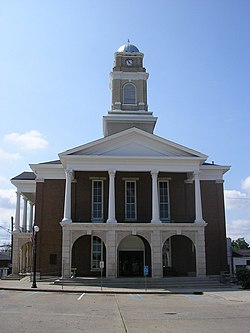
Garrard County Courthouse, Lancaster, Kentucky

As a young priest studying in the USA I had similar experiences in Lancaster, Kentucky, during the summers of 1969 and 1970. The parish priest, Fr Ralph Beiting, had college students from other parts of the USA work on various projects in his parish that covered nearly four counties and that had very few Catholics. There was still lingering prejudice against Catholics. One of the projects was to visit each home, in pairs, just as the Legion does, and introduce ourselves as being from the Catholic Church, and telling the people about our programmes. Again, the response was generally positive. In some rural homes we'd meet older people sitting on their rocking chairs on the veranda. They'd invite us to sit down and relax and would sometimes share a bit about their Bible-based faith. As we'd leave we'd hear the friendly farewell so common in the area, 'Y'all come back!'

Some of the programmes we invited children to were summer Bible schools and five-day vacations at a summer camp for poor children, boys one week and girls another week. Black and white children would be together, when at the time that was rare.

Only God knows what can result from going from house-to-house as a way of carrying the mission that Jesus gave to the Twelve and that he gives to us. He doesn't guarantee 'success' but simply sends us out in trust.

One of Father Beiting's summer apostolates for many years has been street-preaching, very often with seminarians. On one occasion years ago he was driven out of one town at gunpoint but returned the next day, not to preach but simply to show himself. He was evetually not only accepted but welcomed. He, a Catholic priest, was continuing an old tradition in the area, the travelling preacher. He was one of the very few left. Ordained in 1949 and now in his late 80s, he is still going strong. Here he is preaching last summer. What a wonderful example!



11 July 2012

70th Death Anniversary of Wing Commander Brendan 'Paddy' Finucane

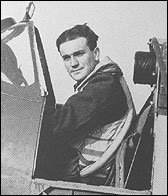
Wing Commander Brendan 'Paddy' Finucane (16 October 1920 - 15 July 1942)

I'm not sure when or how I first came to know of Brendan Finucane, one of the greatest 'aces' in the Royal Air Force during World War II and whose 70th death anniversary occurs on Sunday. Maybe it was in reading English 'comics' when I was in primary school. Weeklies such as The Rover, Adventure, The Hotspur, The Wizard,  featured adventure stories for boys and sometimes had real-life stories. My Uncle Joe Kiernan drove a delivery van for Easons newsagents in Dublin and kept me well supplied.

At some stage I discovered that this airman, known in England as 'Paddy', had become the youngest ever Wing Commander - equivalent to Lieutenant colonel - in the RAF and that he had studied in the same school as myself, O'Connell Christian Brothers' School, Dublin. By the time I began in secondary school there (I was in primary from 1951 to 1956 and in secondary from then till 1961) I heard his name being mentioned from time to time in the school. He had left in 1936 when his family moved to England and he joined the RAF two years later. Among his classmates in O'Connell's were two famous sports commentators, Mícheál O’Hehir and Philip Greene. Philip died only last year.

My great desire when I turned 13 was to be a pilot. This desire was fuelled by reading adventure stories about James Bigglesworth, a fictional character known as 'Biggles', created by Captain W.E. Johns, who had fought as a pilot in the Great War. 'Biggles' managed to fly in both World Wars! In the Second he flew Spitfires and Hurricanes.With some of my closest friends at school I used to devour the 'Biggles' stories, which we borrowed from the public libraries of Dublin. We all wanted to be like 'Biggles' but none of us ended up doing anything more exciting than flying as passengers. Tim Corcoran became a diplomat and Shay Mullany a psychiatrist, both gone to their reward. A third, John Donohoe, became a top kidney doctor and I became a Columban priest. Another classmate, the late Kevin Brady, had an older brother Jim who flew Spitfires in the Irish Air Corps.

Brendan Finucane's 'Spitfire' with shamrock marking

But when I was 15 or 16 I discovered Wing Commander Brendan Finucane in a new way in a book called Daring to Live: Heroic Christians of Our Day by Doris Burton, who wrote for young people. The book came out in 1955 and had chapters on such persons as Louis Pasteur, Fr Miguel Pro SJ, the Mexican martyred in 1927 at the age of 36 and beatified by Blessed John Paul, as was Pier Giorgio Frassati, an Italian born of a wealthy family who discovered at his funeral how he had served the poor of Turin. He died suddenly of polio in 1925 aged only 24. 

One of the things I remember from the book is that the young Irish pilot, when he'd return from a sortie, used to go and pray the rosary for any German whose plane he had shot down. That meant at least 26 rosaries. In a programme on RTÉ Radio 1 broadcast in 2004,  In Search of 'Paddy' Finucane,  one of his brothers, Raymond, speaks of Brendan being 'a good Catholic', taking after their father whom he describes as 'a very keen Catholic, indeed'.

In the RTÉ documentary one of those in his squadron speaks about a song that Brendan loved and that was very popular at the time, Tangerine. The pilots would usually listen to it on their gramophone before going up and Brendan was always among them - except for the day he died.


Brendan is quoted as saying that the Luftwaffe would never get him. Nor did they. During a raid on some ground installations near the French coast a gunner on the ground hit Brendan's plane as it was flying low. He never made it back to England and crashed into the English Channel not far from where this photo of the White Cliffs of Dover was taken. He was too low to bail out.


I don't know if Brendan ever heard Dame Vera Lynn's recording of The White Cliffs of Dover, a song that will be for ever associated with World War II. She recorded it in 1942 but I don't know if this was before or after his death. (I've an idea that this is not Vera's original recording but one she made some years later). Someone has put the song together with a display by Spitfires, in a peaceful setting. I'm sure that Brendan, whom you can find 'live' at 3:54 into a video here, would have enjoyed this.


May this handsome, talented young men who died around the time I was conceived and who inspired me during my adolescent years rest in peace.

07 July 2012

'A spring flower in the desert.' Sunday Reflections, 14th Sunday in Ordinary Time Year B


Readings (New American Bible: Philippines, USA) 

Readings (Jerusalem Bible: Australia, England & Wales, India [optional], Ireland, New Zealand, Pakistan, Scotland, South Africa)

Gospel Mark 6:1-6 (Revised Standard Version – Catholic Edition)

Jesus went away from there and came to his own country; and his disciples followed him.  And on the sabbath he began to teach in the synagogue; and many who heard him were astonished, saying, "Where did this man get all this? What is the wisdom given to him? What mighty works are wrought by his hands! Is not this the carpenter, the son of Mary and brother of James and Joses and Judas and Simon, and are not his sisters here with us?" And they took offense at him. And Jesus said to them, "A prophet is not without honor, except in his own country, and among his own kin, and in his own house." And he could do no mighty work there, except that he laid his hands upon a few sick people and healed them. And he marveled because of their unbelief. And he went about among the villages teaching.

+++

Both the New American Bible and the Jerusalem Bible lectionaries read, He was amazed at their lack of faith. Jesus was among his own people, in the town where his brothers and sisters, ie, his cousins, lived. Perhaps his amazement was a form of frustration. Missionaries are men and women who are often 'amazed' at what seems to be their lack of 'success' in changing the situation, whether it is leading people to faith in Jesus Christ or working among baptised people for the justice that the Gospel demands but evidently isn't there.

Yet Jesus laid his hands upon a few sick people and healed them. In other words, he found some who responded in faith.

One Columban priest who found faith in Keiko, a very sick 14-year-old girl in Japan, was Fr James Norris, a New Zealander who died on 6 October 2007. Japan is still a country where fewer than one in two hundred are Catholics. He wrote about his experience in Far East, the magazine of the Columbans in Ireland and Britain, in 1973. Father Jim's article made a profound impact on me and I reprinted it in Misyon in March-April 2008. our last printed edition. Maybe the few who believed and were healed consoled Jesus in his humanity. Maybe he felt something of what Father Norris describes in the closing paragraph of his article.

A Spring Flower
by Fr James Norris 

Cherry Blossoms at Fukushima, Japan

There is a high school in our parish for nearly 2,000 girls conducted by the Sisters of the Infant of Jesus. Very few of these girls are baptized Christians. As a means of contact, I teach English to the junior high school pupils three times a week. My classes are very informal and I am afraid the young ladies don’t take me very seriously, possibly because I give them no homework or exams. My specialty is supposed to be pronunciation and intonation.

One day, early in November 1971, I received a summons from one of my little pupils, Keiko Uemura, aged 14. She was very sick in the hospital and wished to be baptized. I hadn’t noticed her absence at school. The nuns were full of apologies for not letting me know, but they hadn’t thought her illness was serious; moreover, she had never shown any real interest in religion but on the contrary, during religious classes seemed to take a delight in trying to tie the Sister up in knots with embarrassing questions.

Keiko on her First Communion Day

When I visited her she seemed in good spirits. After ascertaining that she really did believe and had sufficient knowledge to realize what she was doing, I baptized her. A few days later I returned to the hospital with several books that explained the faith simply and would help her to pray. She began to prepare for her first Holy Communion. I discovered that despite her seemingly frivolous behavior during religion classes, she had retained quite a lot and what was more, in her present crisis could believe, simply and totally, with no reservations. 

In December she was moved to the University hospital, the largest in town and the best equipped. Keiko herself was not aware of it, but she was suffering from a rare type of bone cancer that sometimes afflicted children. The doctor gave her three months to live. Her parents were wonderful. One of them was always near her, day and night. In her case this devoted warm parental love was an actual grace that served to open out and expand her soul to receive the grace of God’s love. As Keiko responded to God’s love, the change in her thinking and outlook, her values, could not fail to impress her parents who in turn were drawn along by the girl towards God.

About Christmas time she made her first Holy Communion. She was radiantly happy that day, as is evident from the photo. Present for the occasion were her parents and some of the Sisters from the school. I made a tape recording for future use. Each week I took her Holy Communion. Her mother prepared the altar and with Keiko read the book on doctrine explaining the faith.

Home for the New Year
The girl was permitted to return home for three days over the New Year. As a result of an operation she had recovered so well that she could walk about slowly with the aid of crutches. She believed she was on the way to complete recovery; she was full of roseate plans for her future, a trip to Lourdes followed by a life of service as a nurse to crippled children. Her father hoped against hope for a miracle, but on the quiet he assured me that it was only a question of time.

Spiritual progress
During the next three months she made tremendous spiritual progress. Her mother told me that she herself was sometimes concerned by the flood of visitors, who often outstayed their welcome, even when Keiko was in pain. But the girl never showed it; she always put on a cheerful front and showed her gratitude to all-comers. Later when her mother grumbled about the inconsiderateness of some people, the girl stopped her with: ‘Mother, it may be alright for you to complain because you are not a Christian, but I am one now and must love everybody. Besides, the visitors come because they are interested in me and I am grateful for this.’ Apart from the occasional sigh or moan that escaped her lips, she never complained of the pain.

As the long winter faded, the cherry blossom trees along the Shirakawa River responded to the warm April sun and flooded the banks with a soft pink mist. I could see the blossoms from the window of her room, but the girl was too young to appreciate the pathos of their beauty – those petals whose destiny was to diffuse their delicate beauty for a brief span, only to be caught by the slightest breeze and flutter to the earth from which they sprang. Keiko never saw her own life and destiny in those blossoms.

About the middle of April she began to weaken. Within a week, she had lost consciousness and was given oxygen. She died peacefully on 27 April. The church was filled at her funeral. Her classmates were heartbroken and inconsolable, far more emotionally upset than her family. Indeed, I was surprised at how calmly her parents bore their great loss. I discovered it was because they had received the grace of the faith through the girl’s influence, even before they had begun any formal instructions. They were convinced that she still lived on in God and that they would meet her again.

Whole family converted
A week after the funeral her parents and her brother began their study of the doctrine. They were model catechumens. Every night before the family altar, united to Keiko in spirit, they said the rosary and read a chapter from the Scriptures. I baptized them on 6 November, the anniversary of Keiko’s baptism. There were tears of joy in their eyes that day as they realized they were united to their daughter by grace within the bosom of God the Father.

One of Keiko’s closest friends who was shattered by her death but very impressed by the spiritual change in the girl before her death, has resolved to follow in her footsteps and pursue the ideal of service Keiko set for herself had she lived. She is now under instructions and intends to become a nurse.

Testimony of her faith
There was nothing sensational about this girl’s short life. She did nothing that would merit notice in the mass media; her life created no more of a stir in society than a petal falling to the ground. But I am convinced her story is real news and a genuine success story. In these days of superficial sensationalism, even we Christians tend to forget that the real battles of life are won or lost within the depths of the heart where a man meets his God and says yes or no.

Moreover, in a country like Japan, a missioner seldom sees the grace of God’s action working so powerfully and swiftly in a soul. Such tangible evidence of God’s presence is almost a physical sign of His love which bolsters one’s hope no end, enabling the missioner to keep going. This slip of a girl was a candle in the darkness, a spring flower in the desert.


Missa Papae Marcelli  (Mass of Pope Marcellus) by Palestrina

Gloria

Sung by the Tallis Scholars directed by Peter Phillips

06 July 2012

My parents were married 70 years ago today


On Saturday 6 July 1942 John Coyle, a carpenter, married Mary Collins, a seamstress, in St Paul's Church, Arran Quay, Dublin, (photo below) the first Catholic church to be built in Dublin after the Act of Catholic Emancipation in 1829 that abolished most of the anti-Catholic Penal Laws in the United Kingdom, of which the whole of Ireland was then apart. The occasion was to have some impact on my life as I was the first-born of their union, arriving in the world nine months and two weeks later. The wedding photo above was taken in a studio in Dublin after their honeymoon. So it is likely that I was present on the occasion!

Other couples who had their weddings in St Pauls, now sadly closed, were Captain Charles Boycott, who gave a word to the English language, and Anne Dunne, in 1852, and Éamon de Valera, who played such a major part in Irish history in the last century,  and Sinéad Flanagan in 1910.

St Paul's Church, Arran Quay, Dublin [Wikipedia]


Because of the 'Emergency', as the Second World War was known in what is now the Republic of Ireland - we were neutral in the war - travel was restricted and most things were rationed. The wedding took place at 7am and the breakfast, as wedding receptions were called in those days because there were no afternoon or evening Masses and there was a strict fast from midnight for those who wished to receive Holy Communion, was held in the nearby Four Courts Hotel. It no longer exits. 

But there was also another reason for the early ceremony. My parents were to travel to Arklow, a coastal town in County Wicklow, south of Dublin, by train. They went first class, though my mother often spoke of their return journey a fortnight later when they couldn't find a seat because of the number of schoolgirls on an outing.


Both my parents loved to dance and Dad was one of those who in their spare time built the dance-floor in the hall of the Catholic Young Men's Society in Aughrim Street, where my Mam also appeared in a number of amateur stage productions. She was a very good singer. She'd often tell a story about my Uncle Joe Kiernan, who married one of her younger sisters, my Auntie Nan, at a dance in the hall when Irving Berlin's Always was being played. It seems my Uncle Joe wasn't 'unhappy' and sang the word 'always' with a big grin on his face each time it came around. My Mam would always laugh as she recalled this.

My parents, left, Auntie Nan and Uncle Joe on an outing to Powerscourt, County Wicklow, maybe around 1940 before either couple were married. They've all gone to their reward, Uncle Joe being the last. I celebrated his funeral Mass in 2000.


Irving Berlin was a master at putting simple melodies and simple words together in a way that spoke to people.

I'll be loving you, always,
With a love that's true, always.
When the things you plan need a helping hand
I will understand, always, always.
Days may not be fair, always.
That's when I'll be there, always.
Not for just an hour,
Not for just a day,
Not for just a year but always.

I was growing up when rock 'n' roll arrived in the mid-1950s. When I'd see my parents dancing I'd envy them because they danced so well and so gracefully, though they weren't quite as good as Fred Astaire and Ginger Rogers whose movies they would have seen in the 1930s. When my mother was only 12 she won a prize for doing the Charleston - and was afraid her father would find out!


The late Fr Vincent San Juan SJ, a Filipino who spent most of his life as a priest in the family life ministry, used to compare the relationship of husband and wife with a couple doing ballroom dancing. Sometimes the man led, sometimes the woman. There may be times too when they're not in step with one another or may even step on one another's toes. But when there is love they're soon back into the proper rhythm.

One evening when I was already ordained I was washing the dishes at home with my mother and asked her how she had come to marry my father. One aspect of the story still makes me smile. My Dad was a very honourable person. His best friend, who was also his best man at his wedding, was Matt McKenna. Matt was only 43 when he died. He and my father used to go on summer holidays together. My father judged that he was spending too much time with Matt and was neglecting his girlfriend - so he dropped the latter! Some time later she was given two tickets for a formal dance and asked her mother, later to be my Granny Collins, what she should do. 'Invite Joe', was her mother's response. 'Joe' was the nickname she knew  my father by. So she did and they would have been dressed like Fred and Ginger in the video above for the occasion when they reestablished their relationship.

I'm grateful to God for the advice Granny Collins gave to her daughter, for the dancing that led my parents to the altar, for their giving life to me and to my brother Paddy and for the fact that I never had any doubts about the commitment they made to each other on 6 July 1942, a commitment that Irving Berlin captures in his song.

My mother died in her sleep on 29 April 1970. She had given my father a new suit as a Silver Wedding Anniversary gift in 1967. He was always slow to use something new. He wore the suit for the first time at my mother's funeral. He died suddenly on 11 August 1987. May they and their parents, Nicholas and Jane Coyle, William Patrick and Annie Collins, rest in peace.


04 July 2012

Happy Fourth of July with James Cagney and Bob Hope!


A great dance routine from The Seven Little Foys with Bob Hope playing Eddie Foy and James Cagney playing George M. Cohan.

A Happy Fourth of July to all Americans! After my ordination I spent three wonderful years studying in the USA, 1968 to 1971. May God bless your country!

02 July 2012

Columban Fr Malcolm Sherrard RIP


Fr Malcolm Sherrard died in Wellington, New Zealand, 30 June aged 86 years. 
I didn't know Father Mal very well as we worked in different areas in the Philippines. I found him to be a quiet individual. Fr Michael Gormly, a Columban from New Zealand,  describes him in the obituary below as a true product of the pre-Vatican church, shaped by practices and devotions from earlier years. When I came to the Philippines in 1971 it was common to hear younger 'post-Vatican II' priests and others, and not only in the Philippines, describe the Church as 'community' and not 'buildings'. I didn't come across too many who didn't live in a building! But the missionary priests of those days did a tremendous amount with and for the people, establishing parishes, building schools, clinics and churches and so much more. None of the men I knew boasted about this. They just got on with the job and in doing so helped build vibrant communities of Catholics.
Fr Malcolm, the older son of Samuel and Margaret Sherrard, was born in Whanganui on 21 December 1925. He received his primary schooling in Feilding, and secondary education at St Patrick’s College, Silverstream. He prepared for seminary formation with evening study of Latin while working on the family sheep farm in the Manawatu.
Volunteering for overseas mission, he joined the spiritual year at St Columban’s, Lower Hutt, near Wellington, in 1948, and later moved to North Essendon, Victoria, Australia. His studies were completed at Dalgan Park, Ireland. From the early 1950s he carried a lasting sense of achievement from long holiday cycle tours across Europe. After ordination in 1954 he was assigned to the Philippines as a missionary priest.
Although the tropics were demanding, Fr Malcolm found stamina to maintain a rugged pace for many years. Blessed with a calm and assured manner, his ministry was in rural areas. Mission was the straight-forward task of keeping a parish functioning, and reaching out to meet basic social needs in the scattered communities.
His principal missionary experience was in the Diocese of Iba in the Province of Zambales, first in Botolan, and later in the remote town of Poonbato. A movie from that time, Never to be Lonely, presents him as a tall, confident, active fellow, totally at home in the local situation. He operated with steely determination, some would say a stubborn streak.
Over the years he supervised the building of churches, set up medical clinics, organised emergency relief in times of natural disasters, and was the director of a number of schools. Civil authorities acknowledged his deep concern for the welfare of people in the district. His one aim was to see that the projects touched and enriched the lives of the poor.
Fr Malcolm later spent a number of years on the road in New Zealand, visiting parishes and schools with movies and slides to illustrate his mission message. For the most part, he remained a true product of the pre-Vatican church, shaped by practices and devotions from earlier years. Colleagues reckon we are not to see the like of him again.
Celebrations with Graeme, Jean and family (family members) were times of pride and delight for Fr Malcolm. Likewise, the support and encouragement of the Wellington Filipino Community were a blessing to him. Every visitor to the Columban Mission at Boulcott will fondly remember his gentle manner in hospitality. Kindness was his second name. A genuine concern for others and a selfless readiness to meet needs were at the heart of his missionary priesthood.
May he rest in peace.     
Fr Michael Gormly

Pope Benedict's Prayer Intentions for July 2012


From the website of the Apostleship of  Prayer

General Intention - Work Security 
That everyone may have work in safe and secure conditions.


Mission Intention - Christian Volunteers
That Christian volunteers in mission territories may witness to the love of Christ.