05 January 2012

'They prostrated themselves and did him homage.' Sunday Reflections. The Epiphany.

Adoration of the Magi, Francesco Bassano, painted 1567-69

The Epiphany 

Where the Solemnity of the Epiphany is not to be observed as a Holyday of obligation, it is assigned to the Sunday occurring between 2 and 8 January as its proper day. (The Roman Missal). As far as I know, Ireland is the only country where English is widely used that observes this feast as a Holyday of Obligation. Elsewhere it is observed this year on Sunday 8 January. Thew new English version of The Roman Missal also has a special Vigil Mass for the Solemnity of the Epiphany, though I think the readings are the same as in the Mass During the Day.


Readings (NAB)
 
Gospel Matthew 2:1-12 (New American Bible: Philippines, USA)
 
When Jesus was born in Bethlehem of Judea, in the days of King Herod, behold, magi from the east arrived in Jerusalem, saying, "Where is the newborn king of the Jews? We saw his star at its rising and have come to do him homage."
 
When King Herod heard this, he was greatly troubled, and all Jerusalem with him.
 
Assembling all the chief priests and the scribes of the people, He inquired of them where the Christ was to be born.
 
They said to him, "In Bethlehem of Judea, for thus it has been written through the prophet:
 
And you, Bethlehem, land of Judah, are by no means least among the rulers of Judah; since from you shall come a ruler, who is to shepherd my people Israel."
 
Then Herod called the magi secretly and ascertained from them the time of the star's appearance.
 
He sent them to Bethlehem and said, "Go and search diligently for the child. When you have found him, bring me word, that I too may go and do him homage."
 
After their audience with the king they set out. And behold, the star that they had seen at its rising preceded them, until it came and stopped over the place where the child was. They were overjoyed at seeing the star, and on entering the house they saw the child with Mary his mother.
 
They prostrated themselves and did him homage. Then they opened their treasures and offered him gifts of gold, frankincense, and myrrh.
 
And having been warned in a dream not to return to Herod, they departed for their country by another way.

Reflection by Columban Sister Kathleen Coyle
From the November/December 2011 issue of The Far East, the magazine of the Columbans in Australia and New Zealand.

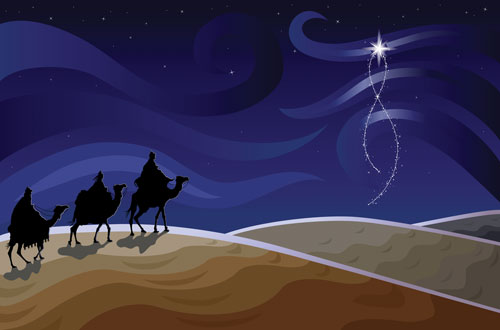
St Matthew reminds us at the end of the Magi story that 'they departed for their country by another way' (Matt 2:12).

It was a journey of transformation for the three stargazers. Having drawn near to the sacred, they were awakened to the mystery of their lives. They are now transformed by the experience of the Christ Child in the manger and ready to live in a new and reflective way.

Just as the Easter liturgy invites us to ask Mary Magdalene, 'Tell us Mary, what have you seen along the way?' so the Christmas and Epiphany liturgies invite us to grasp the significance of the transcendental experience of our travellers from the East. Like Mary they could each reply, 'I have seen the Lord!'

Having been awakened to the mystery of their lives, touched and nourished by the energy of the divine, the Magi return home ready to face the routine of life with new hope and purpose.

Like the Magi, we, too, are led to Jesus. We are invited to come close to the borders of mystery, to search for God in the stable of our hearts.

In Fr Karl Rahner’s words, ‘we are encompassed absolutely by God at the moment of our search as we journey through life by the light of the star.’ Insights from occasional moments of deep prayer, from reading the scriptures, our sensitivity to listening to the pain of a friend, may be for us the star or the brilliant flash of light that leads us to the Child and his mother.

We discover that the real journey isn’t to Bethlehem or to the stable but into our hearts - a journey which is largely shaped by our own experiences. Prayer and meditation enable us to integrate all our experiences into our inner centre, or to partially or completely revise them.

As Meister Eckhart reminds us, we may on occasion experience the brightness of the star as much ‘by the fireside or in the stable’ as we do by devotions, ecstasies and contemplation.

Matthew’s reflection on the visit of the Magi invites us to travel “by another route” (2:12). It also invites us to support those who are searching for God in the humility of a fragile baby and who wish to travel home, transformed. This reflection takes us to a new place. Where that new place is and how God is leading us there, can emerge in our prayer, in our commitment and in our sharing of insights to enrich the community.

The star that shines over our personal mangers prepares us to welcome the Light of the World and to deepen our commitment to mission and mystery. The mystical experience of finding Jesus and of being completely encompassed by God must flow into our personal prayer, liturgies, homes and ministry, so that the mystery of God will spill over into our lives, our world and into history.

Sr Kathleen Coyle, a Columban Sister, has taught theology in the East Asian Pastoral Institute in the Philippines. She now resides in Ireland.


Introit: Ecce advénit Dominátor Dóminus; et regnum in manu eius et potéstas et impérium.

Entrance Antiphon: Behold, the Lord, the Mighty One, has come;
And kingship is in his grasp, and power and dominion. (Cf.Mal3:1; 1 Chr 29:12).


02 January 2012

The resilience of the faith of Filipinos


We are still in the Christmas Season until the Feast of the Baptism of the Lord, observed on Sunday in countries that celebrate the Epiphany as a holyday of obligation on 6 January. In countries that celebrate the Epiphany on Sunday the Feast of the Baptism of the Lord will be observed on Monday 9 January.

Katolikongpinoy posted the old English song, The Coventry Carol, as a tribute to those who died in Tropical Storm Sendong/Washi a week before Christmas, especially in Iligan City and in Cagayan de Oro City, both in northern Mindanao, .

Last night I received a text from a friend whom I first met in the 1970s when he was a houseboy in a Columban parish, Eddie, now a teacher. He was born on the feast of St Edward the Confessor, 13 October, and was given the English king's name at baptism. The feast is not observed in the Philippines but his parents got the name from the Almanake, an annual booklet listing all the saints for each day. Eddie's father was murdered when Eddie was a child, leaving his mother Marilyn with four young children.

I officiated at the wedding of Eddie and Anita. I remember one unpleasant detail: it was the only time in 40 years in the Philippines that I had  the highly contagious 'sore eyes', known as 'piskat' in the Cebuano language. I had to borrow dark glasses and managed not to share this 'gift' with anyone else!

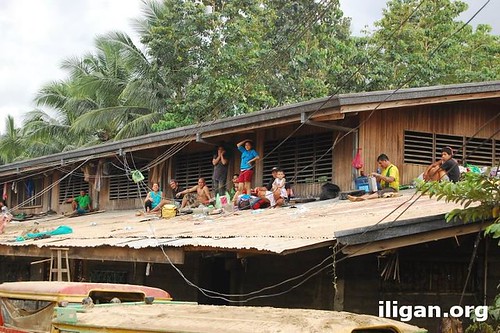
Last night I received a text message in Cebuano from Eddie about his daughter Ea, who is married and lives in Iligan City. It read: Ea and the children are now in our house because they were caught in the floods. By the mercy of God, they were all saved because they were able to climb onto the roof of their house. We are taking care of them, especially the children so that they will forget the trauma.

I texted back to Eddie in Cebuano: The mercy of God they were saved.

Eddie replied in English exactly as posted here: yes . . . GOD IS GOOD ALL THE TIME . . . ALL THE TIME GOD IS GOOD.

Pope Benedict's General Prayer Intention for January is: Victims of Natural Disasters. That the victims of natural disasters may receive the spiritual and material comfort they need to rebuild their lives.

Countless Filipinos have respond in the way the Holy Father wishes, taking care of the immediate material needs of the victims of the storm. That included prisoners in one jail who do a lot of carpentry work offering to build coffins to be sent to the stricken cities, a very urgent need.

The father in the video is mourning his dead child. Eddie thanks God that his daughter and grandchildren were saved. We cannot understand such things. But Eddie lost his father to a violent and unjust death and knows how precious life is and that it is a gift from God.

One of the greatest gifts God has given the people of the Philippines is a resilient faith, a faith that has a strong sense of gratitude. May it always be so.

29 December 2011

'God takes delight in his people.' Sunday Reflections for the Solemnity of Mary, Mother of God

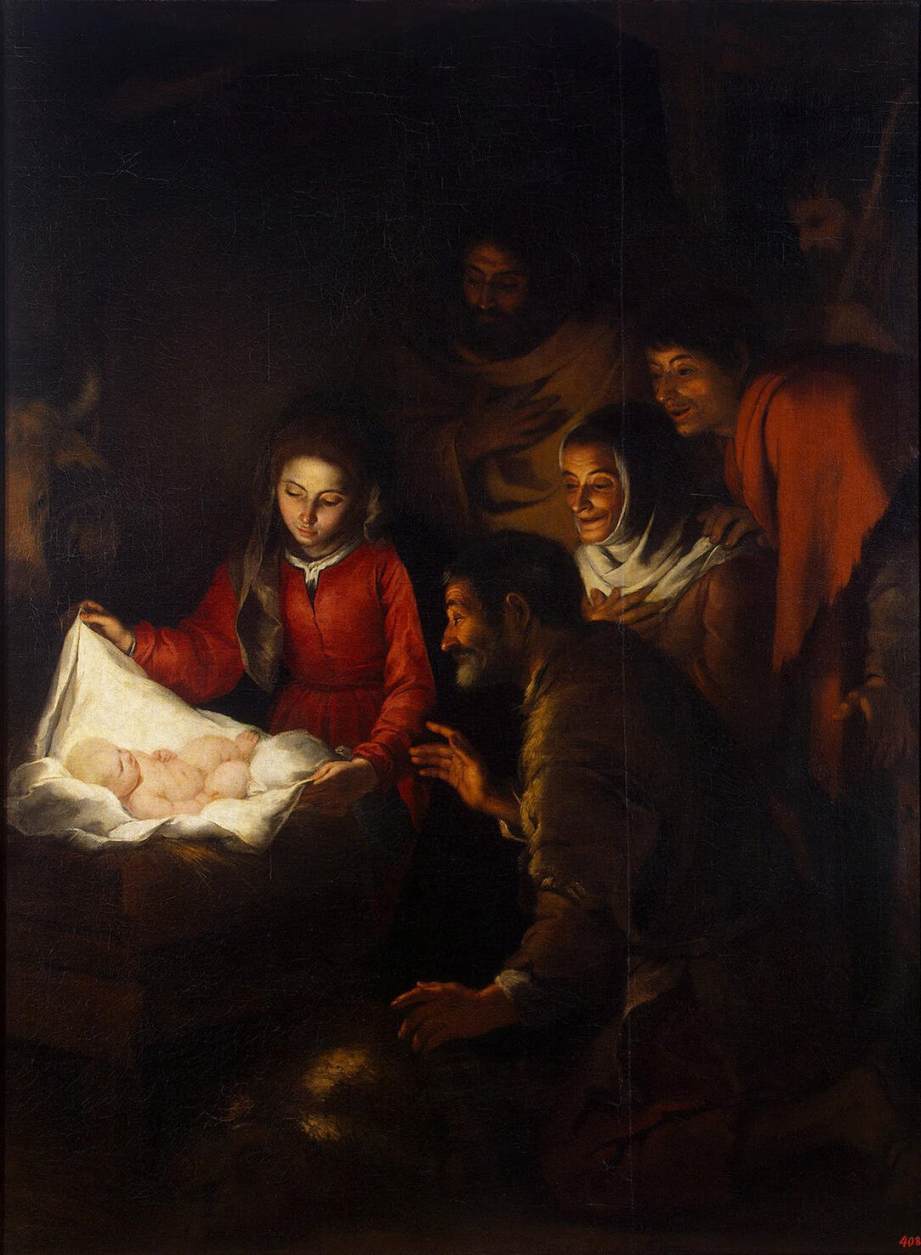
Adoration of the Shepherds Murillo, painted 1646-50

Readings (New American Bible: Philippines, USA)

Gospel Luke 2:16-21 (Jerusalem Bible: Australia, England & Wales, India [optional], Ireland, New Zealand, Pakistan, Scotland, South Africa)

The shepherds hurried away and found Mary and Joseph, and the baby lying in the manger. When they saw the child they repeated what they had been told about him, and everyone who heard it was astonished at what the shepherds had to say. As for Mary, she treasured all these things and pondered them in her heart. And the shepherds went back glorifying and praising God for all they had heard and seen; it was exactly as they had been told.

When the eighth day came and the child was to be circumcised, they gave him the name Jesus, the name the angel had given him before his conception.

+++

An Soiscéal Lúcás 13:33-37 (Gaeilge, Irish)

San am sin d’imigh na haoirí anonn go Beithil go deifreach, agus fuair siad Muire agus Iósaef, agus an naíonán ina luí sa mhainséar. Agus ar a fheiceáil dóibh, d’inis siad an ní a dúradh leo mar gheall ar an leanbh seo. Agus cách a chuala, b’ionadh leo na nithe a dúirt na haoirí leo. Agus thaiscigh Muire ina cuimhne na nithe seo uile, ag machnamh orthu ina croí. Agus chuaigh na haoirí ar ais ag glóiriú agus ag moladh Dé faoinar chuala siad agus a bhfaca siad, de réir mar a bhí ráite leo.

Nuair a bhí ocht lá caite agus é le timpeallghearradh, tugadh Íosa mar ainm air, mar a thug an t-aingeal air sular gabhadh sa bhroinn é.

+++

My mother once told me a story about her mother-in-law, my grandmother Jane Coyle, that made me smile. I was Jane’s first grandchild and my father John was her only child. When my mother would take me over to my grandparents’ house, as she often did, the neighbours would drop by to admire the infant, as people do. Some would say I looked like my father while others would say I was more like my mother. 

My mother discovered that after we had gone, especially if some had remarked that I looked like her, my grandmother Jane would go to the next-door neighbour and ask, ‘Doesn’t my grandson look like my son?’ (Jane Coyle died when I was three and was buried the day my brother was baptised).

One of my favourite lines in the Bible – I quoted it in Sunday Reflections for Christmas Day – is ‘God takes delight in his people’ (Psalm 149). This is from the Grail translation of the psalms, the version used in the English-language editions of the Breviary, the Prayer of the Church.  Psalm 149 appears in Morning Prayer of the Church on the first Sunday of the four-week cycle and on all solemnities and feasts. I had been praying this psalm regularly for many years before the line jumped out at me some time in the early 1990s. I can’t remember how or why.  

 I have some idea of the delight that God takes in us and in me from the kind of delight that I and most people I know take in a newborn child, even one whose circumstances of birth aren’t ideal. Murillo captures the delight of the shepherds, the light reflected from the infant Jesus showing it in their faces. We see St Joseph in the background. The light of Jesus is reflected most strongly in the face of Mary, who looks so young and almost vulnerable, a quieter delight on her face, taking in the wonder of what has happened. But Mary kept all these things, pondering them in her heart (Luke 2: 19). She is wearing red, the colour associated with the Holy Spirit, rather than the conventional blue. And Mary said to the angel, "How shall this be, since I have no husband?" And the angel said to her, "The Holy Spirit will come upon you, and the power of the Most High will overshadow you; therefore the child to be born will be called holy, the Son of God (Luke 1:34-35). 

The eyes of all in Murillo’s painting, and our eyes, are drawn to the Baby Jesus, the painter capturing the truth of St John’s words: In him was life, and the life was the light of men. The light shines in the darkness, and the darkness has not overcome it (John 1:4-5). 

Murillo’s painting is similar in ways to Gerrit van Honthorst’s Adoration of the Child that I used on Christmas Day and that you can see below. I do not know if Murillo was familiar with the earlier painting in which Mary is also wearing red and holding the cloth in almost the same way. Again, all eyes are on The light that shines in the darkness, and the darkness has not overcome it. 

Both paintings capture the beautiful blessing that God asked Moses to give to his people and that we listen to in the First Reading today: The LORD bless you and keep you:  The LORD make his face to shine upon you, and be gracious to you: The LORD lift up his countenance upon you, and give you peace. "So shall they put my name upon the people of Israel, and I will bless them" Numbers 6:24-27). God truly takes delight in us, his sons and daughters. The birth of Jesus invites us to take delight in God who became Man.  

 [Scripture quotations from Revised Standard Version, Catholic Edition].

 Adoration of the Child Gerrit van Honthorst, painted c.1620


  Look toward the Lord and be radiant; let your faces not be ashamed (Cf Ps34[33]). Communion Antiphon, Third Sunday in Ordinary Time.

+++
Today is the eighth day of the Octave of Christmas. I came across this video on a couple of blogs today. The normally fearful Linus is not afraid to explain the meaning of Christmas by quoting the words of St Luke directly on the stage. At the words of the angel, 'fear not' he drops his security blanket, rather like the Apostles after Pentecost.

. 


Happy New Year!
Manigong Bagong Taon!
¡Feliz Año Nuevo!
Athbhliain Faoi Mhaise Daoibh!

27 December 2011

'Some Children See Him'


I found this beautiful song, which I don't remember hearing before, on the website of the Columbans in Ireland. It was written by Alfred Burt. The male singer is Tennessee Ernie Ford (1919-1991). I'm not sure who the female singer is nor do I know who put the video together. The recording goes back to the 1950s.

26 December 2011

' . . . on the feast of Stephen': a tale of two men named Wenceslas (Václav)


Good King Wenceslas is one of the most popular Christmas carols in Britain and Ireland but not known at all in the Philippines. It is sung here by The Irish Rovers, a Canadian group consisting of immigrants from Ireland, mostly Northern Ireland. You can detect the accent of their place of origin in their singing. The words are by John Mason Neale, whose translation of Veni, Veni Emmanuel is the best known English version of O come, O come Emmanuel. The tune of Good King Wenceslas goes back to the 13th century.

The opening line of this carol is 'Good King Wenceslas looked out on the feast of Stephen'. Today, 26 December, is the feast of St Stephen, the first Christian martyr. 'Good King Wenceslas' is also venerated by the Church as a martyr, his feast falling on 28 September. However, though he is on the universal calendar of the Church he's not venerated at all in the Philippines since 28 September is also the feast day of the first Filipino saint, San Lorenzo Ruiz, like St Stephen and St Wenceslas, a martyr.

Cardinal Miloslav Vlk, then Archbishop of Prague, with skull of Saint Wenceslas during a procession on 28 September 2006

The King Wenceslas referred to is St Wenceslas, Duke of Bohemia, assassinated on 28 September 935. He was declared king after his death. He is the patron saint of the Czech Republic and the main square in Prague is named after him.

The Czech version of the saint's name is 'Václav', the Christian name of the recently deceased former president, Václav Havel, and also of the current president, Václav Klaus.

Václav Havel, 5 October 1936 - 18 December 2011.
First President of the Czech Republic, 2 February 1993 - 2 February 2003

Pope Benedict: Václav Havel a visionary leader

Pope Benedict's telegram to President Václav Klaus of the Czech Republic:

His Excellency Václav Klaus President of the Czech Republic. Having learned with sadness of the death of Former President Václav Havel, I send heartfelt condolences at this time of national mourning. I join all those who have gathered in Saint Vitus' Cathedral for the solemn funeral rite in commending the soul of the deceased to the infinite mercy of our heavenly Father. Remembering how courageously Mr Havel defended human rights at a time when these were systematically denied to the people of your country, and paying tribute to his visionary leadership in forging a new democratic polity after the fall of the previous regime, I give thanks to God for the freedom that the people of the Czech Republic now enjoy. As a pledge of spiritual strength and comfort, I cordially impart my Apostolic Blessing to all who mourn in the hope of resurrection to new life.


BENEDICTUS PP. XVI
 

24 December 2011

'In Times Like These', a song dedicated to the victims of Typhoon Sendong/Washi


Glenn, a young man who is studying law at Xavier University in Cagayan de Oro, the southern Philippines city hardest hit by Typhoon Sendong/Washi a week ago, wrote and recorded this song. His sister Maria Fe produced the video. Their parents, Joe and Annie, are teachers who grew up in Columban parishes in Mindanao.

Please continue to pray for the souls of those who have died, for those who are trying to pick up the pieces and for the many people who are working together for a better future for all.

23 December 2011

Typhoon Sendong/Washi: Pastoral Letter of Archbishop of Cagayan de Oro, Philippines

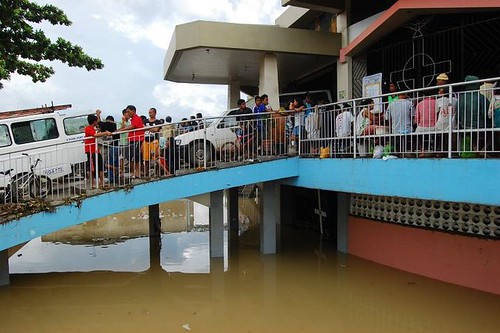
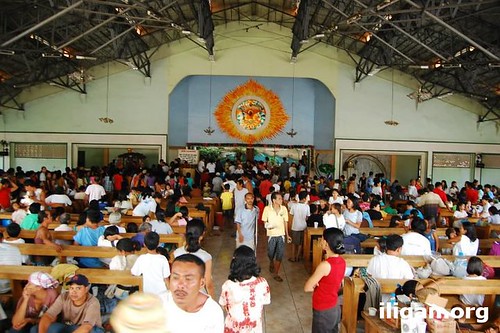
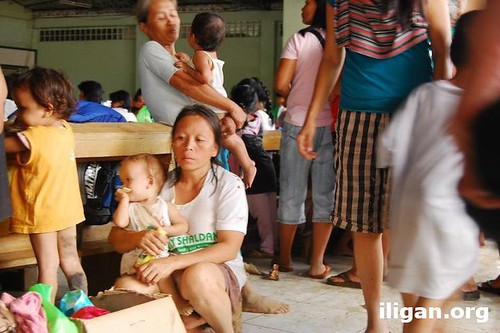
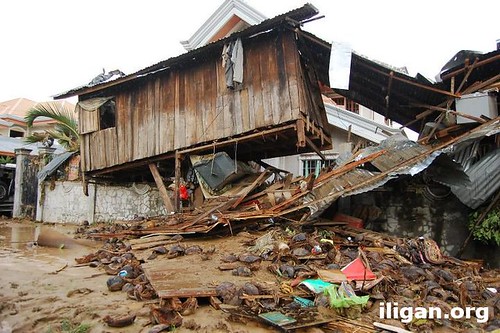
Photos from Iligan.org

 
San Lorenzo Ruiz Church, Iligan City, a temporary evacuation center.

The Columbans are very familiar with both Iligan City and Cagayan de Oro City, the two places most badly hit by Typhoon Sendong/Washi last weekend. 'Washi' was the international code-name for the storm, 'Sendong' the Philippine name. Columban Fr Rolly Aniscal lost a cousin and her two children in Cagayan de Oro. The children's bodies haven't been recovered yet.

I'm posting photos taken in Iligan City, which is about 90kms from Cagayan de Oro City.

New Zealander Fr Paul Finlayson and his team in the Columban-run Holy Rosary Parish, Agusan, Cagayan de Oro, are taking care of 25 families whose homes were destroyed or badly damaged. Venus Guibone, who worked in Ireland as a Columban lay missionary whose house was very badly damaged is among those being accommodated at St John Vianney Theological Seminary.

San Lorenzo Ruiz Church

Pastoral Letter - A Time to Grieve, A Time to Build

A Pastoral Letter written by Archbishop Antonio J. Ledesma, S.J., Archbishop of Cagayan de Oro, addressed to the faithful people of the Archdiocese of Cagayan in this moment of pain and sorrow as the city was devastated by the typhoon Sendong.

Christmas is a time of rejoicing. But this year in Cagayan de Oro we mourn and express our condolence for all those who have perished in the wake of Typhoon Sendong on Dec. 16-17. In some places entire families have been washed away by the rampaging waters of Cagayan de Oro River. Others died in their sleep trapped inside their homes by the sudden rise of flood waters that reached unprecedented levels past midnight.

There are accounts of how a mother clutching the hands of two children was able to escape from the floods, only to lose another child whose pleas for help could be heard receding in the darkness of the night. Another family was able to hold on to an uprooted balete tree that floated out into Macajalar Bay and reached the shores of Camiguin Island. Floating bodies have been retrieved from the waters of nearby towns. The low-lying communities of Cala-Cala and Isla de Oro have been leveled by a tsunami-like river surge.


Practically everyone in the city has lost some relatives or personal friends in this calamity. Schools have lost some students and staff; officemates have not reported because of the condition of their homes; and a number of unidentified bodies still await a dignified burial in a common resting place.

In some of our churches, the Misa de Gallo could not be celebrated because the church became a refuge for families seeking higher ground. In one chapel, even pigs and other animals were brought in and tied at the foot of the altar. Lay ministers were scandalized until the parish priest reminded them that this must have been the same situation in the stable of that first Christmas night. We have also started to celebrate the Misa de Gallo in the evacuation centers. [Note: the Misa de Gallo is the novena of nine pre-dawn Masses in thanksgiving for the gift of our faith celebrated throughout the Philippines from 16 to 14 December. A resilient faith is one of the most remarkable gifts God has given the people of the Philippines.]

Even as we grieve with those directly affected by this tragedy, the challenge for us now is to help re-build the lives and broken homes of the survivors. The evacuation centers are slowly being organized in the distribution of relief goods – in particular, water, food, medicine, mats, blankets, etc.

We are heartened to see many volunteers and organizations coming forward to share their time, energy and resources. Our affected parishes and social action workers have collaborated with government agencies in running these centers in the City Central School, West City Central School, Macasandig, Bulua, Kauswagan, Iponan, etc. The 14 centers have been providing shelter and basic needs to more than 7,000 families and 43,000 individuals. Meanwhile, the listed number of dead and missing has reached nearly 700 persons.


The longer-term challenge is to help these families re-build their present homes or re-locate to safer grounds. We are heartened by the visit of President Aquino and other public officials. His declaration of a state of national calamity and observation that families should not be allowed to return to extremely dangerous areas are welcome statements. Last January 2009, the city had already experienced severe flooding. Some old-time residents recalled that this phenomenom happens every forty years. But barely three years after that, Typhoon Sendong came with greater vengeance.

We have to cast a broader look at the entire river basin area of Cagayan de Oro River. This extends to the northwestern part of Bukidnon and surrounding areas. Illegal logging and irresponsible mining activities have contributed to the degradation of the environment and the siltation of the river bed. The erection of man-made structures may have also impeded the natural flow of the waters. (The continued hydraulic flush mining along Iponan River has likewise caused widespread flooding of the Canitoan-Iponan areas of the city.) It is for these reasons that we have to strengthen the Cagayan de Oro River Basin Management Council, a multi-sectoral effort to protect and conserve our most precious natural resource after our human resources – the river system.

As we approach Christmas week and the coming of the new year, may I propose a Family-Adopt-a-Family program. Families unaffected by the flood can invite to their homes an evacuee family, especially those that have lost their homes or loved ones, for a few days or for a Christmas meal to share the spirit of the season. May the new-born child in the manger fill us with the spirit of solidarity in moments of adversity and hope in the sharing of love and life with one another. “Make us know the shortness of our life that we may gain wisdom of heart” (Ps. 90).

These people had been on the roof for two days.