Since we are travellers and pilgrims in the world, let us ever ponder on the end of the road, that is of our life, for the end of our roadway is our home (St Columban, 8th sermon).
This video is one I might have used in Sunday Reflections for today as a contemporary example of the 'widow's mite'.
Mark 12:41-44 (Knox translation)
As Jesus was sitting opposite the treasury of the temple, Jesus watched the multitude throwing coins into the treasury, the many rich with their many offerings; and there was one poor widow, who came and put in two mites, which make a farthing.Thereupon he called his disciples to him, and said to them, Believe me, this poor widow has put in more than all those others who have put offerings into the treasury. The others all gave out of what they had to spare; she, with so little to give, put in all that she had, her whole livelihood.
Readings(Jerusalem Bible: Australia, England & Wales, India
[optional], Ireland, New Zealand, Pakistan, Scotland, South Africa)
Gospel
Mark 12:38-44 [12:41-44] (Revised Standard Version – Catholic Edition)
[In his teaching Jesus said, "Beware of the scribes, who like
to go about in long robes, and to have salutations in the market places and the
best seats in the synagogues and the places of honor at feasts, who devour
widows' houses and for a pretense make long prayers. They will receive the
greater condemnation."]
And Jesus sat down opposite the
treasury, and watched the multitude putting money into the treasury. Many rich
people put in large sums. And a poor widow came, and put in two copper coins,
which make a penny. And he called his disciples to him, and said to them,
"Truly, I say to you, this poor widow has put in more than all those who
are contributing to the treasury. For they all contributed out of their
abundance; but she out of her poverty has put in everything she had, her whole
living."
+++
At the grave of my Great-uncle Lawrence Dowd in Belgium, September 2001.
Uncle Larry, my maternal grandmother's older half-brother, was killed on 6 August 1917. I was the first relative to visit his grave.
Pope Benedict XV, Bishop of Rome from 3 September 1914 to 22 January 1922,in 1915 granted priests permission to celebrate three Masses on All Souls' Day, one of their own intentions, one for all the faithful departed and one for the Holy Father's intentions. He had been elected pope a few weeks after the Great War, later known also as World War I, began. He made many attempts to bring about peace, nearly all of which were rebuffed. He was conscious of the slaughter of so many and of churches destroyed and wanted all who died in the war to be remembered in the holy sacrifice of the Mass.
November 11, or the Sunday closest to it, is observed as Remembrance Day (Veterans Day in the USA) or Remembrance Sunday in many countries. This was originally Armistice Day, commemorating the end of fighting in World War I at 11:00 am on 11 November 1918.
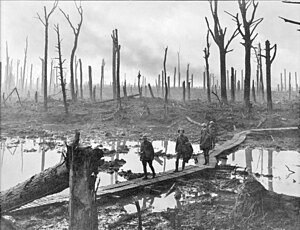
In today's gospel Jesus praises the poor widow who out of her poverty has put in everything she had, her whole living. The Great War created many widows, mostly young wives of men who died in the war, many of them left with young children. It left many grieving parents, seeing their sons - it was mostly sons - die in their teens and early 20s. The vast majority were never able to bury their loved ones or to visit their graves after the war was over. Countless soldiers lie in unknown graves. Others lie buried in beautiful cemeteries but with no name on their gravestone.
On the occasion of my officiating at the wedding of two friends in Belgium in September 2001, Stefaan a Belgian and Joy a Filipina, they were able to help me locate the grave of Corporal Lawrence Dowd who died in the Third Battle of Ypres (Ieper), also known as the Battle of Passchendaele, or simply 'Passchendaele', on 6 August 1917.
I don't know why Lawrence Dowd enlisted in the Royal Dublin Fusiliers. The whole of Ireland was in the United Kingdom at the time but Irishmen, unlike young men in Britain, weren't conscripted. He was single and in his 30s. Many young men joined their countries' armies out of a sense of patriotism, ready to give up life itself.
Most of the men who fought and died in the Great War came from backgrounds of poverty. Archbishop Daniel Mannix of Melbourne described the conflict as 'just a sordid trade war'.
Yet there is no question of the choice that many made to put in everything they had, for the highest reasons.
Two of these, from my native Dublin, were not from a poor background. One died ten days after Uncle Larry and in the same battle, Fr William Doyle SJ (3 March 1873 - 16 August 1917). Father Willie Doyle chose to go to be a chaplain in the war and it was his steady practice of virtue over the years, and his cooperation with grace, that created the hero of the trenches who was willing to run across a battlefield battered with shells and bullets to bring help to his 'poor brave boys', as he called them. [Remembering Fr William Doyle SJ].
In the trenches Fr Doyle made no distinction between soldiers in British uniforms and soldiers in German uniforms when he ministered to them on the battlefield. He died in action having run 'all day hither and thither over the battlefield like an angel of mercy'. His body was never found.
Thomas Kettle (9 February 1880 – 9 September 1916) was a lawyer and was a Member of Parliament in Westminster for some time representing the Irish Parliamentary Party. He kept volunteering to join the army and was turned down a number of times because of poor health. He was eventually commissioned as an officer in the Royal Dublin Fusiliers and left Ireland on 14 July 1916. He was killed in action on 9 September that year during the awful Battle of the Somme in France. He too has no known grave. Shortly before his death he wrote a poem to his three-year-old daughter Elisabeth (Betty) which I always find incredibly moving. It also has a connection with Columban Father John Henaghan, one of five Columbans, 'The Malate Martyrs', who died during the Battle of Manila in February 1945. He had written a number of books but a few years after his death another was published, the title taken from the last line of Tom Kettle's poem, The Secret Scripture of the Poor.
Fr John Henaghan (1881 - 10 February 1945)
To My Daughter Betty, The Gift of God by Thomas Michael Kettle dated ‘In the field, before Guillemont, Somme, Sept. 4, 1916’.
IN wiser days, my darling rosebud, blown
To beauty proud as was your mother's prime,
In that desired, delayed, incredible time,
You'll ask why I abandoned you, my own,
And the dear heart that was your baby throne,
To dice with death. And oh! they'll give you rhyme
St Martin of Tours, soldier and later bishop, feast day 11 November.
On this day let us pray, through the intercession of St Martin of Tours, for all who, like the widow in the gospel, freely gave their everything, their very lives, as so many of them believed, like Tom Kettle, for a dream, born in a herdsman's shed, / And for the secret Scripture of the poor.
The Passover of the Jews was at hand, and Jesus went up to Jerusalem. In the temple he found those who were selling oxen and sheep and pigeons, and the money-changers at their business. And making a whip of cords, he drove them all, with the sheep and oxen, out of the temple; and he poured out the coins of the money-changers and overturned their tables. And he told those who sold the pigeons, "Take these things away; you shall not make my Father's house a house of trade." His disciples remembered that it was written, "Zeal for thy house will consume me." The Jews then said to him, "What sign have you to show us for doing this?" Jesus answered them, "Destroy this temple, and in three days I will raise it up." The Jews then said, "It has taken forty-six years to build this temple, and will you raise it up in three days?" But he spoke of the temple of his body. When therefore he was raised from the dead, his disciples remembered that he had said this; and they believed the scripture and the word which Jesus had spoken.
The Pope's cathedra in the apse. The cathedra is the seat from which a bishop preaches and teaches formally and from which we get the word 'cathedral'.
Today's feast, officially known as The Dedication of the Lateran Basilica, can remind us of many blessings. It can remind us of the gift of faith we received in baptism. One of the patrons of the Basilica of St John in the Lateran is St John the Baptist, the baptistry there being dedicated to him. We can ask God to bless the church where we were baptised and all those who use it.
We can thank God for the church or chapel where we made our First Holy Communion and ask God to bless all those who use it. (The one where I made mine is no more, sadly).
We can thank God for the church where we were confirmed and ask God to bless all those who use it.
Those who are married can thank God for the church where they were wed and ask God to bless all those who use it.
Those of us in Holy Orders can thank God for the church or chapel where we were ordained and ask God to bless all those who use it.
We can thank God for our parish church and ask God to bless all those who use it.
We can thank God for churches from which loved ones were buried and ask God to bless all those who use them.
As the Church honours the cathedral of the Holy Father, the Archbasilica of St John in the Lateran, (St Peter's is not a cathedral), we can thank God for Pope Benedict, ask God to give him continued strength, and earnestly pray for unity among all Christians.
Rome, 7 January 2010: Spaniard Antonio Cardinal Cañizares Llovera sings Pontifical Mass at the Lateran. Music by the Lassus Scholars from Dublin, Ireland.
My Dad would ask me when I was a kid, 'When did Good Friday fall on Easter Monday?' The answer was 'In Fairyhouse in the Irish Grand National'. Good Friday was a horse, at least according to Dad, and he didn't do too well in the big race on Easter Monday. Fairyhouse isn't too far from Dublin or from St Columban's, Dalgan Park, the Columban seminary where I lived from 1961 to 1968.
I've never been at the races in my life but I won some money on the Grand National - the one held in Aintree, near Liverpool - every April, a steeplechase. It's an occasion when almost everyone it seems in Ireland and in Britain has a 'flutter' - except those who do so regularly. It's utterly unpredictable.
In 1959, when I was turning 16, I backed Oxo, which won at 8/1 (thanks to Wikipedia for the details). The very scientific reason why I put my money on that particular horse was that we lived in the Oxmantown area of Dublin, where the Oxmen/Ostmen or 'men from the east', ie, Danes and Vikings, had settled after groups of them started to invade Ireland in 795.
Dad told me that his mother Jane did far better than I did when she backed Tipperary Tim in 1929. He came in at 100/1.
My encounters with horses have been rather sporadic. When I lived in the Columban house in Solihull, England, from 2000 to 2002 I befriended a gray stallion in the stables we rented to a neighbour who kept horses. He liked a bit of attention, not to mention sugar cubes and slices of apple.
The last time I sat on a horse was way back around this time of year in 1977 when I looked after the parish of Columban Fr Sean Nolan in Karomatan (now Sultan Naga Simaporo), Lanao del Norte for a month. One day we had to go to a very distant barrio for a fiesta Mass. We got lost as none of us in the party knew the way and forded the same river four times on the way. When we reached the village, which was way up in the mountains, we had to climb even further to the chapel.
On the way back I rode a horse, sitting behind a 14-year-old boy. Our 'saddle' was a sack. After some time I asked him, 'Asa ang karsada?' 'Where is the road?' He gave me the answer I wanted to hear, 'Duol-duol na', 'It's quite near'. When I asked him again half-an-hour late by which time I was feeling very sore, he told me the truth, 'Layo-layo pa', 'It's still quite a distance away'. At that stage, to the relief of horse and self, I got down and walked.
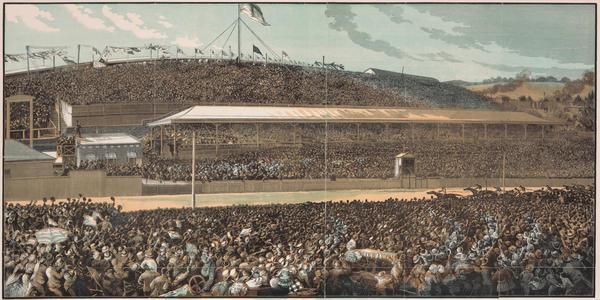
Even though I'm from Ireland, live in the Philippines, and have no interest in racing - the last time I read the racing pages was when I was seven or eight when I'd read the names of the horses to amuse my brother Paddy, three years younger than me - it's impossible for me as a Columban not to know that each year on the first Tuesday of November the Melbourne Cup takes place. (We've had Australian Columbans since our very early days more than 90 years ago). Unlike the Grand National, it's a flat race but like the Grand National it's a race that everyone has a bet on. And it's a great festival.
Probably not too many will back Delany's Donkey this year.
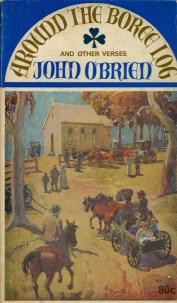
'John O'Brien' was the pen-name of Monsignor Patrick Joseph Hartigan (1878 - 1952), an Irish-Australian priest who delightfully captured in verse something of the life of the Catholics in the outback of New South Wales a hundred years ago, most of whom would also have been of Irish descent. One of his most popular recitations, as we call this kind of verse in Ireland, where the works of 'John O'Brien' were well known when I was young, is Tangmalangaloo. It's story is not unrelated to the Melbourne Cup.
The bishop sat in lordly state and purple cap sublime,
And galvanized the old bush church at Confirmation time.
And all the kids were mustered up from fifty miles around,
With Sunday clothes, and staring eyes, and ignorance profound.
Now was it fate, or was it grace, whereby they yarded too
An overgrown two-storey lad from Tangmalangaloo?

A hefty son of virgin soil, where nature has her fling,
And grows the trefoil three feet high and mats it in the spring;
Where mighty hills uplift their heads to pierce the welkin's rim,
And trees sprout up a hundred feet before they shoot a limb;
There everything is big and grand, and men are giants too -
But Christian Knowledge wilts, alas, at Tangmalangaloo.

The bishop summed the youngsters up, as bishops only can;
He cast a searching glance around, then fixed upon his man.
But glum and dumb and undismayed through every bout he sat;
He seemed to think that he was there, but wasn't sure of that.
The bishop gave a scornful look, as bishops sometimes do,
And glared right through the pagan in from Tangmalangaloo.

"Come, tell me, boy," his lordship said in crushing tones severe,
"Come, tell me why is Christmas Day the greatest of the year?
"How is it that around the world we celebrate that day
"And send a name upon a card to those who're far away?
"Why is it wandering ones return with smiles and greetings, too?"
A squall of knowledge hit the lad from Tangmalangaloo.

He gave a lurch which set a-shake the vases on the shelf,
He knocked the benches all askew, up-ending of himself.
And so, how pleased his lordship was, and how he smiled to say,
"That's good, my boy.  Come, tell me now; and what is Christmas Day?"
The ready answer bared a fact no bishop ever knew -
"It's the day before the races out at Tangmalangaloo.
HEAR O ISRAEL THE LORD OUR GOD THE LORD IS ONE [ AND HIS NAME IS ONE ] AND YOU SHALL LOVE THE LORD YOUR GOD WITH ALL OF YOUR HEART AND WITH ALL OF YOUR SOUL
AND WITH ALL YOUR RESOURCES
Readings(Jerusalem
Bible: Australia, England & Wales, India [optional], Ireland, New Zealand,
Pakistan, Scotland, South Africa)
Gospel
Mark 12:28b-34 (Revised Standard Version – Catholic Edition)
One of the scribes came up and heard them disputing with one
another, and seeing that Jesus answered them well, asked him, "Which
commandment is the first of all?" Jesus answered, "The first is,
'Hear, O Israel: The Lord our God, the Lord is one; and you shall love the Lord
your God with all your heart, and with all your soul, and with all your mind, and
with all your strength.' The second is this, 'You shall love your neighbor as
yourself.' There is no other commandment greater than these." And the
scribe said to him, "You are right, Teacher; you have truly said that he
is one, and there is no other but he; and to love him with all the heart, and
with all the understanding, and with all the strength, and to love one's
neighbor as oneself, is much more than all whole burnt offerings and
sacrifices." And when Jesus saw that he answered wisely, he said to him,
"You are not far from the kingdom of God." And after that no one
dared to ask him any question.
The first reading today is one the
most important in the whole Bible for people of the Jewish faith. There is only
one God. Only the Hebrews in the ancient Mediterranean world believed that.
Jesus quotes Deuteronomy 6:4-6 in his response to the scribe. These words are
at the heart of Jewish prayer and are prayed by or spoken to a Jew when he is dying,
reminding him of the most important reality of all, that God is God. The Hebrew
for Hear, O Israel is Shema Yisrael, שְׁמַע יִשְׂרָאֵל in Hebrew. Believing Jews pray or
sing the Shema Yisrael, or Shema, just as Christians pray or sing
the Our Father, the opening words
giving their name to the whole prayer. Jews pray it twice a day and before sleeping
The setting of the Shema in the video above is modern and joyful. That in the video
below is traditional, the singing a style that is very ancient, a style very
similar to that used by Christians today in the Middle East and to that of
Muslims. [The scenes in the video below
are at the Western Wall in Jerusalem, also known as the Wailing Wall, where
Blessed John Paul II prayed on a visit to the Holy City.] Jesus would have prayed the Shema everyday and perhaps chanted it first as a child when St Joseph took him to the Temple and later when he went there as an adult.
And at the wedding in Cana Jesus would have danced with the other men in a style like that of the man in the video. The Shema is a profoundly joyful proclamation of faith in the one God.
I’ve often enough heard people
creating a gap between the two great commandments, which are a summary of the
Ten Commandments. There is no such gap. You
shall love your neighbor as yourself is a consequence of you shall love the Lord your God with all your heart . . . just as in God’s plan being a
father or mother is a consequence of being first of all a husband or wife.
In his homily at the opening of the Year of Faith on 11 October Pope Benedict said, Jesus is the centre of the Christian faith.The Christian believes in God whose face was revealed by Jesus Christ. He is the fulfilment of the Scriptures and their definitive interpreter.
The testimony of the saints shows us men and women, young and old, even children, whose lives were focused on Jesus the Lord, God who became Man, and because of this gave themselves in the service of others. It is impossible to live the first great commandment without wanting to live the second. It is impossible to live the second without wanting to live the first.
On 26 October when he canonised seven new saints including St Pedro Calungsod, the young catechist-martyr from the central Philippines and St Kateri Tekakwitha, the first native North American saint, Pope Benedict underlined the mission of the saints: The tenacious profession of faith of these seven generous disciples of Christ, their configuration to the Son of Man shines out brightly today in the whole Church. He used a term that Blessed John Paul used many times in his apostolic exhortation of 1992, Pastores Dabo vobis, configuration to the Son of Man.
Blessed John Paul's document was about the ordained priesthood and he reminded priests in it a number of times that they were called to be configured to Christ. But here Pope Benedict is calling all of us to be such, that is to become, with God's grace, so like Jesus Christ that others will see him in us.
Jesus as he quotes the Shema in today's gospel is not calling us to be 'nice' to others, but to be configured to him. He is calling us to be able to say with St Paul, that in every way, whether in pretense or in truth, Christ is proclaimed; and in that I rejoice. Yes, and I shall rejoice(Philippians 1:18-19).
The video above is a production of The Silent No More Campaign. It is coming more and more to light that abortion, apart from being fatal to the child and sometimes to the mother, leaves a scar on the lives of many mothers and fathers of aborted children.
Groups such as Rachel's Vineyard reach out to such persons through weekend retreats where healing can begin. Only last weekend Bernadette Goulding (photo above) of Rachel's Vineyard Ireland let a retreat in Tórshavn, the capital of the beautiful Faroe Islands in the north Atlantic, a country of just under 50,000 people and under the jurisdiction of Denmark. I spent about six weeks there during the summer of 2000. There is no permanent priest there, though there is a permanent deacon. The islands come under the Diocese of Copenhagen, which includes three countries in two continents, Denmark, the Faroes and Greenland.
While Bernadette was conducting the retreat in the Faroes the most widely read newspaper in Ireland, the Irish Independent, carried two stories of how some pregnant women in the Republic of Ireland, where abortion is illegal, have been given advice by counsellors that could put their lives in danger. One story was under the headline Revealed: the abortion advice that could put lives at risk. (The reality that abortion is almost always fatal to the child, though occasionally one survives, is usually overlooked.)
Gemma O'Doherty reports: STAFF at some taxpayer-funded pregnancy counselling services are putting women's lives at risk and breaking the law, an undercover probe has revealed.
The investigation was carried out over several months by a team of women, some from the pro-life movement, who secretly recorded counsellors at 11 locations around the country.
Some of the advice they gave about abortion was illegal, according to a leading lawyer, and some was medically dangerous, a top doctor says.
In several instances, women were told to hide their abortions from their doctors, a course of action that could endanger life if post-surgery abortion complications remain undiagnosed. (Full report here. The HSE mentioned in the story is the Health Service Executive, a government agency.)
The second story in the Irish Independent on the same date, 27 October, carries the headline Shocking breach of good medical practice, says Rotunda chief. The Rotunda Hospital (above), in the heart of Dublin, is the oldest of three major maternity hospitals in the Irish capital, which is said to be one of the safest places in the world for pregnant women.
This story begins: A LEADING obstetrician has warned that advice given by some taxpayer-funded pregnancy-counselling services is putting women's lives in danger.
Sam Coulter Smith, clinical professor of obstetrics and gynaecology at the Royal College of Surgeons, said he was "shocked and very disappointed" to learn that Irish women who travel to Britain for abortions are being told they should hide this from their doctors.
The findings, which emerged as part of an undercover investigation into crisis-pregnancy counselling services, are now the subject of an HSE probe.
At the HSE-run Crisis Pregnancy Support Service in Ballinasloe, Co Galway, a woman was told that "going on to have future pregnancies, there is no onus on you to disclose that you've had a termination.
"There is no direct relationship between termination, future pregnancy, anything like that. They don't need to know. They will ask you the same general question: is this your first pregnancy? You can say 'Yes'." (Full report here.)
There is a great need for political activity to ensure that every person, born and unborn, will have first-class medical care. There is need for public advocacy to ensure that the laws of every country will recognise the right to life of every human being, born and unborn, to fight against the twisted sense of the 'right' to kill an unborn child.
But as we see on every page of the Gospels, Jesus showed us how to live by the way he related to each suffering person he met. Some of us are called to be political and social activists, for want of a better term, but some are called specifically to enable individual women and men, persons with an individual name and an individual history, to experience the power of God's healing.
Those involved in Rachel's Vineyard and similar groups, many of whom have experienced such healing, are called by God to meet the individual with compassion and with a message of hope.
I don't know much about the faith of Scottish poet Norman MacCaig (1910 - 1996). Wikipedia tells us that he described it as 'Zen Calvinism' - 'a comment typical of his half-humorous, half-serious approach to life'.
A favourite poem of mine is Country Postman. It expresses for me something of the reality of the Communion of Saints that we celebrate and remember in a special way on these two days. I've no idea if Norman MacCaig was thinking of the Communion of Saints when he wrote it. But it captures something of what holds us all together as a community. With email, Facebook and all the ways of communicating in 'this digital continent', as Pope Benedict calls it, perhaps the role of the postman has changed, though he is still vital in rural communities, not only to deliver the mail but to keep an eye on older persons living on their own, some of whom perhaps are reclusive but who still welcome him.
The poem too catches something of the fragility in all of us, especially in those who serve the broader community quietly and generously for so many years. And could Jesus, who turned water into wine at a wedding for people like those this postman served, turn away this poor man who died after probably celebrating a little too much?
It is persons such as MacCaig's Country Postman whom we remember on All Souls' Day and it is our prayers that help them move from being numbered among All Souls to being numbered among All Saints.