Since we are travellers and pilgrims in the world, let us ever ponder on the end of the road, that is of our life, for the end of our roadway is our home (St Columban, 8th sermon).
GospelJohn 1:29-34(English Standard Version, Anglicised)
At that time: John saw Jesus coming towards him, and said, ‘Behold, the
Lamb of God, who takes away the sin of the world! This is he of whom I said,
“After me comes a man who ranks before me, because he was before me.” I myself
did not know him, but for this purpose I came baptising with water, that he
might be revealed to Israel.’ And John bore witness: ‘I saw the Spirit descend
from heaven like a dove, and it remained on him. I myself did not know him, but
he who sent me to baptise with water said to me, “He on whom you see the Spirit
descend and remain, this is he who baptises with the Holy Spirit.” And I have
seen and have borne witness that this is the Son of God.
Fr Barry Cairns, a Columban priest born in New Zealand in 1931 who is still enthusiastically testifying in Japan that this is the Son of God tells a story in a number of our Columban magazines of one of his parishioners, Mr Dismas Shigeru Kato, who is doing the same in his 90s.He became a Catholic as an adult. Only about one person out of 200 in Japan is a Catholic. Father Barry tells us about his parishioner when they were both younger.
I would like to introduce Mr Dismas Shigeru Kato. He was born 91 years ago in a small fishing village called Kushimoto in Wakayama Province of Japan. In his youth and when drafted into the wartime army he built up a massive debt for alcohol at different bars.
Then he got married. His wife was very patient with him. Mr Kato worked for the Kansai Electric Power Company. He cared for external power lines. He was paying off his debts bit by bit.
Then Mr Kato became a Christian, first with the local Protestant Church and later the Catholic Church where he was baptized. He chose as his baptismal name Dismas, which is the traditional name of the penitent brigand on a cross beside Jesus at his crucifixion.
At this time I was pastor of Kushimoto which was one of the smallest parishes in Japan. It was definitely a mission of primary contact to the un-evangelized! At Sunday Mass we had 5-10 people attending. However after Mass, 50 non-Christian children from the village came for Sunday school. Mr Kato's daughter, Majimi, was the only Christian.
It was here that Mr Dismas Shigeru Kato really shone in the darkness. For the children we used a projector showing a film strip about a small Catholic boy in Africa. Remember this was before TV came into the village. The film strip was in colour and most extensive with many episodes. Mr Kato would study each episode during the week and in the darkness needed for the projector could tell the story without looking at the script. Each character in the story was given in its own distinctive voice. It was a masterful and captivating presentation. I often heard the children discussing both the developing story and its Christian message.
At this time too Mr Kato was giving witness in another field. The Kansai Electric Company had a trade union seminar. The subject was traffic safety. During the open discussion Mr Kato stood up and said: ‘As many of you know I am a Christian. You have probably heard that Christ 2,000 years ago was strong on love of others. A modern aspect of love of neighbour is safe driving. Let the driver be concerned and respectful for others who use the road. Aggressive, dangerous driving can be a form of self-centredness. Careful, considerate driving is a form of love of neighbor. Let this be our motive for safe driving.’
A moment of spontaneous reflective silence was followed by massive applause. This was a new, different, and appealing approach.
The provincial section of the newspaper featured Mr Kato and his talk emphasising motivation for safe driving instead of just keeping rules for their own sake.
At 91 Shigeru Kato has moved into a Catholic-run retirement home. Here he is a leader of a group who pray the Rosary together.
I pray for more like Mr Kato to evangelize this nation of Japan.
+++
Mr Kato's life, where his Catholic Christian faith permeates everything he does, reflects the spirit of the Letter to Diognetus, written in the second century, which speaks of how we Christians are meant to live in the world. We can get a flavour of it here.
For the Christians are distinguished from other men neither by country, nor language, nor the customs which they observe . . . They dwell in their own countries, but simply as sojourners. As citizens, they share in all things with others, and yet endure all things as if foreigners. Every foreign land is to them as their native country, and every land of their birth as a land of strangers. They marry, as do all [others]; they beget children; but they do not destroy their offspring. They have a common table, but not a common bed.
People in many countries, and many here in Ireland itself, were utterly shocked and disheartened at the many voters here in recent referendums - one in 2015 that re-defined marriage as no longer necessarily involving a man and a woman, the other in 2018 to do with the sacredness of the life of the unborn child - who saw no connection between their faith and the way they voted. We can never separate the reality that through our baptism we become the beloved sons and daughters of God the Father, brothers and sisters of Jesus Christ and of one another, from the reality of our daily lives and our lives as citizens. Everything is meant to be permeated by that marvellous truth in which we find our deepest identity, the truth that by baptism we are the beloved sons and daughters of God the Father.
Kinasai-omoniwo-oumono
Composed by Saburo Takada
This Japanese hymn is based on Matthew 11:28-30.Come to me, all who labour and are heavy laden, and I will give you rest.Take my yoke upon you, and learn from me, for I am gentle and lowly in heart, and you will find rest for your souls.For my yoke is easy, and my burden is light.
Traditional
Latin Mass
Second
Sunday After the Epiphany
The Complete Mass in Latin and English is here. (Adjust the date at the top of that page to 1-18-2026 if necessary).
The steward of the feast called the bridegroom and said to him, 'Every man serves the good wine first; and when men have drunk freely, then the poor wine; but you have kept the good wine until now' (John 2:9-10; Gospel).
For the shorter reading everything in [square brackets] may be omitted.
Jesus said to his disciples:
[‘Do
not think that I have come to abolish the law or the prophets; I have come not
to abolish but to fulfil.For truly I
tell you, until heaven and earth pass away, not one letter,not one stroke of a letter, will
pass from the law until all is accomplished.Therefore,
whoever breaksone of the least of these commandments,
and teaches others to do the same, will be called least in the kingdom of
heaven; but whoever does them and teaches them will be called great in the kingdom
of heaven.]For I tell you, unless your righteousness exceeds that of the
scribes and Pharisees, you will never enter the kingdom of heaven.
‘You have heard that
it was said to those of ancient times, “You shall not murder”; and “whoever
murders shall be liable to judgement.”But I say to
you that if you are angry with a brother or sister,you will be liable to judgement; [and if you insulta brother or sister,you will be liable to the council; and if
you say, “You fool”, you will be liable to the hellof fire. So when you are offering your gift at the altar,
if you remember that your brother or sisterhas something against you,leave your
gift there before the altar and go; first be reconciled to your brother or
sister,and then come and offer your gift.Come to
terms quickly with your accuser while you are on the way to courtwith him, or your accuser may hand you
over to the judge, and the judge to the guard, and you will be thrown into
prison.Truly I tell
you, you will never get out until you have paid the last penny.]
‘You have heard that
it was said, “You shall not commit adultery.”But I say to
you that everyone who looks at a woman with lust has already committed adultery
with her in his heart.[If your right eye causes you to sin, tear it out
and throw it away; it is better for you to lose one of your members than for
your whole body to be thrown into hell.And if your right hand causes you to sin,
cut it off and throw it away; it is better for you to lose one of your members
than for your whole body to go into hell.
‘It was also said, “Whoever divorces his wife, let him give
her a certificate of divorce.”But I say to you that anyone who
divorces his wife, except on the ground of unchastity, causes her to commit
adultery; and whoever marries a divorced woman commits adultery.]
‘Again, you have heard
that it was said to those of ancient times, “You shall not swear falsely, but
carry out the vows you have made to the Lord.”But I say to
you, Do not swear at all, [either by
heaven, for it is the throne of God,or by the
earth, for it is his footstool, or by Jerusalem, for it is the city of the
great King.And do not
swear by your head, for you cannot make one hair white or black.]Let your word be “Yes, Yes” or “No, No”; anything more than this
comes from the evil one.’
Entrance Antiphon Antiphona ad introitum
Be my protector, O God, a mighty stronghold to save me.
Esto mihi in Deum protectorem, et in locum refugii, ut salvem me facias.
For your are my rock, my stronghold!
Quoniam firmamentum meum et refugium meum es tu,
Lead me, guide me, for the sake of your name.
et propter nomen tuum dux mihi eris, et enutries me.
Ps. ibid. In you, 0 Lord, I
take refuge; let me never be put to shame.
In te, Domine,
speravi, non confundar in aeternum:
In your justice rescue me and deliver me.
in iustitia tua Iibera me, et eripe me.
Glory be to the Father.
Gloria Patri . . .
Be my protector, O God, a mighty stronghold to save me.
Esto mihi in Deum protectorem, et in locum refugii, ut salvem me facias.
For your are my rock, my stronghold!
Quoniam firmamentum meum et refugium meum es tu,
Lead me, guide me, for the sake of your name.
et propter nomen tuum dux mihi eris, et enutries me.
The text in bold is used in the Ordinary Form of the Mass, the full text in the Extraordinary Form, though it may also be used in the Ordinary Form.
More than thirty-five years ago
I spent part of a summer working in a parish near New York City. One day when I
was on duty I answered the phone. The man calling gave me his name, which I
wrote down. He told me he was living in an irregular situation, having been
divorced from his wife. He was asking what the Church could do for him in that
situation. I tried to tell him about programmes that the Church had in the
diocese for Catholics who were divorced and re-married civilly or living with
someone else. The latter situation wasn't nearly as common then as it is now.
I was able to find his mailing address easily and wrote him a letter letting him know that I had understood his situation and the reason for his anger and frustration. Again, I informed him of the ways the Church was trying to be with those who found themselves in situations such as his.
The following day I had another phone call from the man. He thanked me profusely for my letter, for having listened to him and for having heard what he was trying to say. He also acknowledged that he was in a situation that he himself had created.
Today's Gospel shows us a Jesus who is somewhat different from the 'domesticated' meek and mild Jesus that we often imagine or create. He speaks of hard things: the consequences of breaking God's law, the necessity of forgiving and accepting forgiveness, the fruits of anger - not the feeling, which is something spontaneous, but the decision to remain angry/to hate - and the effects of adultery. Some of the most difficult parts of the gospel may be omitted and probably will be by many priests, for various reasons.
The media at the moment are giving lots of coverage to how the Church approaches those who are living with someone not their spouse. One might be led to think that the Church is being harsh for the sake of being harsh, imposing impossible difficulties on some of its members and failing to be 'merciful' and 'pastoral'.
On 11 February 2014 Fr Edward McNamara LC, who writes for the Catholic news agencyZenit, replied to a questionabout this very matter. He quotes fromThe Catechism of the Catholic Church, Nos 1650 and 1651. The latter says, Toward Christians
who live in this situation, and who often keep the faith and desire to bring up
their children in a Christian manner, priests and the whole community must
manifest an attentive solicitude, so that they do not consider themselves
separated from the Church, in whose life they can and must participate as
baptized persons: 'They should be encouraged to listen to the Word of God, to
attend the Sacrifice of the Mass, to persevere in prayer, to contribute to
works of charity and to community efforts for justice, to bring up their
children in the Christian faith, to cultivate the spirit and practice of
penance and thus implore, day by day, God's grace.
I have close friends in such
situations and in visiting parishes in Britain to do mission appeals for the
Columbans I've met couples in irregular situations who are very much involved
in their parishes, but who accept the teaching of Jesus, expressed through his
Church, and live with that painful reality which they know they have created
for themselves, for whatever reasons.
[I wrote this reflection three years ago but right now this very question is causing quite a bit of distress, division and confusion in the Church in the context of one part of Amoris Laetitia, the document by Pope Francis on love in the family published last year.]
In the story of the woman caught in adultery (John 8:1-11) we find this exchange at the end:
Jesus was left alone with the woman standing before him. Jesus straightened up and said to her, ‘Woman, where are they? Has no one condemned you?’She said, ‘No one, sir.’ And Jesus said, ‘Neither do I condemn you. Go your way, and from now on do not sin again.’
Jesus shows the woman the greatest respect. Part of that respect is not denying that she had sinned. She knew that she had. God alone knew what had been going on in her heart. Jesus restored her dignity to her, gave her hope: Neither do I condemn you. Go your way, and from now on do not sin again.
Jesus has taught us very clearly what marriage is:Some Pharisees came to him, and to test him they asked, 'Is it lawful for a man to divorce his wife for any cause?' He answered, 'Have you not read that the one who made them at the beginning "made them male and female," and said, "For this reason a man shall leave his father and mother and be joined to his wife, and the two shall become one flesh"? So they are no longer two, but one flesh. Therefore what God has joined together, let no one separate.' (Matthew 19:3-6).
This is a hard saying. Many utterly reject it, even the part about male and female. Others wrestle with the consequences of not accepting the teaching of Jesus when they find themselves in difficult situations.
Some think, wrongly, that the Church does not allow persons who are divorced to receive Holy Communion. That is not true. An ongoing seriously sinful situation is created when two persons, at least one of whom is married in the eyes of the Church, choose to live together whether after a civil wedding or otherwise. The same, of course, applies to any two persons not married to each other who live together in a sexually intimate relationship. That is a choice people make. But if a divorced person lives a chaste life he or she isn't living in a sinful situation. The First Reading makes it very clear that God gives us the freedom to choose - and that there are consequences to the choices we make:
If you choose, you can keep the commandments,
and to act faithfully is a matter of your own choice.
He has placed before you fire and water;
stretch out your hand for whichever you choose.
Before each person are life and death,
and whichever one chooses will be given.
For great is the wisdom of the Lord;
he is mighty in power and sees everything;
his eyes are on those who fear him,
and he knows every human action.
He has not commanded anyone to be wicked,
he has not given anyone permission to sin.
Responsorial Psalm (NAB Lectionary, Philippines, USA)
The response in the responsorial psalm, which is an echo of the first reading, is Blessed are they who follow the law of the Lord! (NAB). This is taken from Psalm 119 [118], as are the verses used in the responsorial psalm. this is the longest psalm, 176 verses in groups of eight in praise of God's law as something that makes us free.
In the Sermon on the Mount Jesus challenges us in every aspect of our lives. He challenges us to think with a new mindset. St Paul expresses it well: Let the same mind be in you that was in Christ Jesus (Philippians 2:5). That means taking to heart the words that Jesus repeated a number of times in the Sermon on the Mount: You have heard that it was said . . . But I say to you . . .
God So Loved the World (from Stainer’s ’The Crucifixion’)
Words:Text compiled by William John Sparrow-Simpson
Music:God So Loved the World (from Stainer’s 'The Crucifixion’) John Stainer
God so loved the world that He gave His only begotten Son,
That whosoever believeth in Him should not perish,
But have everlasting life.
For God sent not His Son into the world to condemn the world,
On the third day there was a wedding in Cana of Galilee, and
the mother of Jesus was there.Jesus
and his disciples had also been invited to the wedding.When the wine gave out, the mother of
Jesus said to him, “They have no wine.”And Jesus said to her, “Woman, what
concern is that to you and to me? My hour has not yet come.”His mother said to the servants, “Do
whatever he tells you.”Now standing there were six stone water jars for the Jewish
rites of purification, each holding twenty or thirty gallons.Jesus said to them, “Fill the jars with
water.” And they filled them up to the brim.He said to them, “Now draw some out, and
take it to the chief steward.” So they took it.When the steward tasted the water that had
become wine, and did not know where it came from (though the servants who had
drawn the water knew), the steward called the bridegroomand said to him, “Everyone serves the good
wine first, and then the inferior wine after the guests have become drunk. But
you have kept the good wine until now.”Jesus did this, the first of his signs, in
Cana of Galilee, and revealed his glory; and his disciples believed in him.
On the third Sunday of January the Church in the Philippines celebrates the Feast of the Sto Niño, the Holy Child. These Sunday Reflections focus on the Second Sunday in Ordinary Time, Year C. You will find Sunday Reflections for the Feast of the Sto Niño here.
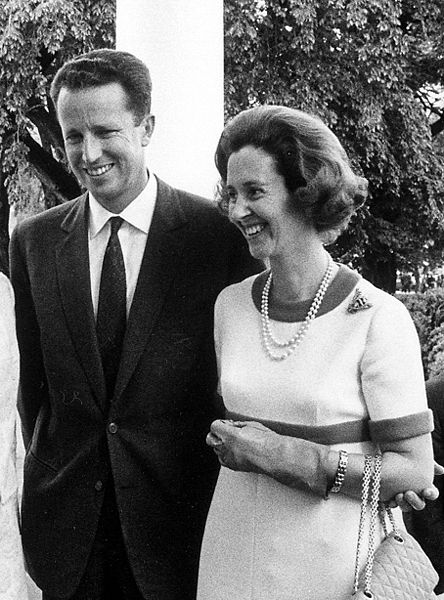
I used this material for the same Sunday three years ago. I have made one or two small changes here. I do believe that the lives of King Baudouin and Queen Fabiola can speak to all Christians no matter what their state of life or social positions are.
Last Sunday I featured the late King Baudouin of the Belgians. This week I feature him again, with Queen Fabiola, who died on 5 December 2014. The King died suddenly on 31 July 1993. The story of how they met is quite remarkable and the late Cardinal Suenens tells the story in his biography of the King, Baudouin, King of the Belgians, The Hidden Life.
The video above has as background music an Irish song that I learned in Grade Three, The Dawning of the Day, in Irish Gaelic Fáinne Geal an Lae, the version I learned. (The singer in the video is Mary Fahl). An Irish song is not at all inappropriate as the matchmaker of the marriage of Baudouin and Fabiola was an Irish woman, Veronica O'Brien.
Veronica was envoy of the Legion of Mary to France and some other European countries. Much 'cloak and dagger' work was involved in finding a wife and queen for the young king. Much more importantly, much prayer was involved too, prayer that was basically a searching for God's will. They became formally engaged in Lourdes, France, King Baudouin travelling incognito, as he always did when he went there. (There are references online in obituaries of the King and elsewhere to Veronica O'Brien as 'Sister Veronica'. She was not a religious but a lay person. Members of the Legion of Mary address each other as 'Brother' and 'Sister' only during Legion meetings, not elsewhere).
The couple were married in Brussels on 15 December 1960. The video shows photos of both the civil and church ceremonies. In a number of European countries a separate civil ceremony is required by law and takes place before the church celebration. The King wrote in his spiritual diary for that day: Normally we are awake by day and dream at night, but this time it's as if I'm in a dream all day.
On 8 July 1978 Baudouin wrote in his diary: My God, I thank you for having led us by the hand to the feet of Mary, and every day since then, I thank you, Lord, that we have been able to love each other in your Love, and that that love has brown each day.
And Queen Fabiola wrote to Veronica: I knew Our Blessed Lady was a Queen and a Mother, and all sort of other things, but I never knew that she was a Matchmaker!
Quoting the Queen led Cardinal Suenens to quote a Spanish verse:
Cristo dijo a su Madre
el dia de la Asunción
no te vaya de este mundo
sin pasar por Aragón.
Christ said to his Mother
on the day of the Assumption:
do not leave this world
without passing through Aragón.
Before her marriage the Queen was Doña Fabiola de Mora y Aragón.
The Cardinal quotes freely from Baudouin's diary about Queen Fabiola.
Fill Fabiola with your holiness. May she live her life in your joy and your peace. Teach me to love her with your own tenderness . . .
Fabiola is so loving; she warms my heart. Her silent, yet active presence is a source of great joy to me. My God, how you have spoiled me!
Thank you, Jesus, for having nurtured in me an immense love for my wife. Thank you for having given me a spouse whose love for me is second only to her love for You. May we both grow in you, Lord.
When Veronica O'Brien met Fabiola in Spain she asked the young woman, who had no idea why where things were leading, why she had never married. She replied, What can I say? I have never fallen in love up to now. I have put my life into the hands of God. I abandon myself to Him, maybe he is preparing something for me.
Veronicarecounted all of this in a letter to the King and concluded, It was utterly astounding, because I knew exactly what God was preparing for her.
Thirty years later the King wrote in his spiritual diary: Mary, show me what I should do so as not to miss an opportunity of loving, of denying myself for your sake, of living the present moment to the full, as if it were my last, and of loving my darling Fabiola infinitely more. yes, Mother, teach me to love her with tenderness, gentleness, thoughtfulness, respect, and teach me to have faith in here . . .
And Baudouin, addressing the Lord, wrote, Teach me too to respect her personality with its differences and its inconsistencies. Jesus, I thank you for having given me this wonderful treasure.
Both King Baudouin and Queen Fabiola in these extracts reflect the spirituality of a book that Cardinal Suenens had given the King before he met his future queen and wife,Abandonment to Divine Providence by Jean-Pierre de Caussade SJ. One English translation of this masterpiece has the title The Sacrament of the Present Moment, which captures the essence of the book, that God's will is in the present moment.
Shortly before he left for Motril, Spain, in 1993, where he died suddenly, King Baudouin confided to Cardinal Suenens and Veronica, I love Fabiola more and more each day: what an inspiration she is to me!
This led the Cardinal to quote Jean Guitton, the first lay person to be invited to Vatican II as an observer, Love is always fruitful, were it only because it transforms those who love.
One of the great sorrows in the life of Baudouin and Fabiola as a married couple was that they had no children. The Queen had five miscarriages. Reflecting on this, the King said to a group visiting the Palace, We have pondered on the meaning of this suffering and, bit by bit, we have come to see that it meant that our heart was freer to love all children, absolutely all children.
In a letter to a young mother the King wrote about a children's party that he and the Queen had hosted at the Palace: In one corner there was a group of handicapped children, several of them with Down's syndrome. I brought over a plateful of toffees to a little girl who had scarcely any manual control. with great difficulty, she succeed in taking a toffee but, to my astonishment, she gave it to another child. then for a long time, without ever keeping one for herself, she distributed these sweets (candies) to all the healthy children who could not believe their eyes. What a depth of love there is in those physically handicapped bodies . . .
One by one the children left. We really felt as if they had become in some sense our children. I think they felt it too. It was a very special afternoon; the presence of the Lord was really tangible. There was such peace and joy. that was pure gift!
I have read Baudouin, King of the Belgians, The Hidden Life, a number of times and each time I am moved by it. I see in it a reflection of what's in today's gospel: his gratitude to God, like the gratitude of all at the wedding feast, not mentioned explicitly but clearly there; his and Fabiola's submission to God's will through Mary: Do whatever he tells you; and the extraordinary generosity of Jesus, God and Man, turning water into the equivalent of about 500 or 600 bottles of the best wine, a generosity that led Baudouin and Fabiola, who couldn't have children of their own, to see that our heart was freer to love all children, absolutely all children.
When we allow him, Jesus can turn the very ordinary in our lives into the extraordinary, just as a little girl with physical and mental disabilities revealed the presence of God to the King of the Belgians, just as Fabiola, his wife and queen, was a daily revelation of God's loving presence to him.
God has the same desire to reveal himself to each of us every day, specifically in the present moment. And He has given us his Mother, who is our Mother also, to guide us with her words of absolute faith, do whatever he tells you.