Madonna and Child, Pompeo Batoni, c.1742
Galleria Borghese, Rome [Web Gallery of Art]
For thus says
the Lord:
I will extend prosperity to her like a river,
and the wealth of the nations like an overflowing stream;
and you shall nurse and be carried on her arm,
and dandled on her knees.
As a mother comforts her child,
so I will comfort you;
you shall be comforted in Jerusalem (Isaiah 66:12-13).
I will extend prosperity to her like a river,
and the wealth of the nations like an overflowing stream;
and you shall nurse and be carried on her arm,
and dandled on her knees.
As a mother comforts her child,
so I will comfort you;
you shall be comforted in Jerusalem (Isaiah 66:12-13).
From
today’s First Reading.
Readings
(Jerusalem
Bible: Australia, England & Wales, India [optional], Ireland, New Zealand,
Pakistan, Scotland, South Africa)
After
this the Lord appointed seventy others and sent them on ahead of him in pairs to
every town and place where he himself intended to go. He said to them, “The harvest
is plentiful, but the laborers are few; therefore ask the Lord of the harvest
to send out laborers into his harvest. Go
on your way. See, I am sending you out like lambs into the midst of wolves. Carry no purse, no bag, no sandals;
and greet no one on the road. Whatever house you enter, first
say, ‘Peace to this house!’ And if anyone is there who
shares in peace, your peace will rest on that person; but if not, it will
return to you. Remain in the same house,
eating and drinking whatever they provide, for the laborer deserves to be paid.
Do not move about from house to house. Whenever you enter a town and
its people welcome you, eat what is set before you; cure the sick who are there, and say to them,
‘The kingdom of God has come near to you.’ But whenever you enter a town and they do not
welcome you, go out into its streets and say, ‘Even
the dust of your town that clings to our feet, we wipe off in protest against
you. Yet know this: the kingdom of God has come near.’ I tell you, on that day it will be more
tolerable for Sodom than for that town.
The seventy returned with joy, saying, “Lord, in your name even the
demons submit to us!” He said to them, “I watched Satan fall from heaven like a
flash of lightning. See, I have given you authority to tread on snakes and
scorpions, and over all the power of the enemy; and nothing will hurt you. Nevertheless, do not rejoice at this, that
the spirits submit to you, but rejoice that your names are written in heaven.”
On PPC this takes place every day, as does the work. And it is usually much longer than two hours. Most of those taking part give up part of their own vacations and pay their own way, though they are usually hosted by local families, just like the 72 in the gospel.


During some of my summer vacations in my seminary years I went on Peregrinatio Pro Christo - Pilgrimage For Christ - with the Legion of Mary. 'PPC', as Legionaries usually call it, was partly inspired by the spirit of Irish monks such as St Columbanus (Columban) and St Columcille (Columba) who left Ireland for other beautiful countries, Columban to the European mainland and Columba to Iona, Scotland, in the modern Diocese of Argyll and the Isles where I spent two months in parish work during the summer of 2013. I also spent two short periods working there in the summer of 1997.
Legionaries go to another country or to another region in their own country for at least a week, usually at the invitation of a particular parish. In 1963 I was in a parish near the centre of Liverpool, around the time the Beatles, from that city, were becoming known throughout the world. Two years later I was in a parish in Paisley, very near Glasgow, and in 1966 in Pewsey, a lovely village in rural Wiltshire in England's beautiful West Country. I arrived there on the day England won the World Cup in football against Germany and watched the game in a cafe in Bristol.
On PPC most of the Legionaries have never met each other before but they establish a close bond very quickly. Instead of a weekly meeting, as they have in their own praesidium, as a branch is called (the Legion takes its terminology from the ancient Roman Legions) they meet daily. Each meeting includes prayers at the beginning, the middle and the end, a reading from the Handbook, reporting on work done, a short talk or allocutio from the spiritual director, and assignments for the coming week, two hours for senior members.

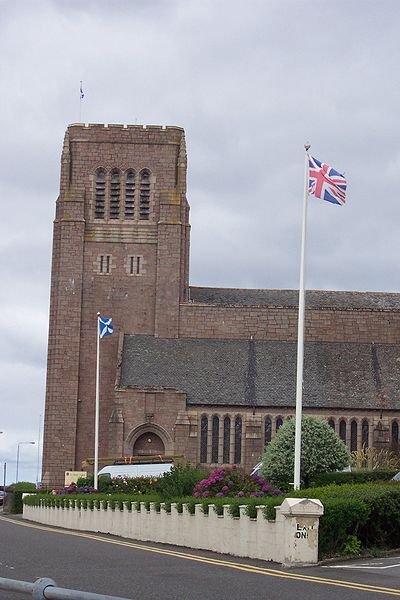
Cathedral of Christ the King, Liverpool [Wikipedia]
Just like the disciples in today's Gospel, Legionaries work in pairs. They may never work alone. If one doesn't turn up the assigned work can't be done. One of the central works of the Legion of Mary is to visit homes. In Liverpool the parish priest asked us to do a parish census. This served two purposes. It helped the parish update its list but, more importantly, it was an opportunity for personal contact with parishioners, especially with those who had lapsed.
I remember one particular home that I visited with my assigned partner. The parish index card noted that the family who lived there had become quite bitter towards the Church, why, I didn't know. But I felt nervous when I pressed the doorbell. When the door was opened one of us said that we were from the Legion of Mary and that we were visiting on behalf of the local parish.
Instead of angry words or having the door being slammed in our faces, we got a big smile from the man who had opened the door when we introduced ourselves and he said, 'O, you're from Ireland!' He then told us of vacations that he and his family had spent in Ireland and that they had received a warm welcome wherever they went.
I took this as a cue to speak of the hospitality and friendliness of the Irish people as being an expression of their Catholic faith. We had a long chat in which the man, who had, as I recall, asked his wife to meet us, expressed no bitterness at all towards the Church and it was clear when we were leaving that he was very grateful for the visit.
I don't know if he and his family went back to the Church but he had experienced a welcoming Church through our visit. In a very real way we had done what Jesus had asked the 72 (or 70) to do: Cure the sick who are there, and say to them, ‘The kingdom of God has come near to you' The sickness in question wasn't a physical one but a spiritual one.
Our faith is a precious gift from God that must be shared. Otherwise it will die. In the gospel the 72 (or 70) are given a specific mission. That is what happens on PPC. But we're on mission all the time and we may never know how we can lead others to the faith.
A few years ago when visiting Canada I was invited to give a talk to a prayer group. Afterwards over coffee I was chatting with one of the members, an immigrant from Germany. She had been a Lutheran but for years had been thinking of becoming a Catholic. However, she couldn't take the final step. One day she was passing a Catholic church and felt drawn to go in. As she was trying to share her hesitation with the Lord a group of teenage boys came in, genuflected to the Blessed Sacrament, spent a couple of minutes in silent prayer, got up, genuflected again and went on their way. This for her was the moment of grace when she let go of her hesitations. She didn't know who the boys were and they had no idea of the powerful impact their visit to the Lord had made on this woman.
Ballachulish, Scotland [Wikipedia]
Three years ago in St Mun's Church, Ballachulish, where I spent some time during the summer, I concelebrated Mass with Bishop Joseph Toal of Argyll and the Isles - he is now Bishop of Motherwell - as he baptised and confirmed James Campbell MacPherson and gave him his First Holy Communion. Campbell, as he is known to everyone, is married and his wife Mary and their children are Catholics. I've no doubt that it was their influence and that of the parishioners in this small parish that gently led him to the faith.
Whether we're 'on duty' as missionaries, as the 72 (or 70) were and as I was on PPC, or 'off duty' the lives we lead can truly remind others that the kingdom of God has come near to you. The people that the Liverpool family met in Ireland, bus drivers, waitresses, newspaper vendors, so many others, probably weren't aware that they were gentle reminders of God's love to them. When we honestly try to follow Jesus despite our sinfulness and weakness we can take heart in the words he spoke to the 72 (or 70) as they reported what had happened during their mission, rejoice that your names are written in heaven.
Antiphona ad introitum
Entrance Antiphon Cf. Ps
47[48]: 10-11
Suscepimus, Deus, misericordiam tuam in medio templi tui.
Your merciful love, O God, we have recevied in the midst of your
temple.
Secundum nomen tuum, Deus, ita et laus tua in fines terrae;
Your praise, O God, like your name, reaches the ends of the earth;
iustitia plena est dextera tua.
your right hand is filled with saving justice.