Showing posts with label Scotland. Show all posts

25 October 2018

Columban Fr Gerard Dunn RIP

Fr Gerard Dunn
15 December 1937 - 24 September 2018

With the passing of Fr Gerard (Gerry) Dunn on 24 September 2018 the Region of Britain of the Columbans lost one of its most memorable characters.

Father Gerry was born on 15 December 1937 to a well-known Catholic family in Glasgow which had a mineral water business. He very much remained a Glaswegian at heart and in later years delighted in showing his fellow Columbans around his native city.

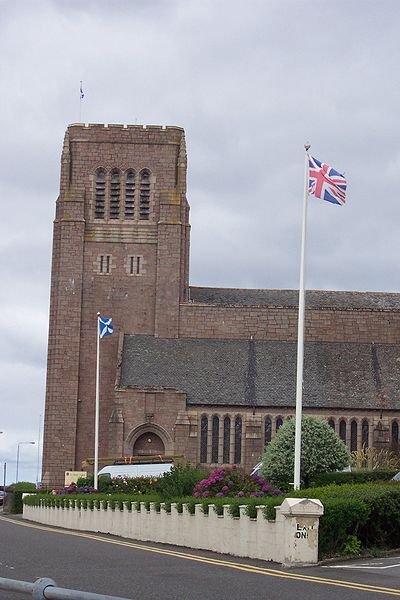
St Andrew's Cathedral, Glasgow [Wikipedia]


After his early education, Father Gerry followed his father into the medical profession.

Having qualified and practiced as a doctor in Glasgow for a relatively short time, he decided to embark on a different kind of healing ministry – as a Columban missionary priest.

He went to St Columban's, Dalgan Park, County Meath, Ireland, in 1962 and was ordained on 21 December 1967.  Because of an outbreak of foot and mouth disease in Britain that year, ordinations did not take place in Dalgan Park, which has a farm attached to it, because of strict Irish quarantine laws. So Father Gerry became the first and only Columban to be ordained on Scottish soil.

After ordination Father Gerry was assigned to Korea.

Within a few years he returned home in poor health and spent the remainder of his Columban life and ministry in Scotland, having ministered for a short time in a parish in Birmingham, England.

Legion of Mary altar [Wikipedia]

He engaged in mission awareness ministry, but gradually focused more and more on other ministries, such as promoting the Legion of Mary, leading pilgrimages to various shrines, and ministering to the small Chinese Catholic community in Glasgow. He learned enough Chinese to be able to celebrate Mass in that language.

St Patrick's Purgatory, Lough Derg, Ireland [Wikipedia]
Lough Derg is one of the places where Father Gerry regularly led pilgrimages from Glasgow.

When the Columban house in Glasgow closed in 2005 Father Gerry along with Fr Declan McNaughton, moved into the presbytery of St Gregory Barbarigo parish in Glasgow as the base for their continuing ministries.

The priests and people of the parish were very welcoming and supportive. Among the many ways Father Gerry endeared himself to the people in the parish was his preparation and distribution of large quantities of nutritious soup.

Father Gerry will be remembered as a lively conversationalist, witty storyteller and entertaining singer. He will also be remembered for his fearless promotion of the teaching of the Church as he understood it. Conversations with him tended to be blend of serious discussion on some controversial issue and frequent amusing anecdotes.

Father Gerry was a wounded healer who courageously coped with poor health for many years in a spirit of great faith.

In 2013 he retired to Nazareth House in Glasgow which is where he died. A large congregation attended his Funeral Mass in the Nursing Home Chapel on 28 September 2018.

Father Gerry’s nephew, Fr Stephen Dunn, was the principal concelebrant and was joined by more than twenty priests, including five Columbans. In his homily, Fr Dan Horgan, on behalf of the Columbans, thanked the Dunn family and others for the great care Father Gerry received and also spoke of his unique gifts and admirable faith.

Father Gerry was buried with his parents in St Peter's Cemetery, also known as Dalbeth Cemetery, Glasgow.

May he rest in peace.

Dalbeth Cemetery [Source]

A Personal Note

Father Gerry joined the Columbans a year after me but joined our class for theology in 1964. I lived with him for five months in Glasgow in 2002 while on a two-year assignment in Britain. I found to be true what the late Columban Fr Con Campion once said to me - he had lived with Father Gerry for some years in our Glasgow house - that there wasn't a kinder Columban. Before and after his funeral Mass I was chatting with persons who had known him and they all mentioned the great influence he had on their lives.

He had a great sense of humour and there was no one better to tell jokes about 'thrifty' Scotsmen. He was also a good singer. He had a number of songs in his repertoire but his favourite was A Scottish Soldier, written in 1960 by the late Andy Stewart who sings it here.


In those days Mary set out and went with haste to a Judean town in the hill country (Luke 1:39).

May our Blessed Mother, whom Father Gerry loved so dearly all his life, lead him to the hills of home.

02 July 2016

'The Lord appointed seventy others and sent them on ahead of him in pairs.' Sunday Reflections, 14th Sunday in Ordinary Time, Year C

Madonna and Child, Pompeo Batoni, c.1742
Galleria Borghese, Rome [Web Gallery of Art]

For thus says the Lord:
I will extend prosperity to her like a river,
    and the wealth of the nations like an overflowing stream;
and you shall nurse and be carried on her arm,
    and dandled on her knees.
As a mother comforts her child,
    so I will comfort you;
    you shall be comforted in Jerusalem (Isaiah 66:12-13).
From today’s First Reading.


Readings (New American Bible: Philippines, USA)

Readings (Jerusalem Bible: Australia, England & Wales, India [optional], Ireland, New Zealand, Pakistan, Scotland, South Africa)


After this the Lord appointed seventy others and sent them on ahead of him in pairs to every town and place where he himself intended to go. He said to them, “The harvest is plentiful, but the laborers are few; therefore ask the Lord of the harvest to send out laborers into his harvest.  Go on your way. See, I am sending you out like lambs into the midst of wolves. Carry no purse, no bag, no sandals; and greet no one on the road. Whatever house you enter, first say, ‘Peace to this house!’ And if anyone is there who shares in peace, your peace will rest on that person; but if not, it will return to you. Remain in the same house, eating and drinking whatever they provide, for the laborer deserves to be paid. Do not move about from house to house. Whenever you enter a town and its people welcome you, eat what is set before you; cure the sick who are there, and say to them, ‘The kingdom of God has come near to you.’ But whenever you enter a town and they do not welcome you, go out into its streets and say,  ‘Even the dust of your town that clings to our feet, we wipe off in protest against you. Yet know this: the kingdom of God has come near.’ I tell you, on that day it will be more tolerable for Sodom than for that town.
The seventy returned with joy, saying, “Lord, in your name even the demons submit to us!” He said to them, “I watched Satan fall from heaven like a flash of lightning. See, I have given you authority to tread on snakes and scorpions, and over all the power of the enemy; and nothing will hurt you. Nevertheless, do not rejoice at this, that the spirits submit to you, but rejoice that your names are written in heaven.”


During some of my summer vacations in my seminary years I went on Peregrinatio Pro Christo  - Pilgrimage For Christ - with the Legion of Mary. 'PPC', as Legionaries usually call it, was partly inspired by the spirit of Irish monks such as St Columbanus (Columban) and St Columcille (Columba) who left Ireland for other beautiful countries, Columban to the European mainland and Columba to Iona, Scotland, in the modern Diocese of Argyll and the Isles where I spent two months in parish work during the summer of 2013. I also spent two short periods working there in the summer of 1997.

Legionaries go to another country or to another region in their own country for at least a week, usually at the invitation of a particular parish. In 1963 I was in a parish near the centre of Liverpool, around the time the Beatles, from that city, were becoming known throughout the world. Two years later I was in a parish in Paisley, very near Glasgow, and in 1966 in Pewsey, a lovely village in rural Wiltshire in England's beautiful West Country. I arrived there on the day England won the World Cup in football against Germany and watched the game in a cafe in Bristol.

On PPC most of the Legionaries have never met each other before but they establish a close bond very quickly. Instead of a weekly meeting, as they have in their own praesidium, as a branch is called (the Legion takes its terminology from the ancient Roman Legions) they meet daily. Each meeting includes prayers at the beginning, the middle and the end, a reading from the Handbook, reporting on work done, a short talk or allocutio from the spiritual director, and assignments for the coming week, two hours for senior members.

On PPC this takes place every day, as does the work. And it is usually much longer than two hours. Most of those taking part give up part of their own vacations and pay their own way, though they are usually hosted by local families, just like the 72 in the gospel.

Cathedral of Christ the King, Liverpool [Wikipedia]

Just like the disciples in today's Gospel, Legionaries work in pairs. They may never work alone. If one doesn't turn up the assigned work can't be done. One of the central works of the Legion of Mary is to visit homes. In Liverpool the parish priest asked us to do a parish census. This served two purposes. It helped the parish update its list but, more importantly, it was an opportunity for personal contact with parishioners, especially with those who had lapsed.

I remember one particular home that I visited with my assigned partner. The parish index card noted that the family who lived there had become quite bitter towards the Church, why, I didn't know. But I felt nervous when I pressed the doorbell. When the door was opened one of us said that we were from the Legion of Mary and that we were visiting on behalf of the local parish.

Instead of angry words or having the door being slammed in our faces, we got a big smile from the man who had opened the door when we introduced ourselves and he said, 'O, you're from Ireland!' He then told us of vacations that he and his family had spent in Ireland and that they had received a warm welcome wherever they went.

I took this as a cue to speak of the hospitality and friendliness of the Irish people as being an expression of their Catholic faith. We had a long chat in which the man, who had, as I recall, asked his wife to meet us, expressed no bitterness at all towards the Church and it was clear when we were leaving that he was very grateful for the visit. 

I don't know if he and his family went back to the Church but he had experienced a welcoming Church through our visit. In a very real way we had done what Jesus had asked the 72 (or 70) to do: Cure the sick who are there, and say to them, ‘The kingdom of God has come near to you'  The sickness in question wasn't a physical one but a spiritual one.

Our faith is a precious gift from God that must be shared. Otherwise it will die. In the gospel the 72 (or 70) are given a specific mission. That is what happens on PPC. But we're on mission all the time and we may never know how we can lead others to the faith. 

A few years ago when visiting Canada I was invited to give a talk to a prayer group. Afterwards over coffee I was chatting with one of the members, an immigrant from Germany. She had been a Lutheran but for years had been thinking of becoming a Catholic. However, she couldn't take the final step. One day she was passing a Catholic church and felt drawn to go in. As she was trying to share her hesitation with the Lord a group of teenage boys came in, genuflected to the Blessed Sacrament, spent a couple of minutes in silent prayer, got up, genuflected again and went on their way. This for her was the moment of grace when she let go of her hesitations. She didn't know who the boys were and they had no idea of the powerful impact their visit to the Lord had made on this woman.

Ballachulish, Scotland [Wikipedia]

Three years ago in St Mun's Church, Ballachulish, where I spent some time during the summer, I concelebrated Mass with Bishop Joseph Toal of Argyll and the Isles - he is now Bishop of Motherwell - as he baptised and confirmed James Campbell MacPherson and gave him his First Holy Communion. Campbell, as he is known to everyone, is married and his wife Mary and their children are Catholics. I've no doubt that it was their influence and that of the parishioners in this small parish that gently led him to the faith.

Whether we're 'on duty' as missionaries, as the 72 (or 70) were and as I was on PPC, or 'off duty' the lives we lead can truly remind others that the kingdom of God has come near to you. The people that the Liverpool family met in Ireland, bus drivers, waitresses, newspaper vendors, so many others, probably weren't aware that they were gentle reminders of God's love to them. When we honestly try to follow Jesus despite our sinfulness and weakness we can take heart in the words he spoke to the 72 (or 70) as they reported what had happened during their mission, rejoice that your names are written in heaven.


Antiphona ad introitum    
Entrance Antiphon Cf. Ps 47[48]: 10-11

Suscepimus, Deus, misericordiam tuam in medio templi tui.
Your merciful love, O God, we have recevied in the midst of your temple.
Secundum nomen tuum, Deus, ita et laus tua in fines terrae;
Your praise, O God, like your name, reaches the ends of the earth;
iustitia plena est dextera tua.
your right hand is filled with saving justice.

13 June 2013

Celebrations for St Columba (Colum Cille) in Oban and Iona

St Columba's Cathedral, Oban, Scotland
The website of the Diocese of Argyll & the Isles gives some information about the cathedral with a photo giving a better idea of its beautiful location.


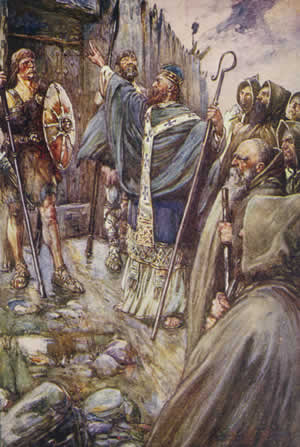
Last Sunday, 9 June, was the Solemnity of St Columba (Colum Cille) in the Diocese of Argyll & the Isles, in western Scotland. He is patron saint of the diocese and of the cathedral. This Irish saint, an older contemporary of that other great missionary with a similar name, St Columban or Columbanus, came to Iona, a tiny island in the Inner Hebrides, 1,450 years ago. Both saints left Ireland by boat, each with twelve companions. 

St Columba was born on 7 December 521 and died on 9 June 597 while St Columbanus was born c. 540 or 543 and died on 23 November 615.

A special Mass was celebrated in St Columba's Cathedral, Oban, at 5pm, with Bishop Joseph Toal of the Diocese of Argyll & the Isles the main celebrant. Archbishop Antonio Mennini, Papal Nuncio to Great Britain, was among the bishops present, as was Bishop Michael Smith of Meath, Ireland, where Kells is located. The Book of Kells was probably begun in Iona and taken to the Abbey of Kells, which St Columba had founded c. 554.

Along with Bishop Smith were the parish priest of Kells, Fr John Byrne, and four members of the town council, from four different parties. The Meath contingent presented the Diocese of Argyll & the Isles with a copy of the Book of Kells.

Present at the Mass were the leaders of other Christian communities in the area.

The bishops and concelebrating priests, who included most of the priests of the diocese and some from other dioceses along with some Cistercian monks from Nunraw Abbey and Benedictine monks from Pluscarden Abbey, were led in procession from the place where we vested to the entrance of the Cathedral by a piper. This is something very Scottish and quite moving.

A German, Jürgen Rech , playing the Scottish bagpipes

Interior of Iona Abbey Church


The following morning, Monday, 200 of us set off for the Isle of Iona, an island with a land area of only 877 hectares, on a pilgrimage to the place where St Columba founded his most famous monastery. We took the ferry from Oban to Craignure on the Isle of Mull and then travelled by bus to Fionnphort on the west coast of the island. The last leg of the journey was a ten-minute trip by boat to Iona.

Iona Abbey with Mull in the background

It was about a ten-minute walk to the Abbey where we gathered for Mass. The principal celebrant was the Papal Nuncio, Archbishop Antonio Mennini. As in the Cathedral the day before, the responsorial psalm was sung in Gaelic by a choir of secondary school girls from the Outer Hebrides, where Gaelic is still the main language. And, also as in the Cathedral, the gospel was proclaimed first in English by a deacon and then in Gaelic by a priest.

Many Knights and Ladies of the Holy Sepulchre were present in their uniforms.

After Mass the bishops and priests had a light lunch together while the others, who had brought packed lunches, gathered in various places in the grounds of the Abbey for a picnic. The weather was most cooperative.

Many of us later dropped by Cnoc a' Chalmain, the Catholic House of Prayer, where I made a retreat in 2002 and where I'll be from 16 to 21 July before leaving the Diocese of Argyll & the Isles. 'Cnoc a 'Chalmain' means 'The Hill of the Dove', a reference to St Columba, as 'Colum' or 'Colm' are the Irish Gaelic for 'dove' and 'Calum' the Scottish Gaelic.

As always happens on a pilgrimage, many of us made new friends. One pilgrim I spent much time with had cycled from Glasgow to Oban, a distance of about 150 kms.

It was refreshing to see so many wearing religious habits, not only during Mass in the Abbey but on the whole trip. These included Benedictine monks from Pluscarden, one of them, the former abbot, now Bishop Hugh Gilbert OSB of Aberdeen, the diocese where the monastery is located. One of the young monks was a Ghanaian. There were three Cistercian monks from Nunraw, including Abbot Mark Caira and one who had spent 50 years in Cameroon, two Redemptorists, one of them a young Tanzanian, and two Carmelite nuns who had been in the monastery in Oban before it was closed down in 2002.

So there was a good missionary dimension to our piogrimage, fitting for the celebration of a saint sometimes called 'The Apostle to the Picts', the Picts being a people who lived mainly in northern and eastern Scotland.

27 January 2013

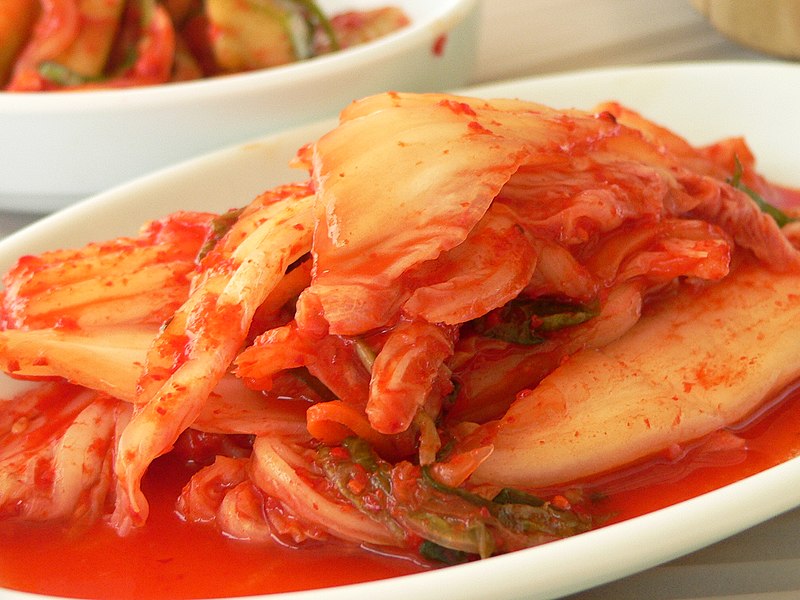
Kimchi-flavoured haggis?


The first Korean meal I had was in New York City in 1968 or 1969 when, as a young priest, I was studying music near there. My host was an Irish Columban based in NYC at the time who had spent his early years as a priest in Korea. I wouldn't swear in court that I tried kimchi on that occasion, but I probably did. I have eaten it many times since, on three visits to Korea and on occasion here in the Philippines.


Until last year I thought kimchi was exclusive to Korea but discovered that it's also popular in Vietnam, and with the same name. I was giving a weekly class to aspirants of the Capuchin Tertiary Sisters of the Holy Family here in Bacolod and used to have lunch with the group afterwards. Some were Vietnamese and I was surprised when they produced kimchi one day. When the realised that I liked it they had some almost every week.

I tried haggis, a very Scottish dish, also for the first time in New York in 1970-71, with a Finnish-American friend who was my mentor in the public elementary school where I was practice-teaching for a few months. A few weeks after starting in the school I moved into the parish as a resident priest. But that's another story. 

I was rather disappointed. All I can I remember is the mashed turnip or Swede, not my favourite vegetable, that is usually served along with mashed potatoes and the haggis (below).


However, during the five months I was based in Glasgow, Scotland, in 2002 I had the chance to eat haggis again when the priest in a rural parish where I was doing a mission appeal for the Columbans took me out for lunch. I decided to give haggis another chance - and enjoyed it. some time later I drove some Filipino friends to Edinburgh and suggested to them that we try haggis for lunch. We all loved it - and the price was very reasonable in the pub where we had it. I learned that it was the poor person's meal in times past.


The texture of haggis reminds me of that of a Filipino dish, sisig, though the two are made from different ingredients. But there is for me another connection between haggis and the Philippines. Haggis in the past was made from the leftover parts of the sheep. In the Visayan languages of the central and southern Philippines the word for breakfast is pamahaw, the root word being bahaw, leftovers. Part of this is often fried rice, which is rice that had been boiled the day before but not all eaten.

Robert Burns. Painting by Alexander Nasmyth.

Many Scottish people at home and around the world celebrate Burns Night on or around 25 January, the birthday of Scottish poet Robert Burns (1759 - 1786). Haggis is so central to the Burns Night supper that it is piped in and then addressed with a poem that Burns wrote.


I have heard that the definition of a Scottish gentleman is a man who can play the bagpipes - but doesn't. I have also heard that the Irish gave the bagpipes to the Scots as a joke - and the Scots haven't seen the joke yet! But to many of us from Ireland and Scotland, or of Irish or Scottish heritage - and the Latin word Scotus originally meant 'Irish', there is something special about the bagpipes.

Where does the kimchi fit in? One of Burns' most popular poems/songs is My Love is Like a Red, Red Rose. While doing research for today's Sunday Reflections I came across a video of a Korean choir singing it (video at the top).

Here are the words of the song:

O my Luve's like a red, red rose
That’s newly sprung in June;
O my Luve's like the melodie
That’s sweetly play'd in tune.

As fair art thou, my bonnie lass,
So deep in luve am I:
And I will luve thee still, my dear,
Till a’ the seas gang dry:

Till a’ the seas gang [go] dry, my dear,
And the rocks melt wi’ the sun:
I will luve thee still, my dear,
While the sands o’ life shall run.

And fare thee well, my only Luve
And fare thee well, a while!
And I will come again, my Luve,
Tho’ it were ten thousand mile.

Here is the song sung by the late Scottish tenor, Kenneth McKellar. It's not his original recording but one made when he was 67.

17 August 2012

'The strength that empowered me was the Eucharist.' Sunday Reflections, 20th Sunday in Ordinary Time Year B

Sandhill Mass Rock ('Carraig an Aifrinn', in Irish), County Donegal, Ireland.

During the 17th century, when Catholics in Ireland were persecuted, Mass was often celebrated in remote places, with a Mass rock as the altar.

Readings (New American Bible: Philippines, USA) 

Readings (Jerusalem Bible: Australia, England & Wales, India [optional], Ireland, New Zealand, Pakistan, Scotland, South Africa) 

Gospel John 6:51-58 (Revised Standard Version – Catholic Edition)

Jesus said to the crowds: “I am the living bread which came down from heaven; if any one eats of this bread, he will live for ever; and the bread which I shall give for the life of the world is my flesh." The Jews then disputed among themselves, saying, "How can this man give us his flesh to eat?" So Jesus said to them, "Truly, truly, I say to you, unless you eat the flesh of the Son of man and drink his blood, you have no life in you; he who eats my flesh and drinks my blood has eternal life, and I will raise him up at the last day. For my flesh is food indeed, and my blood is drink indeed. He who eats my flesh and drinks my blood abides in me, and I in him. As the living Father sent me, and I live because of the Father, so he who eats me will live because of me. This is the bread which came down from heaven, not such as the fathers ate and died; he who eats this bread will live for ever." 


The Holy Sacrifice of the Mass has been central to the lives of Catholic Christians from the very beginning. The Catechism of the Catholic Church, in Article 3, The Sacrament of the Eucharist, No 1382 says The Mass is at the same time, and inseparably, the sacrificial memorial in which the sacrifice of the cross is perpetuated and the sacred banquet of communion with the Lord's body and blood. But the celebration of the Eucharistic sacrifice is wholly directed toward the intimate union of the faithful with Christ through communion. To receive communion is to receive Christ himself who has offered himself for us.

Mass stone, Scotland

Some are called to share in the sacrifice in a very real way. In the video above there is a scene of a priest in mid-17th century Ireland celebrating Mass on a Mass rock. In Scotland these were known as Mass stones.

A Mass in the trenches during the Great War (1914-18)


Fr William Doyle SJ (3 March 1873 - 16 August 1917)

In a letter to his father in Dublin Father William Doyle SJ, a chaplain with the British Army in Belgium wrote about one of the last times he celebrated the Holy Sacrifice of the Mass. He himself was killed by a German shell on 16 August 1917.

Close beside us I had found the remains of a dug-out which had been blown in the previous day and three men killed. I made up my mind to offer up Mass there for the repose of their souls. In any case I did not know a better hole to go to, and to this little act of charity I attribute the saving of my life later on in the day. I had barely fitted up my altar when a couple of shells burst overhead, sending the clay tumbling down. For a moment I felt very tempted not to continue as the place was far from safe. But later I was glad I went on for the Holy Souls certainly came to my aid as I did to theirs.


Death at the end of Mass in China


In his book The Laughter and the Weeping Columban Fr Luke O'Reilly describes the last Mass of Fr Timothy Leonard (photo above), the first Columban to die violently. Father time was ordained for the Diocese of Limerick in 1918 and immediately joined the newly established Society of St Columban. He was a member of the first group of Columbans to go to China in 1920.

(Fr) Tim Leonard, the first Columban martyr, was killed by the communists in July 1929. He was pastor of Nanfeng, about 30 miles from Nancheng. the communist guerrillas had made a raid on the town and his information seemed to have been that they had left at dawn on this particular day in July (17 July). He decided to ring the bell to inform that people that morning Mass would take pace as usual. The bell attracted the attention of some of the communist stragglers and they decided to fire shots through a window into the church. (Father) Mick Moran, who was a curate (assistant priest) in the Nanfeng area at the time, told me afterwards that Mao Tse Tung (Mao Zedong) was in the party who fired the shots that July morning. Anyhow, some of the party entered the church, around the time of Communion, presumably, because they scattered the Sacred Hosts on the floor and Tim Leonard tried to prevent them physically from desecrating the Blessed Sacrament. the communists stabbed him and took him away and we do not know how long he lived but it does seem that they hacked him to death. The Nanfeng Catholics regarded Tim Leonard as a martyr.

A Mass in Belsen Concentration Camp


Memorial Stone at Bergen-Belsen Concentration Camp, Germany

Retired Northern Ireland politician James Molyneaux, now Lord Molyneaux, was among the British soldiers who liberated Bergen-Belsen concentration camp in May 1945. He wrote about this in The Daily Telegraph (London) on 27 January 2004. I have seldom read a more powerful testimony to the centrality of the Mass in our lives than what he wrote:

The most moving experience came on the second morning as I was walking from what had been the luxury SS barracks which our troops had transformed into a hospital. My attention was drawn to two packing cases covered by a worn red curtain. A young Polish priest was clinging to this makeshift altar with one hand, while celebrating Mass. Between his feet lay the body of another priest who probably died during the night. No one had had the energy to move the body.

I had no difficulty in following the old Latin Mass, having been educated at St James's Roman Catholic School in County Antrim, and, although an Anglican, I had gained a working knowledge of all the rituals. Still supporting himself against the altar, the young priest did his best to distribute the consecrated elements. Some recipients were able to stumble over the rough, scrubby heathland. Others crawled forward to receive the tokens and then crawled back to share them with others unable to move. Some almost certainly passed on to another - probably better - world before sunset. Whatever one's race or religion one can only be uplifted and impressed by that truly remarkable proof of the ultimate triumph of good over evil. 

As an Anglican James Molyneaux has a different understanding of 'the consecrated elements' than Catholics have. We believe that the bread and wine become the Body and Blood of Christ. But his deep reverence for what he saw - prisoners who had been starved sharing the Body of Christ with one another - is very evident.

Celebrating Mass in a Vietnamese Prison
'The strength that empowered me was the Eucharist'


In Preaching Hope from Prison François-Xavier Cardinal Nguyên Van Thuán, Coadjutor Archbishop of Thành-Phô Hô Chí Minh (formerly Saigon), writes about celebrating Mass in prison:

The day I was arrested I had to leave everything behind me. The following day I was allowed to write and ask my friends to bring my clothes, toothpaste and other personal needs. I also asked them to include some wine ‘as medicine.’ My friends understood. They sent me a little bottle of Mass-wine labeled ‘Medicine for Stomach Aches’ and also some hosts hidden in a little burner used to keep the humidity at bay.


Every night I kept a tiny piece of bread for the following day’s Eucharist. And so every day for many years I had the joy of celebrating Mass with three drops of wine and one of water in my palm. This was my altar, my cathedral. For me it was the true medicine of body and soul something to stave off death in order to live for ever in Christ.

A Joyful Celebration of Mass Amidst Drug Wars in Mexico

Fr Kevin Mullins is an Australian Columban who is parish priest of our only parish in Mexico, in Ciudad Juarez, just over the border from El Paso, Texas, USA, where the Columbans also work. Father Kevin was featured recently on the news in Australia.


For my flesh is food indeed, and my blood is drink indeed. He who eats my flesh and drinks my blood abides in me, and I in him.