21 January 2016

'Today this scripture has been fulfilled in your hearing.' Sunday Reflections, 3rd Sunday in Ordinary Time, Year C

An extract from Franco Zeffirelli's Jesus of Nazareth [Today's gospel ends at 2:28]

Readings (New American Bible: Philippines, USA)

Readings (Jerusalem Bible: Australia, England & Wales, India [optional], Ireland, New Zealand, Pakistan, Scotland, South Africa)

Gospel Luke 1:1-4; 4:14-21 (New Revised Standard Version, Catholic Edition, Canada) 


Since many have undertaken to set down an orderly account of the events that have been fulfilled among us, just as they were handed on to us by those who from the beginning were eyewitnesses and servants of the word, I too decided, after investigating everything carefully from the very first, to write an orderly account for you, most excellent Theophilus, so that you may know the truth concerning the things about which you have been instructed.

Then Jesus, filled with the power of the Spirit, returned to Galilee, and a report about him spread through all the surrounding country. He began to teach in their synagogues and was praised by everyone.

When he came to Nazareth, where he had been brought up, he went to the synagogue on the sabbath day, as was his custom. He stood up to read, and the scroll of the prophet Isaiah was given to him. He unrolled the scroll and found the place where it was written:
“The Spirit of the Lord is upon me,
    because he has anointed me
        to bring good news to the poor.
He has sent me to proclaim release to the captives
    and recovery of sight to the blind,
        to let the oppressed go free,
 to proclaim the year of the Lord’s favor.”


And he rolled up the scroll, gave it back to the attendant, and sat down. The eyes of all in the synagogue were fixed on him. Then he began to say to them, “Today this scripture has been fulfilled in your hearing.”
Scroll of the Book of Isaiah [Wikipedia]

Jesus, filled with the power of the Spirit, returned to GalileeSt Luke tells us. Thirty-three years ago in the Diocese of Bacolod on the island of Negros where I now live in the Philippines the Spirit led nine men to jail, three priests and six laymen, all falsely charged with multiple murder. Fourteen months were to pass before the nine were released.

Two of the priests were Columbans, Fr Brian Gore from Australia and the late Fr Niall O'Brien from Ireland. The third was a diocesan priest, Fr Vicente Dangan, now deceased.

The six laymen, all working for the Church during the very difficult Martial Law years in the Philippines, were Jesus S. Arzaga, Peter Cuales, Lydio J. Mangao, Conrado Muhal (RIP), Geronimo T. Perez (RIP) and Ernesto Tajones. They became known as The Negros Nine and you can find their photos here

While the Negros Nine were in jail in Bacolod City the late Bishop Antonio Y. Fortich appointed the three priests as chaplains there. The vast majority of prisoners were from poor backgrounds and their cases were being constantly put back. The three priests, as well as ministering to the spiritual needs of the prisoners were able to get lawyer-friends to follow up on the cases of many of those languishing, wondering if they would ever get out.

As a result of this, many of them did. He has sent me to proclaim release to the captives . . . to let the oppressed go free . . .


The Negros Nine in prison, 1983-84
L to R: Lydio Mangao,  Peter Cuales, Jesus Arzaga, Fr Vicente Dangan(+), Geronimo Perez(+), Fr Brian Gore, Conrado Muhal(+), Fr Niall O'Brien(+), Ernesto Tajones

I'm writing this on 21 January. Tomorrow the 43rd annual March for Life will take place in Washington DC.  According to the pro-abortion Guttmacher Institute in  a July 2014 reportFrom 1973 through 2011, nearly 53 million legal abortions occurred. This is the consequence of the infamous Roe v Wade decision in 1973 by the US Supreme Court. 

A charge that is often made is that those who are pro-life when it comes to the unborn and abortion are really only 'pro-birth' and not interested in the lives of children once they are born.

My friend Lala and her friend Jordan, whom I also know, might dispute this if they had the ability to express themselves in such a way. Lala was left in a garbage bin after birth and raised by the Daughters of Charity in Cebu City. Lala was born with Trisomy 21 (Down's Syndrome) and Jordan with intellectual and physical disabilities. They now live in the L'Arche community in Cainta, Rizal, part of the Manila urban sprawl. Over the years those who have chosen to live with Lala, Jordan and others for long periods, enabling them to live normal lives, have come from as far away as Germany and Japan.

Lala feeding Jordan

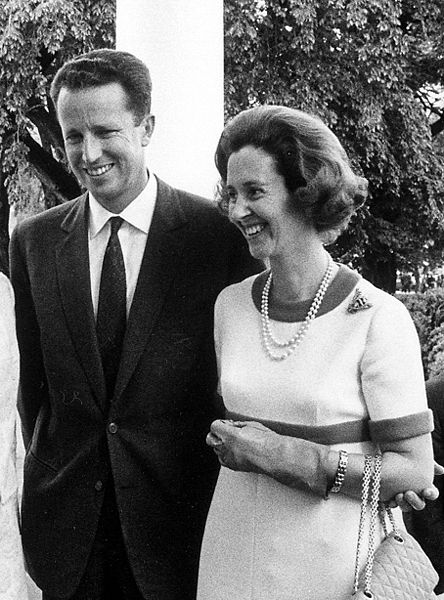
The late King Baudouin of the Belgians, about whom I've written in the two previous Sunday Reflections wrote in a letter to a young mother about a children's party that he and Queen Fabiola had hosted: 

In one corner there was a group of handicapped children, several of them with Down's Syndrome. I brought a plateful of toffees to a little girl who had scarcely any manual control. With great difficulty, she succeeded in taking a toffee but, to my astonishment, she gave it to another child. then for a long time, without ever keeping one for herself, she distributed these sweets to all the healthy children who could not believe their eyes. What a depth of love there is in these physically handicapped bodies . . .

Lala and the little girl who astonished King Baudouin are truly sisters in Christ. He has anointed me to bring good news to the poor. King Baudouin and the able-bodied children with whom the little girl with the disabilities shared her toffees were poor in spirit in the sense that St Matthew means in the first of the Beatitudes, ie, they knew their need of God. They recognised God's presence at the party, just as those who know Lala, especially those who live in L'Arche with her, recognise that the scripture has been fulfilled in their presence and is being fulfilled each day.

The Negros Nine were involved in organising Christian Communities where people would work together for the peace and justice that the Gospel demands in an area of awful poverty for many, poverty caused by greed. They suffered with the people because of the demands of the Gospel. Those of the Negros Nine who remain continue to work for justice and peace through the Negros Nine Human Development Foundation. Among other things the foundation is involved in trying to prevent the trafficking of women and minors. To set at liberty those who are oppressed . . .

While looking for a musical setting of the Entrance Antiphon I discovered Cantate Domino in B-flat, a setting of part of Psalm 96 (95) in Latin from which the Antiphon is taken, by Japanese composer Ko Matsushita. This came out of the Sing for Japan Choir Project, an international response to the earthquake and tsunami of 11 March 2011. I had not heard of Ko Matsushita nor had I heard of the Sing for Japan Choir Project. I discovered quite a few videos of Cantate Domino and finally settled on one featuring the Kaohsiung Chamber Choir from southern Taiwan.


The Entrance Antiphon is taken from Psalm 95 [96]: 1, 6. The above is Cantate Domino in B-flat, a setting of verses 1, 2, 4, 5 ,6, 11 by Japanese composer Ko Matsushita. Verses 1 and 6 are highlighted.

Cantate Domino canticum novum,
cantate Domino omnis terra.
Cantate Domino benedicite nomini eius,
adnuntiate diem de die salutare eius;
quoniam magnus Dominus et laudabilis valde
terribilis est super omnes deos;
quoniam omnes dii gentium daemonia
at vero Dominus caelos fecit.
Confessio et pulchritudo in conspectu eius, 
sanctimonia et magnificentia in sanctificatione eius.
Laetentur caeli et exultet terra
commoveatur mare et plenitudo eius.

Entrance Antiphon Cf Psalm 95[96]:1,6

O sing a new song to the Lord, 
sing to the Lord, all the earth. 
In his presence are majesty and splendour, 
strength and honour in his holy place.

The Spirit of the Lord is upon me, because he has anointed me to preach good news to the poor . . .

And in so many ways, if we have eyes to see and ears to hear, we can say with Jesus, Today this scripture has been fulfilled in your hearing.


CHRIST IN YOU, OUR HOPE OF GLORY
Colossians 1:27
51st International Eucharistic Congress, Cebu, Philippines
24-31 January 2016



14 January 2016

'Do whatever he tells you.' Sunday Reflections, 2nd Sunday in Ordinary Time, Year C (Outside the Philippines)

Marriage at Cana (detail), Paolo Veronese, 1571-72
Gemäldegalerie, Dresden, Germany [Web Gallery of Art]


Readings (New American Bible: Philippines, USA)

Readings (Jerusalem Bible: Australia, England & Wales, India [optional], Ireland, New Zealand, Pakistan, Scotland, South Africa)


On the third day there was a wedding in Cana of Galilee, and the mother of Jesus was there.  Jesus and his disciples had also been invited to the wedding. When the wine gave out, the mother of Jesus said to him, “They have no wine.” And Jesus said to her, “Woman, what concern is that to you and to me? My hour has not yet come.” His mother said to the servants, “Do whatever he tells you.” Now standing there were six stone water jars for the Jewish rites of purification, each holding twenty or thirty gallons. Jesus said to them, “Fill the jars with water.” And they filled them up to the brim. He said to them, “Now draw some out, and take it to the chief steward.” So they took it. When the steward tasted the water that had become wine, and did not know where it came from (though the servants who had drawn the water knew), the steward called the bridegroom and said to him, “Everyone serves the good wine first, and then the inferior wine after the guests have become drunk. But you have kept the good wine until now.” Jesus did this, the first of his signs, in Cana of Galilee, and revealed his glory; and his disciples believed in him.


A production of the Lumo Project.

Feast of the Santo Niño

On the third Sunday of January the Church in the Philippines celebrates the Feast of the Sto Niño, the Holy Child. These Sunday Reflections focus on the Second Sunday in Ordinary Time, Year C. You will find Sunday Reflections for the Feast of the Sto Niño here.


I used this material for the same Sunday three years ago. I have made one or two small changes here. I do believe that the lives of King Baudouin and Queen Fabiola can speak to all Christians no matter what their state of life or social positions are.

Last Sunday I featured the late King Baudouin of the Belgians. This week I feature him again, with Queen Fabiola, who died on 5 December 2014. The King died suddenly on 31 July 1993. The story of how they met is quite remarkable and the late Cardinal Suenens tells the story in his biography of the King, Baudouin, King of the Belgians, The Hidden Life.

The video above has as background music an Irish song that I learned in Grade Three, The Dawning of the Day, in Irish Gaelic Fáinne Geal an Lae, the version I learned. (The singer in the video is Mary Fahl). An Irish song is not at all inappropriate as the matchmaker of the marriage of Baudouin and Fabiola was an Irish woman, Veronica O'Brien. 

Veronica was envoy of the Legion of Mary to France and some other European countries. Much 'cloak and dagger' work was involved in finding a wife and queen for the young king. Much more importantly, much prayer was involved too, prayer that was basically a searching for God's will. They became formally engaged in Lourdes, France, King Baudouin travelling incognito, as he always did when he went there. (There are references online in obituaries of the King and elsewhere to Veronica O'Brien as 'Sister Veronica'. She was not a religious but a lay person. Members of the Legion of Mary address each other as 'Brother' and 'Sister' only during Legion meetings, not elsewhere).

The couple were married in Brussels on 15 December 1960. The video shows photos of both the civil and church ceremonies. In a number of European countries a separate civil ceremony is required by law and takes place before the church celebration. The King wrote in his spiritual diary for that day: Normally we are awake by day and dream at night, but this time it's as if I'm in a dream all day.

On 8 July 1978 Baudouin wrote in his diary: My God, I thank you for having led us by the hand to the feet of Mary, and every day since then, I thank you, Lord, that we have been able to love each other in your Love, and that that love has brown each day.

And Queen Fabiola wrote to Veronica: I knew Our Blessed Lady was a Queen and a Mother, and all sort of other things, but I never knew that she was a Matchmaker!

Quoting the Queen led Cardinal Suenens to quote a Spanish verse:

Cristo dijo a su Madre 
el dia de la Asunción 
no te vaya de este mundo 
sin pasar por Aragón.

Christ said to his Mother 
on the day of the Assumption: 
do not leave this world 
without passing through Aragón.

Before her marriage the Queen was Doña Fabiola de Mora y Aragón.


The Cardinal quotes freely from Baudouin's diary about Queen Fabiola.

Fill Fabiola with your holiness. May she live her life in your joy and your peace. Teach me to love her with your own tenderness . . .

Fabiola is so loving; she warms my heart. Her silent, yet active presence is a source of great joy to me. My God, how you have spoiled me!

Thank you, Jesus, for having nurtured in me an immense love for my wife. Thank you for having given me a spouse whose love for me is second only to her love for You. May we both grow in you, Lord.

When Veronica O'Brien met Fabiola in Spain she asked the young woman, who had no idea why where things were leading, why she had never married. She replied, What can I say? I have never fallen in love up to now. I have put my life into the hands of God. I abandon myself to Him, maybe he is preparing something for me.

Veronica recounted all of this in a letter to the King and concluded, It was utterly astounding, because I knew exactly what God was preparing for her.

Thirty years later the King wrote in his spiritual diary: Mary, show me what I should do so as not to miss an opportunity of loving, of denying myself for your sake, of living the present moment to the full, as if it were my last, and of loving my darling Fabiola infinitely more. yes, Mother, teach me to love her with tenderness, gentleness, thoughtfulness, respect, and teach me to have faith in here . . .

And Baudouin, addressing the Lord, wrote, Teach me too to respect her personality with its differences and its inconsistencies. Jesus, I thank you for having given me this wonderful treasure.

Both King Baudouin and Queen Fabiola in these extracts reflect the spirituality of a book that Cardinal Suenens had given the King before he met his future queen and wife,Abandonment to Divine Providence by Jean-Pierre de Caussade SJ. One English translation of this masterpiece has the title The Sacrament of the Present Moment, which captures the essence of the book, that God's will is in the present moment.

Shortly before he left for Motril, Spain, in 1993, where he died suddenly, King Baudouin confided to Cardinal Suenens and Veronica, I love Fabiola more and more each day: what an inspiration she is to me!

This led the Cardinal to quote Jean Guitton, the first lay person to be invited to Vatican II as an observer, Love is always fruitful, were it only because it transforms those who love.


Children's Games, Pieter Bruegel the Elder, 1559-60
Kunsthistorisches Museum, Vienna [Web Gallery of Art]

One of the great sorrows in the life of Baudouin and Fabiola as a married couple was that they had no children. The Queen had five miscarriages. Reflecting on this, the King said to a group visiting the Palace, We have pondered on the meaning of this suffering and, bit by bit, we have come to see that it meant that our heart was freer to love all children, absolutely all children.

In a letter to a young mother the King wrote about a children's party that he and the Queen had hosted at the Palace: In one corner there was a group of handicapped children, several of them with Down's syndrome. I brought over a plateful of toffees to a little girl who had scarcely any manual control. with great difficulty, she succeed in taking a toffee but, to my astonishment, she gave it to another child. then for a long time, without ever keeping one for herself, she distributed these sweets (candies) to all the healthy children who could not believe their eyes. What a depth of love there is in those physically handicapped bodies . . .

One by one the children left. We really felt as if they had become in some sense our children. I think they felt it too. It was a very special afternoon; the presence of the Lord was really tangible. There was such peace and joy. that was pure gift!

I have read Baudouin, King of the Belgians, The Hidden Life, a number of times and each time I am moved by it. I see in it a reflection of what's in today's gospel: his gratitude to God, like the gratitude of all at the wedding feast, not mentioned explicitly but clearly there; his and Fabiola's submission to God's will through Mary: Do whatever he tells you; and the extraordinary generosity of Jesus, God and Man, turning water into  the equivalent of about 500 or 600 bottles of the best wine, a generosity that led Baudouin and Fabiola, who couldn't have children of their own, to see that our heart was freer to love all children, absolutely all children.

When we allow him, Jesus can turn the very ordinary in our lives into the extraordinary, just as a little girl with physical and mental disabilities revealed the presence of God to the King of the Belgians, just as Fabiola, his wife and queen, was a daily revelation of God's loving presence to him.

God has the same desire to reveal himself to each of us every day, specifically in the present moment. And He has given us his Mother, who is our Mother also, to guide us with her words of absolute faith, do whatever he tells you.

13 January 2016

Feast of the Santo Niño (Philippines). Third Sunday of January, Year C

The original image enshrined at the Minor Basilica of the Santo Niño de Cebú.

First Reading Isaiah 9:1-6

Second Reading  Ephesians 1:3-6, 15-18

Gospel Luke 2:41-52

Each year the parents of Jesus went to Jerusalem for the feast of Passover, and when he was twelve years old, they went up according to festival custom. After they had completed its days, as they were returning, the boy Jesus remained behind in Jerusalem, but his parents did not know it. Thinking that he was in the caravan, they journeyed for a day and looked for him among their relatives and acquaintances, but not finding him, they returned to Jerusalem to look for him. After three days they found him in the temple, sitting in the midst of the teachers, listening to them and asking them questions, and all who heard him were astounded at his understanding and his answers. When his parents saw him, they were astonished, and his mother said to him, “Son, why have you done this to us? Your father and I have been looking for you with great anxiety.” And he said to them, “Why were you looking for me? Did you not know that I must be in my Father’s house?” But they did not understand what he said to them. He went down with them and came to Nazareth, and was obedient to them; and his mother kept all these things in her heart. And Jesus advanced [in] wisdom and age and favor before God and man.

The Sleeping Sto Niño 
(There are many versions)

THE SLEEPING GOD

by Simeon Dumdum, Jr.

This first appeared in Cebu Daily News three years ago. It is used here with permission. Simeon Dumdum, Jr, known to his friends as 'Jun', is a retired Regional Trial Court judge, a writer and a poet.


Not too long ago, a couple gifted us with a wood carving of the Child Jesus. It has the size, curls and royal garments of the Santo Niño of Cebu, as well as its crown, globe and scepter. Except that the globe lies on a seat and the figure reclines on it, sleeping – the scepter resting on a leg.

The statue, which has apparently gained popularity, goes by the name Sleeping Santo Niño.

In the house we give pride of place to a copy of the standard, the official representation enshrined in the basilica. It occupies the center of a table that serves as altar, together with the crucifix and the image of Our Lady of Guadalupe. But I am unsure as to where to put the Sleeping Santo Niño. My decision on the matter would almost certainly depend on whether it is a holy object or a mere artistic item – an objet d’art. I have since been inclined to the latter, having dragged my feet towards having it blessed (terrified of the priest’s refusal or ridicule), and for the moment having installed the statue above a console together with a paper weight portraying the head of a plumpish baby angel.

How did the first Sleeping Santo Niño come about? Did the one who carved it, true to his restless, artistic soul, make it purely for the purpose of creating something different, just as others have come up with their own different versions of the Holy Child, many of them clearly out of character, such as a Santo Niño holding a saw, a sight that would have terrified good St. Joseph himself.

Did the carver want to make such a statement? By the way, the official statement of the official representation of the Santo Niño is of the universal Kingship of Jesus, who is God, who became man, and is shown as a child to stress the need in the kingdom for the childlike virtues –dependence, trust, simplicity.

Someone, who apparently was losing in his grapple with faith, wrote about the Sleeping Santo Niño being a revelation of the “real” character of God – detached, indifferent, unconcerned with human problems.

Isabella Stewart Gardner Museum, Boston [Web Gallery of Art]


This was exactly what the disciples felt when, while aboard a boat on the lake, a storm arose and the waves began swamping them, and Jesus was in the stern, sleeping on a cushion. Mark tells us that they woke Jesus up, saying, “Teacher, don’t you care that we are about to die?”

Jesus got up and rebuked the wind, commanded it to stop, and then turned towards the disciples to chide them, “Why are you cowardly? Do you still not have faith?”

I doubt that the originator of the Sleeping Santo Niño had this episode in mind when applying chisel to wood. Likely as not, he thought of a tender human scene – Baby Jesus, like any infant elaborately dressed up by its parents for a pageant and unmindful of adult concerns, succumbing to sleep, the thing that infants most need and yield to no matter the occasion.

But subconsciously the carver has conveyed to me the message that Mark gives in the incident about the storm on the lake. It was not accidental that Jesus slept on a cushion at the stern (neither was it inconceivable – it was evening, and as usual Jesus must have had a full day). His rebuke being proof, he gave the disciples a lesson on faith – of reliance on the protection of the Father so complete that like him they should have slept the storm away, as well as that his mere presence among them should have been assurance enough of safety. After all, he had power at any time to tell off the wind and the waves.

People who complain that God does not intervene enough in human affairs really want Him to do the work for them. But really with full faith in God they should first act, carry out their roles, let the play of their lives unfold, and not always whine for the Author to appear. Incidentally, C. S. Lewis tells us, “When the author walks on the stage, the play is over.”

Perhaps the Sleeping Santo Niño deserves a second look. It does no more than remind, not of a divine pastime, but of the proper human attitude – trust. The God who appears to sleep is really an unsleeping God – as watchful as a parent is of an infant that is learning to walk, and coming to its aid only when necessary.

+++


I love Jun's reference to the sight of the Child Jesus holding a saw as something that 'would have terrified good St Joseph'! As the son of a carpenter named Joseph myself I felt embarrassed the first time I tried to use a saw and didn't have a clue. I still don't!

Pope Francis in Manila speaking about his statue of the sleeping St Joseph.


You will find Sunday Reflections for the Second Sunday in Ordinary Time, Year C, observed everywhere except in the Philippines, here.


CHRIST IN YOU, OUR HOPE OF GLORY
Colossians 1:27
51st International Eucharistic Congress, Cebu, Philippines
24-31 January 2016