09 February 2012

6.9 earthquake hits Negros island, Philippines


The island of Negros, 13,326 squ kms (5,146 squ miles) in area is in the central Philippines and containts two provinces, Negros Oriental to the east and Negros Occidental to the west and north. Bacolod city, where I live, is in Negros Oriental. Last Monday a 6.9 earthquake hit the island, its epicentre near the town of Tayasan and Guihulngan City. while we felt it strongly here in Bacolod City there were no casualties or damage. It's not clear from reports how many died in Negros Oriental, perhaps up to a hundred. Much damage was done to roads and buildings in some areas.

My Columban confrere, Fr Donald Kill, from Ohio in the USA, who is based in Ozamiz City, Mindanao, but with a ministry to haemophiliacs in the area of Dumaguete City, the largest urban centre in Negros Oriental, also hit by Sendong/Washi, the tropical storm that caused such damage a week before Christmas. Father Don, who was shot in an ambush in Mindanao in 1973 or 1974 but who miraculously survived, sent the report below to the Columban website in the USA.


8 February 2012


This article, written by Ozamiz City-based Columban Fr Donald Kill, is taken from the website of the Columbans in the USA. For some years now Father Don has been working with hemophiliacs.

Fr Don Kill wrote to us regarding the February 6, 2012, earthquake in the Philippines: Well, this seems to be a year of disasters in unusual places.

Dumaguete is a beautiful, peaceful, college town with several very good schools. I built a house there several years ago, because we have about 30 hemophilia patients in the area around Dumaguete. One of the attractions of Dumaguete is that it is seldom hit by storms and never has earthquakes – that is until this year.

On Monday, February 6, around noon time, a 6.9 earthquake struck the same areas devastated earlier by typhoon Sendong. As I write this, 73 people are known to be dead, about 100 more are missing and presumed dead, buried under two landslides caused by the earthquake.

Our house in Sibulan, about a mile north of Dumaguete, was not damaged, thank God. None of the hemophilia kids in the area have been reported as injured or missing at this point. However, some of the students lived through a few moments of sheer terror as the college building 'jumped up and danced side to side'. They thought they would surely die.

The quake happened along a never before known fault beneath the sea between Dumaguete and the island of Cebu. The two are only a short distance from each other and require less than an hour to cross on a barge or other craft. No one can remember there ever being an earthquake of such intensity in the area. If any quakes had ever been felt, they would have been from stronger quakes centered farther away along known fault lines.


In the Chinese astrology, this is the year of the 'Water Dragon'. Maybe the Dragon has awakened and is moving beneath the waters. May God control its powers and the destructive forces unleashed in nature.

And where was I when all this was happening? I was in a plane safely cruising at 18,000 feet on the way to Manila. I flew right over it all and never knew it happened until the text messages began coming in. God is good.

Please pray for and, if possible help, those who have lost their houses to the double disaster in this area.

Father Don

02 February 2012

'He cured many who were suffering . . .' Sunday Reflections, 5th Sunday in Ordinary Time Year B

St Francis at Prayer, Murillo, painted 1645 -50

Readings (New American Bible: Philippines, USA)

Gospel Mark 1:29-39 (Jerusalem Bible: Australia, England & Wales, India [optional], Ireland, New Zealand, Pakistan, Scotland, South Africa)

On leaving the synagogue, Jesus went with James and John straight to the house of Simon and Andrew. Now Simon's mother-in-law had gone to bed with fever, and they told him about her straightaway. He went to her, took her by the hand and helped, her up. And the fever left her and she began to wait on them.

That evening, after sunset, they brought to him all who were sick and those who were possessed by devils. The whole town came crowding round the door, and he cured many who were suffering from diseases of one kind or another; he also cast out many devils, but he would not allow them to speak, because they knew who he was.

In the morning, long before dawn, he got up and left the house, and went off to a lonely place and prayed there. Simon and his companions set out in search of him, and when they found him they said, 'Everybody is looking for you.' He answered, 'Let us go elsewhere, to the neighbouring country towns, so that I can preach there too, because that is why I came.' And he went all through Galilee, preaching in their synagogues and casting out devils.


An Soiscéal Marcas 1:29-39 (Gaeilge, Irish)

San am sin ar dhul amach as an tsionagóg d Íosa, chuaigh sé isteach gan mhoill i dteach Shíomóin agus Aindrias, in éineacht le Séamas agus Eoin. Bhí máthair chéile Shíomóin ina luí agus an fiabhras uirthi, agus ní dhearna siad aon mhoill gan labhairt leis mar gheall uirthi. Chuaigh sé anonn chuici, rug ar láimh uirthi agus thóg suas í. D’fhág an fiabhras í agus thosaigh sí ag freastal orthu.

Nuair a bhí an tráthnóna ann, tar éis luí gréine, thug siad chuige cách a bhí tinn agus na daoine a raibh deamhain iontu. Bhí an chathair ar fad cruinnithe timpeall an dorais, agus leigheas sé mórán a bhí tinn ó gach sórt galair, agus chaith sé amach mórán deamhan, agus ní ligeadh sé do na deamhain labhairt, mar bhí a fhios acu cérbh é.

D’éirigh sé ina shuí ar maidin tamall maith roimh lá, ghabh sé amach agus d’imigh go dtí áit uaigneach agus bhí sé ansiúd ag guí. Chuaigh Síomón agus a chompánaigh ar a lorg, agus nuair a fuair siad é dúirt siad leis: “Tá cách do do chuardach.” Dúirt sé leo: “Téanam go dtí áit éigin eile, isteach sna bailte móra atá ar cóngar, chun go mbeinn ag seanmóir iontu sin freisin, mar is chuige sin a ghabh mé amach.” Agus tháinig sé ag seanmóir ina gcuid sionagóg ar fud na Gailíle go léir agus ag caitheamh na ndeamhan amach.

+++


I'm writing this in Manila on Thursday. Earlier I came back from Alaminos, Pangasinan, a five-hour bus trip from Manila, heading north-west, near the Gulf of Lingayen that featured in World War II and an area where Columbans worked from 1935 utnil 2010. I went to visit two friends, Dr Tom Okner and his wife Mary Ann, who are part of a medical mission from Minnesota in Western Pangasinan District Hospital this week. I went up yesterday and when I arrived Tom was busy doing operations - he's an ENT specialist - while Mary Ann was preparing the schedules for the operations by different surgeons. Mary Ann invited me to go into the Operating Room but I declined. I'd have to dress up and, more importantly, I'd only be in the way.

The scene in the hospital reminded me of this Sunday's gospel. Jesus had gone straight to the home of St Peter from the synagogue. The medical team arrived at night on the long flight from Minneapolis/St Paul via Tokyo and were taken straight by bus to Pangasinan.Next morning they were at work. So many people were coming that it might not be possible to do surgery for everyone. The gospel tells us that Jesus 'cured many' but not all.

The medical team have little sleep each night and basically are working a 7 to 7 schedule, with some on call also at night.

Before I wemt to Alaminos I read an email from one of my closest friends - we started in kindergarten together - asking me 'as a person with some influence' to pray for the wife of another classmate who is having delicate surgery today. On the bus coming down I had a text message from a friend here in the Philippines thanking me for praying for his mother-in-law who was critically ill lately but has improved and added a request for prayers for his older brother who is an alcoholic and going through a bad patch at present. He also asked for prayers for his sister-in-law.


When I arrived back in Manila I found an email from Gee-Gee Torres Dimayuga (above with son Mikko), the former assistant editor of Misyon who is now living near Atlanta. I officiated at the wedding of Gee-Gee and Miggy in Manila a few years ago. They have two children, Mikko and Mica. Due to an accident during the birth procedure Mikko was born with multiple disabilities. Gee-Gee told me that Mikko is once again in hospital with RSV (Respiratory syncytial virus) which, she says, 'is just like an ordinary cold for most children, but with children like Mikko, it becomes serious and more complex'. Young Mikko knows the inside of the ICU more than most of us.

I am astonished and humbled at the number of times people thank me for my prayers. The gospel tells us that before dawn Jesus 'went off to a lonely place and prayed'. That is the line that always draws me the most in this and in similar passages in the gospels. And I usually find that early morning is the best time for me to spend time in personal prayer. I know
Tom and Mary Ann to be persons of deep faith and it is basically their generous faith that has brought them to the Philippines this week. But if I were to undergo surgery under Tom I wouldn't want him to go 'off to a lonely place and pray' at the time of the operation. Nor would he and his patients appreciate it if I tried to do his job.

All of us are involved in the healing mission of Jesus, surgeons, physicians, nurses, administrators, family members, parents who spend hours with a sick child, sacrificing their sleep, those praying for the sick and priests who administer the sacrament of the sick to patients.

As it happens, nearly 30 years ago I spent three months doing clinical pastoral education in a large hospital in Minneapolis, working as a chaplain to all the patients and staff on my floor. It was a great experience. I found the faith of some of the elderly Lutheran patients - Minneapolis is largely Scandinavian and Lutheran in background while St Paul, the other 'Twin City', is largely German-Irish and Catholic - very similar to that of elderly Irish Catholics. It was a joy to pray with them and to realise the strength and depth of the faith of some.

It was a joy too to help a woman in that hospital over a period of weeks come to terms with the news that she had terminal cancer, to celebrate the sacraments with her, to be with her husband and adult children as they tried to come to terms with this situation, and to be invited to celebrate the funeral Mass.

We are all part of the Body of Christ. We are all called by God to share in the healing power of Jesus the Risen Lord whether as surgeons, persons who make schedules for patients, individuals who pray - though all are called to prayer in their lives. The father of my friend Mary Ann was a distinguished doctor who died before Christmas aged 90 and after 66 years of marriage. When I first met Dr Stephen Balshi more than 40 years ago I remember a comment he made in passing that showed how important for him it was that the priest be faithful to prayer, especially to the Breviary, also known as the Prayer of the Church, The Divine Office.

Those who thank me and the many others who pray for them in times of sickness also thank the doctors and other medical professionals who help them recover. The Jesus who healed many sick persons in the evening and the Jesus who went off to pray before dawn after only a few hours of sleep was the same person. He is present now as the Risen Lord, as our healer, in the hands of the surgeon, in the kind word of the nurse, in the concern of the administrator reaching out to as many as possible, in the love of anxious parents, in the priest who brings the sacrament of the sick, in all who pray for those who are suffering.

31 January 2012

'I have always laboured lovingly for them. . .' St John Bosco


I have always admired St John Bosco (16 August 1815 - 31 January 1888). I gave more than a passing thought to the idea of being a Salesian, though that notion never really took hold. But a Salesian priest in England whom I never met did play a part in my desire to be a priest. He established a group called The Guild of St Dominic Savio and members received a newsletter each month. At one stage I wrote the priest to tell him that I hoped to be a missionary priest. I was about 16 at the time. He wrote me a personal letter in which he said that there were many good priests but that the Church needed holy priests. That has stayed with me for more than 50 years now.

I have been blessed all my life as a priest - more than 44 years now - through involvement with young people, as a teacher, a retreat-giver, a confessor, an editor replying to letters, as a friend. At times young people have exasperated me but they have always given me hope and have called forth the best in me. They have been forgiving and understanding.

The second reading in the Office of Readings today, the Feast of St John Bosco, is from a letter of St John Bosco to his confreres in the Salesian Congregation which he founded to respond to the needs of boys who had little hope or direction in their lives. It is a letter that shows an understanding of human nature and of God's call to be loving.

I have highlighted some parts and added [comments].

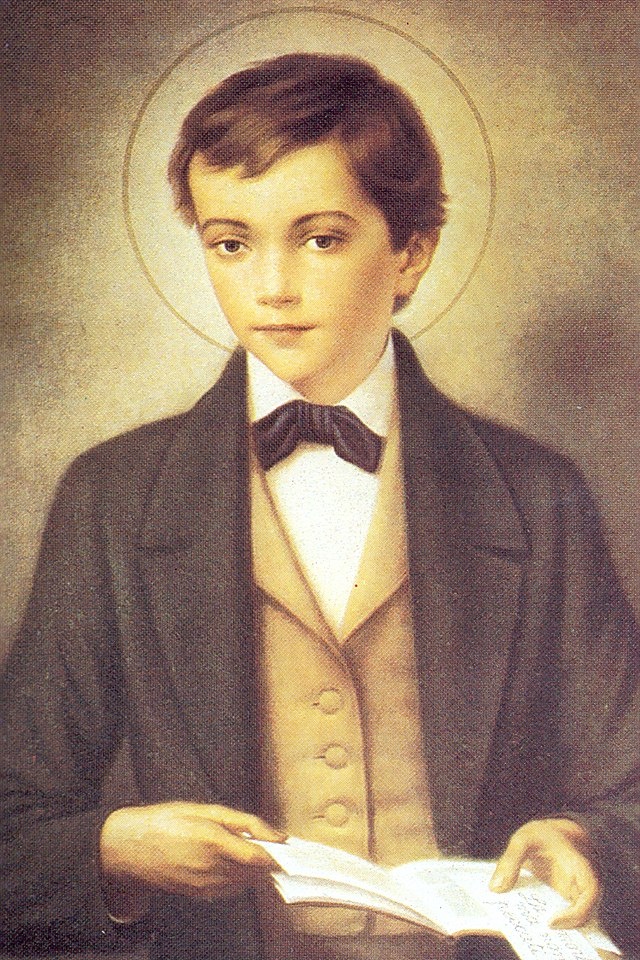
St Dominic Savio, 2 April 1842 - 9 March 1857, a student of St John Bosco

I have always laboured out of love

First of all, if we wish to appear concerned about the true happiness of our foster children and if we would move them to fulfil their duties, you must never forget that you are taking the place of the parents of these beloved young people. I have always laboured lovingly for them, and carried out my priestly duties with zeal. And the whole Salesian society has done this with me.

My sons, in my long experience very often I had to be convinced of this great truth. It is easier to become angry than to restrain oneself, and to threaten a boy than to persuade him. Yes, indeed, it is more fitting to be persistent in punishing our own impatience and pride than to correct the boys. We must be firm but kind, and be patient with them. [So often I've seen young persons respond positively and with gratitude to kind firmness, what may be called at times 'tough love'.]

I give you as a model the charity of Paul which he showed to his new converts. They often reduced him to tears and entreaties when he found them lacking docility and even opposing his loving efforts. [No young person has ever reduced me to tears by his or her behaviour but I have been close to tears on occasion when a young person has thanked me for being firm and showing care.]

See that no one finds you motivated by impetuosity or wilfulness. It is difficult to keep calm when administering punishment, but this must be done if we are to keep ourselves from showing off our authority or spilling out our anger. [This echoes last Sunday's gospel, Mark 1:21-28, where the people recognised the inner authority of Jesus.]

Let us regard those boys over whom we have some authority as our own sons. Let us place ourselves in their service. Let us be ashamed to assume an attitude of superiority. [The Handbook of the Legion of Mary, written by its founder, the Venerable Frank Duff, urges a similar approach to persons.] Let us not rule over them except for the purpose of serving them better. [Elected officials and anyone in a position of authority might take this to heart.]

This was the method that Jesus used with the apostles. He put up with their ignorance and roughness and even their infidelity. He treated sinners with a kindness and affection that caused some to be shocked, others to be scandalised, and still others to hope for God’s mercy. [Read an extraordinary instance of this in yesterday's post in Remembering Fr William Doyle SJ.] And so he bade us to be gentle and humble of heart.

They are our sons, and so in correcting their mistakes we must lay aside all anger and restrain it so firmly that it is extinguished entirely.

There must be no hostility in our minds, no contempt in our eyes, no insult on our lips. We must use mercy for the present and have hope for the future, as is fitting for true fathers who are eager for real correction and improvement.

In serious matters it is better to beg God humbly than to send forth a flood of words that will only offend the listeners and have no effect on those who are guilty.

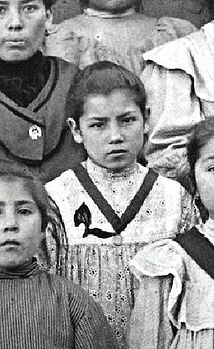
Blessed Laura Vicuña (5 April 1891, Chile – 22 January 1904, Argentina, educated by the Salesian Sisters, Patron of victims of abuse


29 January 2012

Pleasing your wife, pleasing your husband

Officiating at a wedding in the Philippines


I want you to be free from anxieties. The unmarried man is anxious about the affairs of the Lord, how to please the Lord; but the married man is anxious about worldly affairs, how to please his wife, and his interests are divided. And the unmarried woman or girl is anxious about the affairs of the Lord, how to be holy in body and spirit; but the married woman is anxious about worldly affairs, how to please her husband.

This is a sort of appendix to Sunday Reflections for today. The above verses, 1 Corinthians 7: 32-34, are from today's Second Reading. My friends in Worldwide Marriage Encounter are probably sick and tired of my emphasising that the basic vocation in marriage is to be a spouse, not a parent. The latter is a consequence of the former. In this brief passage St Paul doesn't mention parenthood at all but the priority of pleasing one's spouse. I truly believe that  a spouse who gives first priority to that will be a good parent.

I was invited to a wedding recently and the officiating priest asked me to preach. I told the couple that their wedding day didn't mean the end of dating but rather the beginning. I went on to speak of the spousal relationship as being the fundamental one.

The wedding was at 4pm. Before 9pm, the last item during the reception was a short video of the ceremony. I was delightedly surprised when it opened with my words about dating and made the spousal relationship the basic theme, rather than only showing various shots of the wedding.

I have seen marriages break up where both spouses were doing everything they could 'for the sake of the kids'. I think that break-ups are much less likely when a husband's priority is, in St Paul's words, how to please his wife, and a wife's priority how to please her husband.

I have seen in so many families how children truly feel loved when their parents' priorities are such. One adult daughter told me how her father, when he was dying, said goodbye to all his children and then asked them to leave so that he could spent his last moments with his wife.

27 January 2012

'He taught them with authority.' Sunday Reflections, 4th Sunday in Ordinary Time Year B

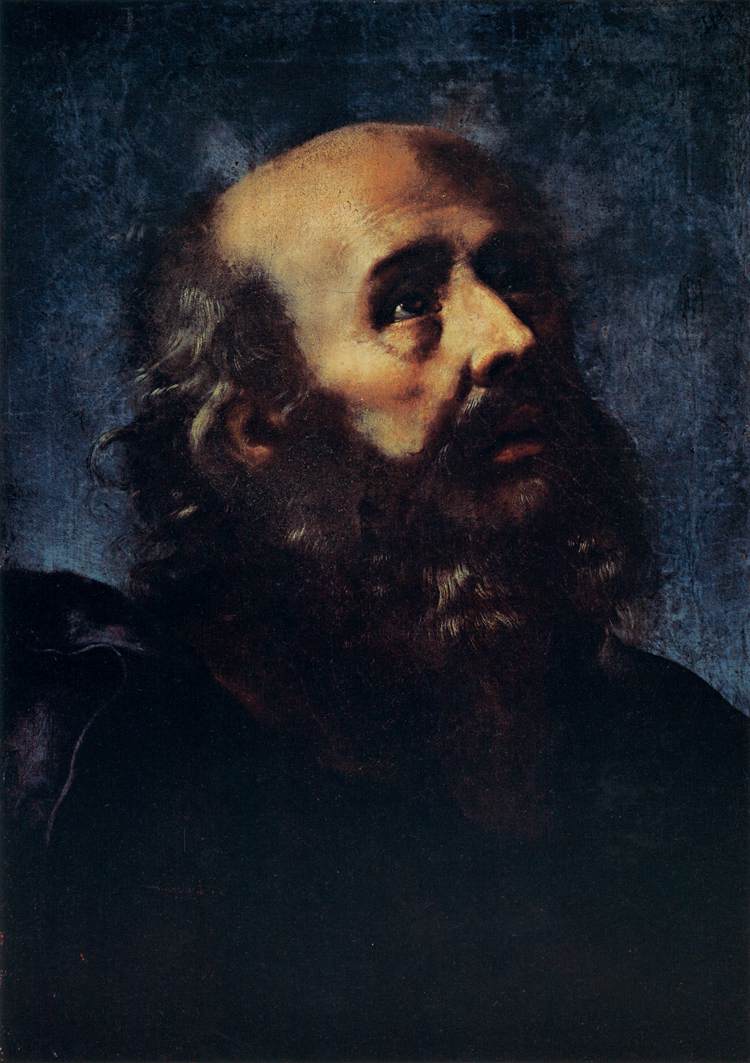
Moses, Carlo Dolci, painted 1640-45

Readings (New American Bible: Philippines, USA)


Gospel Mark 1:21-28 (Jerusalem Bible: Australia, England & Wales, India [optional], Ireland, New Zealand, Pakistan, Scotland, South Africa)

Jesus and his followers went as far as Capernaum, and as soon as the sabbath came Jesus went to the synagogue and began to teach. And his teaching made a deep impression on them because, unlike the scribes, he taught them with authority.

In their synagogue just then there was a man possessed by an unclean spirit, and it shouted, ‘What do you want with us, Jesus of Nazareth? Have you come to destroy us? I know who you are: the Holy One of God.’ But Jesus said sharply, ‘Be quiet! Come out of him!’ And the unclean spirit threw the man into convulsions and with a loud cry went out of him. The people were so astonished that they started asking each other what it all meant. ‘Here is a teaching that is new’ they said ‘and with authority behind it: he gives orders even to unclean spirits and they obey him.’ And his reputation rapidly spread everywhere, through all the surrounding Galilean countryside.

An Soiscéal Marcas 1:21-28 (Gaeilge, Irish)

When I was 16 I joined Fórsa Cosanta Áitiúil (Local Defence Force), part of the Irish Army Reserve (cap badge above). Membership was voluntary. We trained on Sundays and there was a two-week summer camp. However, I didn’t stay in it long enough to experience that.

I remember two individuals very clearly, not by name but by rank. One was a corporal and the other a sergeant. The corporal took delight in shouting and swearing at everyone. He was in his early 20s and we mostly between 16 and 18. We did what he told us to do. But none of us had any respect for him. 

The sergeant, also in his early 20s, while strict, never shouted at us and the strongest word he ever used was ‘damn’. While in its fullest meaning this really is a curse, usage over the centuries has made it a very mild expression, with hardly any connection to its dictionary definition. We did what the sergeant told us to do, and with genuine respect for him. He respected us and because of that his authority came primarily from his person, not from his rank.

I am always struck by the way St Mark highlights the authority Jesus had. It wasn’t from any position he held but from the Truth that he is. He tells us in St John’s Gospel that he is ‘the way, the truth and the life’. The people recognised this: his teaching made a deep impression on them because, unlike the scribes, he taught them with authority; ‘Here is a teaching that is new’ they said ‘and with authority behind it: he gives orders even to unclean spirits and they obey him.’

I remember our rector in the seminary, Fr Joseph Flynn, once saying to us, ‘Let us at least be hypocrites’. What he meant was that if we fall short of what we believe and profess, and know that we are falling short and ask God’s forgiveness, we will still have something of the authority of Jesus himself. The tax collector who prayed in the Temple, ‘Lord, have mercy on me a sinner’, still carries authority whereas the hypocritical Pharisee doesn’t.

Yesterday I had an email from a recovering alcoholic who told me he ‘went into a blank space’ when he learned of the death of a priest who had also been a recovering alcoholic. This priest had been very close to him during the first years of his recovery. I know that the priest had occasional lapses but sought the help of others in AA when he did. That’s what gave him the authority he had with fellow 'strugglers'. 


Some saints, such as St Thérèse of Lisieux (above, aged 15), carry the authority of the purity of their lives. Some, like St Augustine of Hippo, carry the authority of a person who has, with God’s grace, overcome a life of sin. Moses, who speaks to us in the first reading today, carries the authority of a great leader who acknowledged his own impatience and who accepted the consequence of this, that he would lead his people to the Promised Land, see it, but never enter it himself.

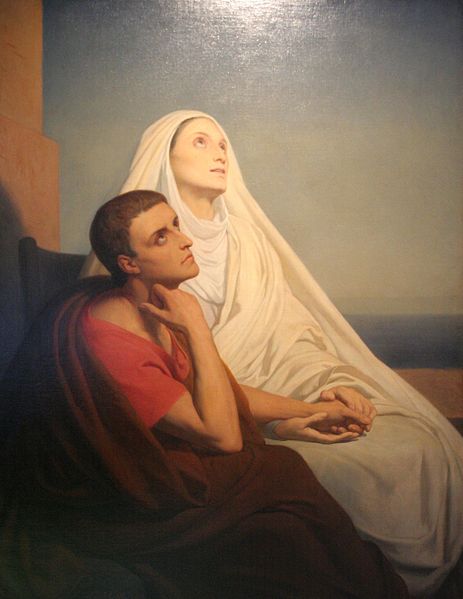
  St Augustine and St Monica, by Ary Scheffer (painted 1846)


San am sin chuaigh Íosa isteach i gCafarnáum. Agus lá na sabóide féin, ar dhul isteach satsionagóg dó, thosaigh sé ag teagasc.Agus bhí ionadh orthu faoina theagasc; á dteagasc a bhí sé mar dhuine a mbeadh údarás aige, níorbh ionann agus na scríobhaithe.

Bhí, san am sin, duine sa tsionagóg a raibh smacht ag spiorad míghlan air, agus scread sé amach: “Há, cad ab áil leat dínn, a Íosa Nazairéanaigh? Chun ár millte a tháinig tú. Is eol dom cé hé thú: Naomh Dé.” Labhair Íosa leis go bagrach: “Bí i do thost, agus gabh amach as.” Bhain an spiorad míghlan rachtaí as an duine, ghlaoigh amach go hard agus d’imigh as. Agus bhí alltacht chomh mór sin ar chách go raibh siad ag fiafraí dá chéile: “Cad é an rud é seo?” deiridís: “teagasc nua á dhéanamh le húdarás; na spioraid mhíghlana féin, fógraíonn sé orthu agus déanann siad rud air.” Agus níorbh fhada gur leath a chlú go fada gearr ar fud cheantar uile na Gailíle.

+++

26 January 2012

A 'spirited' young Massgoer!


I came across this on Facebook. We'll have to wait in the Philippines, in Hong Kong and, I think, New Zealand, until next Advent for this.

24 January 2012

Please pray for Julie

Mrs Julie Lamb with grandchildren Erin and Patrick O'Brien

Yesterday I received an email from a good friend in London, Ontario, Laura O'Brien. Laura asked me to pray for her mother, Mrs Julie Lamb. Julie has lung cancer and has been 'given weeks to a couple months to live'.

I've known Laura since 1981 when I was studying in Toronto. She and her husband Danny - Laura had the good sense to marry an Irishman! - were members of a prayer group that used to meet in St Basil's in the heart of  this remarkably cosmopolitan city. (The 1980 census showed that 44 per cent of the population of Metro Toronto had been born outside of Canada).

I met Julie for the first time in 2010 during a visit to Canada. She is a delightfully alive person.

Laura wrote, 'She is getting great care, and all the family have pulled together to ensure she has all her needs met'.

Please remember Julie and her family in your prayers