Since we are travellers and pilgrims in the world, let us ever ponder on the end of the road, that is of our life, for the end of our roadway is our home (St Columban, 8th sermon).
My ordination day, 20 December 1967, with Dad, Mam and my brother Paddy.
My late Dad, John Coyle, was born 99 years ago today - or possibly yesterday. He was never quite sure whether his birthday was the 26th or 27th but finally opted for the latter.
He is still the biggest influence in my life because of the quiet way he lived his deep faith as a husband, father, neighbour, carpenter and general foreman for many years on building sites. One of his strongest characteristics was his respect for others. He went to Mass every day, including the day he died suddenly, 11 August 1987.
Dad also influenced my taste in popular music. He loved a good tune. Sometimes he would 'doodle' on the piano but couldn't play it. One of his great favourites was Charlie Kunz, in the video above, an American-born bandleader and pianist who settled in England. He would sometimes tell me about the time he saw Charlie perform in the old Theatre Royal in Dublin before World War II.
He and my mother, Mary, were very good ballroom dancers. That is one of the reasons I'm able to write this blog. They had been going together for a while but split up amicably. Some time later my mother was given two tickets for a dress dance (a formal ball). She asked her mother what she should do with the tickets. She said, 'Invite Joe'. 'Joe' was the name my mother and her family used for Dad. To others he was 'John'. But Joseph was his second Christian name.
One of the photos on display in our house was of my parents at a dress dance my father looking elegant in his white bow-tie. It might well have been the occasion when they resumed their relationship. I'm almost certain it was taken before they were married in 1942.
He loved the music of Victor Silvester, featured in the video below. When he visited the Philippines in 1981, eleven years after my mother's death, the people in Tangub City, Misamis Occidental, Mindanao, put on a welcome party. He hadn't lost his ability to 'trip the light fantastic' and enjoyed himself immensely.
My mother used to say if we found ourselves in a crowded space such as a bus or a lift (elevator), 'If we've as much room in heaven we'll be all right'. May the light of heaven shine on my parents and on my grandmother Annie Dowd Collins for suggesting to her daughter Mary that she invite her former boyfriend Joe to that dress dance!
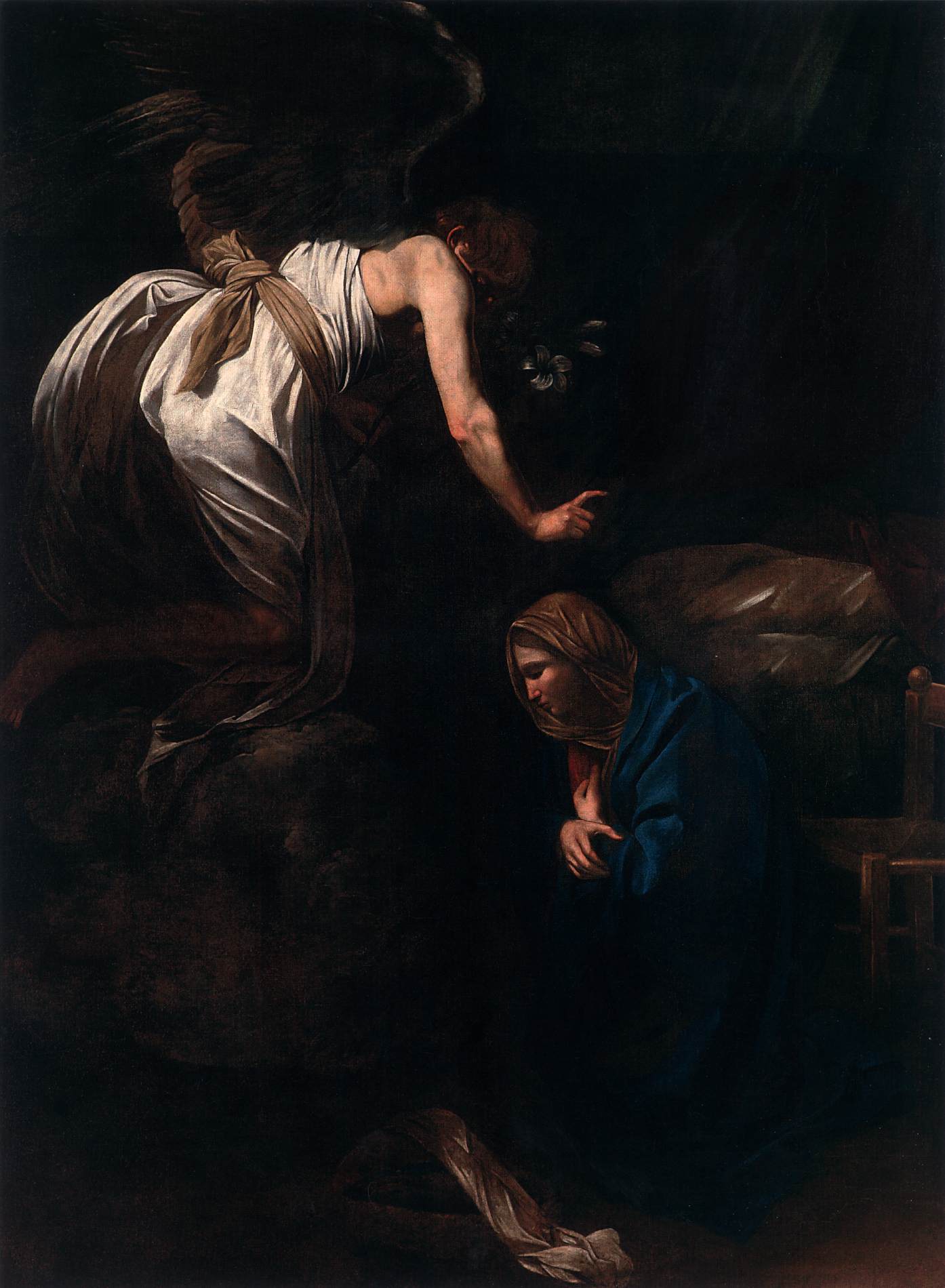
Luke 1:26-38(Revised Standard Version - Catholic Edition)
In the sixth month the angel Gabriel was sent from God to a city of Galilee named Nazareth, to a virgin betrothed to a man whose name was Joseph, of the house of David; and the virgin's name was Mary. And he came to her and said, "Hail, full of grace, the Lord is with you!" But she was greatly troubled at the saying, and considered in her mind what sort of greeting this might be. And the angel said to her, "Do not be afraid, Mary, for you have found favor with God. And behold, you will conceive in your womb and bear a son, and you shall call his name Jesus. He will be great, and will be called the Son of the Most High; and the Lord God will give to him the throne of his father David, and he will reign over the house of Jacob for ever; and of his kingdom there will be no end." And Mary said to the angel, "How shall this be, since I have no husband?" And the angel said to her, "The Holy Spirit will come upon you, and the power of the Most High will overshadow you; therefore the child to be born will be called holy, the Son of God. And behold, your kinswoman Elizabeth in her old age has also conceived a son; and this is the sixth month with her who was called barren. For with God nothing will be impossible." And Mary said, "Behold, I am the handmaid of the Lord; let it be to me according to your word." And the angel departed from her.
O God,
who willed that your Word
should take on the reality of human flesh
in the womb of the Virgin Mary,
grant, we pray,
that we, who confess our Redeemer to be God and man,
may merit to become partakers even in his divine nature.
Who lives and reigns with you in the unity of the Holy Spirit,
FromThe Gospel of John(2003) Jesus Predicts His Death (12:20-36) Directed by Philip Saville. Jesus played by Henry Ian Cusick; narrator, Christopher Plummer.
Gospel John 12:20-33 (Jerusalem Bible: Australia, England & Wales, India [optional], Ireland, New Zealand, Pakistan, Scotland, South Africa)
Among those who went up to worship at the festival were some Greeks. These approached Philip, who came from Bethsaida in Galilee, and put this request to him, 'Sir, we should like to see Jesus.' Philip went to tell Andrew, and Andrew and Philip together went to tell Jesus. Jesus replied to them:
'Now the hour has come for the Son of Man to be glorified. I tell you, most solemnly, unless a wheat grain falls on the ground and dies, it remains only a single grain; but if it dies, it yields a rich harvest. Anyone who loves his life loses it; anyone who hates his life in this world will keep it for the eternal life. If a man serves me, he must follow me, wherever I am, my servant will be there too. If anyone serves me, my Father will honour him. Now my soul is troubled. What shall I say: Father, save me from this hour? But it was for this very reason that! have come to this hour. Father, glorify your name!'
A voice came from heaven, 'I have glorified it, and I will glorify it again. People standing by, who heard this, said it was a clap of thunder; others said, 'It was an angel speaking to him.'
Jesus answered, 'It was not for my sake that this voice came, but for yours.
'Now sentence is being passed on this world; now the prince of this world is to be overthrown. And when I am lifted up from the earth, I shall draw all men to myself.' By these words he indicated the kind of death he would die.
An Soiscéal Eoin 12:20-33 (Gaeilge, Irish)
San am sin bhí Gréagaigh áirithe ar na daoine a chuaigh suas go Iarúsailéim chun adhradh a dhéanamh lá na féile. Tháinig siadsan mar sin go dtí Pilib, an fear ó Bhéatsáide na Gailíle, agus d’iarr siad achainí air: “A thiarna, ba mhaith linn Íosa a fheiceáil,” ar siad. Tháinig Pilib agus d’inis sé d’Aindrias é, agus ansin tháinig Aindrias agus Pilib agus d’inis siad d’Íosa é. D’fhreagair Íosa iad agus dúirt:
“Tá an uair tagtha chun go ndéanfaí Mac an Duine a ghlóiriú. Amen, Amen, a deirim libh, an gráinne arbhair a thit sa talamh, mura bhfaigheann sé bás, fanann sé leis féin amháin. Ach má fhaigheann sé bás, tugann sé toradh mór uaidh. An té a thugann grá dá anam féin, caillfidh sé é, agus an té a thugann fuath dá anam féin ar an saol seo, déanfaidh sé é a choimeád chun na beatha síoraí. Má dhéanann aon duine friothálamh ormsa, leanadh sé mé, agus an áit ina mbímse, is ann a bheidh mo fhriothálaí chomh maith. Má dhéanann aon duine friothálamh ormsa, tabharfaidh m’Athair onóir dó. Tá buaireamh ar m’anam anois. Cad déarfaidh mé? ‘ A Athair, saor mé ón uair seo’? Ach is chuige sin a tháinig mé chun na huaire seo. Athair, tabhair glóir do d’ainm!”
Ansin tháinig guth ó neamh: “Thug mé glóir dó, agus tabharfaidh mé glóir dó arís.”Arna chloisteáil don slua a bhí ina seasamh timpeall, dúirt siad gur toirneach a rinneadh; dúirt cuid acu: “Aingeal a labhair leis.” D’fhreagair Íosa:
“Ní ar mo shonsa,” ar sé, “a tharla an guth, ach ar bhur sonsa. Anois atá breith á tabhairt ar an saol seo. Anois atá prionsa an tsaoil seo le teilgean amach. Má ardaítear mise ón talamh tarraingeoidh mé gach duine chugam féin.”
Dúirt sé an méid sin á chur in iúl cén sórt báis a bhí i ndán dó a fháil.
The Venerable Matt Talbot (2 May 1856 - 7 June 1925)
When Fr Patrick Sheehy died suddenly at the age of 80 in the Columban retirement home in Ireland eight days before Christmas 1999 people began to notice that certain things weren’t being done anymore, simple things such as newspapers and letters being brought to men who weren’t very mobile.
Father Pat, from Union Hall, in west Cork, one of the most beautiful parts of Ireland, if not the world, was ordained in 1944 and went to China in 1946. He was expelled from there in 1951 and moved to Japan, where he was to spend the next 38 years, apart from a two-year break for health reasons. When he retired to Ireland ‘he quietly kept busy at many corporal works of mercy until his sudden death, as Those Who Journeyed With Us, the Columban book of brief obituaries, puts it.
When I read in today’s Gospel, when I am lifted up from the earth, I shall draw all men to myself, I thought of Father Pat. He didn’t do anything to draw attention to himself. But in his death he drew the attention of those around him to the simple ways in which the Lord had been present through him in his thoughtful acts.
I thought of the Venerable Matt Talbot, - ‘The Workers’ Saint’ - whose sudden death in Granby Lane, behind the Dominican church in Dublin, where he was on his way to Mass on Trinity Sunday, 7 June 1925, led to the discovery of the extraordinarily ascetical life he had led for 41 years after giving up the alcohol to which he had been addicted. A penitential chain was found on his body. All the evidence later discovered pointed to the fact that this was something he wore only occasionally and with the permission of his spiritual director. But without that chain nobody would have known anything about this extraordinary man, with little formal education, living a profound life of penance and prayer while working as a labourer on the docks of Dublin and sharing the little money he had with those poorer than himself.
When I am lifted up from the earth, I shall draw all men to myself. Again, Matt Talbot never sought any attention for himself. As a poor, working man, he would have got little attention anyway. But in his death he brought many closer to the Jesus he loved, especially alcoholics like himself. He had to decide each day to live soberly. He had to decide each day to pray, to attend Mass, to fast, to give himself to his work, to give away what he earned.
Father Pat Sheehy had to give up his dream of spending all his life in China when, with so many others, he was expelled. He had to let go of Japan for two years in the mid-1950s because of poor health, though the Lord brought him back there. When retired he had to decide each day to do each act of kindness that he did quietly, many of which weren’t clearly seen until he died.
Each decision we make to die to self in some way is a living out of the words of Jesus today: unless a wheat grain falls on the ground and dies, it remains only a single grain; but if it dies, it yields a rich harvest. Very often it is others who reap this rich harvest.
We don't talk about it much if for no reason other than, it hurts.
He is still Dad. He will always be Dad; but the shell of him is being slowly stripped away. Word loss creep first led to fewer letters. I've saved them all. When he visits, we get to eat together, to share the chaos that is my life and laugh a bit, sometimes it overwhelms him --which is reasonable; they overwhelm me sometimes too.
Alzheimer's is brutal and it's ongoing and it makes my heart howl sometimes when I know he's fishing for the next word, the next thought and they all get away. When my grandmother had it, I remember I did what I could to joke it away whenever possible, and I could usually make her laugh. "You always get to go new places. You always meet new people. You can claim you met anyone you want to and impress because we'll never be certain and neither will you." We had a good laugh about that as I helped her get her "doll face" on, she loved for me to draw her eyebrows.
Even late into the disease, Coco and I could still laugh a bit at this hard thing; one time she came into the dining room saying "This cereal tastes terrible." I looked at the silver tray she'd filled with granola and salsa. "Yes, I bet it did." I deadpanned. She smiled at me, she knew it was a bit of a rub. The ability to joke at it took some of the razor edge off, but this time, I can't laugh.
It's too close, too near, too sharp and too soon. Even though it's been ongoing, it still feels like a hard slap whenever we get to a new barrier of "we can't." and that's made harder by being only able to walk in spirit with my folks on this road to the cross because we live so far away.
Dad's still here and sometimes, he's really still here. He can sing with his son if his son coaxes him along and he loves his grandchildren fiercely. He knows the mass and he tries to read things. Sometimes he can.
He still laughs at movies and enjoys company and wants to participate and Mom fiercely takes every opportunity to bring him to those places and people he loves as often as possible.
So today, I am grateful my brothers and sister and I wrote stories about our dad back in 2007, capturing his habits, loves, and our favorite memories. Now a days, I can read it and have a mental snapshot of some of the wonderful things my Dad is and always was; because Alzheimer's can make everyone else forget what was wonderful and magnificent and beautiful about a person over time, as they are less able to be present and witness to others. It is then that those that love the person who has Alzheimer's must do the remembering.
Christ understood how we remember, by analogy, by familiarity, by meals, by ritual, by words. I at the very least, am not a linear thinker and as such, can tell you the lyrics of a song but not which year the song came out. It gives the impression of someone who jumps from thought to thought, because in reality, that is how my brain operates, in lots of jumps and arcs, very little of my thought process is a grid.
I miss the hooks to old jokes and puns and memories that Dad by citing six thousand books (all of which he had read and I should read by the way) in a single conversation would prompt. I have to prompt them myself to recall his teaching me how to tie knots for a boat, to play poker and make a pina colada. He also cultivated in me a love of Catholic writers that continues to deepen to this day but that seed took a long time to germinate. When we drove across country in a car where only one side door opened when I finished graduate school, he had me read City of God aloud to keep us from growing bored on the road. I told him that sometimes the tone felt like Saint Augustine would walk through town, see something that ticked him off and go back to his room to write it up as an op-ed. He laughed. He'd send me books and articles hoping one day I'd be caught on fire by the stuff. It took, but it took the better part of the past 20 years and now, it is my bed time reading and I wish I wish I wish I could really share it with him.
I can remember him chopping ingredients for gumbo and thus the gumbo recipe. I can remember him strumming the guitar and singing, I've taught some of those songs to my children. They don't always get why I love the song "My old man's a sailor..." but that's okay, hearing their voices evokes his voice; and I get a lump in my throat at church when I hear him sing; it would make me stop singing to listen, but then he'd give me a glare as if to say, "Why aren't You singing?" because that's what we're supposed to be doing at that point.
When a person has Alzheimer's, the first thing to go, are words. They can't remember the word they wanted, the memory evoked won't come into focus, the present goes out of focus and everything is as it isn't. The world becomes a confusing tide of memory, present and unexplained gaps and holes where people and books and ideas and jokes and dreams and pains and loves should be. I don't pretend to be an expert on treatment or care or the long term process or an authority on this of any kind. I'm just his daughter, and I miss his words, his new thoughts, his old puns, all of it.
Part of my present and my past is missing with his memory, like a story he wrote for me in 8th grade. Dad wrote about my very awkward adolescence on an old computer. It was in a word program that no longer exist. So when my modern machine translates it, it becomes gibberish. The story is there, the information is there, it just can't be accessed. I love that story and will have to share it in my own words with my children; but I'd rather have them hold the pages with his words.
Alzheimer's is exactly like that.
I still can't quite laugh, my brain starts to tease about it and I wince. But I know, it is only his brain that is decaying, not his soul and recalling that, fixing on that, it does not ache as much.
Pastoral Care Project, located in the Archdiocese of Birmingham, England, whose mission is To raise awareness to the spiritual needs of the frail elderly - enabling carers to support them in their journey to the fullness of life has once again organised aDay of Prayer for Dementia.
Indeed, somewhat like World Youth Day, it was much more than a day of prayer but more than a week of prayer with special Masses and Prayer Events/Services being held in a number of English dioceses starting on 11 March and ending yesterday, the Solemnity of St Joseph.
Frances Molloy, the Project Manager and founder, originally from Rathlin Island, County Antrim, Northern Ireland, describes how Pastoral Care Promect came about:
In 1989, I was leading a Spiritual Development programme (Light Out of Darkness written by Sr Kathleen O’Sullivan SSL) and the theme of that particular week was ‘finding God in my weakness’, Romans 8.26-27. I met a lady with dementia in an EMI (Elderly and Mentally Infirm) Ward at the George Eliot Hospital in Nuneaton, while visiting as a church volunteer. She was also blind and yet seemed to have an awareness which captured my attention.
She couldn't remember her name – and yet she had this great awareness of God and others. Reflecting on the scripture and the visit, I became aware of how special and unique each person is. The visit highlighted that God still communicates his love through people with dementia and that listening was the way of understanding and meeting their spiritual needs. This was an inspirational visit, which led to the Project taking off in 1994, after many years of prayer and research.
I became involved with the Project when I was based at the Columban house in Solihull, south of Birmingham, from 2000 until 2002. It has become very clear to me over the years that God speaks to all of us very powerfully through those who are weakest and on the margins. The prayer in the video asks God 'that we may see your beauty in them'. For some this may be especially in those with dementia, for some in those with learning disabilities, for others in those who have been abused. Each of us finds ourself on the margins at one time or another.
My apologies to Frances for not posting this much sooner but those with dementia need our prayers and our care each day, not only on a designated day of prayer. And God reveals his beauty to us through them each day.
Gospel John 3:14-21 (Jerusalem Bible: Australia, England & Wales, India [optional], Ireland, New Zealand, Pakistan, Scotland, South Africa)
Jesus said to Nicodemus:
'The Son of Man must be lifted up
as Moses lifted up the serpent in the desert,
so that everyone who believes may have eternal life in him.
Yes, God loved the world so much
that he gave his only Son,
so that everyone who believes in him may not be lost
but may have eternal life.
For God sent his Son into the world
not to condemn the world,
but so that through him the world might be saved.
No one who believes in him will be condemned;
but whoever refuses to believe is condemned already,
because he has refused to believe
in the name of God's only Son.
On these grounds is sentence pronounced:
that though the light has come into the world
men have shown they prefer
darkness to the light
because their deeds were evil.
And indeed, everybody who does wrong
hates the light and avoids it,
for fear his actions should be exposed;
but the man who lives by the truth
comes out into the light, .
so that it may be plainly seen that what he does is done in God.
An Soiscéal Eoin 3:14-21 (Gaeilge, Irish)
Seo mar a dúirt Íosa le Nícodémas :
Faoi mar a d’ardaigh Maois an nathair nimhe san fhásach,
sin mar a chaithfear Mac an Duine a ardú,
i dtreo, gach duine a chreideann ann,
go mbeidh an bheatha shíoraí aige.
Óir ghráigh Dia an domhan chomh mór sin
gur thug sé a Aonghin Mic uaidh
i dtreo, gach duine a chreideann ann,
nach gcaillfí é ach go mbeadh an bheatha shioraí aige.
Óir ní chun daorbhreith a thabhairt ar an saol
a chuir Dia a Mhac uaidh ar an saol
ach chun go slánófaí an saol tríd.
An té a chreideann ann ní thabharfar daorbhreith air,
ach an té nach gcreideann ann,
tá daorbhreith tugtha air cheana féin,
mar nár chreid sé in ainm Mhac Dé, a Aonghin.
Agus an daorbhreith, is mar seo í:
mar gur tháinig an solas isteach sa saol,
de bhrí gurbh olc iad a ngníomhartha.
Óir gach duine a bhíonn ag déanamh an oilc,
bíonn fuath aige don solas agus seachnaíonn sé an solas,
le heagla go gcáinfí a ghníomhartha.
Ach an té a dhéanann an fhírinne,
tagann sé chun an tsolais,
chun go dtaispeáinfí gur i nDia
a rinneadh a ghníomhartha.”
There was a Filipino Jesuit priest whom I knew in the 1970s, Fr Vincent San Juan. He spent most of his life as a priest in the family life apostolate. During the Martial Law years in the Philippines - they began on 21 September 1972 and officially ended in 1981 before Blessed John Paul II visited the country. In reality it didn't end until Dictator Ferdinand Marcos was overthrown in February 1986.
One of the policies vigorously pursued by the Marcos regime was the reduction of the birth-rate, but not by morally sound means. We heard many stories of tubal ligation being done on women in government hospitals after they had given birth, often without any consultation with their husbands. Only poor women would have their babies in government hospitals.All of this was being promoted by the Population Commission, popularly known as 'PopCom'.
Father San Juan gave seminars to many groups of people around the country, probably the majority professional people. They included people working for the government, few of whom would have anything to do with setting policies.He always promoted very clearly the teaching of the Church on marriage, on family life, on the spacing of children.Much of this was contrary to what the Marcos regime was promoting. But he told me that individuals often thanked him for teaching the truth, even if they couldn't speak as openly as he did.
His life reflected what another Jesuit once wrote and that reflect today's gospel: If there was a little more light and truth in the world through one human being, his life has had meaning. That was Fr Alfred Delp SJ, executed by the Nazis on 2 February 1945 at the age of 37.He wrote in his prison cell before his last Christmas:Our hearts must be keenly alert for opportunities in our own little corners of daily life. May we stand in this world, not as people in hiding but as those who help prepare the way for the Son of God.
Nicodemus came to Jesus quietly at night and Jesus warmly welcomed and respected him. Fr San Juan worked quietly teaching the truth when the regime in power was teaching otherwise. Fr Delp did likewise under a regime that was far more oppressive than that of Marcos, oppressive though that was, and paid for it with his life.
There are countless individuals who, without even being aware of it, live the light and truth of the gospel and have no idea of the influence they have on others, of the hope that they bring to others. Each of us is called by Jesus to live a life that has meaning.
West German stamp in honour of Fr Alfred Delp SJ, 1964
Saturday, 17 March, is St Patrick's Day and Ireland's National Day.
One of Miss Cunningham's pupils in Rutland St School in the heart of Dublin half a century ago tells how St Patrick came to Ireland twice, the second time to stay there. You will notice that in this Brown Bag Production, done a few years ago, the pope who gave St Patrick permission to go to Ireland as a bishop bears a remarkable resemblance to a much more recent pope!
Mary, the young girl telling the story, has Patrick being kidnapped in France. I'm more inclined to think he was from Wales, much nearer to Ireland. But we don't know. Scholars can't identify 'Bannavem Taburniae', Patrick's native place as mentioned in the opening paragraph of his Confession. Young Mary sees Patrick's reluctant willingness to return to Ireland as a missionary. There is no doubt about the truth of this because the saint writes about his struggle in his Confession, the authenticity of which no scholar doubts. It and the Letter to Coroticus are the only writings of the saint that we have.
Slemish, County Antrim in the north-east of Ireland where St Patrick is said to have worked as a shepherd while a slave. It is generally believed that St Patrick came to Ireland as a bishop in 432 and that he died on 17 March 461.
Each time I read his Confession I'm struck by the saint's knowledge of Scripture. Texts from the Bible are interwoven with his own words. He had a strong sense of the faith being a gift from God as this extract shows. Words from Scripture are in italics. The English translation is by Bishop Joseph Duffy, the Latin is Patrick's own and the Irish version is by Bishop Liam Mac Philibín (William Philbin).
My decision to write must be made, then, in the light of our faith in the Trinity. The gift of God and his eternal consolation must be made known regardless of danger, I must fearlessly and frankly spread the name of God everywhere in order to leave a legacy after my death to my brothers, and children, the many thousands of them, whom I have baptized in the Lord. And at the very end of the Confession: Do not attribute to me in my ignorance the little I achieved or pointed out which pleased God. Let your concusion and the general opinion rather be the real truth, that my success was the gift of God. This is my confession before I die.
In mensura itaque fidei Trinitatis oportet distinguere, sine reprehensione periculi, notum facere donum Dei, et consulationem aeternam, sine timore fiducialiter Dei nomen ubique expandere, ut etiam post obitum meum exagallias relinquere fratribus et filiis meis, quos in Domino ego babtizaui, tot milia homnium. And at the very end of the Confessio: ut nemo umquam dicat, quod mea ignorantia si aliquid pusillum egi uel demonstrauerim secundum Dei placitum; sed arbitramini et uerissime credatur quod donum Dei fuisset. Et haec est Confessio mea antequam morior.
Mar sin, de réir creidimh sa Tríonóid is ceart dom comhairle a dhéanamh, bronntanas Dé agus an sólás síoraí a chur in iúl gan aird ar chontúirt, ainm Dé a leathadh i ngach áit gan fuacht gan faitíos ionas go bhfágainn tar éis mo bháis oidhreacht ag my bhráithre agus ag mo chlann, a liachtaí sin mile duine a bhaist mé sa tiarna. Agus ag deireadh na Faoistine: . . . nach ndéarfaidh aon duine choíche go mba é m’aineolas ab údar le cibé beagán a rinne mé nó a léirigh mé de réir thoil Dé. Ach ceapaigí agus creidtear – is é lomchlár na fírinne é - go mba é tabhartas Dé é. Agus siúd í m’Fhaoistin roimh bhás dom.
Please pray that the present generation of Irish people, many of whom, perhaps even a majority, have rejected the gift of God, our Christian Catholic faith that St Patrick cherished so deeply, may, with God's grace, re-discover it.
Lord, through the work of Saint Patrick in Ireland we have come to acknowledge the mystery of the one true God and give thanks for our salvation in Christ; grant by his prayers that we who celebrate this festival may keep alive the fire of faith he kindled. Through our Lord Jesus Christ, your Son, who lives and reigns with you in the unity of the Holy Spirit, one God, for ever and ever.
I
Dóchas linn Naomh Pádraig, Aspal mór na hÉireann,
Bring hope to us, St Patrick, great Apostle of Ireland,
Ainm oirearc gléigeal, solas mór an tsaoil é.
Illustrious, glorious name, he is the great light of the world.
D'fhill le soiscéal grá dúinn d'ainneoin blianta i ngéibheann.
He came back to us with the gospel of love, despite years of captivity.
Grá mór Mhac na páirte, d'fhuascail cách ón daorbhruid.
Great love of the Son, freed all from oppression.
II Sléibhte, gleannta, máighe,'s bailte mór’ na hÉireann:
Hill, valleys, plains, large towns of Ireland
Ghlan sé iad go deo dúinn, míle glóir dár naomh dhil.
He cleaned them for ever, a thousand praises to our dear saint.
Iarr’maid ort, a Phádraig, guí orainn na Gaela,
We ask you, Patrick, pray for us Irish,
Dia linn lá 'gus oíche 's Pádraig AspalÉireann.
God and St Patrick Apostle of Ireland be with us day and night.
First stanza repeated.
Lá Fhéile Pádraig faoi mhaise daoibh! A Happy St Patrick’s Day!