08 December 2011

'A witness to speak for the light'. Sunday Reflections, 3rd Sunday of Advent Year B

Preaching of St John the Baptist, Domenico Ghirlandaio, painted 1486-90

Readings (New American Bible: Philippines, USA)

Gospel John 1:6-8, 19-28 (Jerusalem Bible: Australia, England & Wales, India [optional], Ireland, New Zealand, Pakistan, Scotland, South Africa)

A man came, sent by God.
His name was John.
He came as a witness,
as a witness to speak for the light,
so that everyone might believe through him.
He was not the light,
only a witness to speak for the light.

This is how John appeared as a witness. When the Jews sent priests and Levites from Jerusalem to ask him, 'Who are you?' he not only declared, but he declared quite openly, 'I am not the Christ'. 'Well then,' they asked 'are you Elijah?' 'I am not' he said. 'Are you the Prophet?' He answered, 'No'. So they said to him, 'Who are you? We must take back an answer to those who sent us. What have you to say about yourself?' So John said, 'I am, as Isaiah prophesied:

a voice that cries in the wilderness:
Make a straight way for the Lord'.

Now these men had been sent by the Pharisees, and they put this further question to him, 'Why are you baptising if you are not the Christ, and not Elijah, and not the prophet?' John replied, 'I baptise with water; but there stands among you - unknown to you - the one who is coming after me; and I am not fit to undo his sandal-strap'. This happened at Bethany, on the far side of the Jordan, where John was baptising.

+++

An Soiscéal Eoin 1:6-8, 19-28 (Gaeilge, Irish)


Bhí fear a tháinig ina theachtaire ó Dhia,
agus Eoin a ba ainm dó.
Tháinig sé ag déanamh fianaise
chun fianaise a thabhairt i dtaobh an tsolais
chun go gcreidfeadh cách tríd.
Níorbh é féin an solas
ach tháinig ag tabhairt fianaise i dtaobh an tsolais.


Is í seo an fhianaise a thug Eoin nuair a chuir na Giúdaigh sagairt agus Léivítigh ó Iarúsailéim chuige á fhiafraí de: “Cé hé thusa?” D’admhaigh sé agus níor shéan agus d’admhaigh sé: “Ní hé an Críost mé.” D’fhiafraigh siad de: “Cad eile, más ea? An tú Éilias?” “Ní mé,” ar seisean. “An tú an fáidh?” Agus d’fhreagair: “Ní mé.” Dúirt siad leis mar sin: “Cé hé thú? – chun go mbeadh freagra againn dóibh seo a chuir chugat sinn. Cad tá le rá agat mar gheall ort féin?” Dúirt sé: “Is glór duine mé ag éamh san fhásach: ‘Déanaigí díreach bóthar an Tiarna,’ mar a dúirt Íseáia fáidh.” Ó na Fairisínigh a ba ea na teachtairí, agus chuir siad ceist air: “Cén fáth a mbíonn tú ag baisteadh más ea,” ar siad, “mura thú an Críost, nó Éilias, nó an fáidh?”


Thug Eoin freagra orthu: “Déanaim féin baisteadh le huisce,” ar seisean, “ach tá duine in bhur measc nach aithnid daoibh, an té atá ag teacht i mo dhiaidh, nach fiú mé iall a chuarán a scaoileadh.” I mBeatáine, taobh thall den Iordáin, a tharla an méid sin mar a raibh Eoin ag déanamh baiste.


+++
We were a group of nearly 70 boys in our last year of secondary school, 17 and 18 years of age. The A and B sections had the same set of teachers and Brother Mícheál S. Ó Flaitile, a member of the Irish Christian Brothers, now known as the Congregation of Christian Brothers, used to take the two sections together for religions class each day before lunch. At the time he was probably around 60 years of age. Our nickname for him was ‘Pancho’ because he bore a certain resemblance to a chubby cartoon character of that name. We all revered him, though that didn’t prevent us from playing the occasional trick on him.

 
One particular day is seared in my memory. ‘Pancho’ apologized to the two sections because the day before he had scolded a member of the B section in front of us all and later discovered that the student hadn’t done anything wrong. I hadn’t remembered the scolding from the day before nor the alleged misdemeanor, which was trivial anyway. I doubt if any of my classmates had remembered it either. But for ‘Pancho’ it was a matter of honour and justice to correct his mistake and to say to us, and especially to the student he had wrongly judged, that he was sorry.

Years later, when he was already in his 80s, I reminded Br Ó Flaitile of the incident. He said he didn’t remember it – but he smiled.

I have taught from time to time at various levels during my 44 years as a priest and the example of ‘Pancho’ that day has stayed with me and guided me on many an occasion.

Even as a student I saw ‘Pancho’ as a Christ-like person. He taught us about Jesus in our religions classes but I remember very little, if anything, of what he said. But I remember his example, not only on the occasion he apologized to us, but in everything I saw in him over the years. I first came to know him when I was still in elementary school and he was in charge of a student organization I joined. It was only in my last two years in secondary school that I had him as a teacher.

In Ghirlandaio’s painting above we see Jesus very clearly in the background. But the people are focused on St John the Baptist. Jesus is standing higher than his cousin. This is the painter’s way of illustrating the words of the Baptist in today’s gospel: but there stands among you - unknown to you - the one who is coming after me; and I am not fit to undo his sandal-strap.

None of us is fit to undo the sandal-strap of Jesus. But each of us is called to be, not the light, but a witness to speak for the light who is Jesus through the life we lead. ‘Pancho’ was such a witness to me.


Gisella is a young Indonesian singer (as far as I can make out from online research). In this recording of the old European Advent hymn, Veni, Veni, Emmanuel, or 'O Come, O Come, Emmanuel, she is accomapnied by a drummer from Senegal in west Africa. She sings the first verse and refrain in the original Latin and then the same verse and refrai, with another, in the 1851 English translation by John Mason Neale.
 
Veni, Veni, Emmanuel

Veni, veni Emmanuel;
Captivum solve Israel,
Qui gemit in exilio,
Privatus Dei Filio.

Refrain

Gaude! Gaude! Emmanuel,
Nascetur pro te, Israel!

O Come, O Come, Emmanuel

O come, O come, Emmanuel
And ransom captive Israel
That mourns in lonely exile here
Until the Son of God appear

Rejoice! Rejoice! Emmanuel
Shall come to thee, O Israel.

O come, Thou Day-Spring, come and cheer
Our spirits by Thine advent here
Disperse the gloomy clouds of night
And death's dark shadows put to flight.

Rejoice! Rejoice! Emmanuel
Shall come to thee, O Israel.

Request for prayers

I am posting this on the afternoon of 8 December, the Solemnity of the Immaculate Conception, and will be going on retreat later today until the morning of 14 December. May I ask your prayers for myself and I will be praying for you.


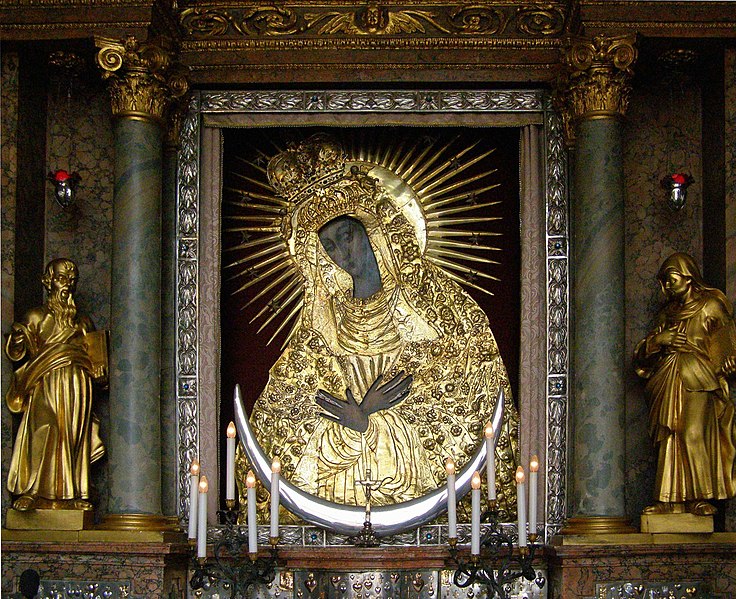
07 December 2011

Virgin of Advent, for the Feast of the Immaculate Conception


VIRGEN DEL ADVIENTO

Virgen del Adviento,
esperanza nuestra,
de Jesús, la aurora,
del Cielo, la puerta.

Madre de los hombres,
de la mar, estrella,
llévanos a Cristo,
danos sus promesas.

Virgen del Adviento,
esperanza nuestra,
de Jesús, la aurora,
del Cielo, la puerta.

Eres Virgen Madre,
la de gracia llena,
del Señor, la esclava,
del mundo, la Reina.

Virgen del Adviento,
esperanza nuestra,
de Jesús, la aurora,
del Cielo, la puerta.

Alza nuestros ojos
hacia tu belleza,
guía nuestros pasos
a la vida eterna.

Virgen del Adviento,
esperanza nuestra,
de Jesús, la aurora,
del Cielo, la puerta

While researching for Sunday Reflections I came across this Advent hymn by Antonio Alcalde. I know nothing about him nor where this was recorded. I suspect it was in one of the Spanish-speaking Latin American country  rather than in Spain. The music is by Fr Jose Cristo Rey Garcia Paredes CMF.

Here is my rough, non-poetic translation of the lyrics:

Virgin of Advent, / our hope, / Crown of Jesus, / Gate of heaven.

Mother of mankind, / Star of the sea, / lead us to Christ, / give us what he has promised.

Virgin of Advent, / our hope, / Crown of Jesus, / Gate of heaven.

You are the Virgin Mother, / full of grace, / handmaid of the Lord, / Queen of the world.

Virgin of Advent, / our hope, / Crown of Jesus, / Gate of heaven.

Raise our eyes / to your beauty / guide our steps / to eternal life.
 

30 November 2011

'Prepare a way for the Lord'. Sunday Reflections, 2nd Sunday of Advent Year B

The Preaching of St John the Baptist, Alessandro Allori, painted 1601-03

Readings (New American Bible: Philippines, USA)

Gospel Mark 1:1-8 (Jerusalem Bible: Australia, England & Wales, India [optional], Ireland, New Zealand, Pakistan, Scotland, South Africa)

The beginning of the Good News about Jesus Christ, the Son of God. It is written in the book of the prophet Isaiah:

Look, I am going to send my messenger before you;
he will prepare your way.
A voice cries in the wilderness:
Prepare a way for the Lord,
make his paths straight.

And so it was that John the Baptist appeared in the wilderness, proclaiming a baptism of repentance for the forgiveness of sins. All Judaea and all the people of Jerusalem made their way to him, and as they were baptised by him in the river Jordan they confessed their sins. John wore a garment of camel-skin, and he lived on locusts and wild honey. In the course of his preaching he said, 'Someone is following me, someone who is more powerful than I am, and I am not fit to kneel down and undo the strap of his sandals. I have baptised you with water, but he will baptise you with the Holy Spirit.

An Soiscéal Marcas 1-8 (Gaeilge, Irish)


Tosach Shoiscéal Íosa Críost, Mac Dé. De réir mar atá scríofa in Íseáia fáidh:


“Feach, cuirim mo theachtaire romhat
a ullmhóidh do bhóthar.
Glór duine ag éamh san fhásach:
‘Réitígí bóthar an Tiarna,
déanaigí díreach a chosáin.’”


Tháinig Eoin ag baisteadh san fhásach agus ag fógairt baiste aithrí chun peacaí a mhaitheamh. Agus bhí ag teacht amach chuige na daoine ó thír Iúdáia go léir, agus muintir uile Iarúsailéim, agus iad ag fáil baiste uaidh in abhainn na Iordáine ag admháil a bpeacaí.


Bhí rón camaill mar éadach ar Eoin, crios leathair faoina choim aige, lócaistí agus mil fhiáin mar bheatha aige. Agus bhíodh sé ag seanmóir á rá: “Tá ag teacht i mo dhiaidh an té atá níos treise ná mé, agus ní fiú mé cromadh síos chun iall a chuarán a scaoileadh. Bhaist mise le huisce sibh, ach baistfidh seisean sibh leis an Spiorad Naomh.”

+++

I met Angela, as I’ll call her, in 1969 when she was 16 and I was a young priest studying in the USA. She was in many ways a mixed-up young person but I could see her integrity and her desire to do what was right. Mainly through correspondence, I saw her grow in the faith until her death thirteen years later. This growth in faith involved two suicide attempts. Thanks to God's loving mercy I was his instrument in helping Angela through the second crisis, which occurred the year before her death. She was very much at peace in the last part of her life.


One thing I learned from that experience was that some persons of strong faith can also be very vulnerable.

On one occasion Angela told me that she was hoping that one day the priest would announce that he was giving general absolution to everyone, as some priests were wont to do at the beginning of Mass, even though this was totally wrong. It was a time when there strange things done ’neath the midnight sun, to quote Robert Service in a totally different context.

One day a priest did exactly what Angela had been hoping for. To her surprise, she felt cheated. Nothing had been asked of her. All Judaea and all the people of Jerusalem made their way to him, and as they were baptised by him in the river Jordan they confessed their sins. The sinners who publicly lined up, as we used to do in most churches before, confessed their sins. They took personal responsibility before God for their wrongdoing and trusted in his mercy.

Advent is a time when we prepare to celebrate the birthday of Jesus, God who became Man. It is a time when we prepare for his Second Coming at the end of time. But we also prepare for his third coming which, in the words of St Bernard, come between the other two. The saint writes in the Office of Readings for Wednesday of the First Week of Advent: This intermediary coming is like a road leading from the first to the last coming. In the first coming Christ was our redemption, in the last he will appear as our life, in this intermediary coming he is our rest and consolation.

Prepare a way for the Lord, make his paths straight, St John the Baptist tells us today, quoting Isaiah in the First Reading. The sacrament of confession / reconciliation / penance is one of the best ways to do this.

Pope Benedict explained very simply what this sacrament is in response to a question by Livia at an audience on 15 October 2005 for children who had made their First Holy Communion that year.

Livia: Holy Father, before the day of my First Communion I went to confession. I have also been to confession on other occasions. I wanted to ask you: do I have to go to confession every time I receive Communion, even when I have committed the same sins? Because I realize that they are always the same.

I will tell you two things. The first, of course, is that you do not always have to go to confession before you receive Communion unless you have committed such serious sins that they need to be confessed. Therefore, it is not necessary to make one’s confession before every Eucharistic Communion. This is the first point. It is only necessary when you have committed a really serious sin, when you have deeply offended Jesus, so that your friendship is destroyed and you have to start again. Only in that case, when you are in a state of ‘mortal’ sin, in other words, grave [sin], is it necessary to go to confession before Communion. This is my first point.


My second point: even if, as I said, it is not necessary to go to confession before each Communion, it is very helpful to confess with a certain regularity. It is true: our sins are always the same, but we clean our homes, our rooms, at least once a week, even if the dirt is always the same; in order to live in cleanliness, in order to start again. Otherwise, the dirt might not be seen but it builds up. Something similar can be said about the soul, for me myself: if I never go to confession, my soul is neglected and in the end I am always pleased with myself and no longer understand that I must always work hard to improve, that I must make progress. And this cleansing of the soul which Jesus gives us in the Sacrament of Confession helps us to make our consciences more alert, more open, and hence, it also helps us to mature spiritually and as human persons. Therefore, two things: confession is only necessary in the case of a serious sin, but it is very helpful to confess regularly in order to foster the cleanliness and beauty of the soul and to mature day by day in life.

May each of us make it part of Advent, part of our preparation for the ‘three comings’ of Jesus, to go to confession.

Prepare a way for the Lord, make his paths straight.

+++

Handel’s Messiah includes part of today’s First Reading. The composer used the Authorized Version, also known as the King James Version, of the Bible, slightly adapting it. This translation was finished 400 years ago.
 
 
Comfort ye, comfort ye my people, saith your God.


Speak ye comfortably to Jerusalem, and cry unto her, that her warfare is accomplished, that her iniquity is pardoned.


The voice of him that crieth in the wilderness, Prepare ye the way of the LORD, make straight in the desert a highway for our God.


Every valley shall be exalted, and every mountain and hill shall be made low: and the crooked shall be made straight, and the rough places plain.

+++


And the glory of the LORD shall be revealed, and all flesh shall see it together: for the mouth of the LORD hath spoken it.

[Sung in Korean]


Then shall the eyes of the blind be opened, and the ears of the deaf unstopped. Then shall the lame man leap as an hart, and the tongue of the dumb shall sing (Isaiah 35:5-6).

He shall feed His flock like a shepherd; and He shall gather the lambs with His arm, and carry them in His bosom, and gently lead those that are with young.


23 November 2011

'Stay awake!' Sunday Reflections, 1st Sunday in Advent Year B


Readings (New American Bible: Philippines, USA)

Gospel Mark 13:33-37 (Jerusalem Bible: Australia, England & Wales, India [optional], Ireland, New Zealand, Pakistan, Scotland, South Africa)

Jesus said to his disciples: 'Be on your guard, stay awake, because you never know when the time will come. It is like a man travelling abroad: he has gone from home, and left his servants in charge, each with his own task; and he has told the doorkeeper to stay awake. So stay awake, because you do not know when the master of the house is coming, evening, midnight, cockcrow, dawn; if he comes unexpectedly, he must not find you asleep. And what I say to you I say to all: Stay awake!'

An Soiscéal Marcas 13:33-37 (Gaeilge, Irish)

San am sin dúirt Íosa lena dheisceabail :Bígí aireach, déanaigí faire, mar níl a fhios agaibh cén uair a bheidh an t-am ann. Is é dála duine é a d’fhág a theach agus a d’imigh ar an gcoigríoch; thug sé an t-údarás dá sclábhaithe, gach duine díobh i mbun a chúraim féin; agus d’ordaigh sé don doirseoir faire a dhéanamh. Déanaigí faire, dá bhrí sin, mar ní fios daoibh cén uair a thiocfaidh tiarna an tí, um thráthnóna, i lár na hoíche, ar ghlao an choiligh, nó ar maidin. Má thagann sé gan choinne, ná faigheadh sé sibh in bhur gcodladh. An rud a deirim libhse, deirim le gach duine é: Déanaigí faire.”


My father, John, 'upped and died', as we say in Ireland, on 11 August 1987 at the age of 74. He had a heart attack while watching cricket on television in the late afternoon, something the Columban Superior General at the time, Fr Bernard Cleary, an Australian, found amusing.He just had time to call my brother, who was about to go out, get to his bed and lie down before he became unconscious.

In our part of Dublin there was one priest on call every day for emergencies in a group of parishes. My father had placed the emerency number, in large digits, and placed t on top of the phone. My brother phoned immediately. It happened that the priest on call was from our parish and was less than five minutes' walk away. The particular priest, though young, wasn't noted for his speed but he was over in no time at all to anoint Dad before the ambulance arrived. However, Dad was dead on arrival at the hospital. He died 17 years after my mother, Mary, who passed away in her sleep.

When I got the news of his death in the middle of the night in Cebu I was shocked. But not for a moment did I feel any regret over things not done. There was no 'unfinished business'. I was consoled when I learned that the priest had been with him but even more consoled knowing that he had been at Mass that morning, as he had been every day of his adult life.

He had no idea when the Lord would come for him. When he found my mother dead in bed he said to my brother, 'Your mother has gone now and we have to adjust to this. His strong faith enabled him to do that. That same faith prepared him for his own sudden death and prepared us, his two sons, to adjust to that new reality with grief, yes, but with no regrets, no 'unfinished business'.

'If he comes unexpectedly, he must not find you asleep. And what I say to you I say to all: Stay awake!'

On my ordination day, 20 December 1967, with my parents and brother
Communion antiphon


Dóminus dabit benignitátem, et terra nostra dabit fructum suum (Ps 84:13).

The Lord will bestow his bounty, and our earth shall yield its increase.


17 November 2011

'I was sick . . . and you visited me.' Sunday Reflections, Christ the King, Year A

The Last Judgment, Sistine Chapel, Michelangelo, painted 1537-41

Readings (New American Bible: Philippines, USA)

Gospel Matthew 25:31-46 (Jerusalem Bible: Australia, England & Wales, India [optional], Ireland, New Zealand, Pakistan, Scotland, South Africa)

Jesus said to his disciples: 'When the Son of Man comes in his glory, escorted by all the angels, then he will take his seat on his throne of glory. All the nations will be assembled before him and he will separate men one from another as the shepherd separates sheep from goats. He will place the sheep on his right hand and the goats on his left. Then the King will say to those on his right hand, "Come, you whom my Father has blessed, take for your heritage the kingdom prepared for you since the foundation of the world. For I was hungry and you gave me food; I was thirsty and you gave me drink; I was a stranger and you made me welcome; naked and you clothed me, sick and you visited me, in prison and you came to see me." Then the virtuous will say to him in reply, "Lord, when did we see you hungry and feed you; or thirsty and give you drink? When did we see you a stranger and make you welcome; naked and clothe you; sick or in prison and go to see you?" And the King will answer, "I tell you solemnly, in so far as you did this to one of the least of these brothers of mine, you did it to me." Next he will say to those on his left hand, "Go away from me, with your curse upon you, to the eternal fire prepared for the devil and his angels. For 1 was hungry and you never gave me food; 1 was thirsty and you never gave me anything to drink; I was a stranger and you never made me welcome, naked and you never clothed me, sick and in prison and you never visited me." Then it will be their turn to ask, "Lord, when did we see you hungry or thirsty, a stranger or naked, sick or in prison, and did not come to your help?" Then he will answer, "I tell you solemnly, in so far as you neglected to do this to one of the least of these, you neglected to do it to me." And they will go away to eternal punishment, and the virtuous to eternal life.'

An Soiscéal Matha 25:31-46 (Gaeilge, Irish)

San am sin duirt Íosa lena dheisceabail: “Nuair a thiocfaidh Mac an Duine ina ghlóir agus na haingil uile in éineacht leis, rachaidh sé ina shuí an uair sin i ríchathaoir a ghlóire. Beidh na náisiúin uile cruinnithe os a chomhair, agus déanfaidh sé na daoine a scaradh ó chéile, mar a scarann an t-aoire na caoirigh ó na gabhair. Cuirfidh sé na caoirigh ar a láimh dheis agus na gabhair ar a láimh chlé. Ansin déarfaidh an rí le lucht na láimhe deise: ‘Tagaigí, a lucht bheannaithe m’Athar, glacaigí mar oidhreacht an ríocht a ullmhaíodh daoibh ó thúsú an domhain. Óir bhí ocras orm agus thug sibh rud le hithe dom, bhí tart orm agus thug sibh rud le hól dom, bhí mé i mo strainséir agus thug sibh aíocht dom, bhí mé nocht agus chuir sibh éadach orm, bhí mé tinn agus tháinig sibh do m’fheiceáil, bhí mé i bpríosún agus thug sibh cuairt orm.’ Freagróidh na fíréin é ansin: ‘A Thiarna, cén uair a chonaiceamar thú agus ocras ort go dtabharfaimis bia duit, nó tart ort go dtabharfaimis deoch duit? Cén uair a chonaiceamar i do strainséir thú go dtabharfaimis aíocht duit, nó nocht go gcuirfimis éadach ort? Nó cén uair a chonaiceamar tinn thú, nó i bpríosún, go dtabharfaimis cuairt ort?’ Agus déarfaidh an rí á bhfreagairt: ‘Deirim libh go fírinneach, sa mhéid go ndearna sibh é do dhuine den chuid is lú de na bráithre seo agamsa, is domsa a rinne sibh é.’ Ansin déarfaidh sé le lucht na láimhe clé ar a seal: ‘Imígí uaim, a dhream mhallaithe, isteach sa tine shíoraí a ullmhaíodh don diabhal agus dá chuid aingeal. Óir bhí ocras orm agus níor thug sibh aon rud le hithe dom, bhí tart orm agus níor thug sibh aon rud le hól dom, bhí mé i mo strainséir agus níor thug sibh aíocht dom, bhí mé nocht agus níor chuir sibh aon éadach orm, bhí mé tinn agus i bpríosún agus níor tháinig sibh do m’fheiceáil.’ Agus freagróidh siad sin é ansin: ‘A Thiarna, cén uair a bhí tú le feiceáil againn agus ocras nó tart ort, nó i do strainséir, nó nocht nó tinn nó i bpríosún agus nach ndearnamar freastal ort?’ Ansin freagróidh sé iad: ‘Deirim libh go fírinneach, sa mhéid nach ndearna sibh é do dhuine den chuid is lú díobh seo, ní dhearna sibh domsa é ach oiread.’ Agus imeoidh siad leo, iad seo isteach i bpionós síoraí, ach na fíréin i mbeatha shíoraí.”
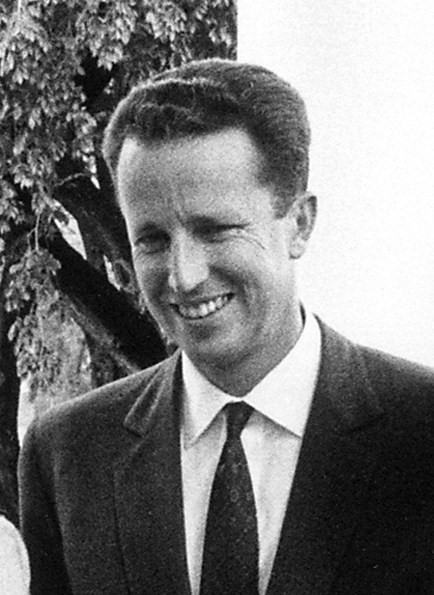
King Baudouin of the Belgians (1930-1993)

Leo Jozef Cardinal Suenens (1904-1996), Archbishop of Malines-Brussels from 1961to 1979,one of the leading figures at Vatican II, in a biography of King Baudouin of the Belgians, wrote of the occasion the king heard of a mother who was so ill in hospital that she could not attend the ordination to the priesthood of her son, a Jesuit. The king went to visit her that day. I was sick . . . and you visited me. When King Baudouin died suddenly in Spain on 31 July 1993 that same priest was chaplain in the prison where Belgium's most hardened criminals are kept. They nearly all attended a Mass for the late king and sent a message of sympathy to Queen Fabiola.

Not too long before his death, King Baudouin visited a brothel in Antwerp to listen to the stories of the women there. One of them, a Filipina, spoke at his funeral and said that he was the only man who had ever listened to them. (I am relying on memory here to some degree but the Los Angeles Times report on the funeral said, 'The breadth of Baudouin's popularity was reflected in the list of those who eulogized him: a Cabinet minister, an artist, a community worker, a prostitute and an investigative journalist'.)

The same report quotes Godfried Cardinal Danneels, then Archbishop of Malines-Brussels, at the funeral Mass in St Michael's Cathedral, 'There are kings who are more than kings, they are shepherds of their people. King Baudouin was such a king'. Thus says the Lord GOD: I myself will look after and tend my sheep. As a shepherd tends his flock when he finds himself among his scattered sheep,so will I tend my sheep' (Ezekiel 34:11-12, today's first reading).

In April 1990 King Bauduoin refused to sign into law a bill legalising abortion. He knew his stand could not prevent the bill from being implemented. The parliament declared him temporarily unable to carry out his duties and the members of the government signed the bill into law before declaring that the king was able to carry out his duties again. The king's stand could have led to the abolition of the monarchy. He himself became king when his father, a divisive figure, abdicated in 1951. I was a stranger and you made me welcome.

Cardinal Suenens' book showed that some wrote to the king for spiritual direction. He was a man whose Catholic faith was fully integrated with his public and private life. He and Queen Fabiola longed to have a child but the queen had five miscarriages.

In the days of Jesus kings were men with great power. Today's monarchs are basically ceremonial heads of state, with little power. But they can have great influence.

A friend of my brother was asked if he could play golf near Belfast with a visitor from the European Continent. The visitor was introduced as 'Mr So-and-so'.  After a few holes my brother's friend asked his golfing partner what he did for a living. 'Mr So-and-so' smiled and said, 'I'm the King of the Belgians'.

None of us are kings or queens but many of us have responsibilities towards others, as priests, spouses/parents, teachers, social workers, caregivers, nurses and what not. The feast of Christ the King tells us that the heart of responsibility is loving service, even to giving up our lives if necessary. I believe that King Baudoin is one of many persons from every walk of life whom God has sent to show us how to follow his Son Jesus, God who became Man, whom we honour today as Christ the King.


16 November 2011

Death: a time for gratitude

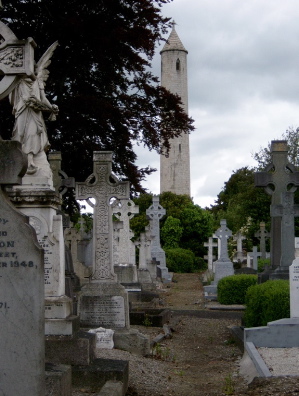
Glasnevin Cemetery, Dublin, with the round tower over the grave of Daniel O'Connell

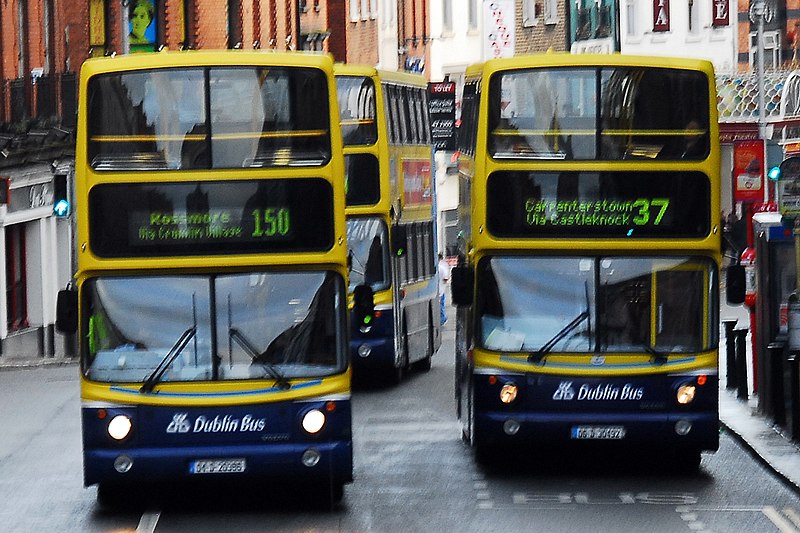
There is a beautiful letter in today's Irish Independent expressing the writer's gratitude to those who had helped his mother in her latter days. He mentions, among others, bus drivers. I have seen many acts of kindness by drivers and passengers over the years on buses here in Dublin and similar acts of kindness in all sorts of ordinary situations. 'Whoever has eyes to see . . .'

I buried my mother in Dublin last week. Her quality of life became poor over her last two years as she battled against the effects of earlier smoking on her eyesight, heart and lungs.

But the people of Dublin were there to help. Bus drivers left their buses and walked her across to her little apartment; some even helped her up the steps and into her little 'home'.

Three complete strangers, her "three angels", did her shopping, washing and ironing and took her to get her silver hair done every week.

Staff in her local pharmacy in Rathfarnham village let her rest in the shop and often took her across to the bus stop or arranged a lift home.

We had a lovely last day. She went to sleep happy that night and did not wake up.

Thank you so much to the many random strangers who did so much for my mother at her time of need.

Frank Devine
Kenilworth, England


11 November 2011

'To everyone who has will be given more . . .' Sunday Reflections, 33rd Sunday Year A


Readings (New American Bible: Philippines, USA)

Gospel Matthew 25:14-30 (Jerusalem Bible: Australia, England & Wales, India [optional], Ireland, New Zealand, Pakistan, Scotland, South Africa)I have a young friend who has been gifted by God with more than average intelligence. I'll call her 'Rosa', though that's not her real name. She 'breezed' through all her examinations from kindergarten to college. She was involved in legitimate extra-curricular activities at school, without neglecting her studies. While studying, she would readily help other students prepare for exams. Most importantly, she recognises that she has a gift from God. She doesn't hide behind a false humility nor does she boast about herself. She is now working with persons who have suffered deeply from the sins of others.

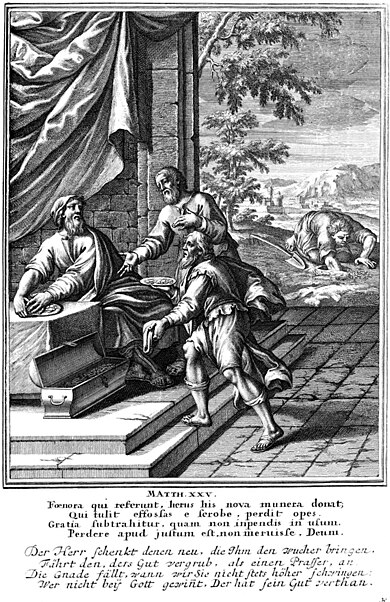
'It is like a man on his way abroad who summoned his servants and entrusted his property to them. To one he gave five talents, to another two, to a third is one; each in proportion to his ability. Then he set out. The man who had received the five talents promptly went and traded with them and made five more. The man who had received two made two more in the same way. But the man who had received one went off and dug a hole in the ground and hid his master's money. Now a long time after, the master of those servants came back and went through his accounts with them. The man who had received the five talents came forward bringing five more. "Sir," he said "you entrusted me with five talents; here are five more that I have made." His master said to him, "Well done, good and faithful servant; you have shown you can be faithful in small things, I will trust you with greater; come and join in your master's happiness". Next the man with the two talents came forward. "Sir," he said "you entrusted me with two talents; here are two more that I have made." His master said to him, "Well done, good and faithful servant; you have shown you can be faithful in small things, I will trust you with greater; come and join in your master's happiness". Last came forward the man who had the one talent. "Sir," said he "I had heard you were a hard man, reaping where you have not sown and gathering where you have not scattered; so I was afraid, and I went off and hid your talent in the ground. Here it is; it was yours, you have it back." But his master answered him, "You wicked and lazy servant! So you knew that I reap where I have not sown and gather where I have not scattered? Well then, you should have deposited my money with the bankers, and on my return I would have recovered my capital with interest. So now, take the talent from him and give it to the man who has the five talents. For to everyone who has will be given more, and he will have more than enough; but from the man who has not, even what he has will be taken away. As for this good-for-nothing servant, throw him out into the dark, where there will be weeping and grinding of teeth."

An Soiscéal Matha 25:14-30 (Gaeilge, Irish)

San am sin dúirt Íosa lena dheisceabail “duine a bhí ag dul ar an gcoigríoch: ghlaoigh sé ar a sheirbhísigh agus thaobhaigh leo a mhaoin; thug cúig thallann do dhuine acu, a dó do dhuine eile, aon tallann amháin do dhuine eile – do gach duine de réir an chumais a bhí ann – agus d’fhág an tír. Ní dhearna fear na gcúig thallann aon mhoill gan cur chun gnó leo agus cúig cinn eile a ghnóthú. Mar an gcéanna d’fhear an dá thallann; ghnóthaigh seisean dhá cheann eile. Ach chuaigh fear na haon tallainne amháin agus rinne poll sa talamh agus chuir sé airgead a mháistir i bhfolach. Seal fada ina dhiaidh sin, tháinig máistir na seirbhíseach sin ag réiteach cuntas leo. Tháinig fear na gcúig thallann ina láthair agus thairg cúig thallann eile aige chuige agus ar seisean: ‘A mháistir, d’fhág tú cúig thallann ar iontaoibh agamsa; seo duit cúig cinn eile a ghnóthaigh mé.’ Labhair a mháistir leis: ‘Go han-mhaith; dea-sheirbhíseach iontaofa thú: bhí tú iontaofa i mbun beagán nithe; ceapfaidh mé i do cheann thú ar mhórán; gabh isteach in aoibhneas do thiarna.’ Tháinig ina láthair ansin fear an dá thallann: ‘A mháistir,’ ar seisean, ‘d’fhág tú dhá thallann ar iontaoibh agamsa: seo duit dhá cheann eile a ghnóthaigh mé.’ Labhair a mháistir leis: ‘Go han-mhaith: dea-sheirbhíseach iontaofa thú; bhí tú iontaofa i mbun beagán nithe; ceapfaidh mé i do cheann thú ar mhórán: gabh isteach in aoibhneas do thiarna.’ Tháinig ina láthair ansin an fear a fuair an t-aon tallann amháin: ‘A mháistir,’ ar seisean, ‘bhí aithne agam ort gur duine crua thú, ag baint fómhair san áit nár chuir tú síol, agus ag cnuasach as an áit nach ndearna tú scaipeadh; agus le barr eagla, chuaigh mé ag cur do thallainne i bhfolach sa talamh. Seo duit í: tá do chuid féin agat.’ Dúirt a mháistir leis á fhreagairt: ‘Drochsheirbhíseach leisciúil thú! Bhí a fhios agat go mbainim fómhar san áit nár chuir mé síol agus go gcnuasaím as an áit nach ndearna mé scaipeadh: ba cheart duitse mar sin mo chuid airgid a chur chun lucht gaimbín, agus nuair a thiocfainn gheobhainn mo chuid féin ar ais le hús. Bainigí de an tallann agus tugaigí í don duine a bhfuil na deich dtallann aige, óir, gach aon duine a mbíonn ní aige, tabharfar dó agus beidh fuílleach aige, ach an té a bhíonn gan ní, fiú amháin a mbíonn aige bainfear de é. Agus an seirbhíseach úd gan aird, caitear amach sa dorchadas é: is ann a bheidh gol agus díoscán fiacla.’


I have a young friend in the Philippines, Richelle (above), who has been gifted by God with more than average intelligence. She 'breezed' through all her examinations from kindergarten to college where she graduated summa cum laude. A few months alter she came second in the country in the licensure examination for social workers. She was involved in legitimate extra-curricular activities at school, without neglecting her studies. While studying, she would readily help other students prepare for exams. Most importantly, she recognises that she has a gift from God. She doesn't hide behind a false humility nor does she boast about herself. She is now working with persons who have suffered deeply from the sins of others.

When I was in Cebu I came to know a young man named Isabelo. Unlike Richelle, he had an intellectual disability because he was born with trisomy 21 (Down Syndrome). However, Isabelo had a special gift for the Faith and Light community to which he and I belonged - he had a great memory for names and would always remind us that so-and-so had not yet arrived.

I met a young girl of about ten or eleven from Hong Kong at the international Faith and Light pilgrimage to Lourdes in 2001 - the movement grew out of a pilgrimage to Lourdes for persons with intellectual disabilities in 1971 - whose name I cannot remember, to my shame, but whose trusting purity made a profound impact on me. In the Irish language such a person is called 'duine le Dia', 'a person with God'. This young girl was truly such.

She and Isabelo were unaware of the specail gift that God had given to each of them, but others enabled those gifts to be shared with the wider community. Rosa is very much aware of being gifted by God and consciously, unselfishly, joyfully and humbly shares her gifts with others.

We sometimes distort the image of Jesus by describing him as 'meek and mild'. This is certainly part of God who became Man. But in today's parable he is scathing of those who don't use the gifts that God has given them. A talent in Biblical times was a container of gold or silver but has come to mean an ability or gift from God that a person has.

Some have the gift of spotting and encouraging in others gifts they don't have themselves. My father, a carpenter, rarely read books but when I was still in kindergarten he gave me a copy of Robert Louis Stevenson's Treasure Island that he had received as a child. It wasn't a simplified edition but unabridged. I read it with joy. The Sisters in the kindergarten I went to had alreadly spotted that my reading ability was way ahead of that of my classmates and used to give me stampetas or holy cards as a reward for reading something normally difficult for a young child.

Soemtimes we discover a gift we have because others see it first. It was only after my ordination, while studying in the USA, that I realised I have a certain ability to listen to persons. This was when individuals, some much older than me, came to me because they needed someone to listen to. I became aware of this while spending most of the summer of 1969 in a sprawling rural parish in Kentucky, where there were very few Catholics. The parish priest used to get college students from many parts of the USA to work in various summer projects, such as camps for poor children, Bible school, home-to-home visitation, and preaching tours, the latter with seminarians. Fr Ralph Beiting had a marvellous gift for organising and inspiring young people,but he wasn't a person you would go to if you wanted someone to listen to you. However, it was his giftst that made it possible for me to discover one of mine.

The two young Irish diocesan priests who founded the Columbans, Fr Edward Galvin (later Bishop of Nancheng, China) and Fr John Blowick, had very different gifts. Fr Galvin was an 'action man' while Fr Blowick was a brilliant scholar who also knew how to deal with bishops and with authorities in the Vatican. Neither on his own would have got anywhere with a new missionary society. Together, they used the speific gifts God had given each to further the mission Jesus gave the Church, to preach the Gospel to every creature.


On His Blindness, John Milton (1608-1674)
"When I consider how my light is spent

Ere half my days in this dark world and wide,
And that one talent which is death to hide
Lodg'd with me useless, though my soul more bent
To serve therewith my Maker, and present
My true account, lest he returning chide,
"Doth God exact day-labour, light denied?"
I fondly ask. But Patience, to prevent
That murmur, soon replies: "God doth not need
Either man's work or his own gifts: who best
Bear his mild yoke, they serve him best. His state
Is kingly; thousands at his bidding speed
And post o'er land and ocean without rest:
They also serve who only stand and wait."

English poet John Milton tried to come to terms with the blindness that came upon him. Many older persons, or those who have been struck with a severe illness or disability, go through a similar struggle. 'Who best bear his mild yoke, they serve him best'. Fr Edward Allen was a saintly Columban I was blessed to have lived with from 1997 till 2000. Over the years he had helped many young women discover ther vocation to religious life. Late in 1998 he had a severe stroke which made him almost totally dependent on others. His mind and his sense of humour remained intact, though his speech wasn't clear. He was 92 when he got the stroke but for the remaining two-and-a-half years of his life he was giving strength to the young and healthy nurses who were taking care of him because of his deep faith in Jesus Christ.
 
God has given each of us a unique set of gifts. We glorify and honour him by racknowledging them and using them joyfully in the service of others, and especially by helping others discover their gifts.