29 October 2011

'The greatest among you must be your servant'. Sunday Reflections, 31st Sunday of Ordinary Time Year A

An Israeli soldier wearing phylacteries (tefillin), on his forehead and on his left arm, while praying.

Gospel Matthew 23:1-12 (Jerusalem Bible: Australia, England & Wales, India [optional], Ireland, New Zealand, Pakistan, Scotland, South Africa)

Addressing the people and his disciples Jesus said, 'The scribes and the Pharisees occupy the chair of Moses. You must therefore do what they tell you and listen to what they say; but do not be guided by what they do: since they do not practise what they preach. They tie up heavy burdens and lay them on men's shoulders, but will they lift a finger to move them? Not they! Everything they do is done to attract attention, like wearing broader phylacteries and longer tassels like wanting to take the place of honour at banquets and the front seats in the synagogues, being greeted obsequiously in the market squares and having people call them Rabbi.

'You, however, must not allow yourselves to be called Rabbi, since you have only one master, and you are all brothers. You must call no one on earth your father, since you have only one Father, and he is in heaven. Nor must you allow yourselves to be called teachers, for you have only one Teacher, the Christ. The greatest among you must be your servant. Anyone who exalts himself will be humbled, and anyone who humbles himself will exalted.

An Soiscéal Matha 23:1-12 (Gaeilge, Irish)

San am sin labhair Íosa ansin leis na sluaite agus lena dheisceabail: “Tá na scríobhaithe agus na Fairisínigh ina suí i gcathaoir Mhaois, agus ó tá siad, déanaigí agus coinnígí a ndeir siad libh, ach ná déanaigí de réir a n-oibreacha, óir ní mar a chéile beart agus briathar acu. Ceanglaíonn siad suas ualaí troma do-iompair agus buaileann siad ar ghuaillí daoine iad, ach ní áil leo féin iad a bhogadh le barr méire. Déanann siad a n-oibreacha uile d’fhonn go mbeifí á dtabhairt faoi deara. Sin mar a chuireann siad leithead ina bhfiolaictéirí agus fad lena scothóga; is maith leo an chéad áit sna fleánna agus na príomhshuíocháin sna sionagóga, agus go mbeifí ag beannú dóibh sna háiteanna poiblí, agus go mbeifí ag tabhairt ‘raibí’ orthu.

Ach ná bíodh ‘raibí’ á thabhairt oraibhse; óir níl ach an t-aon Mháistir oraibh, agus is bráithre sibhse uile. Agus ná glaoigí bhur ‘n-athair’ ar aon duine ar an talamh, óir níl agaibh ach an t-aon Athair, an té atá ar neamh. Agus fós, ná bíodh ‘múinteoirí’ á thabhairt oraibh, óir níl agaibh ach an t-aon Mhúinteoir, an Críost. An té agaibh is uaisle, beidh sé ina sheirbhíseach daoibh. Agus cibé duine a ardóidh é féin, ísleofar é agus cibé duine a ísleoidh é féin ardófar é.

+++
 
I am posting this in St Columban's, Dalgan Park, Ireland, where I studied for the priesthood from 1961 to 1968. I arrived in Ireland yesterday morning from the Philippines and here this morning.
 
One of my philosophy teachers here, the late Fr Joseph McGlade, served as a chaplain in the Royal Air Force during World War II. Many other young Irish Columbans were chaplains in the British forces at that time since they couldn't go to our missions in China, the Philippines, Korea and Burma. Father Joe told us that one of his Protestant colleagues used to quote today's gospel and criticise the Catholic chaplains for allowing themselves to be called 'Father'. Yet he didn't mind being called 'Padre', the Spanish for 'Father', and widely used in the English-speaking world as a title for military chaplains.
 
Jesus is reminding us that God our Father is the source of all life and that he himself is the only one who can teach the fulness of truth. He calls us to teach only the truth, not only in word but in deed. He isn't forbidding us from showing proper respect to our earthly fathers or to those who teach us. Rather he is calling us to be fully rooted in the love of God the Father and in the Truth that he himself, Jesus Christ, is. He tells us, 'the greatest among you must be your servant'.
 
 
This morning here in Dalgan Park I concelebrated at a Mass in which we remembered nine Columban priests who died violently in the Philippines. Fr Francis Vernon Douglas from New Zealand was scourged at a pillar in the Catholic church in Paete, Rizal, near Manila, by Japanese military police, taken  away and never seen again and died on 27 March 1943. It is believed that he refused to break the seal of confession.
 
Frs Peter Fallon, John Henaghan, Patrick Kelly and Joseph Monaghan were taken away by the Japanese from their parish in Malate, Manila, on 10 February 1945 and never seen again.Their colleague Fr John Lalor, was killed three days later by an American bomb that struck Malate Catholic School that had been turned into a hospital. He had also suffered at the hands of bandits in China before being transferred to the Philippines.
 
Fr Thomas Flynn was killed by Communist guerrillas in his parish in Labrador, Pangasinan, on 30 October 1950. He, like Father Douglas, had been a diocesan priest before joining the Columbans.
 
Frs Martin Dempsey and Rufus Halley were both murdered in the same area in Lanao del Sur, Mindanao, Father Martin on 19 October 1970 and Father Rufus Halley on 28 August 2001. Siblings of both of them were at the Mass along with relatives of the other Irish Columbans. Fr Dan O'Connor, a Columban from New Zealand, based in Pakistan and studying in Ireland at the moment, represented the relatives of Fr Douglas.
 
Philippine Ambassador Ariel Y. Abadilla was present at the Mass and after lunch laid a wreath in memory of the priests who had died violently in his country at the foot of the cross in the Columban cemetery in Dalgan Park.
 
These priest were not the kind of religious leaders Jesus had in mind when he said, 'You must therefore do what they tell you and listen to what they say; but do not be guided by what they do: since they do not practise what they preach'. These were men who stayed with their people laid down their lives to show the love of God the Father and whose lives and deaths revealed the Truth who is Jesus our Teacher, who taught us above all the love of God the Father by laying down his life in obedience to his will.

24 October 2011

'Greater Love: Richie Fernando SJ', a joy-filled Filipino missionary


I haven't been able to post for more than a week as I was giving an eight-day directed retreat to eight sisters of the Missionaries of Charity near Manila. While I had some access to the internet it was rather slow.

I had intended to make a post here on the murder of Fr Fausto Tentorio PIME, a 59-year-old Italian priest, in the Diocese of Kidapawan, Mindanao, on Monday 17 October. I will save that post for a later date. As I was looking for a video about Father Fausto I came across one about Brother Richard Michael 'Richie' Fernando SJ, a Filipino Jesuit scholastic who died while trying to prevent a troubled and disabled young man in Cambodia from throwing a grenade. That was in 1996 - on 17 October. Father Fausto gave his life exactly 15 years later.

I remember the mixture of sorrow and pride I felt when I read of the death of Brother Richie, pride as a missionary in the Philippines that a young Filipino seminarian had given his life so spontaneously in order to save the lives of others while on overseas mission, and sorrow that a young life had been cut short. Some months later in the Columban house in Manila I met an Irish Jesuit priest who had been in Richie's community in Cambodia. I shared my feeling of pride and sorrow with him but he could only share his grief at the tragic loss of a brother.

The video above is the first of a four-part production by Jesuits in Manila. At the end of each part you will find the link to the next.

I read somewhere very recently that joy should be even more characteristic of Christians than love. The two, of course, go together but we have the English expression 'as cold as charity' which comes out of the experience of a joyless Christianity, the kind you read about in the novels of Charles Dickens, for example. In everything I have read or heard about Brother Richie Fernando he has come across as a young man of loving faith filled with joy, a joy that is characteristic of the faith of so many Filipinos.

Fr Christopher F. Amoroso MSP, a young members of the Mission Society of the Philippines serving in Japan, wrote an article in the May-June 2011 issue of Misyon, the Columban online magazine I edit, Misyon and My Vocation, on how reading about Richie Fernando in our magazine led him to the priesthood.

Yesterday was Mission Sunday. Fr Fausto Tentorio PIME and Brother Richard Michael Fernando SJ are true faces of the missionary church.


14 October 2011

'You shall love your neighbor.. .' Sunday Reflections, 30th Sunday in Ordinary Time Year A

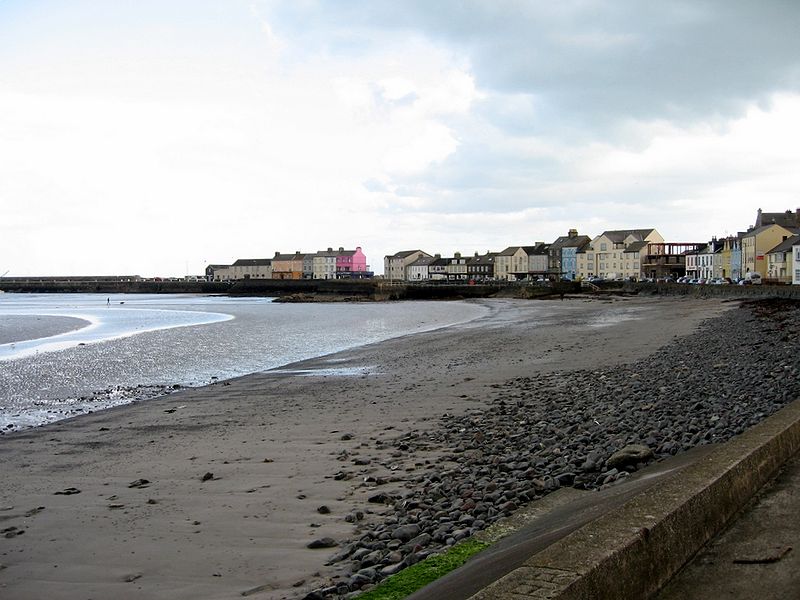
Donaghadee, County Down, Northern Ireland

Readings (New American Bible: Philippines, USA)

Gospel Matthew 22:34-40 (NAB)

When the Pharisees heard that Jesus had silenced the Sadducees,

they gathered together, and one of them,
a scholar of the law tested him by asking,
"Teacher, which commandment in the law is the greatest?"
He said to him,
"You shall love the Lord, your God,
with all your heart,
with all your soul,
and with all your mind.
This is the greatest and the first commandment.
The second is like it:
You shall love your neighbor as yourself.
The whole law and the prophets depend on these two commandments."

+++

Sister Perpetua was Mercy Sister from County Down, Northern Ireland, who died earlier this years. A nurse by profession, she spent some years in Iceland, working in a Catholic hospital there. She had a great love for those who were sick and especially for those who were bereaved.

A few years ago when I visited her in her convent in Downpatrick, where St Patrick is buried, she took me to St Comgall's Church in Donaghadee, probably the most Protestant town in the whole of Ireland. St Comgall's Catholic Church is on a side-sreet. It is part of the parish of Bangor, about the kilometres further north, also on the coast. The parish church there is also St Comgall's.

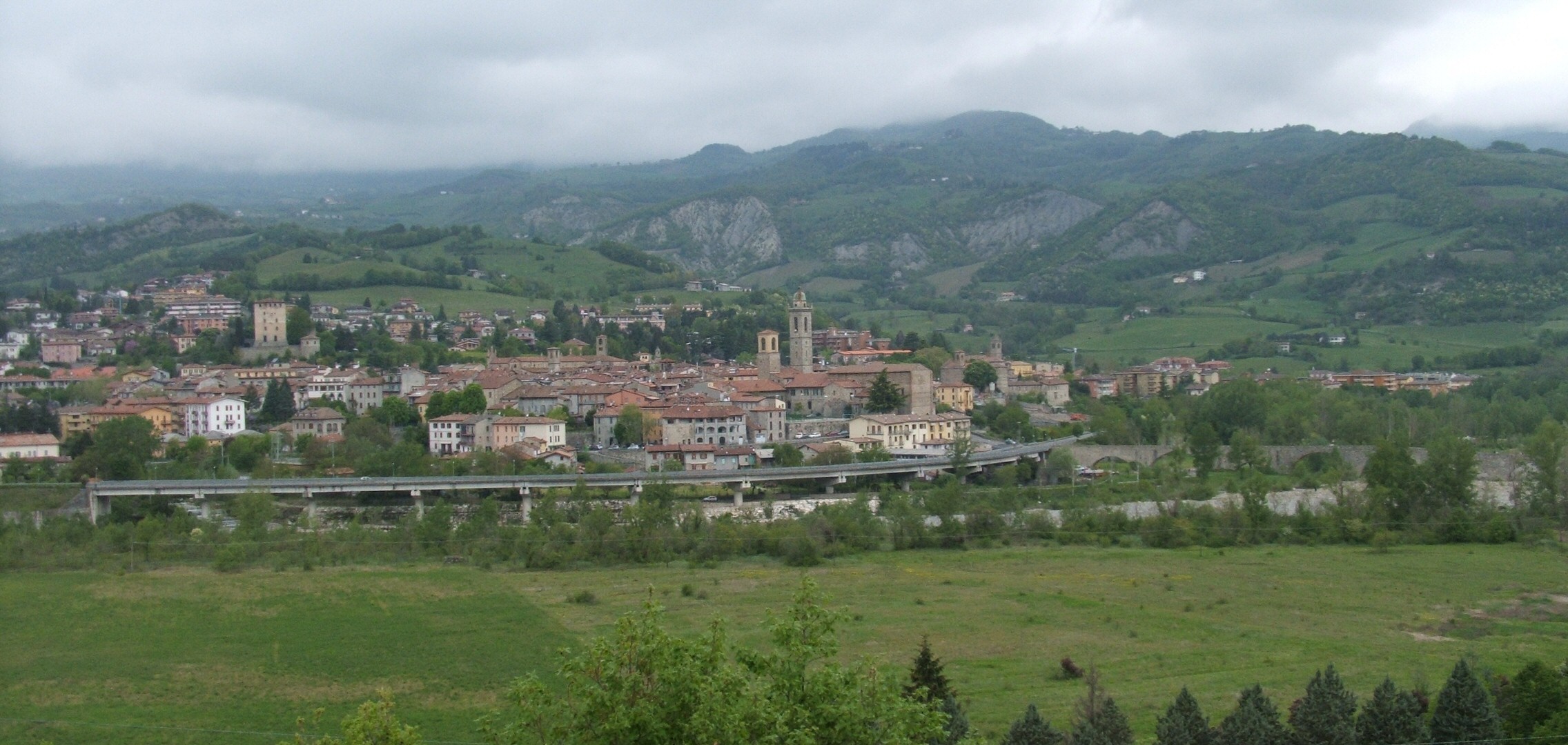
This saint founded the famous monastery in Bangor in 555. Some years later, during the lifetime of St Comgall, St Columbanus (Columban) entered there. Later he and twelve companions left for Continental Europe as Peregrini pro Christo, 'Pilgrims for Christ'.St Columban, the patron of the Missionary Society of St Columban to which I belong, founded a number of monasterieson the European mainland,preaching the gospel wherever they went. The saint's last monastery was in Bobbio, in northern Italy, where he died in 615.

St Columban set out from Bangor as a missionary. More than thirteen centuries later an Italian ice-cream seller, whose name I do not know but will call 'Luigi, found his way to the area from which St Columban had set out on his long journey. This Italian, to earn a living, opened an ice-cream parlour in Donaghadee, where he spent the rest of his life.

On another occasion when I went to visit Sister Perpetua she had just come back from the funeral of Luigi. She told me she had been afraid that very few would attend. But the church was packed and Sister Perpetua found herself sitting beside a Protestant man who had probably never entered a Catholic church before in his life. He told Sister why he was there.

He was one of a large family that never had money to spare. Occasionally during the summer his father would bring the children to Luigi's for ice-cream, even though he never had enough to buy for them all. 'Luigi never let us go', he told Sister,'without making sure that each of us had ice-cream, no matter how little money my father had. That is why I am here'.

St Columban left Ireland to be a missionary and died in Italy. Luigi left Italy to make a living in the area from which St Columban had set out and died in Ireland. He probably never thought of himself as a missionary but he crossed the religious barrier in Ireland by his simple love for poor children.

'You shall love your neighbour . . .'


I am posting this early because I probably won't have access to the internet for the next eight days as I give a retreat to some Missionaries of Charity in Tagaytay City, an elevated and pleasantly cooler area south of Manila. Please keep the Sisters and me in your prayers. Perhaps you can invoke St Columban and Blessed Mother Teresa.

' . . . to Caesar what belongs to Caesar . . .' Sunday Reflections. 29th Sunday in Ordinary Time Year A

Sto Niño Church, Lianga, Surigao del Sur, Philippines

Readings (New American Bible: Philippines and USA)
Gospel Matthew 22:15-21 (Jerusalem Bible: Australia, England & Wales, India [optional], Ireland, New Zealand, Pakistan, Scotland, South Africa)
The Pharisees went away to work out between them how to trap Jesus in what he said. And they sent their disciples to him, together with the Herodians, to say, 'Master, we know that you are an honest man and teach the way of God in an honest way, and that you are not afraid of anyone, because a man’s rank means nothing to you. Tell us your opinion, then. Is it permissible to pay taxes to Caesar or not? But Jesus was aware of their malice and replied, ‘You hypocrites! Why do you set this trap for me? Let me see the money you pay the tax with.’ They handed him a denarius and he said, ‘Whose head is this? Whose name?’ ‘Caesar’s’ they replied. He then said to them, ‘Very well, give back to Caesar what belongs to Caesar – and to God what belongs to God.
Soiscéal Matha 22:15-21 (Gaeilge, Irish)

San am sin d’imigh na Fairisínigh ag déanamh comhairle le chéile chun go mbéarfaidís I ngaiste Íosa sa chaint, agus chuir siad a ndeisceabail féin chuige mar aon leis na Héaródaigh chun a rá leis: “A Mháistir, tá a fhios againn gur fear fírinneach thú agus go múineann tú slí Dé san fhírinne gan beann agat ar dhuine ar bith, agus gan féachain do phearsa seachas a chéile. Abair linn do bharúil, mar sin: An dleathach cáin a íoc le Céasar nó an mídhleathach?” Ach bhí a fhios ag Íosa an mhallaitheacht a bhí iontu agus dúirt: “Cad ab áil libh ag baint trialach asam, a bhréagchráifeacha? Taispeánaigí bonn na cánach dom,” agus shín siad déanar chuige. Dúirt sé leo: “Cé hé arb í seo a íomhá agus a inscríbhinn?” “Céasar,” ar siad leis. “Maith go leor,” ar seisean leo, “íocaigí le Céasar na nithe is le Céasar agus le Dia na nithe is le Dia.”


I was parish priest of Lianga from June 1993 till May 1994, my two-year assignment cut short so that I could become Columban vocation director for the Philippines, an assignment I had till 2000. The parish patron is the Sto Niño, the Holy Child. The town is located on Lianga Bay on the east coast of Mindanao, looking straight across the Pacific Ocean at Colombia in South America. It has some fine beaches and provides a livelihood for many fishermen.
 
However, when I was there Lianga was a relatively remote, sleepy town on a provincial highway that stretched the meaning of the word 'road' to its limits. The big promise of the mayor at the time was 'Next year we will have a telephone'. The lone telephone was to be in the town hall. Now everyone has a mobile phone and I couldn't believe the difference a new highway made to the whole province when I visited in May 2010 to do a wedding, my first visit in ten years. It had transformed the lives of the people.

During my time in Lianga the mail came in and went out three days a week, Monday, Wednesday and Friday. The postmistress was Mrs Rose Sanchez, an official who took great pride in her work and who was trying to persuade the powers that be to have the mail delivered and collected five days a week. I don't know if she ever succeeded. But everything was done efficiently and with courtesy. Rose had a sense of being a public servant, making sure that the service, limited though it was compared to bigger centres, helped improve the lives of the people in the town itself and in the hinterlands.

At the time I used to write a weekly column for The Freeman, a daily published in Cebu City and wrote about Rose one week. I gave her a copy of the article, a copy of which she sent to her superior who congratulated her. She was delighted to have her sense of service recognised.

The partly enigmatic answer that Jesus gave to the Pharisees and Herodians in today's gospel is often referred to in situations of conlfict or apparent conflict between Church and State. But it isn't always a matter of conflict.

Rose, who is retired now, was a servant of the State. She is also a member of the Church. I'm certain that her sense of service came largely from her Catholic faith. She served all the people, Catholic and others, with care. In 'giving back to Caesar' as a servant of the State working for its citizens, she was also 'giving back to God' by serving his people.

Rose was widowed last August. Perhaps you can remember her and her late husband 'Nonoy' in your prayers.


Photos courtesy of Benjie Otagan, A Lianga Diary

11 October 2011

Homelessness and hope in Dublin


I found this video, produced by De Paul Ireland, on Facebook, posted by my friend Sr Maria Forestall FMM in the Faroe Islands. It was made recently in my native Dublin, However, homelessness is a phenomenon in the cities of nearly every Western country.


10 October 2011

'The queen of the south will arise at the judgment . . .'


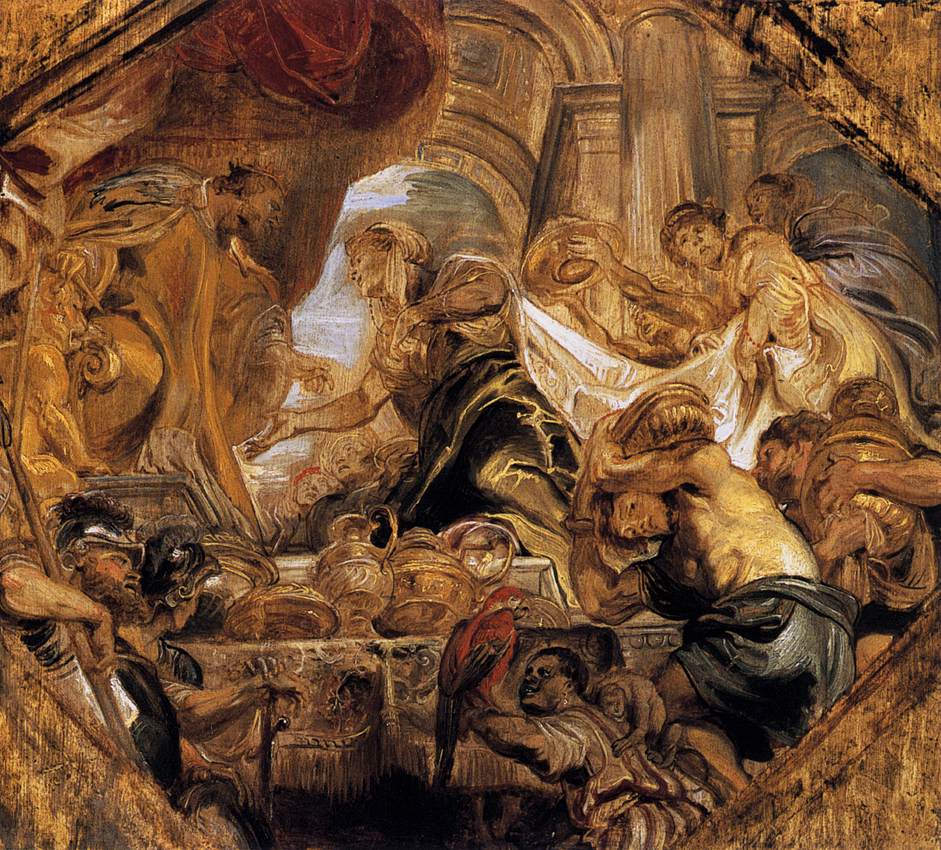
Today's gospel is Luke 11:29-32 in which Jesus mentions 'the queen of the South'. She is also known as the Queen of Sheba. Some scholars say she was from Yemen, others from Ethiopia. Yemen is one of the Arab countries that is unsettled at the moment. Two days ago President Ali Abdullah Saleh, who has been in power for 33 years, promised to step down 'in a few days'. It seems very few believe him. The day before his announcement Tawakul Karman, a Yemeni woman was announced as one of three winners of this year's Nobel Peace Prize. 

Yemen's Catholics belong to the Apostolic Vicariate of Southern Arabia, which also includes Bahrain, Oman, Qatar and the United Arab Emirates. Catholics number 2,129,000 or 3.4 percent of the overall population of 62,498,240. However, in 1950 they numbered 5,840 or 0.1 percent of 10,000,000. The increase in the number and percentage of Catholics is due to the influx of overseas workers in recent decades, especially from the Philippines.

The bishop of the vicariate is Most Rev Paul Hinder OFMCap from Switzerland. All nine bishops have been Capuchin friars.

A special prayer today for the people of Yemen, especially for the Catholics there, would not go astray as we recall the Queen whom Jesus speaks about, whether or not Sheba was Yemen.

Here is the gospel in the Revised Standard Version, Catholic Edition: 

When the crowds were increasing, Jesus began to say, "This generation is an evil generation; it seeks a sign, but no sign shall be given to it except the sign of Jonah. For as Jonah became a sign to the men of Nineveh, so will the Son of man be to this generation. The queen of the South will arise at the judgment with the men of this generation and condemn them; for she came from the ends of the earth to hear the wisdom of Solomon, and behold, something greater than Solomon is here. The men of Nineveh will arise at the judgment with this generation and condemn it; for they repented at the preaching of Jonah, and behold, something greater than Jonah is here.


07 October 2011

'I am ready for anything anywhere.' Sunday Reflections, 28th Sunday in Ordinary Time Year A

Fr Rufus Halley with friends

Readings  (New American Bible: Philippines, USA)
Second Reading: Philippians 4:12-14. 19-20 (Jerusalem Bible: Australia, England & Wales, India [optional], Ireland, New Zealand, Pakistan, Scotland, South Africa)
I know how to be poor and I know how to be rich too. I have been through my initiation and now I am ready for anything anywhere: full stomach or empty stomach, poverty or plenty. There is nothing I cannot master with the help of the One who gives me strength. All the same, it was good of you to share with me in my hardships. In return my God will fulfil all your needs, in Christ Jesus, as lavishly as only God can. Glory to God, our Father, for ever and ever. Amen.My Columban confrere and friend since 1962, Fr Rufus Halley, murdered in an ambush in Lanao del Sur, Philippines, on 28 August 2001, came to mind as I read St Paul’s words for today. He came from a well-to-do family in county Waterford, in the south-east of Ireland, did his secondary studies at Glenstal Abbey School in County Limerick, not a place most parents could afford to send their sons to.
An Dara Léacht: Filipigh 4:12-14. 19-20 (Gaeilge, Irish)

A bhráithre, tá eolas agam ar an gcaolchuid agus ar an bhflúirse. Tá seantaithí agam ar gach sórt: ar an mórdhóthain agus ar an ocras, ar an bhflúirse agus ar an ngannchuid. Táim in ann gach ní a dhéanamh le cabhair an té úd a thugann neart dom. Mar sin féin ba mhaith an mhaise daoibhse teacht i gcabhair orm i mo chruachás. Agus déanfaidh mo Dhia riar go fial ar gach riachtanas daoibhse as a fhlúirse féin i nglóir in Íosa Críost. Moladh le Dia, ár nAthair, le saol na saol. Amen.


The 18-year-old Rufus, whose baptismal name was Michael but known by the Latin nickname for ‘red-haired’, could have chosen any university course. He was a bright student and an outstanding athlete, particularly good at rugby. His sunny disposition drew people to him like a magnet. But he opted for the Columbans and entered Dalgan Park, the Columban seminary about 40 kms north-west of Dublin in September 1962, a year after your scribe.

Ordained at Easter 1969 he came to the Philippines later that year and worked in Tagalog-speaking parishes. His good friend, now Gaudencio Cardinal Rosales, Archbishop of Manila, has written that Father Rufus spoke Tagalog perfectly. Cardinal Rosales should know, since that is his mother-tongue.

But after about ten years in parishes where almost all were Catholics Father Rufus felt a call from God to move to the Prelature of Marawi in Mindanao where Columbans had worked for many years. Around 20 percent of the population of Mindanao as a whole is Muslim, but there are only four areas or so where they form a majority. The Prelature of Marawi, created in 1976 by Pope Paul VI, covers the province of Lanao del Sur and part of rgw province of Lanao del Norte and is 95 percent. Furthermore, the vast majority of the Muslims speak Maranao while the Christians speak Cebuano. Father Rufus became fluent in both languages.

He had chosen to give up the security of living in a totally Christian community in order to live in a community divided by suspicion and hostility for centuries, a place where he would always feel tension and sometimes be in danger. To quote St Paul today, he was 'ready for anything anywhere'.

Cardinal Rosales with his late friend Balodoy and Mrs Bella Feliciano, one of those who introduced Faith and Light to the Philippines.

Here is how Cardinal Rosales wrote about the commitment and death of his friend Pareng Rufus (‘Pareng’ is a Tagalog term used by men who are close friends with one another, ‘Mareng’ being the female equivalent):

I knew of the intensity with which Father Rufus lived his own Christian faith, how he began each day with an hour of adoration before the Blessed Sacrament, the centrality of the Mass in his life. A big influence on him was the life of Charles de Foucauld, 1858-1916, beatified last November (2005). This Frenchman was also from a privileged background. Unlike Pareng Rufus, he lost his Catholic faith and became a notorious playboy before re-discovering it, partly through the example of Muslims living in North Africa. He spent many years as a priest living among the poorest Muslims in a remote corner of the Sahara, pioneering Christian-Muslim dialogue by discovering himself as the Little Brother of Jesus in the Blessed Sacrament and as the Little Brother of the Muslims who came knocking at his hermitage door.

Pareng Rufus

Death of a peacemaker

On 1 December 1916 Charles de Foucauld died at the hands of a young gunman outside his hermitage and on 28 September 2001 Pareng Rufus died at the hands of gunmen who ambushed him as he was riding on his motorcycle from a meeting of Muslim and Christian leaders in Balabagan to his parish in Malabang. The local people, both Christian and Muslim, mourned for him deeply. The grief of the Muslims was all the greater because the men who murdered my Pareng Rufus happened to be Muslims. This great missionary priest brought both communities together in their shared grief for a man of God, a true follower of Jesus Christ.