Since we are travellers and pilgrims in the world, let us ever ponder on the end of the road, that is of our life, for the end of our roadway is our home (St Columban, 8th sermon).
There are various stories and legends about St Valentine. Some say he was a bishop, some that he was a priest. But at the heart of the stories is the reality that he was martyred for officiating at weddings.
His feast day is no longer on the universal calendar of the Catholic Church where the Ordinary Form of the Mass is celebrated, the form of the Mass introduced after the Second Vatican Council, in 1969, the only form of the Mass that most Catholics today have experienced. But his feast day is still on the calendar used by those who celebrate the Extraordinary Form of the Mass, using the Missal promulgated by Blessed John XXIII in 1962.
In many parts of the world St Valentine's Day has become a largely secular affair and the word 'Saint' dropped. Here in the Philippines it is for more than a few an excuse for fornication and adultery, though not by any means for all. For some it is a day to celebrate innocent friendship.
Relics of St Valentine were given to the Carmelite Friars (OCarm) by Pope Gregory XVI in 1836 and they are in the casket beneath the altar in the photo above, which is a side-altar. You can find the history of the relics and of the saint on the website of the Friars.
On another page you will find the texts for Mass in honour of St Valentine.
Opening Prayer
Almighty ever-living God,
by whose gift blessed Valentine fought
for righteousness’ sake even until death,
grant, we pray, through his intercession,
that we may bear every adversity for the sake of your love
and hasten with all our strength towards you
who alone are life.
Through our Lord Jesus Christ, your Son,
who lives and reigns with you and the Holy Spirit,
The First Reading from today's Mass, 1 Kings 10:1-10 (NRSVCE)
When the queen of Sheba heard of the fame of Solomon she came to test him with hard questions. She came to Jerusalem with a very great retinue, with camels bearing spices, and very much gold, and precious stones; and when she came to Solomon, she told him all that was on her mind.
Solomon answered all her questions; there was nothing hidden from the king that he could not explain to her. When the queen of Sheba had observed all the wisdom of Solomon, the house that he had built, the food of his table, the seating of his officials, and the attendance of his servants, their clothing, his valets, and his burnt offerings that he offered at the house of the Lord, there was no more spirit in her.
So she said to the king, “The report was true that I heard in my own land of your accomplishments and of your wisdom,but I did not believe the reports until I came and my own eyes had seen it. Not even half had been told me; your wisdom and prosperity far surpass the report that I had heard. Happy are your wives! Happy are these your servants, who continually attend you and hear your wisdom! Blessed be the Lord your God, who has delighted in you and set you on the throne of Israel! Because the Lord loved Israel forever, he has made you king to execute justice and righteousness.”
Then she gave the king one hundred twenty talents of gold, a great quantity of spices, and precious stones; never again did spices come in such quantity as that which the queen of Sheba gave to King Solomon.
Jesus said to his disciples: “You are the salt of the earth; but
if salt has lost its taste, how can its saltiness be restored? It is no longer
good for anything, but is thrown out and trampled under foot.
“You are the light of the world. A city built on a hill cannot be
hid.No one after lighting a lamp
puts it under the bushel basket, but on the lampstand, and it gives light to
all in the house.In the same
way, let your light shine before others, so that they may see your good works
and give glory to your Father in heaven.
One of the darkest periods in the history of the world was 1939 to 1945 when much of the world was at war. At the heart of the darkness was Nazi Germany, where freedom had been almost entirely suppressed. But not quite. Between June 1942 and February 1943 a small group of students at the University of Munich with their philosophy professor Kurt Huber formed The White Rose, a non-violent resistance group working against Hitler and the Nazi regime.
Among the leaders were Sophie Scholl and her older brother Hans. They were executed together. Both were devout Lutherans. It is said that she was influenced by the writings of Blessed John Henry Cardinal Newman. Others in the group, such as Willi Graf, were devout Catholics. Not all were Christians but they shared a commitment to speaking the truth, even if it cost them their young lives. Most were in their early 20s.
One German Catholic who had a great impact on the group was Blessed Clemens August Graf von Galen, Bishop of Münster, Germany, who died just after being made a cardinal in 1946, a giant of a man physically, morally and spiritually. In a series of sermons in 1941 he denounced some of the policies of Hitler, including that of euthanasia. Hans and Sophie Scholl used one of these in a leaflet The White Rose printed and distributed secretly.
It was while distributing leaflets - the movement produced a total of six, their only means of communication - at the University of Munich, that Hans and Sophie were caught and then executed.
The members of The White Rose are remembered and honoured today and a number of films have been made about them. The video above contains footage from one of those. You can see Franz Josef Müller, a member of The White Rose who survived, speak about the movement here. [The video can't be embedded.]
I remember the late Fr Vincent San Juan SJ, a Filipino who spent most of his life as a priest in the family life apostolate, telling me that during the days of Martial Law here in the Philippines when the government was conducting a vigorous campaign of promoting contraception - doctors in government hospitals often ligated women shortly after they had given birth, with no regard for their husbands or for their feelings - he sometimes gave seminars to government workers. They had little real freedom. But they were happy and encouraged to hear what they recognised as the truth from Father San Juan. To the participants in these seminars who were bombarded daily with government propaganda the Jesuit priest speaking the truth of the Gospel in a quiet and encouraging way was the salt of the earth . . . the light of the world.
Hans and Sophie Scholl and their companions knew that their lives were in danger. But their Christian faith led them to be the salt of the earth . . . the light of the world. Through them at least some experienced the truth of the words of Isaiah 9:2 quoted in Matthew 4:16, the people who sat in darkness have seen a great light, and for those who sat in the region and shadow of death light has dawned.
Salt is of use only when it is mixed with other things. The light of the sun doesn't exist for itself, for us to look at it. If we did we would be blinded. It is meant to light up everything around us, as we are meant by being salt and light to bring others to taste and see the joy of knowing Jesus the Risen Lord.
Not many are called, as some of the members of The White Rose were, to be the salt of the earth . . . the light of the world by laying down their lives. But those in The White Rose got their Christian faith, their moral values from others who for them were the salt of the earth . . . the light of the world. Some of them had belonged to various Nazi movements for young people but saw through the false values being promoted and left. In other words, they had been formed in solid values by others, older persons such as parents, some teachers perhaps. others trying to live honest and upright lives as followers of Jesus, 'missionary disciples', as Pope Francis calls us to be in Evangelii Gaudium No 120, without even being aware that they were such.
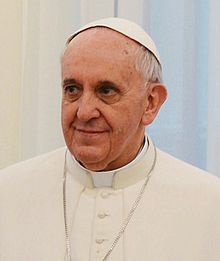
Last October in his homily in St Peter's Square on World Family Day Pope Francis explicitly called families to be the salt of the earth . . . the light of the world. And, characteristically, he called them to be such in a spirit of joy. He ended his homily with these words:
Dear families, you know very well that the true joy which we experience in the family is not superficial; it does not come from material objects, from the fact that everything seems to be going well . . . True joy comes from a profound harmony between persons, something which we all feel in our hearts and which makes us experience the beauty of togetherness, of mutual support along life’s journey. But the basis of this feeling of deep joy is the presence of God in the family and his love, which is welcoming, merciful, and respectful towards all. God alone knows how to create harmony from differences. But if God’s love is lacking, the family loses its harmony, self-centredness prevails and joy fades. But the family which experiences the joy of faith communicates it naturally. That family is the salt of the earth and the light of the world, it is the leaven of society.
Dear families, always live in faith and simplicity, like the Holy Family of Nazareth! The joy and peace of the Lord be always with you!
Today's gospel, Mark 5:21-43, weaves two different healing stories into one, that of the woman who had been bleeding for twelve years and that of the daughter of Jairus, aged twelve, who had just died. In the scene below, taken from Franco Zeffirelli's Jesus of Nazareth, the director focuses only on the story of the little girl. I don't know if the servant of Jairus, whom the latter addresses as 'Thomas' is meant in Zeffirelli's mind to be the future Apostle already showing the honest directness of the saint often referred to as 'Doubting Thomas', the saint who was to make the most explicit act of faith in the whole Bible, My Lord and my God. In this scene Jesus immediately leaves what he was doing in order to respond to an emergency. Much of our life is like that. Zeffirelli retains words of Jesus that we find in the version of St Mark of this incident and in that of St Luke (8:40-46) but not in that of St Matthew (9:18-26): Give her something to eat. There is something wonderfully human about these words. Zeffirelli has Jesus carry the little girl out to her parents and relatives. She would have been very weak after the illness that had led to her death. In my own imagination I can see Jesus standing back and smiling, gently reminding Jairus and his wife in their grateful joy that their daughter was hungry.
Healing the sick was central to the way Jesus proclaimed the Gospel, 'The Good News'. It has always been central to the way the Church proclaims that same Gospel. Many of us are familiar with the name 'Gemelli Policlinico' in Rome. This teaching hospital of 1,850 beds, attached to the medical school of the Catholic University of the Sacred Heart, is named after the founder of the University, Fr Agostino Gemelli OFM, priest, friar, physician, psychologist. Study, science and teaching are also at the heart of the proclamation of the Gospel by the Church. On the Solemnity of the Epiphany last year Pope Benedict visited the children in the paediatric section of the Gemelli Clinic. The children and staff there, especially the little girl to whom he gave a teddy bear, don't seem to have noticed that he was 'dour', as I saw him described the other day, or that he was really a 'Rottweiler', as he has often been called.
When Jesus had crossed again in the boatto the other side, a great crowd gathered round him; and he was by the lake.Then one of the leaders of the synagogue named Jairus came and, when he saw him, fell at his feetand begged him repeatedly, ‘My little daughter is at the point of death. Come and lay your hands on her, so that she may be made well, and live.’ So he went with him.
And a large crowd followed him and pressed in on him.Now there was a woman who had been suffering from haemorrhages for twelve years.She had endured much under many physicians, and had spent all that she had; and she was no better, but rather grew worse. She had heard about Jesus, and came up behind him in the crowd and touched his cloak,for she said, ‘If I but touch his clothes, I will be made well.’Immediately her haemorrhage stopped; and she felt in her body that she was healed of her disease. Immediately aware that power had gone forth from him, Jesus turned about in the crowd and said, ‘Who touched my clothes?’ And his disciples said to him, ‘You see the crowd pressing in on you; how can you say, “Who touched me?”’ He looked all round to see who had done it. But the woman, knowing what had happened to her, came in fear and trembling, fell down before him, and told him the whole truth. He said to her, ‘Daughter, your faith has made you well; go in peace, and be healed of your disease.’
While he was still speaking, some people came from the leader’s house to say, ‘Your daughter is dead. Why trouble the teacher any further?’ But overhearing what they said, Jesus said to the leader of the synagogue, ‘Do not fear, only believe.’ He allowed no one to follow him except Peter, James, and John, the brother of James. When they came to the house of the leader of the synagogue, he saw a commotion, people weeping and wailing loudly. When he had entered, he said to them, ‘Why do you make a commotion and weep? The child is not dead but sleeping.’ And they laughed at him. Then he put them all outside, and took the child’s father and mother and those who were with him, and went in where the child was. He took her by the hand and said to her, ‘Talitha cum’, which means, ‘Little girl, get up!’And immediately the girl got up and began to walk about (she was twelve years of age). At this they were overcome with amazement. He strictly ordered them that no one should know this, and told them to give her something to eat.
When I was a child growing up in Dublin the blessing of throats on the feast of St Blaise took place only in the Franciscan and Capuchin churches, as I recall. Apart from my memory, the only evidence I have been able to find of this is from a bulletin of the Augustinian church in Limerick, Ireland, a year ago: For many centuries devotion to St. Blaise, a fourth century Armenian bishop, had almost completely disappeared. It was kept alive in some Franciscan churches. On the 4th February 2004 the Limerick Chronicle published a picture in its memory section, a clear photograph of a long queue in the local Franciscan church lining up for the blessing of the throats on the Feast of St Blaise. The Friars stood in the sanctuary for the entire day ministering the healing of this popular saint to those who streamed in and out of their church on Henry St.
I have a vague recollection of red flannel, a sort of rough cloth, and of oil being associated with the blessing. The Wikipedia entry on the blessing of throats mentions oil.
Now the blessing of throats is widespread again with the priest holding two unlit candles to the throat of each person while praying this formula: Through the intercession of St Blaise, bishop and martyr, may God deliver you from every disease of the throat and from every other illness: in the name of the Father and of the Son and of the Holy Spirit. Amen.
St Blaise is one of the Fourteen Holy Helpers, saints invoked against various illnesses. That's where the connection with Englebert Humperdinck - the German composer, not the English singer whose real name is Arnold George Dorsey - comes in. In his opera Hansel and Gretel contains this song, The Evening Prayer, when Hansel and Gretel are lost in the forest:
When at night I go to sleep, Fourteen angels watch do keep, Two my head are guarding, Two my feet are guiding; Two upon my right hand, Two upon my left hand. Two who warmly cover Two who o'er me hover, Two to whom 'tis given To guide my steps to heaven. The 'fourteen angels' are the Fourteen Holy Helpers. Here it's sung by Libera, a boys' choir from England.
St Blaise was a bishop Sebaste in historical Armenia. The area of which he was bishop is now part of Turkey and under the jurisdiction of the Archeparchy of Istanbul (Armenian). The Armenian Catholic Church is, with fewer than 500,000 members, one of the smallest of about thirty churches that are fully part of the Catholic Church. The largest by far of these is the Roman or Latin Church but all are equally Catholic and in full communion with one another and with the Pope.
The Presentation of the Lord, as a Feast of the Lord, takes precedence over the Fourth Sunday in Ordinary Time. Readings(New
American Bible: Philippines, USA)
Readings(Jerusalem Bible: Australia, England & Wales, India
[optional], Ireland, New Zealand, Pakistan, Scotland, South Africa)
When the
time came for their purification according to the law of Moses, they brought
him up to Jerusalem to present him to the Lord(as it is written in the law of the Lord,
“Every firstborn male shall be designated as holy to the Lord”),and they offered a sacrifice according to
what is stated in the law of the Lord, “a pair of turtledoves or two young
pigeons.”
Now
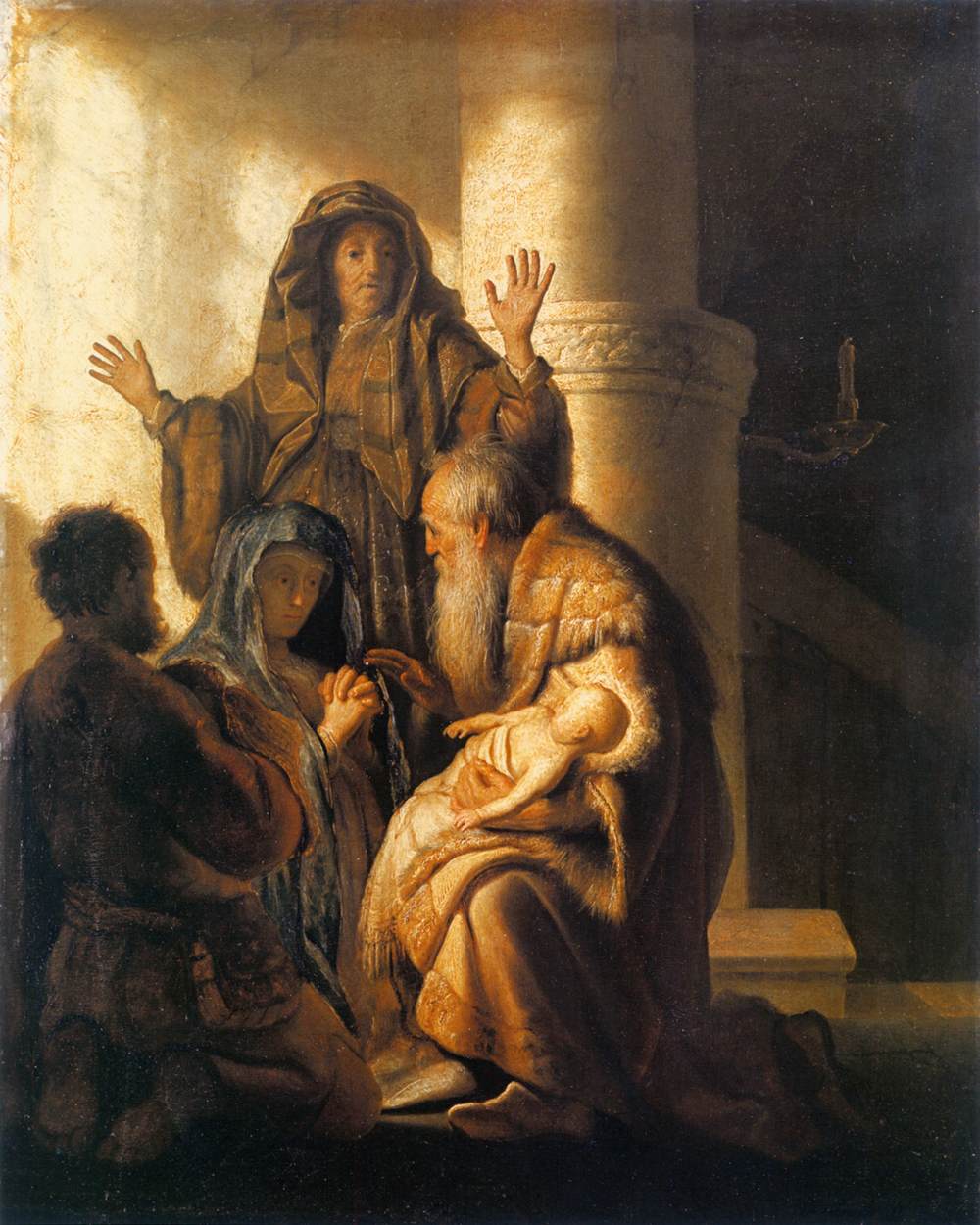
there was a man in Jerusalem whose name was Simeon;this man was righteous and devout, looking
forward to the consolation of Israel, and the Holy Spirit rested on him.It
had been revealed to him by the Holy Spirit that he would not see death before
he had seen the Lord’s Messiah.Guided by the Spirit,
Simeoncame into the temple; and when the parents
brought in the child Jesus, to do for him what was customary under the law,Simeontook him in his arms and praised God, saying,
“Master, now you are dismissing your servantin peace, according
to your word; for my eyes have seen your salvation, which you have prepared in the presence of all peoples, a light for revelation to the Gentiles and
for glory to your people Israel.”
[And the child’s father and mother were amazed at what was
being said about him.Then
Simeonblessed them and
said to his mother Mary, “This child is destined for the falling and the rising
of many in Israel, and to be a sign that will be opposedso that the inner
thoughts of many will be revealed—and a sword will pierce your own soul too.”
There was also a prophet, Annathe daughter of
Phanuel, of the tribe of Asher. She was of a great age, having lived with her
husband seven years after her marriage,then as a widow to
the age of eighty-four. She never left the temple but worshiped there with
fasting and prayer night and day.At that moment she
came, and began to praise God and to speak about the childto all who were
looking for the redemption of Jerusalem.
When they had finished everything required by
the law of the Lord, they returned to Galilee, to their own town of Nazareth.The child grew and
became strong, filled with wisdom; and the favor of God was upon him.]
The late Stephen Cardinal Kim Sou-Hwan, Archbishop of Seoul, with a young friend. The cardinal's paternal grandparents were sentenced to death during the last persecution of Catholics in Korea, in 1869. His grandfather was killed but the persecutors spared his grandmother because she was pregnant. The child in her womb was the Cardinal's father.
After patiently waiting for some years Renante and Christine Uy, from Bacolod City, Philippines, were finally blessed with Kiefer Thomas, their first born. They have been active members of Couples for Christ for many years and have continued with the movement in Thailand where they now live.
+++
Three or four years ago while celebrating Sunday Mass in St Brigid's Parish, Blanchardstown, just north-west of Dublin city, where my brother and his wife live, I saw a young couple coming in at the back of the church a few minutes after Mass had begun. I smiled inwardly when I realised they were Filipinos. But then they came right up to the front pew and I was really touched to see the husband/father carrying their little child.
In the video of the Presentation in the Temple, produced by 'Rosary Priest' Fr Patrick Peyton's Family Theater, it is St Joseph who carries Jesus. St Luke doesn't specify this. But he does tell us that Simeon took him in his arms. The photo of the late Cardinal Kim above evokes this scene for me. What fills me with awe is the fact that his grandmother was spared by the persecutors in 1869 because she was pregnant, while his grandfather wasn't. In Jewish law the man who named a child was considered his legal father. When I was a child I always heard St Joseph spoken of as the foster-father of Jesus. But St Matthew tells us: Her husband Joseph, being a righteous man and unwilling to expose her to public disgrace, planned to dismiss her quietly. But just when he had resolved to do this, an angel of the Lord appeared to him in a dream and said, ‘Joseph, son of David, do not be afraid to take Mary as your wife, for the child conceived in her is from the Holy Spirit.She will bear a son, and you are to name him Jesus, for he will save his people from their sins' (Matt1:19-21). You are to name him Jesus means that St Joseph is being called by God to be a true father to the Son of his wife Mary. And the Church honours St Joseph above all as the Spouse of the Blessed Virgin Mary. And it is through Joseph, son of David being his legal father that Jesus is of the line of David as God had promised. Pope Francis has spoken a number of times about the faith of one of his grandmothers and how she helped to form him. The God-fearing mother, facing all kinds of adversity as she brings up her children in the faith has become almost a cliché. I don't mean any disrespect whatever to such mothers or to any mothers. But the emphasis on the role of the mother and grandmother in the raising of children in the faith tends, I think, to take away from the equally important role of the father and of the grandfather. When I was a small child it was my father who brought me to Sunday Mass while my mother would stay at home with my brother, three years younger, when he was an infant. She would go to another Mass. I saw my father, who spent his working life on building (construction) sites, where he was a highly respected general foreman, get up very early every morning, go to Mass, come home and prepare my mother's breakfast and bring it to her in bed. (For many breakfast in bed is a treat. I hate the idea!) I saw how deeply he respected my mother, even when they had disagreements, never raising his voice to her or to anyone else, including us his two sons. I saw the same when I worked with him on a building site the summer before I was ordained. He never raised his voice there either and he never swore. He led by example and the men had profound respect for him. Some of those told me how great a mentor he was when they were still young and learning their trade. He had been blessed in a similar way when he started as an apprentice carpenter at 15. My father taught me how to swim and how to ride a bicycle, letting go when he judged that I could go solo. I can still recall the joy in each instance when I realised that I was indeed going solo. As I said above, St Luke doesn't specify that it was St Joseph who carried Jesus into the Temple. But the director of the video of the Presentation gives us an insight into the role of St Joseph. He was, as her husband, to be the protector of Mary and of her Son and he was, as his legal father, to be the mentor/teacher of Jesus in how to grow into manhood and in how to be a carpenter. There is one telling scene when Simeon reaches out to take Jesus in his arms. Joseph doesn't hand him over without looking at Mary and getting her approval. As I grew older I could see that my parents made important decisions together such as which school they should send us to.
Simeon and Anna show us the importance of older persons in the lives of young parents and of children. When we are children the most significant older persons are our grandparents. Each Sunday morning my father would bring us to meet our grandfather who was widowed a couple of days after my brother was born. And I saw my maternal grandmother, widowed when I was less than two, very often. When I was in secondary school I often dropped into our parish church on my way home in the afternoon. There were always old people, including my grandfather, praying silently in front of the Blessed Sacrament. I sometimes dropped into other churches and would find the same. There are many things we can reflect on as we celebrate the Presentation of the Lord. But for me it stirs up once again immense gratitude to God for my late father and an appreciation of the great responsibility that the vocation to be a husband/father carries, something, I think, that we as Church need to emphasise more. The young Filipino husband/father carrying his child right up to the front of the church in Dublin, even though he and his wife were a little late, reminded me of the wonder of that vocation. And when we were choosing a photo of the Uy Family for the cover of Misyon I simply had to go for the one above.
Nunc dimittis (Canticle of Simeon)
Setting by Palestrina, sung by The Tallis Scholars.
Nunc dimittis servum tuum, Domine, secundum verbum tuum in pace:
Quia viderunt oculi mei salutare tuum
Quod parasti ante faciem omnium populorum:
Lumen ad revelationem gentium, et gloriam plebis tuae Israel (Luke 2:29-32, Latin Vulgate).
Master, now you are dismissing your servantin peace, according to your word; for my eyes have seen your salvation, which you have prepared in the presence of all peoples, a light for revelation to the Gentiles and for glory to your people Israel (NRSVCE).
+++
You will find music for the Feast of the Presentation on The God Who Sings on ABC Classic FM (Australia). The programme will be broadcast on Sunday night and will be available online for some weeks after that.
Happy Lunar New Year
I have friends from China, Korea and Vietnam all of whom, along with the people of Mongolia, where I have friends too, and of Tibet celebrate the Lunar New Year on 31 January. Happy New Year to all who are celebrating this festival, which continues for a number of days.
The people who sat in darkness have seen a great light, and for those who sat in the region and shadow of death light has dawned (Matthew 4:16, NRSVCE).
Now when Jesusheard that
John had been arrested, he withdrew to Galilee.He left Nazareth and made his home in Capernaum
by the sea, in the territory of Zebulun and Naphtali,so that
what had been spoken through the prophet Isaiah might be fulfilled:
“Land of
Zebulun, land of Naphtali, on the road
by the sea, across the Jordan, Galilee of the Gentiles— the people who sat in darkness have seen a
great light, and for those who sat in the region and shadow of death light has
dawned.”
From that time Jesus began to
proclaim, “Repent, for the kingdom of heaven has come near.”
[As he walked by the Sea of Galilee, he saw two brothers, Simon,
who is called Peter, and Andrew his brother, casting a net into the sea—for
they were fishermen.And he said
to them, “Follow me, and I will make you fish for people.”Immediately
they left their nets and followed him.As he went from there, he saw two other
brothers, James son of Zebedee and his brother John, in the boat with their
father Zebedee, mending their nets, and he called them.Immediately
they left the boat and their father, and followed him.
Jesuswent
throughout Galilee, teaching in their synagogues and proclaiming the good newsof the kingdom and curing every disease and
every sickness among the people.]
Missa Brevis in G Major, Kyrie, Mozart Lumen Choir, conducted by Jooyoung Kim "Once upon a time",5th Annual Concert (Dec. 1, 2012) Moonjeong-dong Catholic Church, Seoul, South Korea
Last Sunday here in the Philippines was the the Feast of the Santo Niño (Holy Child). The gospel was Matthew 18:1-5, 10 in which Jesus tells us Whoever becomes humble like this child is the greatest in the kingdom of heaven. I saw his words come to life at the end of Mass in Holy Family Home for Girls here in Bacolod City where I live.
Earlier this month four new girls came to the home. One, whom I'll call 'Josie', aged 14, is profoundly deaf. Her main way of communicating is Sign Language. The Sisters, staff and some of the girls are now learning Sign Language. The other three new girls include two aged ten and one aged six.
At the end of Mass I saw 'Josie' sitting and quietly crying. I wasn't quite sure why. One of the ten-year-old new girls, rather small for her age but very lively and whom I'll call 'Grace', went over to 'Josie' and put her arms around her to comfort her. Whoever becomes humble like this child is the greatest in the kingdom of heaven.
The majority of the girls in Holy Family Home have had horrific experiences, in most cases within their own family circle. They truly have sat in darkness.
I celebrated Mass again in Holy Family Home on the evening of the feast of St Agnes, 21 January. Each year in the Home we combine a celebration of St Agnes the Martyr (c.291 - c.304), patron saint of chastity, of young girls and of rape victims, and Blessed Laura Vicuña (1891 - 1904), a patron of abuse victims who offered her life for the conversion of her mother and whose feast day is 22 January. I told the girls that the life of Blessed Laura, whose father died when she was young, was so like their own and that she became a saint in the midst of and through her sufferings, especially the cruelty of her stepfather who wasn't married to her mother. Despite her young age she had the maturity, generosity and holiness to offer her life so that her mother would return to the Lord. She told this to her mother when she was dying. It was the physical abuse of her stepfather that led to her death. Laura's prayers were answered.
Laura understood the stark reality of the words of Jesus in today's gospel: Repent, for the kingdom of heaven has come near. She also understood the power of God's mercy. Repentance and God's mercy are central to the preaching and teaching of Pope Francis. Since Blessed Laura, born in Santiago, Chile, died in Argentina he must be familiar with her life that embodied what he has spoken about so many times.
Holy Family Home exists because of the sins of adults against girls, some only small children. It is a place where most of the girls have sat in the region and shadow of death. I have brought many visitors there and the one word they nearly all have used to sum up their experience is 'joy', a joy they find among the girls and among the Capuchin Tertiary Sisters of the Holy Family and the staff. Those who live there are a testimony to the truth of the words of Isaiah that we listen to in the First Reading and the Gospel this Sunday and that we listened to at the Mass During the Night at Christmas:
The people who sat in darkness
have seen a great light,
and for those who sat in the region and shadow of death
The second part of today's gospel tells us of the call of the first disciples who were later called to be apostles, the brothers Simon Peter and Andrew, and the sons of Zebedee, James and John. Though Immediately they left their nets . . .Immediately they left the boat and their father, and followed him we know from the gospels that they continued to fish from time to time and to encounter stormy weather.
Here in the Philippines most fishermen are poor and go to sea in very small boats. In some countries larger boats go far from land and often encounter very dangerous weather. And a very large percentage of international seafarers - the largest group, I think - are Filipinos.
In Britain and Ireland the members of the Royal National Lifeboat Institute (RNLI) mostly volunteers, and their counterparts throughout the world, often put their lives in danger to save those in danger at sea. Irish Lifeboats covers both the RLNI in Ireland and Community Rescue Boats Ireland (CRBI).
Irish musician and songwriter Phil Coulter, who lost a brother in a drowning accident, wrote a wonderful song about those who risk their lives at sea to save the lives of others, Home from the Sea. Here is a video of the song with Phil Coulter's musicians, a choir of members of the RNLI and the late Irish singer Liam Clancy, than whom there was no one better to put across a ballad.
In our prayers today let us remember our fishermen, our seafarers and those involved in rescue work at sea.
On a cold winter's night, with the storm at it's height, A lifeboat answers a call. They pitched and they tossed, 'till we thought they were lost, As we watched from the harbour wall. 'Tho the night was pitch black, there was no turning back, For someone was waiting out there, And each volunteer had to live with his fear As we joined in a silent prayer.
Chorus: Home, home, home from the sea, Angels of mercy, answer our plea. And carry us home, home, home from the sea, Carry us safely home, from the sea.
As they battled their way past the mouth of the bay It was blowing like never before. As they gallantly fought everyone of them thought Of loved ones back on the shore. Then a flicker of light and they knew they were right. There she was on the crest of a wave. She's an old fishing boat and she's barely afloat. Please God, there are souls we can save.
Chorus.................
And back in the town, on a street that runs down To the sea and the harbour wall. They had gathered in pairs at the foot of the stairs, To wait for a radio call. Then just before dawn, when all hope was gone, Came a hush, and a faraway sound. 'Twas the coxswain, he roared "All survivors on board, Thank God, and we're homeward bound"