Showing posts with label Evangelii Gaudium. Show all posts

05 February 2014

'You are the salt of the earth . . . the light of the world.' Sunday Reflections, 5th Sunday in Ordinary Time

Károly Ferenczy, 1896 [Web Gallery of Art]

Readings (New American Bible: Philippines, USA)                                  

Readings (Jerusalem Bible: Australia, England & Wales, India [optional], Ireland, New Zealand, Pakistan, Scotland, South Africa)

Gospel: Matthew 5:13-16 (New RevisedStandard Version, Catholic Edition, Canada) 

Jesus said to his disciples: “You are the salt of the earth; but if salt has lost its taste, how can its saltiness be restored? It is no longer good for anything, but is thrown out and trampled under foot.

“You are the light of the world. A city built on a hill cannot be hid. No one after lighting a lamp puts it under the bushel basket, but on the lampstand, and it gives light to all in the house. In the same way, let your light shine before others, so that they may see your good works and give glory to your Father in heaven.


One of the darkest periods in the history of the world was 1939 to 1945 when much of the world was at war. At the heart of the darkness was Nazi Germany, where freedom had been almost entirely suppressed. But not quite. Between June 1942 and February 1943 a small group of students at the University of Munich with their philosophy professor Kurt Huber formed The White Rose, a non-violent resistance group working against Hitler and the Nazi regime. 


(9 May 1921 - 22 February 1943)


Among the leaders were Sophie Scholl and her older brother Hans. They were executed together. Both were devout Lutherans. It is said that she was influenced by the writings of Blessed John Henry Cardinal Newman. Others in the group, such as Willi Graf, were devout Catholics. Not all were Christians but they shared a commitment to speaking the truth, even if it cost them their young lives. Most were in their early 20s.


One German Catholic who had a great impact on the group was Blessed Clemens August Graf von Galen, Bishop of Münster, Germany, who died just after being made a cardinal in 1946, a giant of a man physically, morally and spiritually. In a series of sermons in 1941 he denounced some of the policies of Hitler, including that of euthanasia. Hans and Sophie Scholl used one of these in a leaflet The White Rose printed and distributed secretly.


Memorial to The White Rose at the University of Munich


It was while distributing leaflets - the movement produced a total of six, their only means of communication - at the University of Munich, that Hans and Sophie were caught and then executed.

The members of The White Rose are remembered and honoured today and a number of films have been made about them. The video above contains footage from one of those.

You can see Franz Josef Müller, a member of The White Rose who survived, speak about the movement here. [The video can't be embedded.]

I remember the late Fr Vincent San Juan SJ, a Filipino who spent most of his life as a priest in the family life apostolate, telling me that during the days of Martial Law here in the Philippines when the government was conducting a vigorous campaign of promoting contraception - doctors in government hospitals often ligated women shortly after they had given birth, with no regard for their husbands or for their feelings - he sometimes gave seminars to government workers. They had little real freedom. But they were happy and encouraged to hear what they recognised as the truth from Father San Juan. To the participants in these seminars who were bombarded daily with government propaganda the Jesuit priest speaking the truth of the Gospel in a quiet and encouraging way was the salt of the earth . . . the light of the world.

Hans and Sophie Scholl and their companions knew that their lives were in danger. But their Christian faith led them to be the salt of the earth . . . the light of the world. Through them at least some experienced the truth of the words of Isaiah 9:2 quoted in Matthew 4:16, the people who sat in darkness have seen a great light, and for those who sat in the region and shadow of death light has dawned.

Salt is of use only when it is mixed with other things. The light of the sun doesn't exist for itself, for us to look at it. If we did we would be blinded. It is meant to light up everything around us, as we are meant by being salt and light to bring others to taste and see the joy of knowing Jesus the Risen Lord.

Not many are called, as some of the members of The White Rose were, to be the salt of the earth . . . the light of the world by laying down their lives. But those in The White Rose got their Christian faith, their moral values from others who for them were the salt of the earth . . . the light of the world. Some of them had belonged to various Nazi movements for young people but saw through the false values being promoted and left. In other words, they had been formed in solid values by others, older persons such as parents, some teachers perhaps. others trying to live honest and upright lives as followers of Jesus, 'missionary disciples', as Pope Francis calls us to be in Evangelii Gaudium No 120, without even being aware that they were such.
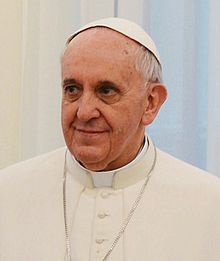


Last October in his homily in St Peter's Square on World Family Day Pope Francis explicitly called families to be the salt of the earth . . . the light of the world. And, characteristically, he called them to be such in a spirit of joy. He ended his homily with these words:

Dear families, you know very well that the true joy which we experience in the family is not superficial; it does not come from material objects, from the fact that everything seems to be going well . . . True joy comes from a profound harmony between persons, something which we all feel in our hearts and which makes us experience the beauty of togetherness, of mutual support along life’s journey. But the basis of this feeling of deep joy is the presence of God in the family and his love, which is welcoming, merciful, and respectful towards all. God alone knows how to create harmony from differences. But if God’s love is lacking, the family loses its harmony, self-centredness prevails and joy fades. But the family which experiences the joy of faith communicates it naturally. That family is the salt of the earth and the light of the world, it is the leaven of society.

Dear families, always live in faith and simplicity, like the Holy Family of Nazareth! The joy and peace of the Lord be always with you!

Photos from Wikipedia.

10 January 2014

'This is my beloved Son . . .' Sunday Reflections, The Baptism of the Lord, Year A


The Baptism of Christ, El Greco, painted 1608-28 [Web Gallery of Art]

Readings (New American Bible: Philippines, USA)                                  

Readings (Jerusalem Bible: Australia, England & Wales, India [optional], Ireland, New Zealand, Pakistan, Scotland, South Africa)

Gospel Matthew 3:13-17 (New RevisedStandard Version, Catholic Edition, Canada) 

Then Jesus came from Galilee to the Jordan to John, to be baptized by him. John would have prevented him, saying, “I need to be baptized by you, and do you come to me?” But Jesus answered him, “Let it be so now; for thus it is fitting for us to fulfil all righteousness.” Then he consented.  And when Jesus was baptized, he went up immediately from the water, and behold, the heavens were opened and he saw the Spirit of God descending like a dove, and alighting on him; and lo, a voice from heaven, saying, “This is my beloved Son, with whom I am well pleased.”


Today's Feast of the Baptism of the Lord brings the liturgical season of Christmas to an end. My edition of The Divine Office suggests the hymn above, Of the Father's Love Begotten (Divinum Mysterium),  as one that may be sung today.


'I baptise you in the name of the Father . . .' 28 December 2011


A Columban confrere, Fr Peter Steen, who died in Ireland in May 2009 at the age of 84 just a couple of weeks after leaving the Philippines, spoke to me a number of times, as I recall, about paintings of the baptism of Jesus. Many of them show only Jesus and his cousin, St John the Baptist. He thought that these were very inaccurate. Jesus lined up with others. St Luke's account specifically says When all the people were baptized, and when Jesus also had been baptized and was praying (3:21).

Anyone present that day, if they had noticed Jesus at all, would have seen him as another sinner. This is an extraordinary expression of God's love for us, that God who became Man would let himself be seen as one of us sinners. In Evangelii Gaudium, The Joy of the Gospel, Pope Francis writes about evangelization: The heart of its message will always be the same: the God who revealed his immense love in the crucified and risen Christ (No 11).

Today ends the Church's liturgical season of Christmas in which we have focused to a large degree on the fact that some, at least, especially the shepherds and the Magi, recognised in Jesus a child from God. But today the Church moves thirty years forward, to the beginning of the public life of Jesus, when he identifies himself with us sinners. This is how he began to reveal his immense love that would culminate in his crucifixion and resurrection.

Pope Francis reminds us in the same document, God never tires of forgiving us; we are the ones who tire of seeking his mercy (No 3). Jesus lining up with sinners to be baptised is a powerful reminder that God never tires of forgiving us.

14 young women and girls lining up for baptism and confirmation, 28 December 2011

At his weekly general audience last Wednesday Pope Francis began a series of teachings on baptism. Here is a summary in English of what Pope Francis said in Italian. I have emphasised some parts of the text.


Dear Brothers and Sisters: Today we begin a series of catecheses on the sacraments, starting with baptism. The Second Vatican Council tells us that the Church herself is a 'sacrament', a grace-filled sign which makes Christ’s saving work present in history, through the power of the Holy Spirit. The first of the Church’s seven sacraments, baptism gives us new birth in Christ, makes us sharers in the mystery of his death and resurrection, grants the forgiveness of sin and brings us new freedom as God’s children and members of his Church. Let us not forget the great gift we have received. Our baptism has changed us, given us a new and glorious hope, and empowered us to bring God’s redeeming love to all, particularly the poor, in whom we see the face of Christ. Our baptism has also given us a share in the Church’s mission of evangelization; as disciples, we are also missionaries. As we celebrate the feast of the Baptism of the Lord this Sunday, let us ask him to renew in us the grace of our baptism and to make us, with all our brothers and sisters, true children of God and living members of his body, the Church.


Before the audience members of a circus entertained Pope Francis and the people at the audience. Speaking directly to the circus performers the Pope said, When you travel from city to city I ask you to become messengers of joy, messengers of brotherhood in a world that greatly needs it.

Pope Francis makes the same point in a colourful way in Evangelii Gaudium No 10: An evangelizer must never look likes someone who has just come back from a funeral!

In reality, funerals can be powerful moments of evangelization. Fr Michael Scully, a Columban priest who worked in Japan for many years, told of how a funeral homily given by Fr Willie Spicer, another Columban at whose funeral he was preaching, led to the conversion of a Japanese artist. 


At the moment of our baptism God the Father quietly said the words he spoke at the baptism of Jesus: This is my beloved son/daughter, with whom I am well pleased.

The Baptism of Jesus took place at the beginning of his public ministry. Our baptism initiates us into our participation in and responsibility for continuing that ministry, which Jesus handed over to the Church. Pope Francis speaks about the urgency of that in Evangelii Gaudium No 14: Lastly, we cannot forget that evangelization is first and foremost about preaching the Gospel to those who do not know Jesus Christ or who have always rejected him. Many of them are quietly seeking God, led by a yearning to see his face, even in countries of ancient Christian tradition. All of them have a right to receive the Gospel. Christians have the duty to proclaim the Gospel without excluding anyone. Instead of seeming to impose new obligations, they should appear as people who wish to share their joy, who point to a horizon of beauty and who invite others to a delicious banquet. It is not by proselytizing that the Church grows, but 'by attraction'.


Blessed Miguel Pro SJ (1891 - 1927)
‘¡Viva Cristo Rey!’ 'Long live Christ the King!' 23 November 1927

Pope Francis reminds us that the Church grows by attraction. Two priest-martyrs exemplify that for me very powerfully and humanly. One is Blessed Miguel Pro SJ whose last words at his execution were ¡Viva Cristo Rey. He once promised to joke in heavenIf I meet any long-faced saints there I will cheer them up with the Mexican Hat Dance! 

Fr Ragheed Ganni (1972 - 2007)

Father Ragheed, an engineer by profession, lived in the Irish College in Rome while styudying there. Someone who knew him said this of him after he was murdered in Iraq in 2007: 
He was a raconteur par excellence and a font of knowledge - we discussed everything and anything from the metaphysical to the trivial. A young and gauche student at the time, I learnt about Iraq and about theology; about the workings of the college in the summer and the best places to eat pizza. I was amazed at his command of English and Italian and his perennial good spirits and big smile - he was and will always be an inspiration.

An Irish priest who lived in the next room to Father Ragheed in Rome, Fr Murchadh Ó Madagáin, wrote on his blog about the Iraqi priest: And the thing that will stick with me the most is probably this: he said that without the Eucharist, the people have nothingThat is why he was prepared to stay, because he believed that the Eucharist was everything, and the people needed this hope and so he was prepared to stay there and risk death.  [Emphasis added in both quotations above.] 

Can there be more attractive examples of the living out of our baptismal mission, messengers of joy, messengers of brotherhood in a world that greatly needs it, than these two young priests who chose to live in great danger in their homelands, one prepared to do the Mexican Hat Dance in heaven, the other who knew where to find the best pizza in Rome, dying for their faith?

03 December 2013

St Francis Xavier: 'Many, many people hereabouts are not becoming Christians for one reason only: there is nobody to make them Christians.'


Today, 3 December, is the feast of St Francis Xavier, the great Jesuit missionary priest who, with St Thérèse of Lisieux is the patron saint of missionaries. Here is an extract from a letter of the saint to St Ignatius of Loyola, the founder of the Society of Jesus, the Jesuits. This is the Second Reading in the Office of Readings in the Breviary for the saint's feast day. I copied this version from DivineOffice.org, a website that has the full Prayer of the Church for each day. I have highlighted parts of the letter of St Francis Xavier.

From the letters to Saint Ignatius by Saint Francis Xavier, priest
Woe to me if I do not preach the Gospel

We have visited the villages of the new converts who accepted the Christian religion a few years ago. No Portuguese live here—the country is so utterly barren and poor. The native Christians have no priests. They know only that they are Christians. There is nobody to say Mass for them; nobody to teach them the Creed, the Our Father, the Hail Mary and the Commandments of God’s Law.

I have not stopped since the day I arrived. I conscientiously made the rounds of the villages. I bathed in the sacred waters all the children who had not yet been baptized. This means that I have purified a very large number of children so young that, as the saying goes, they could not tell their right hand from their left. The older children would not let me say my Office or eat or sleep until I taught them one prayer or another. Then I began to understand: “The kingdom of heaven belongs to such as these.”

I could not refuse so devout a request without failing in devotion myself. I taught them, first the confession of faith in the Father, the Son and the Holy Spirit, then the Apostles’ Creed, the Our Father and Hail Mary. I noticed among them persons of great intelligence. If only someone could educate them in the Christian way of life, I have no doubt that they would make excellent Christians.

Many, many people hereabouts are not becoming Christians for one reason only: there is nobody to make them Christians. Again and again I have thought of going round the universities of Europe, especially Paris, and everywhere crying out like a madman, riveting the attention of those with more learning than charity: “What a tragedy: how many souls are being shut out of heaven and falling into hell, thanks to you!

I wish they would work as hard at this as they do at their books, and so settle their account with God for their learning and the talents entrusted to them.

This thought would certainly stir most of them to meditate on spiritual realities, to listen actively to what God is saying to them. They would forget their own desires, their human affairs, and give themselves over entirely to God’s will and his choice. They would cry out with all their heart: Lord, I am here! What do you want me to do? Send me anywhere you like—even to India.


Evangelii Gaudium, the new Apostolic Exhortation of Pope Francis, a Jesuit like the saint we celebrate today, begins with these words:

The joy of the gospel fills the hearts and lives of all who encounter Jesus. Those who accept his offer of salvation are set free from sin, sorrow, inner emptiness and loneliness. With Christ joy is constantly born anew. In this Exhortation I wish to encourage the Christian faithful to embark upon a new chapter of evangelization marked by this joy, while pointing out new paths for the Church's journey in years to come.

I'm sure that St Francis Xavier, whose whole being burned with the desire to bring the Gospel of Jesus Christ to the whole world, would agree.