
Very rightly the fine arts are considered to rank among the noblest activities of man's genius, and this applies especially to religious art and to its highest achievement, which is sacred art. These arts, by their very nature, are oriented toward the infinite beauty of God which they attempt in some way to portray by the work of human hands; they achieve their purpose of redounding to God's praise and glory in proportion as they are directed the more exclusively to the single aim of turning men's minds devoutly toward God (Vatican II, Sacrosanctum Concilium, No 122).
Readings (Jerusalem Bible: Australia, England & Wales, India [optional], Ireland, New Zealand, Pakistan, Scotland, South Africa)
Readings (New
American Bible: Philippines, USA)
Gospel Luke 12:13-21 (English Standard Version Anglicised: India)
Someone in the crowd said to Jesus, “Teacher, tell my brother to divide the inheritance with me.” But he said to him, “Man, who made me a judge or arbitrator over you?” And he said to them, “Take care, and be on your guard against all covetousness, for one's life does not consist in the abundance of one's possessions.” And he told them a parable, saying, “The land of a rich man produced plentifully, and he thought to himself, ‘What shall I do, for I have nowhere to store my crops?’ And he said, ‘I will do this: I will tear down my barns and build larger ones, and there I will store all my grain and my goods. And I will say to my soul, Soul, you have ample goods laid up for many years; relax, eat, drink, be merry.’ But God said to him, ‘Fool! This night your soul is required of you, and the things you have prepared, whose will they be?’ So is the one who lays up treasure for himself and is not rich towards God.”
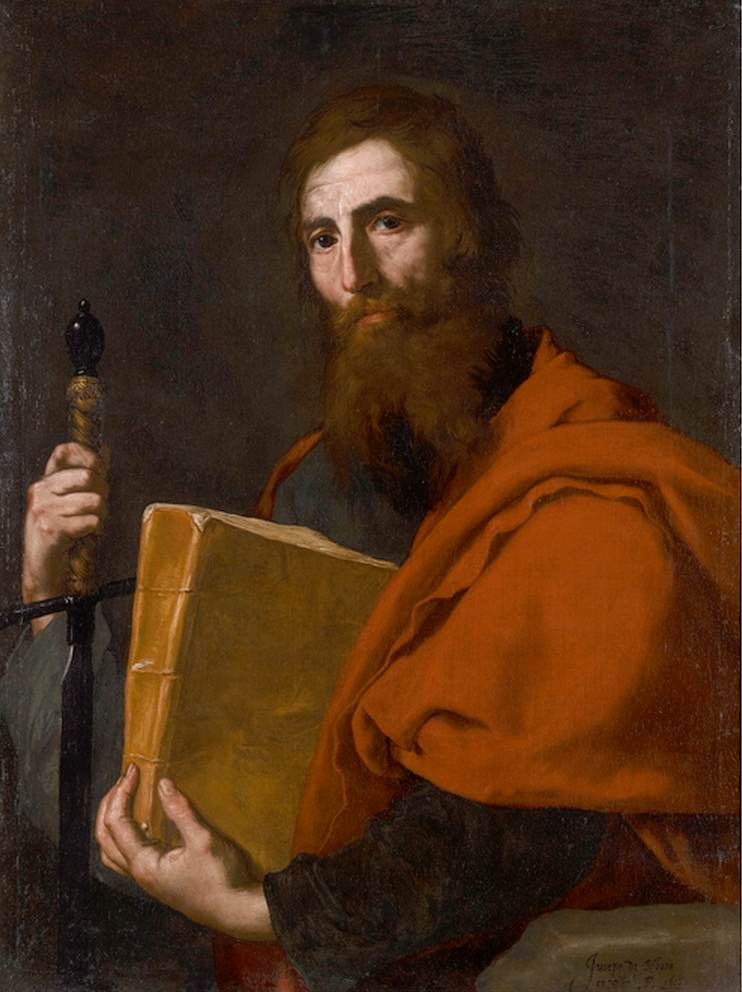
Second Reading Colossians 3:1-5; 9-11 (English Standard Version Anglicised: India)
If then you have been raised with Christ, seek the things that are above, where Christ is, seated at the right hand of God. Set your minds on things that are above, not on things that are on earth. For you have died, and your life is hidden with Christ in God. When Christ who is your life appears, then you also will appear with him in glory.
Put to death
therefore what is earthly in you: sexual immorality,
impurity, passion, evil desire, and covetousness, which is idolatry.
Do not lie to one another, seeing that you have put off the old self with its practices and have put on the new self, which is being renewed in knowledge after the image of its creator. Here there is not Greek and Jew, circumcised and uncircumcised, barbarian, Scythian, slave, free; but Christ is all, and in all.
+++
I will give some quotations from The Presence of God, a 68-page astonishingly rich booklet, by Fr Anselm Moynihan OP that for me are connected with the Second Reading. They are from Chapter 7, The Hidden Sanctuary.
It cannot be overstressed that the presence of God in the soul by grace is a real and substantial presence. God is present in the tabernacle of the heart as really and truly and substantially as he is present in the tabernacle of the altar, although in a different manner . . .
If I fail to honour the Son of God as he is present with the Father and Holy Spirit in the Tabernacle of my own heart, no man can compensate for my indifference. The inner sanctuary of my own heart is utterly and eternally inaccessible to any except myself and God . . .
Yet without devotion to the real presence of God within our souls there can be no full development of our spiritual life, which is essentially an interior life . . .
God's real presence in the inner sanctuary of my soul imposes on me a threefold duty. I must defend the sanctuary: I must adorn and enable it; I must enter frequently to worship him who dwells there . . .
I must, first of all, defend the inner sanctuary of my soul, for during this life it is always under siege . . . Mortal sin destroys the sanctuary completely, leaving the soul ruined and desolate.
God in his mercy has given the Church the beautiful Sacrament of Reconciliation / Penance / Confession so that that sanctuary can be restored.
In Chapter 6, Guest of Our Soul, Father Anselm tells the beautiful story of St Leonidas, martyred in 202. He was the father of Origen, the great theologian of the early Church. Every night, we are told, Leonidas used to kiss the breast of his sleeping child out of reverence for God who was really present in the living tabernacle of the child's heart.
What a beautiful expression of faith and of fatherhood!
Christ is all, and in all.

Traditional Latin Mass
Eighth Sunday after Pentecost
The Complete Mass in Latin and English is here. (Adjust the date at the top of that page to 7-31-2022 if necessary).
Epistle: Romans 8:12-17. Gospel: Luke 16:1-9.
 Wheatfield with Reaper at Sunrise

