Showing posts with label Sto Niño. Show all posts

16 January 2014

Sunday Reflections, Feast of the Sto Niño Year A (Philippines), 19 January 2014

Holy Child of Cebu
Balaang Bata sa Sugbo
Santo Niño de Cebú

The Feast of the Santo Niño is proper to the Philippines and is celebrated on the Second Sunday in Ordinary Times. The prayers and readings of the Mass are proper to the feast. Here are the readings, taken from the New American Bible, the English translation used in the Lectionary in the country.

First Reading Isaiah 9:1-6    

The people who walked in darkness
have seen a great light;
upon those who dwelt in the land of gloom
a light has shone.
You have brought them abundant joy
and great rejoicing,
as they rejoice before you as at the harvest,
as people make merry when dividing spoils.
For the yoke that burdened them,
the pole on their shoulder,
and the rod of their taskmaster
you have smashed, as on the day of Midian.
For every boot that tramped in battle,
every cloak rolled in blood,
will be burned as fuel for flames.
For a child is born to us, a son is given us;
upon his shoulder dominion rests.
They name him Wonder-Counselor, God-Hero,
Father-Forever, Prince of Peace.
His dominion is vast
and forever peaceful,
from David’s throne, and over his kingdom,
which he confirms and sustains
by judgment and justice,
both now and forever.
The zeal of the LORD of hosts will do this!

Responsorial Psalm   Ps 96[97]: 1-2, 2-3, 11-12, 13

R. Today is born our Savior, Christ the Lord.
Sing to the LORD a new song;
   sing to the LORD, all you lands.
Sing to the LORD; bless his name.
R. Today is born our Savior, Christ the Lord.
Announce his salvation, day after day.
Tell his glory among the nations;
among all peoples, his wondrous deeds.
R. Today is born our Savior, Christ the Lord.
Let the heavens be glad and the earth rejoice;
   let the sea and what fills it resound;
   let the plains be joyful and all that is in them!
Then shall all the trees of the forest exult.
R. Today is born our Savior, Christ the Lord.
They shall exult before the LORD, for he comes;
   for he comes to rule the earth.
He shall rule the world with justice
   and the peoples with his constancy.
R. Today is born our Savior, Christ the Lord.

Second Reading Ephesian 1:3-6, 15-18 

Blessed be the God and Father of our Lord Jesus Christ, who has blessed us in Christ with every spiritual blessing in the heavens, as he chose us in him, before the foundation of the world, to be holy and without blemish before him. In love he destined us for adoption to himself through Jesus Christ, in accord with the favor of his will, for the praise of the glory of his grace that he granted us in the beloved.

Therefore, I, too, hearing of your faith in the Lord Jesus and of your love for all the holy ones, do not cease giving thanks for you, remembering you in my prayers, that the God of our Lord Jesus Christ, the Father of glory, may give you a spirit of wisdom and revelation resulting in knowledge of him.

May the eyes of (your) hearts be enlightened, that you may know what is the hope that belongs to his call, what are the riches of glory in his inheritance among the holy ones.

Gospel, Matthew 18:1-5, 10

At that time the disciples approached Jesus and said, "Who is the greatest in the kingdom of heaven?"

He called a child over, placed it in their midst, and said, "Amen, I say to you, unless you turn and become like children, you will not enter the kingdom of heaven.

Whoever humbles himself like this child is the greatest in the kingdom of heaven. And whoever receives one child such as this in my name receives me.

"Whoever causes one of these little ones who believe in me to sin, it would be better for him to have a great millstone hung around his neck and to be drowned in the depths of the sea.

"See that you do not despise one of these little ones, for I say to you that their angels in heaven always look upon the face of my heavenly Father.

The Novena Song for the Feast of the Sto Niño


The Feast of the Santo Niño is hugely important in the Philippines. It is also an extension, in a real sense, of Christmas, even though the liturgical season of Christmas ended last Sunday with the Feast of the Baptism of the Lord. The first Reading is that used in the Christmas Mass During the Night ('Midnight Mass').

It is also a celebration of the fact that Jesus came among us as a child. After posting this I read Our Stories on Misyon, the Columban online magazine I edit here in the Philippines, a reflection by our editorial assistant Richelle Verdeprado on the continuity between childhood dreams and the opportunities given us each day of our adult lives to create stories that glorify God’s presence in our lives.

Here are some quotations from Pope Francis, chosen in the context of this Sunday's celebration.

Apostolic Exhortation of Pope Francis

No 21. The Gospel joy which enlivens the community of disciples is a missionary joy.

No.23. The joy of the Gospel is for all people: no one can be excluded.

No 24. An evangelizing community knows that the Lord has taken the initiative, he has loved us first (cf. 1 Jn 4:19), and therefore we can move forward, boldly take the initiative, go out to others, seek those who have fallen away, stand at the crossroads and welcome the outcast. Such a community has an endless desire to show mercy, the fruit of its own experience of the power of the Father’s infinite mercy. 

Finally an evangelizing community is filled with joy; it knows how to rejoice always. It celebrates every small victory, every step forward in the work of evangelization. Evangelization with joy becomes beauty in the liturgy, as part of our daily concern to spread goodness. The Church evangelizes and is herself evangelized through the beauty of the liturgy, which is both a celebration of the task of evangelization and the source of her renewed self-giving.

No 30. Each particular Church, as a portion of the Catholic Church under the leadership of its bishop, is likewise called to missionary conversion . . . It is the Church incarnate in a certain place, equipped with all the means of salvation bestowed by Christ, but with local features. Its joy in communicating Jesus Christ is expressed both by a concern to preach him to areas in greater need and in constantly going forth to the outskirts of its own territory or towards new sociocultural settings.

During the Novena in preparation for the feast.

No. 49.  I prefer a Church which is bruised, hurting and dirty because it has been out on the streets, rather than a Church which is unhealthy from being confined and from clinging to its own security.

No. 68. The immense importance of a culture marked by faith cannot be overlooked; before the onslaught of contemporary secularism an evangelized culture, for all its limits, has many more resources than the mere sum total of believers. An evangelized popular culture contains values of faith and solidarity capable of encouraging the development of a more just and believing society, and possesses a particular wisdom which ought to be gratefully acknowledged.

No.69. It is imperative to evangelize cultures in order to inculturate the Gospel. In countries of Catholic tradition, this means encouraging, fostering and reinforcing a richness which already exists.

No. 71. The new Jerusalem, the holy city (cf. Rev 21:2-4), is the goal towards which all of humanity is moving. It is curious that God’s revelation tells us that the fullness of humanity and of history is realized in a city. We need to look at our cities with a contemplative gaze, a gaze of faith which sees God dwelling in their homes, in their streets and squares. God’s presence accompanies the sincere efforts of individuals and groups to find encouragement and meaning in their lives. He dwells among them, fostering solidarity, fraternity, and the desire for goodness, truth and justice.

Sto Niño, Gugma Ko, 'Holy Child, My Love', 

I don't know who the singer and musicians are in the video above but here is the song sung by its composer, Manny Lapingcao.


The website of the Basilica Minore de Santo Niño de Cebu, Cebu City, is here.


15 November 2013

'There will be great earthquakes . . .' Sunday Reflections, 33rd Sunday in Ordinary Time Year C

Sto Niño Basilica, Cebu City, Philippines, 15 October 2013

Readings (New American Bible: Philippines, USA)                                  

Readings (Jerusalem Bible: Australia, England & Wales, India [optional], Ireland, New Zealand, Pakistan, Scotland, South Africa)


And as some spoke of the temple, how it was adorned with noble stones and offerings, Jesus said, "As for these things which you see, the days will come when there shall not be left here one stone upon another that will not be thrown down." And they asked him, "Teacher, when will this be, and what will be the sign when this is about to take place?" And he said, "Take heed that you are not led astray; for many will come in my name, saying, 'I am he!' and, 'The time is at hand!' Do not go after them. And when you hear of wars and tumults, do not be terrified; for this must first take place, but the end will not be at once." 

Then he said to them, "Nation will rise against nation, and kingdom against kingdom; there will be great earthquakes, and in various places famines and pestilences; and there will be terrors and great signs from heaven. But before all this they will lay their hands on you and persecute you, delivering you up to the synagogues and prisons, and you will be brought before kings and governors for my name's sake. This will be a time for you to bear testimony.  Settle it therefore in your minds, not to meditate beforehand how to answer; for I will give you a mouth and wisdom, which none of your adversaries will be able to withstand or contradict.  You will be delivered up even by parents and brothers and kinsmen and friends, and some of you they will put to death;  you will be hated by all for my name's sake. But not a hair of your head will perish. By your endurance you will gain your lives."

Tanauan, Leyte, after Super Typhoon Haiyan/Yolanda 8 November 2013


Sr Maricel Fuerza TC and Sr Reah Lei Talibas TC are friends of mine, members of the Capuchin Tertiary Sisters of the Holy Family. They both happen to be in the same small community at the novitiate of the Sisters in Talisay City, Negros Occidental, just north of Bacolod City.

Sr Maricel is from Catigbian, Bohol, very near the epicentre of the 7.2 magnitude earthquake that hit Bohol and other parts of the Visayas, noticeably Cebu, the morning of 15 October. Her family home was destroyed, though nobody was hurt.


Sister Maricel is on the left.

Sr Rhea Lei is from Tanauan, Leyte, a coastal town south of Tacloban City that has been featured so much in the news since Super typhoon Haiyan/Yolanda passed through the central Philippines on 8 November. Her family home too was destroyed though all are safe. Sister texted me the other day that her family were suffering from hunger because of the lack of food and water. She texted later 'I desire to go [home] but I feel helpless at this time'.


Sister Rhea Lei is on the far left.

A word I have often used about the people of the Philippines is 'resilience'. Many reporters, foreign and Filipino, have been seen that resilience this last week. I have seen it so many times. I remember travelling on a bus nearly 40 years ago in northern Mindanao sitting next to a young couple with two or three very young children and two or three bags. I didn't really find out their story but I knew they were moving to another place to make a new start. Jesus tells us at the end of today's gospel, By your endurance you will gain your lives.

People here, especially those who are poor or without influence, are long-suffering. Sometimes this can result in an unhelpful passivity. But the other side of that is an extraordinary resilience when disaster strikes. Very often this is an expression of deep faith. I saw on TV a shot of people kneeling and praying in front of a statue of Our Blessed Mother in one of the churches in Tacloban City. These were people left with nothing who had probably lost family members or others close to them.

The Church of Our Lady of Perpetual Help, the Redemptorist church in Tacloban, is sheltering 200 to 300 families,  the pews serving as beds. A BBC reporter there described Fr Edwin Bacaltos CSsR, the parish priest and whom I know, as a genuine good shepherd. And it was stated that, as usual, there would be four Masses on Sunday.

Though there has been some looting, what I saw on TV showed an 'orderliness' of some kind, even though some were taking goods that couldn't possibly be of any use. I have been struck by the orderliness of very long queues of people, young and old, waiting patiently  and with hope for food and water, even when hardly anything is available.


Christ on the Sea of Galilee, 1854, Eugène Delacroix [Wikipedia]

I know that the Church in some countries will have special collections for the victims of Haiyan/Yolanda. I know that people will be very generous, as so many have been already.

'I have returned', 1944, Gulf of Leyte [Wikipedia]

An iconic photo from World War II is that of General Douglas MacArthur landing at Tacloban to help, with the aid of both American and Filipino soldiers (the soldier with the helmet behind General MacArthur is Philippine General Carlos P. Romulo), to liberate the Philippines from the Japanese. 69 years later an American aircraft carrier has arrived in the same area to help, with many others, to liberate the people of Leyte from their present misery. The 'many others' include not only countless Filipinos but people on board ships sent by the United Kingdom and Japan. Nation will rise against nation, and kingdom against kingdom Jesus tells us, That was the reality in the Pacific War 70 years ago but now former enemies are working together to help the victims of what is said to be the strongest storm ever to hit land.

Surely this is a symbol of God's presence just as Jesus, God who became man, was present while asleep on the boat in the middle of a storm.

Filipinos have a great devotion to the Sto Niño, the Child Jesus. The video at the top shows the bell tower of the Sto Niño Basilica in Cebu being destroyed by the earthquake. The main church in Tacloban City is also named after the Sto Niño. I used the video below earlier in the week. The hymn to the Sto Niño of Tacloban was recorded in that church, which is seen in the video. The hymn, both the words and the way it is sung, captures for me something of the faith and hope of Filipino Catholics, in this instance those in the region that has been most severely stricken, a trust in God's love and mercy. The people fervently sing as they ask the Holy Child of Tacloban not to leave them.

He won't.


Shortly after I uploaded Sunday Reflections I received the following reflection from a friend in Manila, not as a response but by coincidence.

Calamities, natural and man-made have besieged our country in recent months and years, with increasing frequency, intensity and horror. As Christians, how do we witness about God, to a man cradling his lifeless daughter in his arms, or a child made orphan by surging sea and homeless by howling wind, or a community whose locus of worship for centuries has been reduced to a pile of rubble in seconds? Is God punishing us? As Catholics, fortified by the Year of Faith, we can never ever believe that. Instead, we witness to a God of love, as we help bury the dead, feed, clothe, shelter the living, comfort the grieving. We cling to our faith in a God who brings good out of evil, for our sake and for those who are on the verge of losing their faith. The good has started coming, in the deluge of donations, equipment, rescue and medical missions, from all over the world – even from those, with whom, we have had differences. Indeed, natural calamities make humankind realize how fleeting is life, how fragile is our shared planet. Reminded of how helpless we truly are, we raise our hearts in prayer, our arms in surrender, like children asking to be carried, confident, that our Father will scoop us up in His arms and carry us home.

Blessings

Vi

13 November 2013

'We may have ratified our own doom.' Aftermath of Super Typhoon Haiyan/Yolanda in Tacloban City, Philippines


The photos above were uploaded on October 30 on her Facebook account by my friend Rhea Gladys Mae Sarigumba, a social worker who lives in Tacloban City. She is with one of her two daughters in the top right while her mother Mrs Vicenta Matildo is in the photo below with her to granddaughters, the children of Rhea and her husband Rogel who is pictured in the top right with his two daughters, his mother-in-law Vicenta and sister-in-law Lalai with her daughter Barbie.

Rhea with her husband Rogel and their daughters whose nicknames are 'Xycy' and 'Xie Ann'.

I've had no news about Rhea since Super Typhoon Haiyan/Yolanda hit Tacloban City early on Friday morning, 8 November. One of the last entries by Rhea on the timeline of her Facebook is a link to an update on the approaching storm on the website of PAGASA, the national weather bureau in the Philippines issued at 6AM on 7 November, less than 24 hours before it hit the islands of Samar and Leyte in the Eastern Visayas. ('PAGASA' is an acronym but in the Visayan languages, spoken in the hardest-hit areas, it means 'hope'.)

Rhea's very last entry on Facebook, dated 7 November, was How can I sleep when 
all I hear is raindrops.. #kanta lang teh? (Just sing?)

Vicenta, Rhea's mother left Surigao del Norte in Mindanao, where she lives, for Tacloban City on Sunday but I haven't heard from her since. However,  a mutual friend and neighbour of Vicenta texted me this morning that Vicenta's mother and her sisters are all safe as they had evacuated before the storm hit.


This afternoon I received a text message from another Rhea, Sr Rhea Lei Tolibas TC, a young religious of the Capuchin Tertiary Sisters of the Holy Family who is based in the novitiate of the Sisters just north of Bacolod City. She's from Tanauan, Leyte, seen at the beginning of the video above, a coastal town about 45 minutes south of Tacloban City. Her family are safe and in an evacuation centre but lack food and water. Sr Rhea mentioned that people are desperate. 

BBC World reported this afternoon, Wednesday, that eight people had been killed while a crowd stormed a storehouse looking for food.


The website of the Mercy International Association carries this report of damage to the hospital and school of the Mercy Sisters in Tacloban:

As a human tragedy, the scale of the disaster is so enormous that it is almost beyond our comprehension. What makes this tragedy especially compelling for us is that our own Sisters are significantly effected. The new Mother of Mercy hospital at Tacloban is 50% damaged, the Holy Infant school and college 75% damaged, the Convent in Mindanao badly damaged and the food supplies have run out. It is,of course, impossible to make direct contact with our Sisters, but our understanding is that no Sister is hurt, thank God. However, news has filtered through that some of our Sisters' families are harmed or missing. In the midst of this disaster, these Sisters of Mercy continue to bring human and spiritual comfort and support to all in such drastic need around them.

Six Irish Mercy Sisters from St Maries of the Isle, Cork, went to Tacloban in 1954 at the invitation of Bishop Lino Gonzaga of Palo. That original group grew into a new congregation of Mercy Sisters that now has 47 members, all Filipinos, working in a number of areas. Education and medical care have always been central to Mercy Sisters. Mother of Mercy Hospital, Tacloban City, was one expression of that. 

The six Irish Sisters were asked to take over the running of an already established school that has grown into Holy Infant College (HIC). Ironically, the thene for the 87th anniversary of the establishment of the school was Responding to the Challenges of Climate Change.


Yeb Saño, Climate Change Commissioner of the Philippines and a delegate to the 2013 Climate Change Conference in Warsaw speaks very movingly about the impact of Haiyan/Yolanda on his own family. Whether or not the super typhoon was caused by climate change it reminds us of the urgency of respecting God's creation. And God saw everything that he had made, and behold, it was very good (Genesis 1:31, RSVCE). We may have ratified our own doom, Mr Saño points out. But there still is room for us to act.

From looking at news reports on television I see some hope that  within two or three days essential aid, food, drinking water, shelter, medicine,communication systems, proper sanitation, the recovery and burial of all the dead, may avert an even greater disaster than what is there now. Good weather that will last for at least a few days is expected by Friday.

Last night President Aquino said that the estimate of 10,000 dead was too high and that the government believed the death toll was around 2,500. The final figure may be somewhere in between those two estimates. But each death is a tragedy for family and relatives.

When my friend Rhea Sarigumba posted the PAGASA update on Facebook she wrote, May God guide us with His loving care and protection.

May God give strength to all in the affected areas, victims, those bringing aid, administrators and media people. 


Will Yeb Saño's warning, We may have ratified our own doom, come true or will there be a place for Xycy, Xie Ann, Mabel, the children born just after the storm, and their contemporaries around the world at the table of life when they grow up?

Just now, 7:50pm Philippine time, I received news that the family of Reah and Rogel are all safe. Thanks be to God.

10 November 2013

Devastation in Tacloban City, Philippines


It has become clear that Super Typhoon Haiyan ('Yolanda' in the Philippines) has caused enormous destruction and, very possibly, many deaths. Tacloban City, on the island of Leyte in the eastern Visayas, the group of large islands in the centre of the country, looks as if a bomb had been dropped on it. I have visited it a number of times.

Much of the damage was caused by a storm surge, which is similar to a tsunami. I heard an official of PAGASA, the national weather bureau, explain on television today that where the seas is shallow, as it is in Tacloban City,  such surges tend to be much higher than where the sea is deep and therefore much more destructive.

Part of downtown Tacloban City


There are now reports that more than 10,000 may have died as a result of the storm. Reuters quotes a senior police official on this.


At 1.47 in the video above you can see the damage done to Daniel Z. Romualdez Airport. Below is a photo of the main building.


Although the airport buildings, including the control tower, as far as I know, have been badly damaged the runway has now been cleared of debris and military aircraft carrying supplies and troops have been able to land. President Aquino also visited today.

Reports indicate that it may be months before normal electricity services can be resumed.

There has been some looting in Tacloban City but scenes on TV showed this to be an 'orderly' process, if one can describe it as such. And footage shows people queuing up in orderly fashion at the airport, hoping for relief goods and, in some cases, hoping to get out. However, police and soldiers have been brought in to bring about order. One can well imagine that if people don't get basics such as food, drinking water, shelter and medical care, that matters could get out of hand.

One striking characteristic of Filipinos is their resilience. I've seen this over and over again. People pick up the pieces and start again.

Pope Francis sent the following telegram through Secretary of State Archbishop Pietro Parolin to President Aquino:

Deeply saddened by the destruction and loss of life caused by the super typhoon, His Holiness Pope Francis expresses his heartfelt solidarity with all those affected by this storm and its aftermath. He is especially mindful of those who mourn the loss of their loved ones and of those who have lost their homes. In praying for all the people of the Philippines, the Holy Father likewise offers encouragement to the civil authorities and emergency personnel as they assist the victims of this storm. He invokes divine blessings of strength and consolation for the Nation.

Basilica of Sto Niño de Tacloban

The Patron of Tacloban City is the Sto Niño de Tacloban, the Holy Child of Tacloban. May God show his love in a special way to the many children who have been traumatised by their experience in those places in the Philippines that bore the brunt of the typhoon. And may Mary and her husband St Joseph obtain for parents and others in positions of authority the strength and generosity to do what needs to be done to bring about a life-giving normality.


May the faith of the people of Tacloban City and other affected areas, expressed in the hymn above to the Sto Niño de Tacloban asking his blessing and mercy, touch the Merciful Heart of our loving Saviour Jesus Christ.

Photos from Wikipedia.

18 January 2013

'Do whatever he tells you.' Sunday Reflections. 2nd Sunday in Ordinary Time Year C

The Marriage at Cana, Jan Cornelisz Vermeyen, c.1530
Rijksmuesum, Amsterdam  [Web Gallery of Art]


Readings (New American Bible: Philippines, USA)

Readings (Jerusalem Bible: Australia, England & Wales, India [optional], Ireland, New Zealand, Pakistan, Scotland, South Africa) 

Gospel John 2:1-11 (Revised Standard Version – Catholic Edition)

On the third day there was a marriage at Cana in Galilee, and the mother of Jesus was there; Jesus also was invited to the marriage, with his disciples. When the wine failed, the mother of Jesus said to him, "They have no wine." And Jesus said to her, "O woman, what have you to do with me? My hour has not yet come." His mother said to the servants, "Do whatever he tells you." Now six stone jars were standing there, for the Jewish rites of purification, each holding twenty or thirty gallons. Jesus said to them, "Fill the jars with water." And they filled them up to the brim. He said to them, "Now draw some out, and take it to the steward of the feast." So they took it. When the steward of the feast tasted the water now become wine, and did not know where it came from (though the servants who had drawn the water knew), the steward of the feast called the bridegroom and said to him, "Every man serves the good wine first; and when men have drunk freely, then the poor wine; but you have kept the good wine until now." This, the first of his signs, Jesus did at Cana in Galilee, and manifested his glory; and his disciples believed in him. 

Feast of the Sto Niño

On the third Sunday of January the Church in the Philippines celebrates the Feast of the Sto Niño, the Holy Child. These Sunday Reflections focus on the Second Sunday in Ordinary Time Year C. But you may want to read an article by a good friend in Cebu, Judge Simeon Dumdum, Jr, which I featured on this blog in 2009, The Sleeping Sto Niño.

To complicate matters for me, here in the Diocese of Bacolod, as Sunday is 20 January, we celebrate the Solemnity of St Sebastian, patron of the Cathedral, of the Diocese and of the City, and will observe the Feast of the Sto Niño the following Sunday.

Second Sunday in Ordinary Time Year B


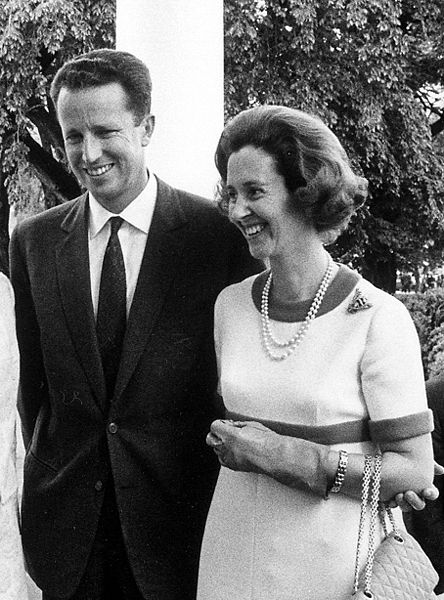
Last Sunday I featured the late King Baudouin of the Belgians. This week I feature him again, with Queen Fabiola. The story of how they met is quite remarkable and the late Cardinal Suenens tels the story in his biography of the King, Baudouin, King of the Belgians, The Hidden Life.

The video above has as background music and Irish song that I learned in Grade Three, The Dawning of the Day, in Irish Gaelic Fáinne Geal an Lae, the version I learned. An Irish song is not at all inappropriate as the matchmaker of the marriage of Baudouin and Fabiola was an Irish woman, Veronica O'Brien. 

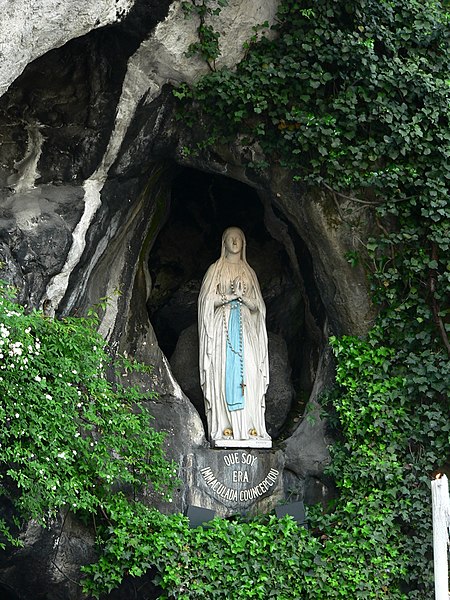
Veronica was envoy of the Legion of Mary to France and some other European countries. Much 'cloak and dagger' work was involved in finding a wife and queen for the young king. Much more importantly, much prayer was involved too, prayer that was basically a searching for God's will. They became formally engaged in Lourdes, France, King Baudouin travelling incognito, as he always did when he went there.

The couple were married in Brussels on 15 December 1960. The video shows photos of both the civil and church ceremonies. In a number of European countries a separate civil ceremony is required by law and takes place before the church celebration. The King wrote in his spiritual diary for that day: Normally we are awake by day and dream at night, but this time it's as if I'm in a dream all day.

On 8 July 1978 Baudouin wrote in his diary: My God, I thank you for having led us by the hand to the feet of Mary, and every day since then, I thank you, Lord, that we have been able to love each other in your Love, and that that love has brown each day.

And Queen Fabiola wrote to Veronica: I knew Our Blessed Lady was a Queen and a Mother, and all sort of other things, but I never knew that she was a Matchmaker!

Quoting the Queen led Cardinal Suenens to quote a Spanish verse:

Cristo dijo a su Madre 
el dia de la Asunción 
no te vaya de este mundo 
sin pasar por Aragón.

Christ said to his Mother 
on the day of the Assumption: 
do not leave this world 
without passing through Aragón.

Before her marriage the Queen was Doña Fabiola de Mora y Aragón.


The Cardinal quotes freely from Baudouin's diary about Queen Fabiola.

Fill Fabiola with your holiness. May she live her life in your joy and your peace. Teach me to love her with your own tenderness . . .

Fabiola is so loving; she warms my heart. Her silent, yet active presence is a source of great joy to me. My God, how you have spoiled me!

Thank you, Jesus, for having nurtured in me an immense love for my wife. Thank you for having given me a spouse whose love for me is second only to her love for You. May we both grow in you, Lord.

When Veronica O'Brien met Fabiola in Spain she asked the young woman, who had no idea why where things were leading, why she had never married. She replied, What can I say? I have never fallen in love up to now. I have put my life into the hands of God. I abandon myself to Him, maybe he is preparing something for me.

Veronica recounted all of this in a letter to the King and concluded, It was utterly astounding, because I knew exactly what God was preparing for her.

Thirty years later the King wrote in his spiritual diary: Mary, show me what I should do so as not to miss an opportunity of loving, of denying myself for your sake, of living the present moment to the full, as if it were my last, and of loving my darling Fabiola infinitely more. yes, Mother, teach me to love her with tenderness, gentleness, thoughtfulness, respect, and teach me to have faith in here . . .

And Baudouin, addressing the Lord, wrote, Teach me too to respect her personality with its difference adn its inconsistencies. Jesus, I thank you for having given me this wonderful treasure.

Both King Baudouin and Queen Fabiola in these extracts reflect the spirituality of a book that Cardinal Suenens had given the King before he met his future queen and wife, Abandonment to Divine Providence by Jean-Pierre de Caussade SJ. One English translation of this masterpiece has the title The Sacrament of the Present Moment, which captures the essence of the book, that God's will is in the present moment.

Shortly before he left for Motril, Spain, in 1993, where he died suddenly, King Baudouin confided to Cardinal Suenens and Veronica, I love Fabiola more and more each day: what an inspiration she is to me!

This led the Cardinal to quote Jean Guitton, the first lay person to be invited to Vatican II as an observer, Love is always fruitful, were it only because it transforms those who love.

Children's Games, 1560, Peter Bruegel the Elder

One of the great sorrows in the life of Baudouin and Fabiola as a married couple was that they had no children. The Queen had five miscarriages. Reflecting on this, the King said to a group visiting the Palace, We have pondered on the meaning of this suffering and, bit by bit, we have come to see that it meant that our heart was freer to love all children, absolutely all children.

In a letter to a young mother the King wrote about a children's party that he and the Queen had hosted at the Palace: In one corner there was a group of handicapped children, several of them with Down's syndrome. I brought over a plateful of toffees to a little girl who had scarcely any manual control. with great difficulty, she succeed in taking a toffee but, to my astonishment, she gave it to another child. then for a long time, without ever keeping one for herself, she distributed these sweets (candies) to all the healthy children who could not believe their eyes. What a depth of love there is in those physically handicapped bodies . . .

One by one the children left. We really felt as if they had become in some sense our children. I think they felt it too. It was a very special afternoon; the presence of the Lord was really tangible. There was such peace and joy. that was pure gift!

I have read Baudouin, King of the Belgians, The Hidden Life, a number of times and each time I am moved by it. I see in it a reflection of what's in today's gospel: his gratitude to God, like the gratitude of all at the wedding feast, not mentioned explicitly but clearly there; his and Fabiola's submission to God's will through Mary: Do whatever he tells you; and the extraordinary generosity of Jesus, God and Man, turning water into  the equivalent of about 500 or 600 bottles of the best wine, a generosity that led Baudouin and Fabiola, who couldn't have children of their own, to see that our heart was freer to love all children, absolutely all children.

When we allow him, Jesus can turn the very ordinary in our lives into the extraordinary, just as a little girl with physical and mental disabilities revealed the presence of God to the King of the Belgians, just as Fabiola, his wife and queen, was a daily revelation of God's loving presence to him.

God has the same desire to reveal himself to each of us every day, specifically in the present moment. And He has given us his Mother, who is our Mother also, to guide us with her words of absolute faith, do whatever he tells you.