11 December 2013

Pope Francis' plea: 'One Human Family, Food for All.' Guinea-Bissau's Catholics fast to help Filipinos


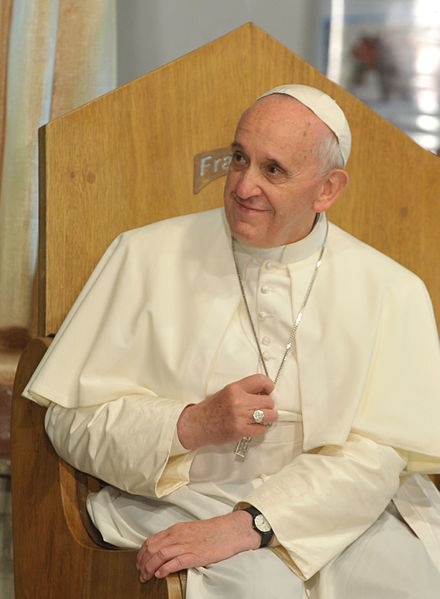
Yesterday, 10 December, Pope Francis published the video above. Below is the English translation of the text. I have highlighted some parts and added [comments].

Dear brothers and sisters,

Today, I am happy to announce to you the launch of a campaign against global hunger by our very own Caritas Internationalis and to tell you that I intend to give my full support. This confederation, together with its 164 member organisations works in 200 countries and territories around the world and its work is at the heart of the mission of the Church and of Her attention towards all those who suffer because of the scandal of hunger, those with whom the Lord identified when he said, “I was hungry and you gave me something to eat”.
Logo of Caritas Internationalis [Wikipedia]


When the Apostles said to Jesus that the people who had come to listen to his words were hungry, He invited them to go and look for food. Being poor themselves, all they found were five loaves and two fish. But with the grace of God, they managed to feed a multitude of people, even managing to collect what was left over and avoiding that it went to waste[In the Visayan languages spoken in the central Philippines and in most parts of Mindanao the word for 'leftovers; is 'bahaw'. This is the root word of 'pamahaw', which means 'breakfast' and can also mean 'snack'. In other words, the languages themselves indicate an attitude towards food that reflects that of the Gospel.]

We are in front of a global scandal of around one billion – one billion people who still suffer from hunger today. We cannot look the other way and pretend this does not exist. The food available in the world is enough to feed everyone. The parable of the multiplication of the loaves and fish teaches us exactly this: that if there is the will, what we have never ends. On the contrary, it abounds and does not get wasted.
[Pope Francis is reminding us that the world's resources are capable of feeding everyone.]

Therefore, dear brothers and sisters, I invite you to make space in your heart for this emergency of respecting the God-given rights of everyone to have access to adequate food. We share what we have in Christian charity with those who face numerous obstacles to satisfy such a basic need. At the same time we promote an authentic cooperation with the poor so that through the fruits of their and our work they can live a dignified life. [Very often those who provide food - farmers and fishermen - and those who provide medical services - nurses from the Philippines and India in many parts of the world - don't have enough food for themselves or access at home to the medical services they provide for others overseas.]

I invite all of the institutions of the world, the Church, each of us, as one single human family, to give a voice to all of those who suffer silently from hunger, so that this voice becomes a roar which can shake the world.

This campaign is also an invitation to all of us to become more conscious in our food choices, which often lead to waste and a poor use of the resources available to us. It is also a reminder to stop thinking that our daily actions do not have an impact on the lives of those who suffer from hunger first-hand. [I have eaten in restaurants in the USA where the portions served were so big that they were impossible to finish. What's left over in this situation is wasted food. On the other hand, when I made retreats in the Jesuit Retreat House in Guelph, Ontario, Canada in 1982 I noticed that our evening meal was always a tasty makeover of what hadn't been consumed at lunch. The highlighted sentence just above expresses what I experienced there.]

I ask you from the bottom of my heart to support our Caritas organisations in this noble campaign where they will act as one human family to ensure food for all. 

Let us pray that the Lord gives us the grace to envisage a world in which no one must ever again die of hunger. And asking for this grace, I give you my blessing.
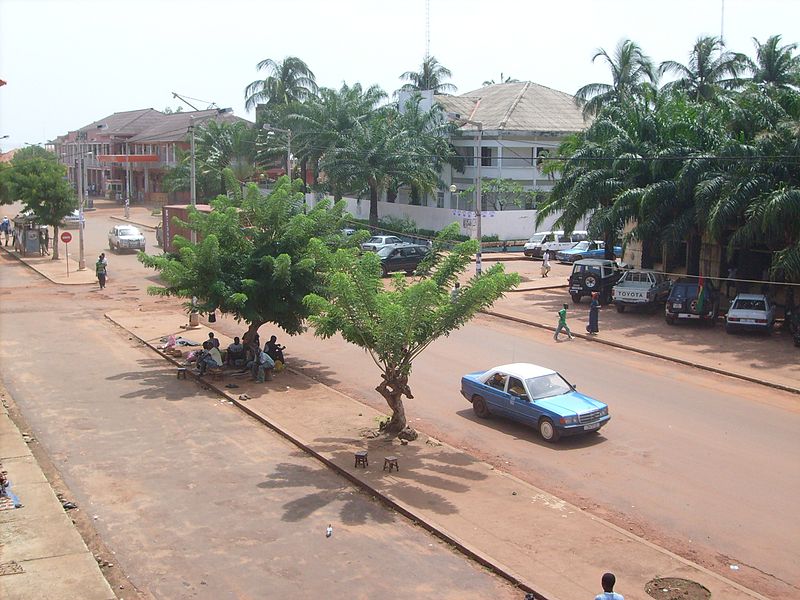
Downtown Bissau, capital of Guinea-Bissau [Wikipedia]

By a very happy coincidence the message of Pope Francis comes the day after this story:

On Monday 9 December the bishops of the two dioceses in Guinea-Bissau, a former Portuguese colony in west Africa with a land area of 36,000 square kilometers, roughly the combined land areas of Samar, Leyte and Panay, the three largest of the islands of the Philippines that were partly devastated by Supertyphoon Haiyan/Yolanda last month, asked their people to fast on 13 December in order to help the victims of that storm.

Guinea-Bissau has a population of less than 1,700,000 while that of the Philippines is around 100,000,000. While more than 80 percent of Filipinos are Catholics only about twelve percent of the people of Guinea-Bissau are Catholics: 80,000,000 Filipino Catholics and 200,000 in the west African country. The nominal GDP per capita of the Philippines in 2013 is estimated to be US$2,792 while that of Guinea-Bissau in 2012 was US$551 [source: Wikipedia].

I asked the three staff members in the editorial office of Misyon if they knew where Guinea-Bissau was. They didn't know and I don't think they had even heard of it. I doubt too if very many people in Guinea-Bissau know where Tacloban City is, or even the Philippines itself.

Pope Francis reminds us in his message how Jesus fed the thousands with only five loaves and two fishes. Surely the generosity of the Catholics of Guinea-Bissau in responding to the needs of the victims of Haiyan/Yolanda is a reminder of the power of God's love as expressed in the multiplication of the loaves and fishes and in the widow's mite, which Jesus noticed and pointed out to his disciples.

Typical scenery in Guinea-Bissau [Wikipedia]


Bissau - In the spirit of the liturgical season of Advent, the Bishops of the dioceses in Guinea Bissau and Bafata , His Exc. Mgr. Pedro Zilli and His Exc. Mgr. José Camnate na Bissign have invited all the diocesan communities to a "Day of fasting and prayer for peace in the world, in Africa and in Guinea-Bissau" to be held on December 13. According to information sent to Fides Agency by the Diocese of Bissau, in presenting the initiative, the Bishops point out: "May our prayer and our fasting lead us to accept peace through a life marked by truth, justice and reconciliation. World leaders, Africans and Guineans must think about the poorest of the poor. The democratic spirit must fill the hearts of everyone, especially of politicians and the military".
In tune with the wave of international solidarity in favor of the Philippines, a nation deeply wounded by Typhoon Haiyan, the Bishops recommend to all parish communities that "the fruit of fasting has to be destined to the victims of this natural disaster". Furthermore, the Catholic Church promotes a fundraiser for the Filipino people until Sunday, December 22. On 6 and 7 December there was the usual Marian Pilgrimage to the Guinean National Shrine of Our Lady of the Nativity in Cacheu. Since we have just concluded the Year of Faith, the motto of the pilgrimage chosen was: "With Mary, we walk in the light of faith". As usual there were many young people and adults who carried out the pilgrimage on foot, marked by prayer and sacrifice. More than four thousand faithful then took part in the Mass of the Solemnity of the Immaculate Conception, concelebrated by the Bishops of the two dioceses , which was also attended by representatives of the state and the Muslim community.

10 December 2013

Pope Francis' Prayer Intentions for December 2013


[Image from Wikipedia]

General Intention

Victimized Children

That children who are victims of abandonment or violence may find the love and protection they need.


From the homily of Pope Benedict XVI at the Christmas Midnight Mass 24 December 2008, quoted in the video above: 

In every child we see something of the Child of Bethlehem. Every child asks for our love. This night, then, let us think especially of those children who are denied the love of their parents. Let us think of those street children who do not have the blessing of a family home, of those children who are brutally exploited as soldiers and made instruments of violence, instead of messengers of reconciliation and peace. Let us think of those children who are victims of the industry of pornography and every other appalling form of abuse, and thus are traumatized in the depths of their soul. The Child of Bethlehem summons us once again to do everything in our power to put an end to the suffering of these children; to do everything possible to make the light of Bethlehem touch the heart of every man and woman. Only through the conversion of hearts, only through a change in the depths of our hearts can the cause of all this evil be overcome, only thus can the power of the evil one be defeated. Only if people change will the world change; and in order to change, people need the light that comes from God, the light which so unexpectedly entered into our night.

Mission Intention

Prepare the Savior’s Coming


That Christians, enlightened by the Word incarnate, may prepare humanity for the Savior’s coming. 


From the talk given by Pope Benedict at his General Audience 12 November 2008 and quoted in the video above:

We live with a great responsibility. We have talents, and our responsibility is to work so that this world may be open to Christ, that it be renewed.

The following words, quoted in the video above, were spoken by Pope Francis at his General Audience on 24 March:

The time of waiting for his arrival is the time he gives to us, to all of us, before his Final Coming with mercy and patience; it is a time of watchfulness; a time in which we must keep alight the lamps of faith, hope and charity, a time in which to keep our heart open to goodness, beauty and truth. It is a time to live in accordance with God, because we do not know either the day or the hour of Christ’s return . . . Dear brothers and sisters, may looking at the Last Judgement never frighten us: rather, may it impel us to live the present better. 

Pope Benedict XVI in 2010 [Image from Wikipedia]

The video above concludes with extracts from the concluding prayer at the end of Pope Benedict's General Audience on 12 November 2008. Here is the full text of that prayer:

'Come, Lord Jesus!' We do not of course desire the end of the world. Nevertheless, we do want this unjust world to end. We also want the world to be fundamentally changed, we want the beginning of the civilization of love, the arrival of a world of justice and peace, without violence, without hunger. We want all this, yet how can it happen without Christ's presence?

Without Christ's presence there will never be a truly just and renewed world. And even if we do so in a different way, we too can and must also say, completely and profoundly, with great urgency and amid the circumstances of our time: 'Come, Lord Jesus!' 

Come in your way, in the ways that you know. Come wherever there is injustice and violence. Come to the refugee camps, in Darfur, in North Kivu, in so many parts of the world. Come wherever drugs prevail. Come among those wealthy people who have forgotten you, who live for themselves alone. Come wherever you are unknown. Come in your way and renew today's world. And come into our hearts, come and renew our lives, come into our hearts so that we ourselves may become the light of God, your presence. 

In this way let us pray with St Paul: Maranà, thà! 'Come, Lord Jesus!' and let us pray that Christ may truly be present in our world today and renew it.


09 December 2013

The Immaculate Conception: 'Our tainted nature's solitary boast'.


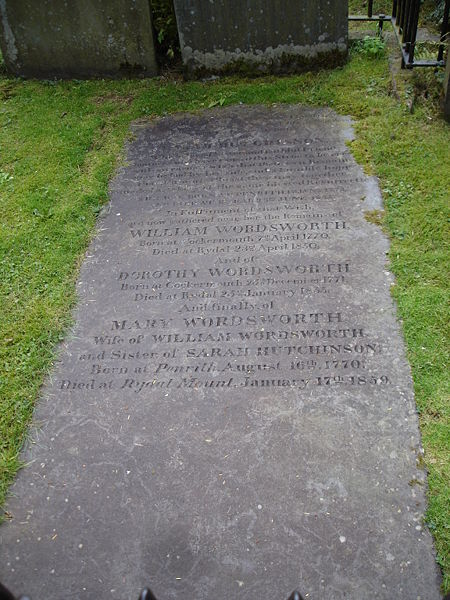
I have often heard the quotation about our Blessed Mother from English poet William Wordsworth (1770 - 1850), Our tainted nature's solitary boast. But I never read the poem from which it is taken until now.

The Virgin

Mother! whose virgin bosom was uncrost
With the least shade of thought to sin allied.
Woman! above all women glorified,
Our tainted nature's solitary boast;
Purer than foam on central ocean tost;
Brighter than eastern skies at daybreak strewn
With fancied roses, than the unblemished moon
Before her wane begins on heaven's blue coast;
Thy image falls to earth. Yet some, I ween,
Not unforgiven the suppliant knee might bend,
As to a visible Power, in which did blend
All that was mixed and reconciled in thee
Of mother's love with maiden purity,
Of high with low, celestial with terrene!


William Wordsworth wasn't a Catholic but he understood the meaning of Mary's Immaculate Conception, something the Church believed in for many centuries and that was declared a dogma of the church by Pope Pius IX, 'Pio Nono', in 1854, four years after the death of Wordsworth and four years before Mary appeared to St Bernadette in Lourdes and revealed to her in her local French patois that she was the Immaculate Conception.

In 2001 I did mission appeals in for the Columbans in the Diocese of Lancaster, which includes the beautiful Lake District of England. In August that year I visited the grave of William Wordsworth in the cemetery attached to the Anglican church in Grasmere. I attended Sunday Evensong (Vespers) in the church and was the only person there apart from the Anglican priest and a liturgical assistant. At one level it was quite sad. But Jesus did assure us that when two or three of us gather in his name he is there among us. However, the church was full later in the evening for a lecture on the life and work of Wordsworth.

The Lourdes Hymn, sung in Lourdes

The hymn is being sung in different languages, with the words Ave, Maria, 'Hail, Mary', in Latin. The video is by John O'Sullivan.

Today's solemnity reminds us of the mission that God the Father gave to Mary: to bring her Son, God who became Man, to us and to bring us to her Son, God who became Man.

06 December 2013

'Repent, for the kingdom of heaven has come near.' Sunday Reflections, 2nd Sunday of Advent Year A


Readings (New American Bible: Philippines, USA)                                  

Readings (Jerusalem Bible: Australia, England & Wales, India [optional], Ireland, New Zealand, Pakistan, Scotland, South Africa)

Gospel Matthew 3:1-12 (New Revised Standard Version, Catholic Edition: Canada) 

In those days John the Baptist appeared in the wilderness of Judea, proclaiming, “Repent, for the kingdom of heaven has come near.” This is the one of whom the prophet Isaiah spoke when he said,

“The voice of one crying out in the wilderness:
‘Prepare the way of the Lord,
    make his paths straight.’”

Now John wore clothing of camel’s hair with a leather belt around his waist, and his food was locusts and wild honey. Then the people of Jerusalem and all Judea were going out to him, and all the region along the Jordan,  and they were baptized by him in the river Jordan, confessing their sins.

But when he saw many Pharisees and Sadducees coming for baptism, he said to them, “You brood of vipers! Who warned you to flee from the wrath to come? Bear fruit worthy of repentance. Do not presume to say to yourselves, ‘We have Abraham as our ancestor’; for I tell you, God is able from these stones to raise up children to Abraham. Even now the ax is lying at the root of the trees; every tree therefore that does not bear good fruit is cut down and thrown into the fire.

“I baptize you with water for repentance, but one who is more powerful than I is coming after me; I am not worthy to carry his sandals. He will baptize you with the Holy Spirit and fire. His winnowing fork is in his hand, and he will clear his threshing floor and will gather his wheat into the granary; but the chaff he will burn with unquenchable fire.”


Responsorial Psalm (New American Bible Lectionary)


Repent, for the kingdom of heaven has come near is the stark message of St John the Baptist. He says of his ministry, I baptize you with water for repentance. The response to the Responsorial Psalm is Justice shall flourish in his time, and fullness of peace for ever.

Repentance, justice and peace go together - with God's mercy. Pope Francis has spoken many times about that. In that context he has also reminded us, especially priests, of the importance of the sacrament of confession/penance/reconciliation.

Jesus speaks to us through his Church this Sunday reminding us of the importance of repenting in order to welcome him into our lives. In Advent we prepare to celebrate his birth and also for his Second coming, whenever that will be. And we also prepare for his daily coming into our lives.

We frequently fail Jesus by our sins. But he doesn't leave us in despair. He doesn't turn his back on us.

In his Wednesday General Audience on 20 November Pope Francis spoke about the remission of sins. As he often does, he used three points. The first was that the principal agent in the forgiveness of sins is the Holy Spirit. I'll print the rest of his talk and highlight parts of it. I'll also add some (comments).


And we come to the second element: Jesus gave the Apostles the power to forgive sins. It is a little difficult to understand how a man can forgive sins, but Jesus gives this power. The Church is the depository of the power of the keys, of opening or closing to forgiveness. God forgives every man in his sovereign mercy, but he himself willed that those who belong to Christ and to the Church receive forgiveness by means of the ministers of the community. (This means that the sacrament of confession is an explicit expression of God's will and that God forgives us through the ministry of the priest.) Through the apostolic ministry the mercy of God reaches me, my faults are forgiven and joy is bestowed on me. (God's mercy and the joy that comes from this, two realities that Pope Francis has spoken about again and again.) In this way Jesus calls us to live out reconciliation in the ecclesial, the community, dimension as well. And this is very beautiful. The Church, who is holy and at the same time in need of penitence, accompanies us on the journey of conversion throughout our life. The Church is not mistress of the power of the keys, but a servant of the ministry of mercy and rejoices every time she can offer this divine gift.

Perhaps many do not understand the ecclesial dimension of forgiveness, because individualism, subjectivism, always dominates, and even we Christians are affected by this. Certainly, God forgives every penitent sinner, personally, but the Christian is tied to Christ, and Christ is united to the Church. For us Christians there is a further gift, there is also a further duty: to pass humbly through the ecclesial community. (Through baptism we are related to Jesus Christ and to one another through the Church. It can never be a matter simply of 'Jesus and I', though he calls each of us into an intimate relationship with him, but never apart from his and our relationship to others.) We have to appreciate it; it is a gift, a cure, a protection as well as the assurance that God has forgiven me. I go to my brother priest and I say: 'Father, I did this...'. And he responds: 'But I forgive you; God forgives you'. At that moment, I am sure that God has forgiven me! 

And this is beautiful, this is having the surety that God forgives us always, he never tires of forgiving us. And we must never tire of going to ask for forgiveness. You may feel ashamed to tell your sins, but as our mothers and our grandmothers used to say, it is better to be red once than yellow a thousand times. We blush once but then our sins are forgiven and we go forward.


Confession, Giuseppe Maria Crespi, 1712 [Web Gallery of Art]

Lastly, a final point: the priest is the instrument for the forgiveness of sins. God’s forgiveness is given to us in the Church, it is transmitted to us by means of the ministry of our brother, the priest; and he too is a man, who, like us in need of mercy, truly becomes the instrument of mercy, bestowing on us the boundless love of God the Father. Priests and bishops too have to go to confession: we are all sinners. Even the Pope confesses every 15 days, because the Pope is also a sinner. (I often encourage people to go to confession and provide opportunities for them to do so. But it seems that most don't see any need for confession. But on one occasion here in the Philippines when I was asked to celebrate Mass at the end of a recollection day for students in a Catholic girls' high school I made myself available for confession. It became very clear that this was what the girls wanted. We ended up cancelling the Mass so that all could go to confession and having it on another day in the school.) And the confessor hears what I tell him, he counsels me and forgives me, because we are all in need of this forgiveness. Sometimes you hear someone claiming to confess directly to God... Yes, as I said before, God is always listening, but in the Sacrament of Reconciliation he sends a brother to bestow his pardon, the certainty of forgiveness, in the name of the Church. (God sends a brother to assure of us his forgiveness. This is another expression of the reality expressed so beautifully at the beginning of St John's Gospel, 1:14, words that we use when we pray the Angelus: And the Word became flesh and lived among us.)

The service that the priest assumes a ministry, on behalf of God, to forgive sins is very delicate and requires that his heart be at peace, that the priest have peace in his heart; that he not mistreat the faithful, but that he be gentle, benevolent and merciful; that he know how to plant hope in hearts and, above all, that he be aware that the brother or sister who approaches the Sacrament of Reconciliation seeking forgiveness does so just as many people approached Jesus to be healed. The priest who is not of this disposition of mind had better not administer this sacrament until he has addressed it. The penitent faithful have the right, all faithful have the right, to find in priests servants of the forgiveness of God. (While Pope Francis doesn't call priests a 'brood of vipers', as St John the Baptist calls some of the Sadducees and Pharisees in today's gospel, he implies that those who are not 'gentle, benevolent and merciful' in the confessional are such.)

Dear brothers, as members of the Church are we conscious of the beauty of this gift that God himself offers us? Do we feel the joy of this cure, of this motherly attention that the Church has for us? Do we know how to appreciate it with simplicity and diligence? Let us not forget that God never tires of forgiving us; through the ministry of priests he holds us close in a new embrace and regenerates us and allows us to rise again and resume the journey. For this is our life: to rise again continuously and to resume our journey.

[Note. This is the proper form of absolution given by the priest: 

God, the Father of mercies,
through the death and the resurrection of his Son
has reconciled the world to himself
and sent the Holy Spirit among us
for the forgiveness of sins;
through the ministry of the Church
may God give you pardon and peace,
and I absolve you from your sins in the name of the Father, and of the Son and of the Holy Spirit
.


The highlighted words are essential for the validity of the sacrament.]


This extract from Handel's Messiah includes part of the quotation from the Prophet Isaiah used by St Matthew when he tells us that it refers to St John the Baptist. Handel uses the Authorized (King James) Version of the Bible, slightly adapting it.

Comfort ye, comfort ye my people, saith your God.
Speak ye comfortably to Jerusalem, and cry unto her,
that her warfare is accomplished,
that her iniquity is pardoned . . .

The voice of him that crieth in the wilderness,
Prepare ye the way of the Lord,
make straight in the desert a highway for our God.

Every valley shall be exalted,
and every mountain and hill [shall be] made low:
and the crooked [shall be made] straight,
and the rough places plain (Isaiah 40:2-4).

03 December 2013

St Francis Xavier: 'Many, many people hereabouts are not becoming Christians for one reason only: there is nobody to make them Christians.'


Today, 3 December, is the feast of St Francis Xavier, the great Jesuit missionary priest who, with St Thérèse of Lisieux is the patron saint of missionaries. Here is an extract from a letter of the saint to St Ignatius of Loyola, the founder of the Society of Jesus, the Jesuits. This is the Second Reading in the Office of Readings in the Breviary for the saint's feast day. I copied this version from DivineOffice.org, a website that has the full Prayer of the Church for each day. I have highlighted parts of the letter of St Francis Xavier.

From the letters to Saint Ignatius by Saint Francis Xavier, priest
Woe to me if I do not preach the Gospel

We have visited the villages of the new converts who accepted the Christian religion a few years ago. No Portuguese live here—the country is so utterly barren and poor. The native Christians have no priests. They know only that they are Christians. There is nobody to say Mass for them; nobody to teach them the Creed, the Our Father, the Hail Mary and the Commandments of God’s Law.

I have not stopped since the day I arrived. I conscientiously made the rounds of the villages. I bathed in the sacred waters all the children who had not yet been baptized. This means that I have purified a very large number of children so young that, as the saying goes, they could not tell their right hand from their left. The older children would not let me say my Office or eat or sleep until I taught them one prayer or another. Then I began to understand: “The kingdom of heaven belongs to such as these.”

I could not refuse so devout a request without failing in devotion myself. I taught them, first the confession of faith in the Father, the Son and the Holy Spirit, then the Apostles’ Creed, the Our Father and Hail Mary. I noticed among them persons of great intelligence. If only someone could educate them in the Christian way of life, I have no doubt that they would make excellent Christians.

Many, many people hereabouts are not becoming Christians for one reason only: there is nobody to make them Christians. Again and again I have thought of going round the universities of Europe, especially Paris, and everywhere crying out like a madman, riveting the attention of those with more learning than charity: “What a tragedy: how many souls are being shut out of heaven and falling into hell, thanks to you!

I wish they would work as hard at this as they do at their books, and so settle their account with God for their learning and the talents entrusted to them.

This thought would certainly stir most of them to meditate on spiritual realities, to listen actively to what God is saying to them. They would forget their own desires, their human affairs, and give themselves over entirely to God’s will and his choice. They would cry out with all their heart: Lord, I am here! What do you want me to do? Send me anywhere you like—even to India.


Evangelii Gaudium, the new Apostolic Exhortation of Pope Francis, a Jesuit like the saint we celebrate today, begins with these words:

The joy of the gospel fills the hearts and lives of all who encounter Jesus. Those who accept his offer of salvation are set free from sin, sorrow, inner emptiness and loneliness. With Christ joy is constantly born anew. In this Exhortation I wish to encourage the Christian faithful to embark upon a new chapter of evangelization marked by this joy, while pointing out new paths for the Church's journey in years to come.

I'm sure that St Francis Xavier, whose whole being burned with the desire to bring the Gospel of Jesus Christ to the whole world, would agree.

30 November 2013

'Therefore you also must be ready . . .' Sunday Reflections, 1st Sunday of Advent Year A

The Great Flood, Bonaventura I. Peeters [Web Gallery of Art]

Readings (New American Bible: Philippines, USA)                                  

Readings (Jerusalem Bible: Australia, England & Wales, India [optional], Ireland, New Zealand, Pakistan, Scotland, South Africa)

Gospel Matthew 24:37-44 (New Revised Standard Version Catholic Edition: Canada) 

Jesus spoke to his disciples:

“As the days of Noah were, so will be the coming of the Son of Man. For as in those days before the flood they were eating and drinking, marrying and giving in marriage, until the day Noah entered the ark, and they knew nothing until the flood came and swept them all away, so too will be the coming of the Son of Man.

Then two will be in the field; one will be taken and one will be left. Two women will be grinding meal together; one will be taken and one will be left.

“Keep awake, therefore, for you do not know on what day your Lord is coming. But understand this: if the owner of the house had known in what part of the night the thief was coming, he would have stayed awake and would not have let his house be broken into.
Therefore you also must be ready, for the Son of Man is coming at an unexpected hour.”

Tropical Storm Washi/Sendong, 16-17 December 2011
The footage above is of Dumaguete City, Negros Oriental, and was made by Mark Anthony Besario.


In February 2000 a friend of mine, Daisy, an engineer who teaches at Xavier University, Cagayan de Oro, was travelling home to Ozamiz City for the weekend. This involved a journey of about three or four hours by road to Mukas, Kolambugan, Lanao del Norte, where the bus then went on board a ferry for the 20-minute trip across Panguil Bay to Ozamiz City. While waiting for the bus to take the next ferry from Mukas Daisy got off and bought some crabs, a favourite with Filipinos.

Because of the crabs Daisy went up on the upper deck of the ferry instead of sitting in the bus. Halfway across the bay there was a huge explosion. 37 passengers on the three buses on board were killed and others injured.

Then two will be in the field; one will be taken and one will be left. Two women will be grinding meal together; one will be taken and one will be left. We could add, Two women will be travelling together in a bus; one will be taken and one will be left.

On Thursday 21 November Pope Francis met the Filipino community in Rome in St Peter's Basilica. With them, in the light of the recent calamities in the Philippines, a powerful earthquake in October and Super Typhoon Haiyan/Yolanda in November, he asks why these things happen.


Pope Francis doesn't offer any easy answers. He encourages us to ask God 'Why?', like little children, as this will catch the attention of our loving Father.

The ending of the old liturgical year and the beginning of the new both remind us of the importance of being ready whenever the Lord comes. This readiness is essential both for the individual and for the whole Christian community. When Jesus returns will he find that we have built a community where God's justice reigns? At the moment of the death of each of us will be in a right relationship with God? Will we have directed our lives towards him?


The old hymn, O Christ who art the light and day, a translation by R. R. Terry of the original Latin Christe Qui Lux Es Et Dies, in a setting here by English composer William Byrd, is often sung as part of Compline, the Night Prayer of the Church. It is a hymn that recognises the reality of sin but also God's desire to protect us. Though it's not specifically an Advent hymn it recalls the purpose of that blessed season that we are just beginning: to prepare to celebrate the First Coming of Jesus at his birth but also to prepare for his daily coming into our lives and for his Second Coming at the end of time.


Antiphona ad Introitum   Cf. Psalm 24:1-3.

Ad te levávi ánimam meam, Deus meus, 
in te confído, non erubéscam. 
Neque irrídeant me inimíci mei, 
étenim univérsi qui te exspéctant non confundéntur.

Entrance Antiphon.   Cf. Psalm 24:1-3.

To you, I lift up my soul, O my God.
In you, I have trusted, let me not be put to shame.
Nor let my enemies exult over me, 
and let none who hope in you be put to shame.


Luis Antonio Cardinal Tagle, Archbishop of Manila, 2013


Bishop Luis Antonio Tagle of Imus, now Cardinal-Archbishop of Manila, 2010.

22 November 2013

'Today you will be with me in Paradise.' Sunday Reflections, Christ the King, Year C


CrucifixionPedro de Campaña, c.1550 [Web Gallery of Art]

Readings (New American Bible: Philippines, USA)                                  

Readings (Jerusalem Bible: Australia, England & Wales, India [optional], Ireland, New Zealand, Pakistan, Scotland, South Africa)


And the people stood by, watching; but the rulers scoffed at Jesus, saying, "He saved others; let him save himself, if he is the Christ of God, his Chosen One!" The soldiers also mocked him, coming up and offering him vinegar, and saying, "If you are the King of the Jews, save yourself!" There was also an inscription over him, "This is the King of the Jews." One of the criminals who were hanged railed at him, saying, “Are you not the Christ? Save yourself and us!" But the other rebuked him, saying, "Do you not fear God, since you are under the same sentence of condemnation? And we indeed justly; for we are receiving the due reward of our deeds; but this man has done nothing wrong." And he said, "Jesus, remember me when you come into your kingdom." And he said to him, "Truly, I say to you, today you will be with me in Paradise." 


Responsorial Psalm (New American Bible Lectionary)

A Dominican friar in Ireland told me three years ago or so about one of his confreres who was to celebrate Mass one morning in a nearby Sisters' convent. Since it was only a short walk he decided to wear his habit. (It was the Dominican habit that first caught my imagination about the priesthood when I was six or seven, though later on I never considered joining the Dominicans.) Along the way the friar met a Sister from another convent who chided him for being so 'old-fashioned' or 'pre-Vatican 2' or words to that effect. A little further on a young man stopped him. This was the conversation that followed:

You're a priest, right?

Yes.

Well I'm getting married tomorrow and I need to go to confession.

So Father heard the young man's confession on the street and went on his 'pre-Vatican 2' way to celebrate Mass.

Today's Gospel shows us Jesus hanging on the Cross under a sign that said in Greek, Hebrew and Latin 'King of the Jews'. And the Kingdom he came to establish broke through in the conversation between him and one of the two thieves crucified with him. 

The brief conversation that St Luke records shows us what the Sacrament of Confession is all about. This young man acknowledged his sinful ways and accepted the punishment he received. He recognised the innocence of Jesus and saw in him something that spoke profoundly to him of God's love and mercy. It is very unlikely that he could see that Jesus was indeed God who became Man. But he saw in him a man of God and saw in some way the true nature of the Kingdom that Jesus had established.

Jesus, remember me when you come into your kingdom.

Truly, I say to you, today you will be with me in Paradise.

Fr William Doyle SJ (1873 - 1017) 

The June 2013 issue of The Pioneer, the magazine of the Pioneer Total Abstinence Association has an extraordinary story of how a young woman received the grace of forgiveness in baptism hours before her execution for murder in England just over a century ago. Snatched from the Brink tells how a young woman, Fanny Cranbush, a former prostitute, had asked if she could see a priest whose name she didn't know and had no idea where he was.

Through God's grace the priest, Fr Willie Doyle SJ, who was to die in Belgium on 16 August 1916 as a chaplain in the British army during the Great War, was located, travelled across from Ireland and spent the last few hours with Fanny. She wanted to be baptised and was also able to receive her First and Last Holy Communion as Fr Doyle celebrated Mass with her in her cell. The Bread of Life was the last food she ate.

A couple of years before this Father Willie had been giving a mission in a parish in the east of England. He had been hearing confessions well into the night and happened to pass Fanny on the street as he went to his lodging and she was plying her 'trade'.

Father Doyle was totally in the dark when he arrived at the prison but Fanny reminded him of their previous encounter.

You said to me, ‘Child, aren’t you out very late? Won’t you go home? Don’t hurt Jesus. He loves you.’ You said this so gently, so appealingly, and then you gave me a look that seemed to go right through me.

The memory of those words were what led her to the moment when she knew that Jesus was speaking the same words to her as she went to her execution that he spoke to the thief on the cross on his right: Truly, I say to you, today you will be with me in Paradise.


Probably the most central theme of the teaching of Pope Francis is God's mercy. He speaks of the Sacrament of Confession in that context. Last Wednesday he told the thousands gathered in St Peter's Square that he goes to confession himself every two weeks because he is a sinner. He spoke especially to priests about their responsibility of being merciful.

Here is the English version of the Pope's talk read by a speaker. I've highlighted some parts of it.

Dear Brothers and Sisters: Today I would like to speak again on the forgiveness of sins by reflecting on the power of the keys, which is a biblical symbol of the mission Jesus entrusted to the Apostles. First and foremost, we recall that the source of the forgiveness of sins is the Holy Spirit, whom the Risen Jesus bestowed upon the Apostles. Hence, he made the Church the guardian of the keys, of this power. The Church, however, is not the master of forgiveness, but its servant. The Church accompanies us on our journey of conversion for the whole of our lives and calls us to experience reconciliation in its communal and ecclesial dimension. We receive forgiveness through the priest. Through his ministry, God has given us a brother to bring us forgiveness in the name of the Church. Priests, who are the servants of this sacrament, must recognize that they also are in need of forgiveness and healing, and so they must exercise their ministry in humility and mercy. Let us then remember always that God never tires of forgiving us. Let us truly value this sacrament and rejoice in the gift of pardon and healing that comes to us through the ministry of priests.

As a priest who is, as every priest should be, familiar with both sides of the confessional box, I am truly grateful to Pope Francis for reminding us so often of God's love, of the reality of sin and of the Devil, of the reality of God's mercy, expressed most especially through the beautiful Sacrament of Confession/Penance/Reconciliation/Forgiveness.

About 15 minutes before he died on the battlefield while trying to rescue a wounded soldier Fr Willie Doyle, who had an extraordinary gift of bringing hardened sinners back to God, himself went to confession for the last time.


+++

May I ask your prayers as I make a retreat from 25 to 30 November. Thank you.


The Mass in the video above, in which today's Entrance Antiphon was sung, was celebrated in Westminster Cathedral, London, on 18 September 2010 during the visit of Pope Benedict XVI to Britain. The longer form, used in what is now called the Extraordinary Form of the Roman Rite - 'The Old Mass', 'The Tridentine Mass' - is sung, as it may be in the Ordinary Form.

Antiphona a introitum   (Revelations 5:12; 1:6)

Dignus est Agnus, qui occísus est, 
accípere virtútem et divinitátem 
et sapiéntiam et fortitúdinem et honórem. 
Ipsi glória et impérium in saecula saeculórum.

[V. (Ps. 71: 1) Deus, judícium tuum Regi da: et justítiam tuam Fílio Regis. v. 
Gloria Patri, et Filio, et Spiritui Sancto. 
Sicut erat in principio et nunc et semper 
et in saecula saeculorum. Amen.]

Entrance Antiphon   (Revelations 5:12; 1:6)

How worthy is the Lamb who was slain, 
to receive power and divinity, 
and wisdom and strength and honour.
to him belong glory and power for ever and ever.