Showing posts with label Kerala. Show all posts

21 April 2022

'So that you may come to believe that Jesus is the Christ . . .' Sunday Reflections, 2nd Sunday of Easter (Divine Mercy Sunday)


The Incredulity of St Thomas
Rembrandt [Web Gallery of Art]

Readings(Jerusalem Bible: Australia, England & Wales, India [optional], Ireland, New Zealand, Pakistan, Scotland, South Africa) 

Readings(New American Bible: Philippines, USA)

GospelJohn 20:19-31 (English Standard Version Anglicised: India)  

On the evening of that day, the first day of the week, the doors being locked where the disciples were for fear of the Jews, Jesus came and stood among them and said to them, “Peace be with you.” When he had said this, he showed them his hands and his side. Then the disciples were glad when they saw the Lord. Jesus said to them again, “Peace be with you. As the Father has sent me, even so I am sending you.” And when he had said this, he breathed on them and said to them, “Receive the Holy Spirit. If you forgive the sins of any, they are forgiven them; if you withhold forgiveness from any, it is withheld.”

Now Thomas, one of the Twelve, called the Twin, was not with them when Jesus came. So the other disciples told him, “We have seen the Lord.” But he said to them, “Unless I see in his hands the mark of the nails, and place my finger into the mark of the nails, and place my hand into his side, I will never believe.”

Eight days later, his disciples were inside again, and Thomas was with them. Although the doors were locked, Jesus came and stood among them and said, “Peace be with you.” Then he said to Thomas, “Put your finger here, and see my hands; and put out your hand, and place it in my side. Do not disbelieve, but believe.” Thomas answered him, “My Lord and my God!” Jesus said to him, “Have you believed because you have seen me? Blessed are those who have not seen and yet have believed.”

Now Jesus did many other signs in the presence of the disciples, which are not written in this book; but these are written so that you may believe that Jesus is the Christ, the Son of God, and that by believing you may have life in his name.

Léachtaí i nGaeilge


John 20:19-31 from The Gospel of John (2003) 
Directed by Philip SavilleNarrator: Christopher Plummer

In 2007, during a visit to Canada I was asked to give a talk to a prayer group. Afterwards, over coffee, I was chatting with one of the members, an elderly immigrant from Germany, who told me how she had become a Catholic. She had been raised as a Lutheran and had been on the verge of joining the Catholic Church for a long time but could not take the final step.

One weekday afternoon, feeling somewhat down because of this she went for a walk. She was perhaps somewhat like St Thomas when he said, Unless I see in his hands the mark of the nails, and place my finger into the mark of the nails, and place my hand into his side, I will never believe. She happened to pass by a Catholic church and decided to go in. While she was there a group of teenage boys came in, went up to the front of the church, genuflected before the Blessed Sacrament in the tabernacle, knelt down for a couple of minutes, stood up, genuflected again and went on their way.

These boys were expressing what the Church has always taught: Do not, then, regard the eucharistic elements as ordinary bread and wine: they are in fact the body and blood of the Lord, as he himself has declared. Whatever your senses may tell you, be strong in faith.

You have been taught and you are firmly convinced that what looks and tastes like bread and wine is not bread and wine but the body and the blood of Christ. You know also how David referred to this long ago when he sang: Bread gives strength to man’s heart and makes his face shine with the oil of gladness. Strengthen your heart, then, by receiving this bread as spiritual bread, and bring joy to the face of your soul. (From The Jerusalem Catecheses, used in the Office of Readings for Saturday within the Octave of Easter.) 

This is the reason that Fr Jean-Marc Fournier, chaplain to the Paris Fire Brigade, rescued the Blessed Sacrament from the burning Notre-Dame de Paris Cathedral in Holy Week of 2019.

The visit of those Canadian teenage boys to the Blessed Sacrament was the German woman's My Lord and my God! moment. She became a Catholic shortly afterwards. Those boys had no idea of how their simple expression of their faith had so profoundly touched the life of a person whom they may not have even noticed.

The moment that St Thomas said My Lord and my God! was truly an 'eternal' moment. It led to his martyrdom and to his living with God for all eternity. 

My German-Canadian friend's moment is 'eternal' in the same way. It led her into a deeper relationship with the Lord Jesus and with all the members of the Church and pointing towards an eternity with God himself.

Every such moment in our lives is meant to be eternal, a moment when we experience the presence of God's love so clearly, a moment that we continue to carry with us, sometimes consciously but perhaps more often not being aware of it, a moment that leads us to eternal life.

I think that we may legitimately think of those many moments in the way St John in his gospel writes of the many other signs [miracles] that Jesus did, which are not written in this book. These moments are graces given by God so that you may come to believe that Jesus is the Christ, the Son of God, and that by believing you may have life in his name.


The Mar Thoma Sliva or Saint Thomas Cross, the symbol of the Syro-Malabar Church [Wikipedia]

As of December 2018 nearly nine per cent of nurses in the Republic of Ireland were from India. Most of these nurses are Catholics from Kerala who belong to the Syro-Malabar Catholic Church that traces its origins back to St Thomas the Apostle. These, as well as the Syro-Malankara Catholics in Kerala, are in full communion with Rome. 

I have met many Keralite Catholics here in Ireland and also in Britain and know how fervent they are in living their faith.There are Masses in the Syro-Malabar Rite every Sunday in the Archdiocese of Dublin and in some other places, including the parish of Johnstown-Walterstown, which includes St Columban's, Dalgan Park, where I live.

May St Thomas the Apostle, whose My Lord and my God! is the most explicit expression of faith in Jesus Christ in the whole of the New Testament, continue to watch over them. 


Syro-Malabar Hallelujah


Traditional Latin Mass

Low Sunday

The Octave Day of Easter

The Complete Mass in Latin and English is here. (Adjust the date at the top of that page to 04-24-2022 if necessary).

Epistle: 1 John 5:4-10.  Gospel: John 20:19-31.


St Thomas the Apostle 
Jusepe Martínez [Web Gallery of Art]


My Lord and my God!


05 January 2017

'When they saw that the star had stopped, they were overwhelmed with joy.' Sunday Reflections. The Epiphany

The Adoration of the MagiVelázquez [Web Gallery of Art]

Readings for the Solemnity of the Epiphany

Readings (New American Bible: Philippines, USA)

Readings (Jerusalem Bible: Australia, England & Wales, India [optional], Ireland, New Zealand, Pakistan, Scotland, South Africa) 

The readings above are used both at the Vigil Mass and at the Mass during the Day. Each Mass has its own set of prayers and antiphons.

Correction

In countries where the Epiphany is observed as a Holyday of Obligation on 6 January, eg, Ireland, the Baptism of the Lord is celebrated, not the Mass of the Second Sunday after the Nativity as I had posted earlier. Here is the link to the readings for Year A. 

Readings (Jerusalem Bible)

Alleluia and Gospel for the Epiphany


Alleluia, alleluia!
Vidimus stellam eius in Oriente,
We have seen his star in the East,
et venimus cum muneribus adorare Dominum.
and have come with gifts to adore the Lord.
Alleluia, alleluia!

The same text (cf. Matthew 2:2), without 'Alleluia, alleluia,' is used as the Communion Antiphon at the Mass during the Day.


In the time of King Herod, after Jesus was born in Bethlehem of Judea, wise men from the East came to Jerusalem, asking, ‘Where is the child who has been born king of the Jews? For we observed his star at its rising, and have come to pay him homage.’ When King Herod heard this, he was frightened, and all Jerusalem with him; and calling together all the chief priests and scribes of the people, he inquired of them where the Messiah was to be born. They told him, ‘In Bethlehem of Judea; for so it has been written by the prophet:
“And you, Bethlehem, in the land of Judah,
    are by no means least among the rulers of Judah;
for from you shall come a ruler
    who is to shepherd my people Israel.”’
Then Herod secretly called for the wise men and learned from them the exact time when the star had appeared. Then he sent them to Bethlehem, saying, ‘Go and search diligently for the child; and when you have found him, bring me word so that I may also go and pay him homage.’ When they had heard the king, they set out; and there, ahead of them, went the star that they had seen at its rising, until it stopped over the place where the child was. When they saw that the star had stopped, they were overwhelmed with joy. On entering the house, they saw the child with Mary his mother; and they knelt down and paid him homage. Then, opening their treasure-chests, they offered him gifts of gold, frankincense, and myrrh. And having been warned in a dream not to return to Herod, they left for their own country by another road.
Adoration of the MagiFilippino Lippi [Web Gallery of Art]

While based in Britain from 2000 till 2002 I was able to spend Christmas with my brother and his family in Dublin, a short flight from England, in 2000 and 2001. During the holiday in 2001 I saw a documentary on RTÉ, Ireland's national broadcasting service, about Filipino nurses in Ireland. These began to arrive in 2000, initially at the invitation of the Irish government to work in government hospitals. Very quickly there was an 'invasion' of Filipino nurses and carers, now to be found in hospitals and nursing homes in every part of the country. 

One of the nurses interviewed told how many Filipinos, knowing that the Irish celebrate Christmas on the 25th, unlike the Philippines where the culmination of the feast is on the night of the 24th, offered to work on Christmas Day so that their Irish companions could be with their families. This also helped to dull the pain of being away from their own families.

I was moved to tears at the testimony of one nurse, from Mindanao as I recall, speaking about her job and her first Christmas in Ireland in 2000. She spoke very highly of her employers, of her working conditions and of her accommodation, which she compared with that of the Holy Family on the first Christmas night. She spoke of Jesus, Mary and Joseph in this situation as if they were members of her own family, as in a very deep sense they are, or we of their family.

Here was a young woman from the East powerfully proclaiming, without being aware of it, that the Word became flesh and lived among us. The fact that she wasn't aware of it, that she was speaking about her 'next door neighbours', made her proclamation of faith all the more powerful. She would have known many in her own place, and very likely knew from her own experience, something of what Joseph and Mary went through in Bethlehem. Her faith in the Word who became flesh and lived among us wasn't something in her head but part of her very being.

For much of the last century thousands of Catholic priests, religious Sisters and Brothers left Europe and North America to preach and live the Gospel in the nations of Africa, Asia and South America. Some of the countries and regions from which they left, eg, Belgium, the Netherlands, Ireland, Quebec, have to a great extent lost or even rejected the Catholic Christian faith. The Jewish people had, in faith, awaited the coming of the Messiah for many centuries. But when He came it was uneducated shepherds who first recognised him and later Simeon and Anna, two devout and elderly Jews who spent lengthy periods in prayer in the Temple.

Today's feast highlights wise men from the east, not 'believers' in the Jewish sense, led by God's special grace to Bethlehem to bring gifts in response to that grace, explaining, We . . . have come to pay him homage.They reveal to us that God calls people from every part of the world to do the same and to bring others with them.

Will nurses from the Philippines and from Kerala in India, migrants from Korea and Vietnam, from the east, bring the gift of faith in Jesus Christ once again to the many people in Western Europe and North America who no longer know him in any real sense? Will they by the lives they lead as working immigrants gently invite those in the West who have lost the precious gift of our Catholic Christian faith to once again come to pay him homage?

An arrangement by John Rutter of the old carol


28 August 2015

'Because of our traditions, every one of us knows who he is.' Sunday Reflections, 22nd Sunday in Ordinary Time, Year B

Christ, El Greco, c.1606
Cathedral, Toledo, Spain [Web Gallery of Art]

Readings (New American Bible: Philippines, USA)

Readings (Jerusalem Bible: Australia, England & Wales, India [optional], Ireland, New Zealand, Pakistan, Scotland, South Africa)

Gospel Mark 7:1-8, 14-15, 21-23 (New Revised Standard Version, Catholic Edition, Canada) 
   
Now when the Pharisees and some of the scribes who had come from Jerusalem gathered around Jesus, they noticed that some of his disciples were eating with defiled hands, that is, without washing them. (For the Pharisees, and all the Jews, do not eat unless they thoroughly wash their hands, thus observing the tradition of the elders;  and they do not eat anything from the market unless they wash it; and there are also many other traditions that they observe, the washing of cups, pots, and bronze kettles.) So the Pharisees and the scribes asked him, “Why do your disciples not live according to the tradition of the elders, but eat with defiled hands?” He said to them, “Isaiah prophesied rightly about you hypocrites, as it is written,
‘This people honors me with their lips,
    but their hearts are far from me;
in vain do they worship me,
    teaching human precepts as doctrines.’
You abandon the commandment of God and hold to human tradition.”
Then he called the crowd again and said to them, “Listen to me, all of you, and understand: there is nothing outside a person that by going in can defile, but the things that come out are what defile.”
For it is from within, from the human heart, that evil intentions come: fornication, theft, murder, adultery, avarice, wickedness, deceit, licentiousness, envy, slander, pride, folly. All these evil things come from within, and they defile a person.”

Silver Torah Case [Wikipedia]

Moses said to the people: 'So now, Israel, give heed to the statutes and ordinances that I am teaching you to observe, so that you may live to enter and occupy the land that the Lord, the God of your ancestors, is giving you. You must neither add anything to what I command you nor take away anything from it, but keep the commandments of the Lord your God with which I am charging you.' (First Reading).

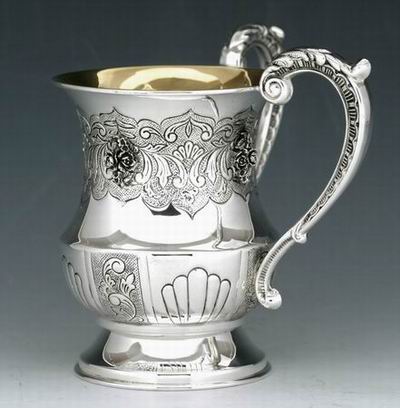
A silver cup for for netilat yadayim, the Jewish ritual washing of hands [Wikipedia]

Because of lack of time I shall use, with adaptations, some of the material I used for this Sunday three years ago.


The Indian Rupees 9,000 monthly rent mentioned in the video is the equivalent of about US$135 or Php6,000.

More than three years ago I was speaking to a Filipino seminarian who had worked in Dubai for some years. He had been quite involved in his parish at home and wanted to visit a group of Catholics from Kerala, India, who lived in a labour camp in Dubai. His friends thought he was crazy but he went anyway. He simply wanted to befriend these men whose living conditions he had heard about.

What he described was what I've found subsequently in videos such as the one above, which is from an Indian TV station, except that in my imagination I had pictured World War II-type wooden huts instead of big buildings not unlike apartment blocks in large cities.

The men made him most welcome. The air inside was just as the reporter in the video described. His hosts were preparing a meal outside their crowded bedroom. They didn't see much need to wash their hands or their utensils and what they were preparing was somewhat more spicy than what Filipinos normally eat.

But the young Filipino enjoyed being with his fellow Catholics, whom he knew were his brothers. He could see clearly their living conditions and was able to understand some of their stories. But what struck him most of all was their hospitality.

The Pharisees and scribes in today's gospel ask Jesus, Why do your disciples not live according to the tradition of the elders, but eat with hands defiled?

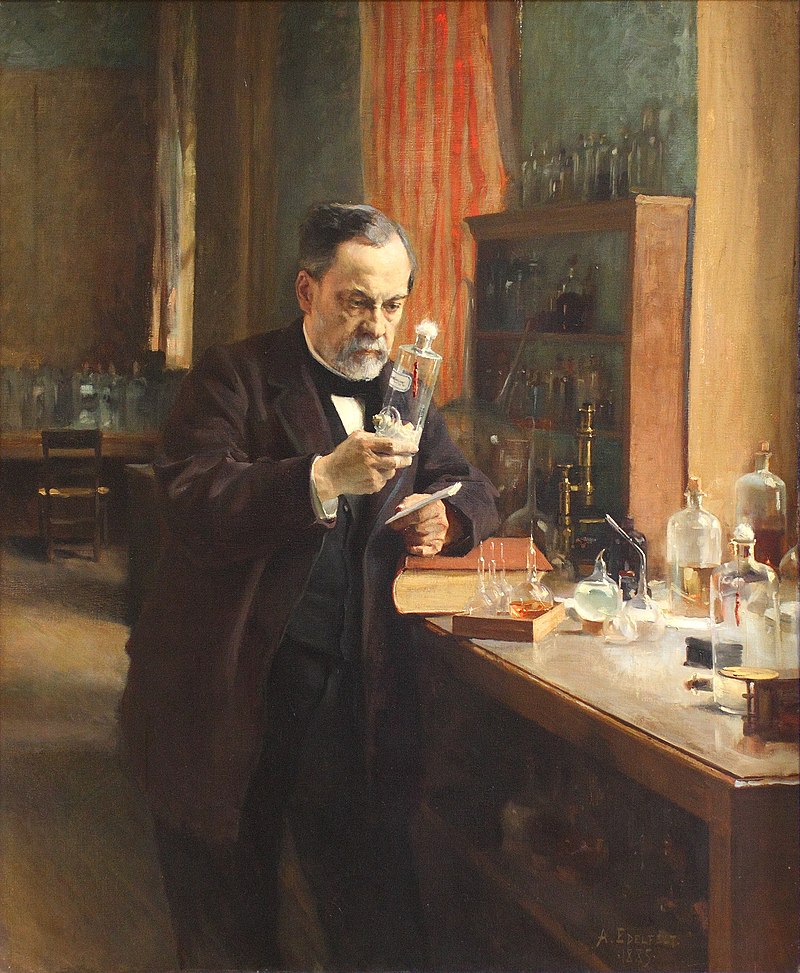
Louis Pasteur in his laboratory, Albert Ederfelt, 1885

I don't think that Jesus is telling us to be careless with food, in preparing it or eating it. Scientists such as Louis Pasteur have shown us the importance of doctors washing their hands and equipment before surgery, a connection that hadn't been seen before. But what Jesus is on about, I think, is the attitude of someone who would notice that the workers from Kerala in a 'villa' in Dubai didn't wash their hands before cooking and eating and would be critical of them - instead of asking why the washing facilities they shared with so many others were lacking. Someone who would fail to see the overcrowded living quarters and the underpaid workers, separated from their families, being exploited by their employers and by recruiting agencies in their own countries.

The situation my young Filipino friend came across in Dubai can be found in many countries. The term 'OFW' is widely used here in the Philippines. It means 'Overseas Filipino Worker'. OFWs are often described by politicians as modern-day heroes. But too few politicians and others are asking why so many, probably a minority in the overall picture but yet a large number of individual real persons, are exploited by some agencies at home and by employers abroad. In reality, these are treated as anything but heroes.

Nor is Jesus opposing tradition or traditions. He was a faithful Jew, as were Joseph and Mary and understood their importance. Tradition and traditions, even if we don't know their origins, are basically life-giving. The Pharisees and scribes  in today's gospel - not all Pharisees and scribes were like these - have turned them into ways of sucking the lifeblood out of people.

Reb Tevye in the extract from Fiddler on the Roof below says, And because of our traditions, every one of us knows who he is. The exploited workers from Kerala carried with them the tradition of hospitality they had inherited from their ancestors and welcomed a stranger from the Philippines in Dubai. Despite their appalling conditions they knew who they were. They lacked freedom in so many ways but they had the freedom to be welcoming. Hospitality is one of the most cherished experiences in the Bible, in both the Old and New Testaments. It is cherished in every culture and it is at the heart of following Jesus, who showed hospitality to others, rich and poor, and who graciously accepted it from others, rich and poor. Indeed, he was sometimes criticised for eating with the poor, as he is in today's gospel because his companions didn't wash their hands.

I don't know if the workers from Kerala whom my friend met had a chance to go to Mass - he did as he lived very near a church. But the Prayer after Communion today fits in with their meeting in Dubai.

Renewed by this bread from the heavenly table, 
we beseech you, Lord, 
that, being the food of charity, 
it may confirm our hearts 
and stir us to serve you in our neighbour. 
Through Christ our Lord.


Antiphona ad introitum     Entrance Antiphon  Ct Ps 85 [86]: 3, 5


Miserere mihi Domine, 
Have mercy on me, OLord,
quoniam ad te clamavi tota die:
for I cry to you all the day long.
quia tu Domine suavis ac mitis es,
O Lord, you are good and forgiving,
et copiosus in misericordia omnibus invocantibus te.
full of mercy to all who call on you.

03 January 2015

'We . . . have come to pay him homage.' Sunday Reflections, The Epiphany of the Lord.

The Adoration of the MagiVelázquez, 1619
Museo del Prado, Madrid [Web Gallery of Art]

Readings for the Solemnity of the Epiphany
Readings (New American Bible: Philippines, USA)

Readings (Jerusalem Bible: Australia, England & Wales, India [optional], Ireland, New Zealand, Pakistan, Scotland, South Africa) 

The readings above are used both at the Vigil Mass and at the Mass during the Day. Each Mass has its own set of prayers and antiphons.

In countries where the Epiphany is observed as a Holyday of Obligation on 6 January, eg, Ireland, the Mass of the Second Sunday after the Nativity is celebrated. The same readings are used in Years A, B, C:

Readings (Jerusalem Bible)


Alleluia and Gospel for the Epiphany


Alleluia, alleluia!
Vidimus stellam eius in Oriente,
We have seen his star in the East,
et venimus cum muneribus adorare Dominum.
and have come with gifts to adore the Lord.
Alleluia, alleluia!

The same text (cf. Matthew 2:2), without 'Alleluia, alleluia,' is used as the Communion Antiphon at the Mass during the Day.

Gospel Matthew 2:1-12 (New Revised Standard Version, Catholic Edition, Canada)

In the time of King Herod, after Jesus was born in Bethlehem of Judea, wise men from the East came to Jerusalem,  asking, “Where is the child who has been born king of the Jews? For we observed his star at its rising, and have come to pay him homage.”  When King Herod heard this, he was frightened, and all Jerusalem with him; and calling together all the chief priests and scribes of the people, he inquired of them where the Messiah was to be born. They told him, “In Bethlehem of Judea; for so it has been written by the prophet:
‘And you, Bethlehem, in the land of Judah,
    are by no means least among the rulers of Judah;
for from you shall come a ruler
    who is to shepherd my people Israel.’”
Then Herod secretly called for the wise men and learned from them the exact time when the star had appeared.  Then he sent them to Bethlehem, saying, “Go and search diligently for the child; and when you have found him, bring me word so that I may also go and pay him homage.” When they had heard the king, they set out; and there, ahead of them, went the star that they had seen at its rising, until it stopped over the place where the child was. When they saw that the star had stopped, they were overwhelmed with joy. On entering the house, they saw the child with Mary his mother; and they knelt down and paid him homage. Then, opening their treasure chests, they offered him gifts of gold, frankincense, and myrrh. And having been warned in a dream not to return to Herod, they left for their own country by another road.

Adoration of the Magi (detail), Filippino Lipi, 1496
Galleria degli Uffizi, Florence [Web Gallery of Art]

While based in Britain from 2000 till 2002 I was able to spend Christmas with my brother and his family in Dublin, a short flight from England, in 2000 and 2001. During the holiday in 2001 I saw a documentary on RTÉ, Ireland's national broadcasting service, about Filipino nurses in Ireland. These began to arrive in 2000, initially at the invitation of the Irish government to work in government hospitals. Very quickly there was an 'invasion' of Filipino nurses and carers, now to be found in hospitals and nursing homes in every part of the country.

One of the nurses interviewed told how many Filipinos, knowing that the Irish celebrate Christmas on the 25th, unlike the Philippines where the culmination of the feast is on the night of the 24th, offered to work on Christmas Day so that their Irish companions could be with their families. This also helped to dull the pain of being away from their own families.

I was moved to tears at the testimony of one nurse, from Mindanao as I recall, speaking about her job and her first Christmas in Ireland in 2000. She spoke very highly of her employers, of her working conditions and of her accommodation, which she compared with that of the Holy Family on the first Christmas night. She spoke of Jesus, Mary and Joseph in this situation as if they were members of her own family, as in a very deep sense they are, or we of their family.

Here was a young woman from the East powerfully proclaiming, without being aware of it, that the Word became flesh and lived among us. The fact that she wasn't aware of it, that she was speaking about her 'next door neighbours', made her proclamation of faith all the more powerful. She would have known many in her own place, and very likely knew from her own experience, something of what Joseph and Mary went through in Bethlehem. Her faith in the Word who became flesh and lived among us wasn't something in her head but part of her very being.

For much of the last century thousands of Catholic priests, religious Sisters and Brothers left Europe and North America to preach and live the Gospel in the nations of Africa, Asia and South America. Some of the countries and regions from which they left, eg, Belgium, the Netherlands, Ireland, Quebec, have to a great extent lost or even rejected the Catholic Christian faith. The Jewish people had, in faith, awaited the coming of the Messiah for many centuries. But when He came it was uneducated shepherds who first recognised him and later Simeon and Anna, two devout and elderly Jews who spent lengthy periods in prayer in the Temple.

Today's feast highlights wise men from the east, not 'believers' in the Jewish sense, led by God's special grace to Bethlehem to bring gifts in response to that grace, explaining, We . . . have come to pay him homage.They reveal to us that God calls people from every part of the world to do the same and to bring others with them.

Will nurses from the Philippines and from Kerala in India, migrants from Korea and Vietnam, from the east, bring the gift of faith in Jesus Christ once again to the many people in Western Europe and North America who no longer know him in any real sense? Will they by the lives they lead as working immigrants gently invite those in the West who have lost the precious gift of our Catholic Christian faith to once again come to pay him homage?


An arrangement by John Rutter of the old carol