Showing posts with label St Brigid. Show all posts

30 January 2026

Sunday Reflections, 4th Sunday in Ordinary Time, Year A, 1 February 2026


Lala Vicente with Jordan Navor
L'Arche, Cainta, near Manila. I have known both for many years.


In Ireland this Sunday is the Feast of St Brigid, Secondary Patroness of the country. The Mass is that of St Brigid but the readings are those of the Fourth Sunday in Ordinary Time, Year A.

Readings (Jerusalem Bible: Australia, Ireland, New Zealand)

Readings (English Standard Version, Catholic Edition: (England & Wales, Scotland, India)

Readings (New American Bible: Philippines, USA)

Gospel Matthew 5:1-12a (English Standard Version, Anglicised)

At that time: Seeing the crowds, Jesus went up on the mountain, and when he sat down, his disciples came to him. And he opened his mouth and taught them, saying: ‘Blessed are the poor in spirit, for theirs is the kingdom of heaven. Blessed are those who mourn, for they shall be comforted. Blessed are the meek, for they shall inherit the earth. Blessed are those who hunger and thirst for righteousness, for they shall be satisfied. Blessed are the merciful, for they shall receive mercy. Blessed are the pure in heart, for they shall see God. Blessed are the peacemakers, for they shall be called sons of God. Blessed are those who are persecuted for righteousness’ sake, for theirs is the kingdom of heaven. Blessed are you when others revile you and persecute you and utter all kinds of evil against you falsely on my account. Rejoice and be glad, for your reward is great in heaven.’ 

Léachtaí i nGaeilge

The Beatitudes

Down Syndrome Abortion Rate

study of abortions in the United States from 1995-2011 found that 67% of women who were told their baby would have Down syndrome decided to abort. This number is much higher in other countries. BBC reports that 90% of women in England whose babies are diagnosed with Down syndrome choose to abort . . . We see that trend in other countries as well. For instance, the Life Institute reports that in Iceland, nearly 100% of babies with Down syndrome are aborted. And in Germany, more than 90% of babies with Down syndrome are aborted.

Research will show that these figures have become higher in recent years in Western Countries. Since 2018 it has been legal in the Republic of Ireland, where I am from, to abort children in the womb simply because they have Down Syndrome.

Pope Francis on abortion

This central paragraph in Laudato si', the encyclical of Pope Francis 'On care for our common home' is all but ignored by the vast majority who profess to be concerned about Planet Earth. I've highlighted the words of Pope Francis and of Pope Leo XIV below because of the importance and clarity.

Since everything is interrelated, concern for the protection of nature is also incompatible with the justification of abortion. How can we genuinely teach the importance of concern for other vulnerable beings, however troublesome or inconvenient they may be, if we fail to protect a human embryo, even when its presence is uncomfortable and creates difficulties? 'If personal and social sensitivity towards the acceptance of the new life is lost, then other forms of acceptance that are valuable for society also wither away' (Laudato Si’, No 120).

Pope Leo XIV on family, abortion and surrogacy

On 9 January in his address to the diplomatic corps accredited to the Holy See Pope Leo said: The vocation to love and to life, which manifests itself in an important way in the exclusive and indissoluble union between a woman and a man, implies a fundamental ethical imperative for enabling families to welcome and fully care for unborn life.  This is increasingly a priority, especially in those countries that are experiencing a dramatic decline in birth rates.  Life, in fact, is a priceless gift that develops within a committed relationship based on mutual self-giving and service.

In light of this profound vision of life as a gift to be cherished, and of the family as its responsible guardian, we categorically reject any practice that denies or exploits the origin of life and its development.  Among these is abortion, which cuts short a growing life and refuses to welcome the gift of life.  In this regard, the Holy See expresses deep concern about projects aimed at financing cross-border mobility for the purpose of accessing the so-called 'right to safe abortion.' It also considers it deplorable that public resources are allocated to suppress life, rather than being invested to support mothers and families.  The primary objective must remain the protection of every unborn child and the effective and concrete support of every woman so that she is able to welcome life.

Likewise, there is the practice of surrogacy.  By transforming gestation into a negotiable service, this violates the dignity both of the child, who is reduced to a 'product,' and of the mother, exploiting her body and the generative process, and distorting the original relational calling of the family. 

Postscript

A report on Thursday 29 January says that primary school enrolment in the current school year in the Republic of Ireland is down by 6,470 compared to last year when enrolment fell by almost 4,000 and by just over 2,000 two years ago

In 2018, when abortion on demand was legalised up to 12 weeks and, in special cases at a later stage of pregnancy, there were 6,666 abortions. In 2024 there were more than 10,000

I haven't seen any commentaries yet on the clear connection between these two sets of statistics.

Rachel's Vineyard offers healing retreats in many countries for persons affected by abortion.
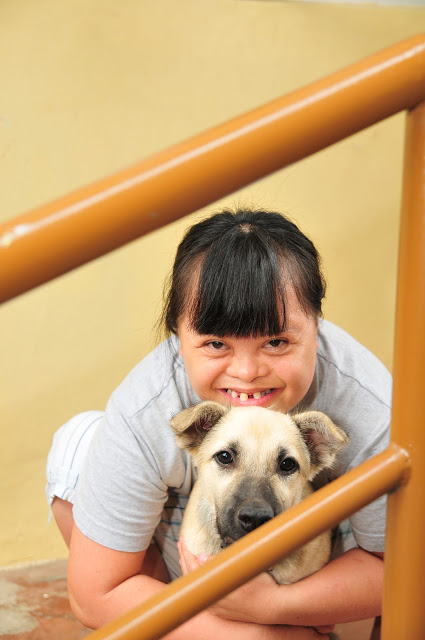
Lala and Hachiko, each looking more content than the other!
Sadly, this beautiful dog choked to death from a chicken-bone.

Second Reading. 1Corinthians 1:26-31

For consider your calling, brothers: not many of you were wise according to worldly standards, not many were powerful, not many were of noble birth. But God chose what is foolish in the world to shame the wise; God chose what is weak in the world to shame the strong; God chose what is low and despised in the world, even things that are not, to bring to nothing things that are, so that no human being might boast in the presence of God. And because of him you are in Christ Jesus, who became to us wisdom from God, righteousness and sanctification and redemption, so that, as it is written, “Let the one who boasts, boast in the Lord.”

+++

The two photos of Lala above show to me the truth of the words of St Paul. They show pure love. I have seen both Lala and Jordan draw love out of others, especially out of those living in L'Arche (Ang Arko): the 'core members' - the VIPs, if you wish - and the assistants.

Pope Benedict with young friends
Blessed are the poor in spirit, for theirs is the kingdom of heaven (Matthew 5:3; Gospel).

Traditional Latin Mass

Septuagesima Sunday

The Complete Mass in Latin and English is here. (Adjust the date at the top of that page to 02-01-2026 if necessary).

Epistle: 1 Corinthians 9:24-27; 10:1-5Gospel: Matthew 20:1-16.

Gospel Lectionary of Henry III
German Miniaturist [Web Gallery of Art]

This illustration of the Gospel shows the labourers working in the vineyard  and receiving their wages.

For the kingdom of heaven is like a householder who went out early in the morning to hire laborers for his vineyard (Matthew 20:1; Gospel).



01 February 2013

Feast of St Brigid, the first day of spring in Ireland. And elsewhere? 'It might as well be spring!'

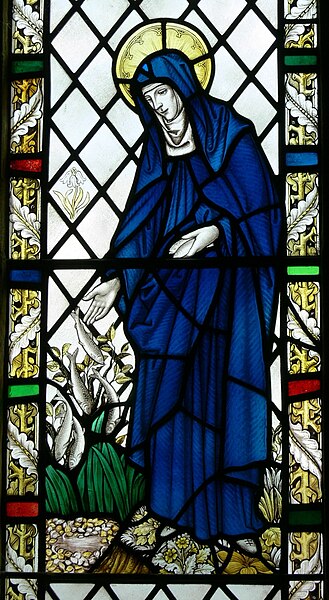
St Brigid  (c.451 - 525), St Non's Chapel, St David's, Wales

Today is observed in Ireland as Lá Fhéile Bhríde, the Feast of St Brigid of Kildare. She is one of the patrons of Ireland and is often referred to as 'Muire na nGael' or 'Mary of the Irish'.

You can find some prayers and resources for celebrating the Feast of St Brigid, including a video on how to make a St Brigid's Cross, on the website of the Diocese of Kildare and Leighlin in Ireland.

Cros BrídeSt Brigid's Cross

Collect

Merciful God,
origin and reward of all charity, 
you called Saint Brigid to teach the new commandment of love 
through her life of hospitality and her care of the needy; 
give to your people, by her intercession, 
a generous spirit, 
so that, with hearts made pure, 
we may show your love to all.
Through our Lord Jesus Christ, your Son, 
who lives and reigns with you in the unity of the Holy Spirit, 
one God, for ever and ever.

The first day of spring

According to the ancient Irish reckoning today, 1 February, is the first day of spring in the temperate regions of the Northern Hemisphere. In most places in those regions 21 March, the equinox, is considered the first day of that season of new growth and hope. Even after more than 41 years in the tropical Philippines the four seasons that I grew up with are still 'in my bones' and I always get a 'lift' when St Brigid's Day comes around. The very cold weather, at least in Ireland, is usually over and the days are growing longer.

The stained glass image of St Brigid above is in a chapel in the southwest of Wales, a country that you can see from parts of the east coast of Ireland on a clear day. In the video below is a singer from a tiny hamlet in the northwest of Wales, Bryn Terfel, with my wish for you whether or not you live in the temperate regions of the Northern Hemisphere or elsewhere, whether or not you consider 1 February or 21 March as the first day of spring. Well, It might as well be spring! 

I don't know of a better version of this classic, a combination of the clever lyrics of Oscar Hammerstein II and the tuneful music of Richard Rodgers.


01 February 2008

A Brigidine blessing for newlyweds

The Church in Ireland has a new Mass formulary for St Brigid, one of the Secondary Patrons of Ireland, whose feast is today. Here is the Collect:

Merciful God,
origin and reward of all charity,
you called Saint Brigid to teach the new commandment of love
through her life of hospitality and her care of the needy;
give to your people, by her intercession,
a generous spirit, so that, with hearts made pure,
we may show your love to all.

Through our Lord Jesus Christ, your Son
who lives and reigns with you and the Holy Spirit,
one God, for ever and ever. Amen.

Brigidine Blessing at the end of a nuptial Mass.

(It’s amazing the number of people, even priests, who mispronounce ‘nuptial as ‘nupjewal’. But then President Eisenhower, as many others still do, used to pronounce ‘nuclear’ as ‘nookyular’!)

Last year while preparing with the couple a wedding ceremony that was celebrated almost entirely in Irish and in Hiligaynon, the language of the region of the Philippines where I‘m presently living, I discovered a beautiful Brigidine Blessing for the end of the nuptial Mass in Leabhar Aifrinn an Pharóiste, ‘The Parish Mass Book’, an Irish language liturgical resource book published by Veritas, Dublin. I don’t have an English text so the translation is my own.

Coincidentally, a variation of St Brigid’s name is ‘Bride’ and in Scotland she’s usually called ‘St Bride’. We have place names in Ireland known as ‘Bridewell’ which would indicate an ancient well in the saint’s honour. There is a police station in Dublin known as ‘The Bridewell’ and I think there’s one in Cork too.

During the blessing at the end of the nuptial Mass the priest holds the St Brigid’s Cross in his right hand. He makes the Sign of the Cross with it over the couple and over the people. Then he gives the St Brigid’s Cross to the bride. According to ancient custom the bride places the Cross on the wall of the house every St Brigid's Day.

Here is the text of the blessings:

Priest: Síocháin an Athar libh,
Síocháin Chríost libh,
Síocháin an Spioraid libh,
Gach lá agus gach oíche.


People: Gach lá agus gach oíche. Amen

(The peace of the Father be with you,
The peace of Christ be with you.
The peace of the Spirit be with you,
Every day and night. Amen.

People: Every day and night. Amen.)

Priest: Coimirce and Athar oraibh,
Coimirce Chríost oraibh,
Coimirce and Spioraid oraibh,
Gach lá agus oíche de bhur saol. Amen.


People: Gach lá agus oíche de bhur saol. Amen.

(The protection of the Father be on you,
The protection of Christ be on you,
The protection of the Spirit be on you,
Every day and night of your lives. Amen.

Every day and night of your lives. Amen.)

Priest: Beannacht an Athar oraibh,
Beannacht Chríost oraibh,
Beannacht an Spioraid oraibh,
Go coróin na beatha síoraí. Amen.


People: Go coróin na beatha síoraí. Amen.

(The blessing of the Father on you,
The blessing of Christ on you,
The blessing of the Spirit on you,
To the crown of eternal life. Amen.

To the crown of eternal life. Amen.)

Priest: Bail ó Dhia oraibh ó Shamhain go Lá ‘le Bríde,
ó Lá le ‘Bríde go Bealtiane,
ó Bhealtaine go Lúnasa,
ó Lúnasa go Samhain;
is go mbeannaí Dia uilechumhactach sibh,
Athair, Mac + agus Spiorad Naomh.

People: Amen.

(May God prosper you from Hallowe’en to St Brigid’s Day,
from St Brigid’s Day to May,
from May to August
and from August to Hallowe’en,
and may almighty God bless you, the Father, Son + Holy Spirit.

People: Amen.)

Priest: Go dté sibh slán faoi shíocháin Chríost.

People: Buíochas le Dia.

(Priest: May you go safely under the peace of Christ.

People: Amen.)

The last part of the blessing refers to the four pre-Christian festivals, Imbolc, Bealtaine, Lúnasa and Samhain that marked the beginning of spring, summer, autumn and winter. St Brigid’s Day, 1 February, replaces Imbolc, but Bealtaine is the Irish name for May, Lúnasa for August and Samhain for November. In Ireland the four seasons are reckoned from the first of February, of May, of August and of November. It is really impossible to translate that last part of the blessing into English. To some extent St Brigid’s Day and Hallowe’en are Imbolc and Samhain ‘baptized’. A popular title in Ireland and some other places for the Virgin Mary in May is ‘Queen of the May’. That, to some extent, ‘baptizes’ Bealtaine. The Solemnity of the Assumption on 15 August is sometimes referred to in Irish as ‘Lá Fhéile Mhuire Mhóir’, ‘The Great Feast of Mary’. That too, in a sense, ‘Christianizes’ Lúnasa.