Showing posts with label Pope Leo XIV. Show all posts

12 June 2026

Sunday Reflections, 11th Sunday in Ordinary Time, Year A. 14 June 2026


The Harvest (Breton Landscape)
Émile Bernard [Web Gallery of Art]

The harvest is plentiful, but the labourers are few; therefore pray earnestly to the Lord of the harvest to send out labourers into his harvest (Matthew 9:37-38; Gospel).

Readings (Jerusalem Bible: Australia, Ireland, New Zealand)

Readings (English Standard Version, Catholic Edition: England & Wales, Scotland, India)

Readings (New American Bible: Philippines, USA)  

Gospel Matthew 9:36-10:8 (English Standard Version, Anglicised)

At that time: When Jesus saw the crowds, he had compassion for them, because they were harassed and helpless, like sheep without a shepherd. Then he said to his disciples, ‘The harvest is plentiful, but the labourers are few; therefore pray earnestly to the Lord of the harvest to send out labourers into his harvest.’

And he called to him his twelve disciples and gave them authority over unclean spirits, to cast them out, and to heal every disease and every affliction. The names of the twelve Apostles are these: first, Simon, who is called Peter, and Andrew his brother; James the son of Zebedee, and John his brother; Philip and Bartholomew; Thomas and Matthew the tax collector; James the son of Alphaeus, and Thaddaeus; Simon the Zealot, and Judas Iscariot, who betrayed him.

These twelve Jesus sent out, instructing them, ‘Go nowhere among the Gentiles and enter no town of the Samaritans, but go rather to the lost sheep of the house of Israel. And proclaim as you go, saying, “The kingdom of heaven is at hand.” Heal the sick, raise the dead, cleanse lepers, cast out demons. You received without paying; give without pay.’

Léachtaí i nGaeilge


St Margaret Mary Alacoque Contemplating the Sacred Heart of Jesus
Corrado Giaquinto [Web Gallery of Art]

For while we were still weak, at the right time Christ died for the ungodly . . .  God shows his love for us in that while we were still sinners, Christ died for us (Romans 5:6, 8; Second Reading). 

At breakfast three years ago on the Solemnity of the Sacred Heart of Jesus (celebrated this year on Friday 12 June), I overheard one of my brother priests pointing out that our faith is not about sin but about God's love for us. The Second Reading at the Mass of the Sacred Heart included theses words of St John that we need 'drummed' into us constantly: In this is love, not that we have loved God but that he loved us and sent his Son to be the propitiation for our sins. Beloved, if God so loved us, we also ought to love one another (1 John 4:10-11).

Loving and serving others comes from the reality that God has shown his love for us as sinners to the extent that the Second Person of the Trinity became one of us and died for us on the Cross. In the Second Reading at this Sunday's Mass St Paul tell us: For if while we were enemies we were reconciled to God by the death of his Son, much more, now that we are reconciled, shall we be saved by his life. More than that, we also rejoice in God through our Lord Jesus Christ, through whom we have now received reconciliation (Romans 5:10-11). In the Jerusalem Bible translation that last verse reads: We are filled with joyful trust in God, through our Lord Jesus Christ, through whom we have already gained our reconciliation.

The First Reading tells us what we are called to be: and you shall be to me a kingdom of priests and a holy nation (Exodus 19:6).

The Responsorial Psalm reinforces this: Know that he, the Lord, is God. He made us, we belong to him, we are his people, the sheep of his flock (Psalm 99 [100]: 3).

The opening words of the Gospel show us how God sees us when we are in need, when we sin and turn away from him: When Jesus saw the crowds, he had compassion for them, because they were harassed and helpless, like sheep without a shepherd. That is why he died for us.

That is why the Church has made June the Month of the Sacred Heart of Jesus. The Church invites us to reflect constantly on St Paul's words to us today: God shows his love for us in that while we were still sinners, Christ died for us.

Christ in Agony on the Cross

In recent decades, most notably in the Western world, the month of June has been hijacked by a powerful international lobby that takes 'Pride' in and promotes sinful ways of behaving and living that deny the reality that God has made us male and female. God teaches us this through nature itself. The more extreme wing of this movement demands that children and adolescents be allowed to change their sex, something that is impossible. They use nonsensical, unscientific terms such as 'the gender assigned at birth'. This is corrupt language that corrupts culture, society and individuals, that cuts us off from God our loving Creator. We're not assigned anything at birth. We are either male or female human beings made in the image of God from the moment of conception.

This extreme lobby promotes the genital mutilation of minors; it promotes cheating in women's sports by allowing men to participate in them; it promotes contempt for women and girls by allowing men who say that they are women into the private spaces of women and girls. All of this is a form of abuse.

Fr Paul D. Scalia of the Diocese of Arlington, Virginia, USA, has an article in The Catholic Thing, Pride and Prejudice, that shows how pervasive this false ideology has become, especially in the United States. This article concludes with words of hope for all, reflective of the readings in this Sunday's Mass.

Humility! is not quite as effective a battle cry as Pride! Humility is hard to embrace because it always carries the stinging reminder of our created and fallen nature – that we neither create nor save ourselves. Pride presumes the power to define ourselves and to brush off the creaturely limits of male and female. In so doing, it closes itself off from – it becomes intolerant of – a Savior.

Humility opens us to the Savior who has opened his Heart to us. 'Learn from me, for I am meek and humble of heart' (Matthew 11:29). The feast of the Sacred Heart bids us open our hearts in humility to the One who has opened his Heart in humility to us. It is a fitting feast to turn away from the pride that divides and toward the humility that saves. Jesus, meek and humble of heart, make my heart like unto thine!

The Sacred Heart

Jesus said, 'Father, forgive them, for they know not what they do' (Luke 23:34).


Salve Regina, Madrid, 7 June 2026

Traditional Latin Mass

Third Sunday After Pentecost

The Complete Mass in Latin and English is here. (Adjust the date at the top of that page to 06-14-2026 if necessary).

Epistle: 1 Peter 5:6-11. Gospel: Luke 15:1-10.


Parable of the Lost Drachma
Domenico Fetti [Web Gallery of Art]

Or what woman, having ten silver coins, if she loses one coin, does not light a lamp and sweep the house and seek diligently until she finds it? (Luke 15:8; Gospel).


31 March 2026

Pope Leo's Prayer for Priests in Crisis, April 2026


Pray with the Pope — April: For priests in crisis

Today, 31 March 2026, Tuesday of Holy Week, the Vatican posted the video above with the Pope's intention for all Catholics to pray for during the month of April. We are asked to Pray with the Pope for his specific intention for each month. This was formerly known as the Apostleship of Prayer.

APRIL: For priests in crisis

In the name of the Father, and of the Son, and of the Holy Spirit. Amen.

Lord Jesus, Good Shepherd and companion on the journey, today we place in your hands all priests, especially those going through moments of crisis, when loneliness weighs heavily, when doubt clouds their hearts, and when exhaustion seems stronger than hope. You who know their struggles and wounds, renew in them the certainty of your unconditional love. Let them feel they are not mere functionaries or lonely heroes, but beloved sons, humble and cherished disciples, and pastors sustained by the prayer of their people.


Good Father, teach us as a community to care for our priests: to listen without judging, to give thanks without demanding perfection, to share with them the baptismal mission of proclaiming the Kingdom in word and deed, and to accompany them with closeness and sincere prayer. May we support those who so often support us.

Holy Spirit, rekindle in our priests the joy of the Gospel. Grant them healthy friendships, networks of fraternal support, a sense of humor when things don’t go as expected, and the grace to always rediscover the beauty of their vocation. May they never lose trust in You, nor the joy of serving your Church with a humble and generous heart. Amen.


30 January 2026

Sunday Reflections, 4th Sunday in Ordinary Time, Year A, 1 February 2026


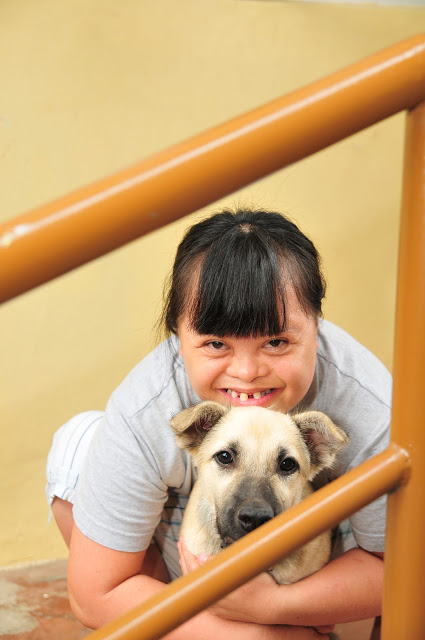
Lala Vicente with Jordan Navor
L'Arche, Cainta, near Manila. I have known both for many years.


In Ireland this Sunday is the Feast of St Brigid, Secondary Patroness of the country. The Mass is that of St Brigid but the readings are those of the Fourth Sunday in Ordinary Time, Year A.

Readings (Jerusalem Bible: Australia, Ireland, New Zealand)

Readings (English Standard Version, Catholic Edition: (England & Wales, Scotland, India)

Readings (New American Bible: Philippines, USA)

Gospel Matthew 5:1-12a (English Standard Version, Anglicised)

At that time: Seeing the crowds, Jesus went up on the mountain, and when he sat down, his disciples came to him. And he opened his mouth and taught them, saying: ‘Blessed are the poor in spirit, for theirs is the kingdom of heaven. Blessed are those who mourn, for they shall be comforted. Blessed are the meek, for they shall inherit the earth. Blessed are those who hunger and thirst for righteousness, for they shall be satisfied. Blessed are the merciful, for they shall receive mercy. Blessed are the pure in heart, for they shall see God. Blessed are the peacemakers, for they shall be called sons of God. Blessed are those who are persecuted for righteousness’ sake, for theirs is the kingdom of heaven. Blessed are you when others revile you and persecute you and utter all kinds of evil against you falsely on my account. Rejoice and be glad, for your reward is great in heaven.’ 

Léachtaí i nGaeilge

The Beatitudes

Down Syndrome Abortion Rate

study of abortions in the United States from 1995-2011 found that 67% of women who were told their baby would have Down syndrome decided to abort. This number is much higher in other countries. BBC reports that 90% of women in England whose babies are diagnosed with Down syndrome choose to abort . . . We see that trend in other countries as well. For instance, the Life Institute reports that in Iceland, nearly 100% of babies with Down syndrome are aborted. And in Germany, more than 90% of babies with Down syndrome are aborted.

Research will show that these figures have become higher in recent years in Western Countries. Since 2018 it has been legal in the Republic of Ireland, where I am from, to abort children in the womb simply because they have Down Syndrome.

Pope Francis on abortion

This central paragraph in Laudato si', the encyclical of Pope Francis 'On care for our common home' is all but ignored by the vast majority who profess to be concerned about Planet Earth. I've highlighted the words of Pope Francis and of Pope Leo XIV below because of the importance and clarity.

Since everything is interrelated, concern for the protection of nature is also incompatible with the justification of abortion. How can we genuinely teach the importance of concern for other vulnerable beings, however troublesome or inconvenient they may be, if we fail to protect a human embryo, even when its presence is uncomfortable and creates difficulties? 'If personal and social sensitivity towards the acceptance of the new life is lost, then other forms of acceptance that are valuable for society also wither away' (Laudato Si’, No 120).

Pope Leo XIV on family, abortion and surrogacy

On 9 January in his address to the diplomatic corps accredited to the Holy See Pope Leo said: The vocation to love and to life, which manifests itself in an important way in the exclusive and indissoluble union between a woman and a man, implies a fundamental ethical imperative for enabling families to welcome and fully care for unborn life.  This is increasingly a priority, especially in those countries that are experiencing a dramatic decline in birth rates.  Life, in fact, is a priceless gift that develops within a committed relationship based on mutual self-giving and service.

In light of this profound vision of life as a gift to be cherished, and of the family as its responsible guardian, we categorically reject any practice that denies or exploits the origin of life and its development.  Among these is abortion, which cuts short a growing life and refuses to welcome the gift of life.  In this regard, the Holy See expresses deep concern about projects aimed at financing cross-border mobility for the purpose of accessing the so-called 'right to safe abortion.' It also considers it deplorable that public resources are allocated to suppress life, rather than being invested to support mothers and families.  The primary objective must remain the protection of every unborn child and the effective and concrete support of every woman so that she is able to welcome life.

Likewise, there is the practice of surrogacy.  By transforming gestation into a negotiable service, this violates the dignity both of the child, who is reduced to a 'product,' and of the mother, exploiting her body and the generative process, and distorting the original relational calling of the family. 

Postscript

A report on Thursday 29 January says that primary school enrolment in the current school year in the Republic of Ireland is down by 6,470 compared to last year when enrolment fell by almost 4,000 and by just over 2,000 two years ago

In 2018, when abortion on demand was legalised up to 12 weeks and, in special cases at a later stage of pregnancy, there were 6,666 abortions. In 2024 there were more than 10,000

I haven't seen any commentaries yet on the clear connection between these two sets of statistics.

Rachel's Vineyard offers healing retreats in many countries for persons affected by abortion.

Lala and Hachiko, each looking more content than the other!
Sadly, this beautiful dog choked to death from a chicken-bone.

Second Reading. 1Corinthians 1:26-31

For consider your calling, brothers: not many of you were wise according to worldly standards, not many were powerful, not many were of noble birth. But God chose what is foolish in the world to shame the wise; God chose what is weak in the world to shame the strong; God chose what is low and despised in the world, even things that are not, to bring to nothing things that are, so that no human being might boast in the presence of God. And because of him you are in Christ Jesus, who became to us wisdom from God, righteousness and sanctification and redemption, so that, as it is written, “Let the one who boasts, boast in the Lord.”

+++

The two photos of Lala above show to me the truth of the words of St Paul. They show pure love. I have seen both Lala and Jordan draw love out of others, especially out of those living in L'Arche (Ang Arko): the 'core members' - the VIPs, if you wish - and the assistants.

Pope Benedict with young friends
Blessed are the poor in spirit, for theirs is the kingdom of heaven (Matthew 5:3; Gospel).

Traditional Latin Mass

Septuagesima Sunday

The Complete Mass in Latin and English is here. (Adjust the date at the top of that page to 02-01-2026 if necessary).

Epistle: 1 Corinthians 9:24-27; 10:1-5Gospel: Matthew 20:1-16.

Gospel Lectionary of Henry III
German Miniaturist [Web Gallery of Art]

This illustration of the Gospel shows the labourers working in the vineyard  and receiving their wages.

For the kingdom of heaven is like a householder who went out early in the morning to hire laborers for his vineyard (Matthew 20:1; Gospel).


03 December 2025

Loren Capobres, a Filipina, shares with Pope Leo XIV her work helping refugees in Lebanon


Loren Capobres addressing Pope Leo XIV in Lebanon

I came across this video yesterday, Tuesday 1 December, and posted it on Facebook. When I opened Facebook this morning I found a message from Loren herself, whom I have never met, and one from a mutual friend in the Philippines, Gwen Llano, who has been involved in Faith and Light for many years. Gwen gave a seminar in Lebanon in 2020 and met Loren there.

The website of the Catholic Bishops' Conference of the Philippines (CBCP) has a report on Loren's talk here. The report by Roy Lagarde says: Pope Leo XIV on Monday said migrants’ experiences must push Christians to oppose war and build communities where no one seeking safety feels unwelcome, after hearing a Filipino woman’s testimony.

Loren Capobres, a former Filipino domestic worker in Lebanon who now works with Jesuit Refugee Service, shared stories that illustrate both the human cost of conflict and the Church’s moral responsibility.

Capobres described her work with migrants through Couples for Christ Lebanon, the Arrupe Migrant Center, and St. Joseph’s Tabaris Parish, which she calls her second home.

She said the parish, supported by Jesuit Refugee Service, became a shelter for migrants who lost homes, work, and security during fighting.

Lebanon is a country that knows suffering. The Lebanese Civil War (1975-1990) led to 150,000 deaths and a million people leaving the country. The population in 1970 was 2,386,114. The country has also given refuge to people fleeing from other wars in the Middle East.

Catholic immigrants such as Loren Capobres bring a deep and generous faith and enrich the countries wherever they go. Here in Ireland I'm often struck by the Catholic faith of Filipinos, Indians from Kerala, who trace their faith back to St Thomas the Apostle, and Nigerians in particular. They come from countries that are very different culturally in many ways from Ireland, but share with us here the deepest identity of all: our Catholic faith received at baptism that when lived leads persons to serve others generously.

May God continue to bless Loren Capobres and so many others like her, wherever they may be.

16 October 2025

Sunday Reflections, 29th Sunday in Ordinary Time, Year C, 19 October 2025. Mission Sunday


Moses
Michelangelo [Web Gallery of Art]
(First Reading, Exodus 17:8-13)

Readings (Jerusalem Bible: Australia, Ireland, New Zealand)

Readings (English Standard Version, Catholic Edition: England & Wales, India, Scotland) 

Readings (New American Bible: Philippines, USA)

Gospel Luke 18:1-8 (English Standard Version, Anglicised)

At that time: Jesus told his disciples a parable to the effect that they ought always to pray and not lose heart. He said, ‘In a certain city there was a judge who neither feared God nor respected man. And there was a widow in that city who kept coming to him and saying, “Give me justice against my adversary.” For a while he refused, but afterwards he said to himself, “Though I neither fear God nor respect man, yet because this widow keeps bothering me, I will give her justice, so that she will not beat me down by her continual coming.” ’

And the Lord said, ‘Hear what the unrighteous judge says. And will not God give justice to his elect, who cry to him day and night? Will he delay long over them? I tell you, he will give justice to them speedily. Nevertheless, when the Son of Man comes, will he find faith on earth?’

Léachtaí i nGaeilge                                           


St John Henry Cardinal Newman
Sir John Everett Millais [Wikipedia]

Pope Leo will declare St John Henry Newman a Doctor of the Church on Saturday 1 November. This report describes Doctors of the Church as a select group of saints recognized for their enduring contribution to Catholic theology and spirituality. He is especially noted for his insights on the development of doctrine and the role of conscience.

+++

The Opening Prayer in today’s Mass starts with these words: Almighty ever-living God, grant that we may always conform our will to yours and serve your majesty in sincerity of heart . . .

This prayer is a synopsis, a summary of what the Christian life is: following Jesus and, with him, submitting our own will to the will of the Father., as Jesus himself did. In John 6:38 Jesus tells us: For I have come down from heaven, not to do my own will, but the will of him who sent me.

We receive the gift of faith through baptism and God nourishes that faith through the Holy Sacrifice of the Mass and the sacraments. We cooperate with God when we pray.

The First Reading and the Gospel today are specifically about prayer. Moses prays for the Hebrew soldiers as they battle with the Amalekites. He holds his arms outstretched as he prays, Aaron and Hur supporting them. Jesus in the gospel invites us to continually pray for our needs and assures us that God will hear us and respond: And will not God give justice to his elect, who cry to him day and night? Will he delay long over them? (Luke 18:7).

St John Henry Cardinal Newman's Coat-of-arms

Our baptism and our prayer bring us into relationship with a loving God. Pope Francis canonised St John Henry Newman on 13 October 2019. The saint's motto as a cardinal was Cor ad cor loquitur – Heart speaks to heart. This goes right to the heart of the Christian life in every sense. Pope Benedict spoke beautifully about this at the Mass during which Cardinal Newman was beatified in Birmingham on 19 September 2010: 

Cardinal Newman’s motto, Cor ad cor loquitur, or ‘Heart speaks unto heart’, gives us an insight into his understanding of the Christian life as a call to holiness, experienced as the profound desire of the human heart to enter into intimate communion with the Heart of God. He reminds us that faithfulness to prayer gradually transforms us into the divine likeness. As he wrote in one of his many fine sermons, ‘a habit of prayer, the practice of turning to God and the unseen world in every season, in every place, in every emergency – prayer, I say, has what may be called a natural effect in spiritualizing and elevating the soul. A man is no longer what he was before; gradually … he has imbibed a new set of ideas, and become imbued with fresh principles’.

St Paul puts it this way: Have this mind among yourselves, which is yours in Christ Jesus (Philippians 2:5). While Moses didn’t know Jesus Christ, he tried all his life as leader of the Hebrews, the position to which God called him, to have this mind in him that was in God, with whom he spoke heart to heart. And he persisted in praying to God on behalf of his people, most especially when they sinned. While scolding his people he never ceased to pray for them. Like the widow in the parable ‘pestering’, ‘bothering’, ‘wearing out’ - different English translations - the unjust judge, Moses did the same to God in his prayer.

St John Henry Newman was a great theologian, a great preacher and, above all, a great priest. Pope Benedict in his homily focused on how Newman lived the priesthood, a pastor of soulsvisiting the sick and the poor, comforting the bereaved, caring for those in prison. No wonder that on his death so many thousands of people lined the local streets as his body was taken to its place of burial.

The Pope made reference to the beautiful description of the Christian life that Newman wrote and that recognises the specific, unique call or vocation each of us has: God has created me to do Him some definite service; He has committed some work to me which He has not committed to another. I have my mission—I never may know it in this life, but I shall be told it in the next. Somehow I am necessary for His purposes, as necessary in my place as an Archangel in his—if, indeed, I fail, He can raise another, as He could make the stones children of Abraham. Yet I have a part in this great work; I am a link in a chain, a bond of connection between persons. He has not created me for naught. I shall do good, I shall do His work; I shall be an angel of peace, a preacher of truth in my own place, while not intending it, if I do but keep His commandments and serve Him in my calling.

Therefore I will trust Him. Whatever, wherever I am, I can never be thrown away. If I am in sickness, my sickness may serve Him; in perplexity, my perplexity may serve Him; if I am in sorrow, my sorrow may serve Him. My sickness, or perplexity, or sorrow may be necessary causes of some great end, which is quite beyond us. He does nothing in vain; He may prolong my life, He may shorten it; He knows what He is about. He may take away my friends, He may throw me among strangers, He may make me feel desolate, make my spirits sink, hide the future from me—still He knows what He is about.

These words of the English saint expand on our Opening Prayer: Almighty ever-living God, grant that we may always conform our will to yours and serve your majesty in sincerity of heart . . .


Mission Sunday, 19 October 2025

Pope Leo's Message for Mission Sunday

Traditional Latin Mass

What earlier generations held as sacred, remains sacred and great for us too, and it cannot be all of a sudden entirely forbidden or even considered harmful (Benedict XVI). 

Nineteenth Sunday after Pentecost

The Complete Mass in Latin and English is here. (Adjust the date at the top of that page to 10-19-2025 if necessary).


Epistle: Ephesians 4:23-28Gospel: Matthew 22:1-14.

Wedding Banquet
Jan Brueghel the Elder [Web Gallery of Art]

The kingdom of heaven may be compared to a king who gave a marriage feast for his son (Matthew 22:1; today's Gospel).